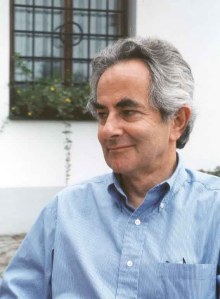
 In his book The Last Word, Thomas Nagel, an atheist professor of philosophy and law at New York University School of Law, defended philosophical rationalism against subjectivism. At one point he admits that rationalism has theistic implications—implications he does not like. He suggests that subjectivism is due in part to a fear of religion, citing his own fear as a case in point:
I speak from experience, being strongly subject to this fear myself: I want atheism to be true and am made uneasy by the fact that some of the most intelligent and well-informed people I know are religious believers. It isn’t just that I don’t believe in God and, naturally, hope that I’m right in my belief. It’s that I hope there is no God! I don’t want there to be a God; I don’t want the universe to be like that. … My guess is that this cosmic authority problem is not a rare condition and that it is responsible for much of the scientism and reductionism of our time. One of the tendencies it supports is the ludicrous overuse of evolutionary biology to explain everything about life, including everything about the human mind. Darwin enabled modern secular culture to heave a great collective sigh of relief, by apparently providing a way to eliminate purpose, meaning, and design as fundamental features of the world.”
Nagel’s admission is consistent with the Christian claim that those who reject the existence of God do not do so wholly for intellectual reasons—the will plays a vital role as well.
 Thinking to Believe
July 20, 2009 at 6:10 am
“At one point he admits that rationalism has theistic implications—implications he does not like.”
I’m sorry, but he doesn’t make that point at all in the quote you provide.
Certainly rational people can be religious. Rational people can also be UFO believers. But that doesn’t make their belief rational.
I have a fear of getting arrested and going to jail. I’ve never done anything illegal, don’t ever plan on doing anything illegal, but the fear (probably put there by watching too many prison movies) exists. I am, if I can be so bold, a rational person. But that fear is irrational. Nonetheless, I still possess it.
LikeLike
July 21, 2009 at 12:36 am
Morsec0de,
Right, Nagel is not discussing rationalism in the quote itself. I did not claim he was. I was merely setting up the quote by summarizing the context in which it was made. On page 130 of The Last Word, in the paragraph preceding the section I quoted, Nagel writes, “Rationalism has always had a more religious flavor than empiricism. Even without God, the idea of a natural sympathy between the deepest truths of nature and the deepest layers of the human mind, which can be exploited to allow gradual development of a truer and truer conception of reality, makes us more at home in the universe than is secularly comfortable. The thought that the relation between the mind and the world is something fundamental makes many people in this day and age nervous. I believe this is one manifestation of the fear of religion which has large and often pernicious consequences for modern intellectual life.”
Nagel’s point is that rationalism is more congruent with a theistic worldview, and that makes many secularists (who are often rationalists) very uncomfortable, including Nagel himself. He wasn’t talking about, and I am not talking about, whether rational people can believe false things, or have irrational fears.
Jason
LikeLike
August 22, 2009 at 8:17 pm
“The fool hath said in his heart, There is no God.” (Ps.14:1) “For he spake, and it was done; he commanded, and it stood fast.”
(Ps. 33:9)
LikeLike