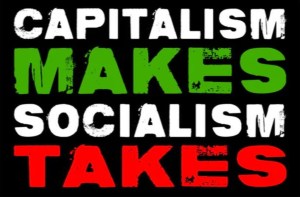
 In light of the rising popularity of socialism in this country, we need to talk about economics. Why? Because economic theories have both a moral foundation and moral implications. As such, Christians ought to care about and critically evaluate economic theories.
 I contend that socialism is a morally evil and ideologically naïve economic philosophy that has failed everywhere it has been tried, resulting in tyranny, misery, and poverty. In contrast, capitalism is a morally good and practical economic philosophy that has produced the most freedom, wealth, and human flourishing in the history of the world. To the extent that we care about freedom, and human flourishing, we should promote capitalism and eschew socialism.
In a new four-part series on economics, I’ll make a moral case against socialism and a moral case for capitalism. Episode one just dropped today. Listen wherever you get podcasts, or at https://thinkingtobelieve.buzzsprout.com.
 Thinking to Believe
July 19, 2025 at 3:02 am
Comparing socialism and capitalism requires careful defining of your terms, since the term socialism has been applied to both extreme right and left ideologies, and capitalism has been applied to both robber barons and social democracies. Unfettered capitalism causes demonstratable harm and leads to child labor, long work hours, and few workers rights. Social democracies, on the other hand—like Sweden, Norway, Finland, Denmark and Germany (where I currently live)—consistently rate among the happiest, healthiest, fairest and safest nations in the world. I’m not saying you can’t make a case for capitalism over socialism, but you do need to define your terms carefully.
Interestingly, those same social democracies are also among the most atheistic nations in the world. That’s ironic, considering that Jesus was a socialist—in that many of his teachings in the Bible align with values commonly associated with socialism (such as economic justice, compassion for the vulnerable, and redistribution to support the common good). According to the Bible, Jesus emphasized care for the poor, telling his followers to sell their possessions and give to those in need (Luke 18:22) and declaring, “Blessed are the poor” (Luke 6:20). He also condemned greed and the worship of wealth, saying, “You cannot serve both God and money” (Matthew 6:24). The early Christian communities practiced a form of voluntary collectivism, as described in Acts 2:44-45, where believers held possessions in common and redistributed resources based on need. The Bible also says Jesus challenged social hierarchies, embraced outcasts and preached radical inclusion.
LikeLike
July 20, 2025 at 11:19 am
I define my terms in the series.
None of the countries you named are truly socialist countries. They are semi-socialist; i.e. they do engage in some redistribution of wealth through very high taxes and a big social welfare system, but the wealth they are confiscating and redistributing is created through a capitalistic system. The citizens, not the government, own the means of production and create the wealth of the nation.
Jesus was no socialist. You are twisting Scripture and making up a Jesus to your own liking. Jesus never talked about economic justice. Jesus never advocated for a redistribution of wealth so that all people would have economic equality. He did speak of charity to the poor on ocassion, but the charity He had in mind was voluntary and at the individual level. He did not advocate for the State to forcibly take people’s wealth and give it to those less fortunate. There is absolutely no sense in which Jesus was a socialist or advocated any socialist principles. Jesus’ mission was not social justice, but to redeem all mankind. Jesus’ concern was not someone’s economic status, but their spiritual condition. The poor needed Jesus just as much as the rich.
“Blessed are the poor” is about the poor in spirit; i.e. the spiritually poor. If he were talking about economics, then it would be bad to give to the poor since they would no longer be blessed. That would contradict Jesus’ teaching about giving to the poor. There’s nothing spiritually beneficial about being poor, or spiritually detrimental to being rich. Jesus’ concern was not about people’s personal wealth. His concern was their spiritual condition. He called all people to repent because He was concerned that all be saved, not just the poor, the outcast, the destitute, the oppressed, etc.
As for Luke 18:22, Jesus did not tell his “followers” to “sell their possessions and give to those in need.” He told one person to do that, and He wasn’t even a follower of Jesus. And notice that Jesus told him to sell everything he had – not just some of what he had (which would make him poor, so if Jesus wanted all of His followers to do this, then Jesus would be advancing more poverty). Jesus never said this or taught this to anyone else. It was specific to this man. Why? Because He knew this man’s wealth was holding him back spiritually. He loved his wealth more than God. So Jesus tested him to demonstrate what he valued most: Jesus or money. He chose money.
Yes, a group of believers very early in the church’s history practiced a form of communalism, but a few things should be noted. First, it was due to the fact that so many Jews who became Christians were staying in Jerusalem beyond the feast of Pentecost due to their newfound faith in Jesus. They needed resources while they were away from home. So this was a temporary thing, not an ongoing practice of the church. Second, it was completely voluntary. No one had to sell anything. Or, they could sell some things to contribute to the fund. The individuals made the decision to give. They were not forced to do so by the State.
LikeLike