Wednesday, May 27th, 2009
Daily Archive
May 27, 2009
Posted by Jason Dulle under
Religions
[3] Comments
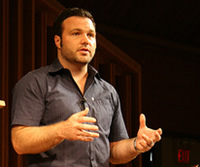 Mark Driscoll, of Mars Hill Church in Seattle Washington, wrote an article for Fox News responding to a recent Newsweek article reporting on the decline of self-identified Christians in America. According to Driscoll, we must distinguish between Christendom and Christianity. Christendom is the visible, cultural expression of Christianity in the world, while Christianity consists of those who have had a transforming experience with Jesus and are living out their faith in their daily lives. Within Christendom there are many whose lives are not noticeably different from their non-Christian counterparts. They are professing Christians rather than practicing Christians. Driscoll contends that while Christendom is no doubt diminishing in the United States, it is not because the actual number of practicing Christians is diminishing, but because larger numbers of professing Christians are simply dropping the “in-name-only” label they have identified with in the past. Why? Because there is no longer the same social benefits that once accompanied church membership, and there is much less stigma today than in the past for abandoning Christianity. I would encourage you to read his piece. It’s a good thesis, and a good read.
HT: Justin Taylor
May 27, 2009
 Yesterday, in a 6-1 decision, the California Supreme Court upheld the voter initiative to amend the California Constitution to define marriage as between a man and woman only. This is the same court that forced same-sex marriage on California last year, when they overturned a 2000 law defining marriage as between a man and woman only, as being unconstitutional. Now that the voters amended the Constitution to define marriage in such a fashion, what could they do? It’s difficult to say the Constitution is unconstitutional!
May 27, 2009
Posted by Jason Dulle under
Apologetics
[8] Comments
 Christian apologetics is an intellectual discipline that offers a rational justification for Christianity. One would think Christians would heartily embrace a discipline whose aim is to show the intellectual viability and superiority of the Christian worldview. Ironically, Christian apologists often face opposition from both unbelievers and believers alike.
Many Christians think apologetics is either unnecessary, or detrimental to faith. The latter understand faith to be commitment of the will in the absence of reason, rather than trust based on good reasons. Having reasons to believe, then, leaves no room for faith. This understanding of faith has no basis in Scripture. Indeed, God, Jesus, and the apostles all provided reasons for others to take their claims seriously. And they did so for good reason: beliefs are caused by reasons. If they weren’t, we would be unable to control what we believe. Beliefs would just pop in and out of our minds inexplicably. A Christian could be in church worshipping Jesus, when suddenly, for no reason at all he stops believing in Jesus and starts believing in Buddha. A man could be walking his dog when suddenly, for no reason at all, he begins to believe he is walking a cat. No, such is not possible because beliefs are caused by reasons. Beliefs are something that happen to us given sufficient epistemic conditions. We cannot just will to believe something. To demonstrate, stop believing in God right now. Don’t just think the thought, “I don’t believe in God,” but make yourself believe that God really doesn’t exist. You can’t do it, because genuine belief requires reasons, and you have good reasons to believe God exists, and no good reasons to think He doesn’t.
Those who think apologetics is unnecessary often claim the Spirit’s work is all we need for conversion. While it’s true that the Spirit’s work in our hearts is necessary for conversion, it is not sufficient. Indeed, if the work of the Spirit was sufficient in itself for conversion, then why do we need to present the Gospel to them? It’s because faith is contingent on knowledge. A person cannot believe in Jesus if they do not know about Jesus. God’s Spirit works together with our presentation of the Gospel to bring about conversion. Now here’s the rub. If faith requires knowledge, and apologetics delivers knowledge, why oppose the use of apologetics in evangelism? Apologetics serve to help remove intellectual barriers to the faith, so that one can submit to the working of the Spirit in their hearts. As such, it is vitally important to evangelism, and should be embraced by Christians.
Indeed, Peter himself thought so. He told us to “be prepared to give a defense to everyone who asks you a reason for the hope that is in you” (1 Pet 3:15). Paul understood evangelism to consist of both the “defense and verification of the Gospel” (Phil 1:7), and instructed us to “make the most of every opportunity,” knowing how we “should answer everyone” (Col 4:5-6). Apologetics is not just a nice add-on to Christianity, but a Bible-based discipline integral to our evangelistic efforts.
May 27, 2009
Posted by Jason Dulle under
Odds & Ends
[20] Comments
 Ravi Zacharias tells the story of a trial in which a lawyer was defending a pornographer of the basest sorts. The lawyer asked the plaintiff, “Have you ever gone into an art gallery?” The plaintiff responded, “Yes.” The lawyer continued, “Have you paid to go into that art gallery?” Again the plaintiff responded, “Yes.” “Were there paintings of naked people in that art gallery?”, the lawyer asked. “Yes,” the plaintiff responded. “So why do you call that art, but Playboy pornography?” The plaintiff did not have a response.
Have you ever wondered what the difference is between a piece of art featuring nude figures, and pornography? Is there a difference?
In A Pilgrim’s Regress, C.S. Lewis wrote about a man who ordered milk and eggs from a waiter in a restaurant. After tasting the milk he commented to the waiter that it was delicious. The waiter replied, “Milk is only the secretion of a cow, just like urine and feces.” After eating the eggs he commented on the tastiness of the eggs. Again the waiter responded that eggs are only a by-product of a chicken. After thinking about the waiter’s comment for a moment the man responded, “You lie. You don’t know the difference between what nature has meant for nourishment, and what it meant for garbage.”
Ravi Zacharias notes that while both art and pornography utilize nude figures, the purpose/motives for portraying the naked body are definitively distinct. Pornography utilizes nude figures for the pure purpose of stimulating the baser instincts of individuals; instincts that will not be satisfied by that alone. Art, on the other hand, utilizes nude figures for the purpose of highlighting the beauty of man. While pornography engenders lust, art engenders admiration for the glory and beauty of the human body, and thus the glory of its Maker.

 Thinking to Believe