Fox News picked up a story from The Washington Times reporting on recent drops in support of abortion rights:
Popular support for abortion rights has dropped seven points in the past year due in part to the election of a pro-choice Democratic president, the Pew Forum on Religion and Public Life said Thursday.
(more…)
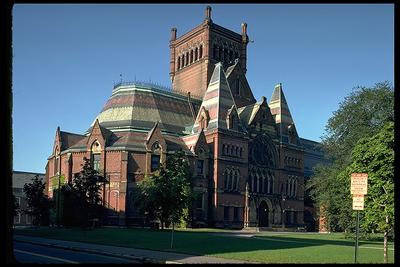 J.P. Moreland and William Lane Craig wrote:
[T]he single most important institution shaping Western culture is the university. It is at the university that our future political leaders, our journalists, our teachers, our business executives, our lawyers, our artists, will be trained. It as at the university that they will formulate or, more likely, simply absorb the worldview that will shape their lives. And since these are the opinion-makers and leaders who shape our culture, the worldview that they imbibe at the university will be the one that shapes our culture. If the Christian worldview can be restored to a place of prominence and respect at the university, it will have a leavening effect throughout society. If we change the university, we can change our culture through those who shape culture.
(more…)
During an interview at Cambridge University William Lane Craig was asked how postmodern students reacted to his “rational approach.” He said:
Frankly, I don’t confront many students who are postmodernists. For all the faddish talk, I think it’s a myth. Students aren’t generally relativistic and pluralistic, except when it comes to ethics and religion. But that’s not postmodernism, that’s modernism. That’s old-style verificationism, which says things that are verifiable through the five senses are factual, but everything else is just a matter of taste (including ethics and religion). I think it’s a deceit of our age to say that modernism is dead.
Craig echoed similar sentiments in To Everyone An Answer on pages 21-22:
[E]nlightenment rationalism is so deeply imbedded in Western intellectual life that these antirationalistic currents like Romanticism and postmodernism are doomed, it seems, to be mere passing fashions. After all, no one adopts a postmodernist view of literary texts when reading the labels on a medicine bottle or a box of rat poison…In the end, people turn out to be subjectivists only about ethics and religion, not about matters provable by science. But this is not postmodernism; this is nothing else than classic Enlightenment naturalism–it is the old modernism in a fashionable new guise.
(more…)
A judge in Dallas Texas has decided that two men who married in Massachusetts who now reside in Texas can get a divorce in Texas. What’s interesting about this is that Texas does not recognize same-sex marriages. In the eyes of the law of Texas, these men are not married, so how can that same state grant them a divorce? What is the legal basis? According to the judge, the basis is the fact that Texas’ law opposing same-sex marriage is unconstitutional. You see how this works?! Many voices prophesied that this would happen: same-sex couples marry in a state that recognizes same-sex marriage, move to a state that does not recognize same-sex marriage, and then successfully challenge that state’s marriage laws by filing for divorce.
As I understand it, the judge’s decision does not, in fact, invalidate the law. If I am understanding it correctly, it merely challenges the law, which, if pressed, could require a constitutional review by the Supreme Court of Texas, who could overturn it if they agree that it is unconstitutional. If anyone knows more about the story, more about the judge’s decision, or more about the legal matters involved here, please step in and either correct me or fill in the blanks.

 Thinking to Believe