This is a travesty of justice. A woman killed her neo-Nazi husband while he was sleeping, and will not serve any jail time for doing so. And it’s not because she was found to be mentally insane. It’s because her husband was seen to be such a bad guy. Indeed, he was. He was a white supremacist, a child pornographer, an abuser, and had the materials to make a bomb. Nevertheless, he was a human being. He needed to experience justice for his crimes, but being killed was not the appropriate form of justice, and his wife was not the appropriate person to determine his punishment. There is no question that she needed to remove herself and her daughter from this man’s influence, but divorce and/or relocation could have accomplished this. Killing him was not necessary. Given the woman’s circumstances I could understand if the court might have lessened her prison sentence, but to let her go scot-free is wrong. This sends a message to society that murder is justifiable so long as the person you are murdering is a bad person. How many other women might be emboldened to kill their abusive or crazy husbands as a result of this case? This is what happens when sentimentalism is elevated in a society. It can even trump the rule of law.
January 2010
January 8, 2010
Apparently It Is OK to Kill Your Neo-Nazi Husband
Posted by Jason Dulle under Odds & Ends, Sin, Social[9] Comments
January 7, 2010
House from First Century Nazareth Discovered
Posted by Jason Dulle under ArchaeologyLeave a Comment

January 7, 2010
Signature in the Cell Part 5: Assessing the Necessity Hypothesis for the Origin of Life
Posted by Jason Dulle under Apologetics, Evolution, Intelligent Design, Science[6] Comments
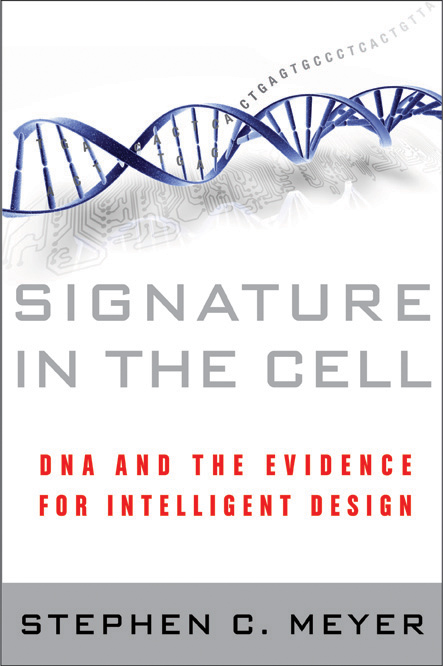 As a result of the failure of the chance hypothesis to explain the origin of life, Dean Kenyon and Gary Steinman proposed a novel solution: life’s origin is due to physical necessity, not chance (Biochemical Predestination, 1969). Like many others in their day, Kenyon and Steinman were proponents of the protein-first model, maintaining that the first life was based on proteins rather than DNA (DNA came later). They got around the utterly implausible odds of forming proteins by chance by just denying that chance was involved at all. They suggested that law-like processes direct the self-organization of chemicals, making the origin of life inevitable, not some lucky happenstance. Just like electrostatic forces draw sodium and chloride together in ordered patterns to form crystals, some (yet-to-be-discovered) natural law organized biochemicals to form the biological information that makes life possible.
As evidence for their view that proteins could self-organize to form the basis of life, they pointed to the fact that amino acids bond with certain other amino acids better than others, making certain sequences more likely than others. This explained how the biological information necessary for life could arise without DNA, RNA, and the transcription-translation process.[1]
Eventually, however, Kenyon came to question his model. He recognized that even if it could explain the origin of biological information, he still needed to explain the origin of DNA as well as how protein synthesis transformed itself from a self-organizing and self-originating process to one that depended entirely on DNA transcription and translation. He dismissed the possibility that proteins constructed DNA because the information flow in modern cells is unidirectional, and it’s in the complete opposite direction: information flows from DNA to proteins, not vice-versa. Because DNA wholly determines the amino acid sequencing of proteins, and because there is no evidence suggesting or reason to think this order was ever different in the past he eventually abandoned the protein-first model. DNA must have come first. But based on his knowledge of its chemical properties, he doubted that DNA possessed the same sort of self-organizational properties he thought were present in amino acids. He was forced by the evidence to abandon his proposal that life originated by necessity.
January 6, 2010
I was out of town for 2+ weeks for Christmas, so I didn’t have a chance to blog much. To be honest, I didn’t want to (and it’s not like readership would be high during the holiday anyway). It was actually nice to be “unplugged” for a while. But I’m back, and about to start posting again, including the 5th installment of my extended summary of Meyer’s Signature in the Cell. Stay tuned.

 Thinking to Believe