 William Lane Craig has written a “fairly” condensed article (30 pages) consisting of five arguments for God’s existence, and examines how the new atheists such as Richard Dawkins have responded to these arguments. This is probably the most lay-accessible, condensed written treatment I have seen from Craig on this topic. Highly recommended.
You can read it in HTML, PDF, or at Scribd.
HT: Justin Taylor
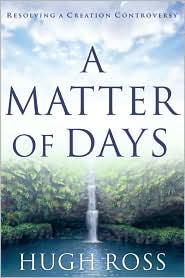 A Matter of Days is a book on the young-earth vs. old-earth creationism debate written by astronomer and Christian apologist, Hugh Ross. Ross is an old-earth creationist, meaning he rejects both Darwinism and theistic evolution. He argues that both the scientific and Biblical data support an ancient universe. Not only does he provide evidence for his view, but he interacts with and critiques the arguments and objections raised by young-earth creationists.
If you are interested in the old-earth vs. young-earth debate, this is a must-read book.
 I’ve read a good number of books since my last “What I’ve Been Reading” post, but have failed to write about them. I hope to write about these books in the coming days or months, but for now I’ll just write about my most recent reading escapades.
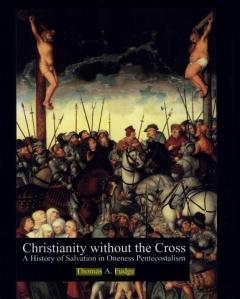
I recently finished reading Christianity without the Cross: A History of Salvation in Oneness Pentecostalism (thank you Michael for purchasing this for me from my Ministry Resource List!). Historian Thomas Fudge has written a well-researched history on the history of the doctrine of salvation in the United Pentecostal Church.[1] Fudge documents the evidence that those involved in the merger of the Pentecostal Church International (PCI) and the Pentecostal Assemblies of Jesus Christ (PAJC) into the United Pentecostal Church (UPC) in 1945 held two different views of salvation. The majority believed that one is born again only after they have repented, been baptized in Jesus’ name, and baptized in the Spirit evidenced by speaking in tongues. A sizable minority (mainly from the PCI), however, believed one was born again at the point of faith/repentance. While they believed in baptism in Jesus’ name and receiving the Spirit evidenced by speaking in tongues, they understood such to be the result of salvation, not the cause of salvation. The two groups agreed to fellowship their soteriological differences, not contending for their own views to the disunity of the new fellowship.
(more…)
 William Lane Craig has written a “fairly” condensed article (30 pages) consisting of five arguments for God’s existence, and examines how the new atheists such as Richard Dawkins have responded to these arguments. This is probably the most lay-accessible, condensed written treatment I have seen from Craig on this topic. Highly recommended.

 Thinking to Believe