2011
Yearly Archive
January 10, 2011
Posted by Jason Dulle under
Social,
Statistics
[8] Comments
 A recent survey in England revealed that 64% of women want a husband who makes more money than them, and 69% would prefer to stay home to be a full-time mother if they were financially able to do so.
I bet the only people surprised by this are social liberals who thought that if you tell a woman long enough that a successful business career will be more meaningful to her than raising a family, she will believe it. Apparently women aren’t buying it. Don’t get me wrong, I’m not saying a woman who wants to work outside the home should not do so. But that is not where most women find their fulfillment in life. God designed men and women differently. Most women find their greatest fulfillment in caring for and raising a family, while most men find their greatest fulfillment in being productive in industry for the benefit of their families. That’s just human nature, and it can’t be socially engineered otherwise.
January 9, 2011
 The reigning philosophy of science is methodological naturalism, which requires that scientists explain all natural phenomena in terms of naturalistic causes. If a scientist thinks the evidence for some biological or natural entity points to an intelligent cause, the possibility is dismissed as unscientific by definition, and the scientist is charged with employing a “God of the gaps” argument in which God is invoked to plug up gaps in our knowledge.
I’ve always found this line of thinking interesting. Can you imagine if this principle was applied to the non-biological world? What caused Stonehenge? “People made it,” you say. Oh no! You have broken the rules of science. This is a physical entity, and thus it must be explained in terms of naturalistic causes. “But,” you say, “it has all the elements of design. The arrangement of parts is both complex and specified.” But this is just the appearance of design, not real design. While we may not know the natural process by which the pyramids were created, scientists are working on that. We cannot give up on science by appealing to some unknown “designers.” To do so is to employ a people of the gaps argument.
(more…)
January 7, 2011
 A couple of months ago we had a guest preacher at our church. He was a seasoned preacher, and overall, his message was edifying. There was one point he made, however, that had me shaking my head. He quoted John 14:2 where Jesus says “in my house are many mansions,” and then went on to explain that in the Greek this literally means “spiritual bodies.”
When we got home my wife asked me what I thought of the message. I told her I liked it, except for his absurd interpretation of John 14:2. She asked if I had looked up the Greek to know that this was the case. I told her no. She asked how I knew it was absurd, then. Here is what I said, and what I want to share with you: If someone says the correct translation of a certain word is radically different than the translation appearing in mainstream translations, then you can bet your bottom dollar the person is mistaken. Think about it, what are the chances that hundreds of individuals who dedicated their entire lives to understanding the Biblical languages are going to miss the boat by a mile, but an individual who has no specialized training in Biblical languages is going to get it right simply by looking up a few words in Strong’s Concordance?
(more…)
January 5, 2011
 Opponents of ID often argue against ID on the basis that it is not science. Of course, the definition of science itself is disputable, and it is often disputed. This is largely a red herring, however, because it shifts the focus away from the merits of ID arguments to the classification of those arguments. As Thomas Nagel has written, “A purely semantic classification of a hypothesis or its denial as belonging or not to science is of limited interest to someone who wants to know whether the hypothesis is true or false.”[1]
While I think ID is a scientific conclusion, I do not wish to debate here whether ID properly qualifies as science, or whether it is better classified as religion/philosophy. The question I want to raise is how scientists would respond if it could be demonstrated that ID is both properly categorized as religion/philosophy and ID is true. Would scientists cease discussing certain subjects in science class? Would they stop discussing the origin of life or origin of species? In my estimation, this is doubtful. I think most would continue to offer naturalistic explanations for these objects because their definition of science requires them to. After all, if by definition alone science must provide naturalistic answers for all natural phenomena, then scientists must continue to offer naturalistic explanations for all phenomena—even phenomena ID would have proven do not have naturalistic explanations.
(more…)
January 4, 2011
Posted by Jason Dulle under
Odds & Ends
[6] Comments
If you like the content provided on this blog, then do me a favor and tell your friends about it in 2011!
January 2, 2011
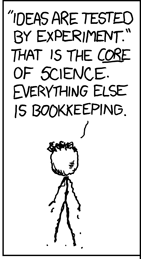 One of the most common objections against Intelligent Design is that if an intelligent agent is causally involved in the natural world, then science is no longer predictable because at any time the agent could intervene and mess with our experiments. For example, Michael Ruse writes, ““[T]he relationship of the natural and the supernatural are unpredictable … [if] the cause of a natural event is the whim of a deity, the event is neither predictable nor fully understandable.”[1]
I think this objection is misguided. First, it is based on a faulty understanding of ID. ID only claims to have discovered evidence of a designer’s activity in the past. It takes no position on the question of whether the designer is still in existence, whether the designer is presently involved in the cosmos, or whether the designer will be involved in the cosmos in the future. Those are philosophical and religious questions.
(more…)
« Previous Page
 A recent survey in England revealed that 64% of women want a husband who makes more money than them, and 69% would prefer to stay home to be a full-time mother if they were financially able to do so.


 Thinking to Believe