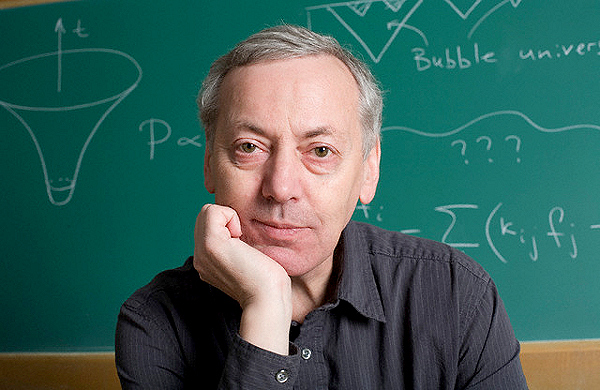
 In honor of Stephen Hawking’s 70th birthday, a meeting of the minds took place to discuss the state of cosmology. New Scientist[1] reported on the events of the night, one of which was a talk delivered by famed cosmologist, Alexander Vilenkin, describing why physical reality must have a beginning. But first, a little background is in order.
For a long time scientists held that the universe was eternal and unchanging. This allowed them to avoid the God question—who or what caused the universe—because they reasoned that a beginningless universe needed no cause.[2] They recognized that if the universe began to exist in the finite past that it begged for a cause that was outside of the time-space-continuum. As Stephen Hawking told his well-wishers in a pre-recorded message, “A point of creation would be a place where science broke down. One would have to appeal to religion and the hand of God.”
Scientific discoveries in the early and mid-20th century, however, forced cosmologists to the uncomfortable conclusion that our universe came into being in the finite past. The scientific consensus was that the origin of our universe constituted the origin of physical reality itself. Before the Big Bang, literally nothing existed. The universe came into being from nothing and nowhere. This sounded too much like the creation ex nihilo of Genesis, however, and seemed to require the God of Genesis to make it happen. As a result, some cosmologists were feverishly looking for ways to restore an eternal universe.

 Thinking to Believe