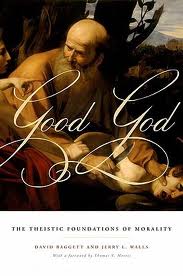
 David Baggett and jerry Walls have written an excellent book exploring God’s relationship to morality. The book aims to provide a moral argument for the existence of God, and to answer criticisms to theistic ethics. After showing how various non-theistic foundations for ethics fail, the authors take a close look at the most common objection to theistic ethics: the Euthyphro argument. They critique both horns of the dilemma: pure voluntarism (X is good because God commands it) and non-voluntarism (X is good wholly independent of God and His will). If goodness is determined by God’s commands, then morality seems arbitrary. Indeed, if God willed that rape is good rape would be good (abhorrent commands objection). There is also the epistemic problem. How would we know what God has commanded, or if God has changed His mind? The problem with non-voluntarism is that it makes God irrelevant to morality. Goodness stands outside of God. Indeed, God is subject to the good in the same way we are. At best His role is to communicate to us what is good. He is like the divine meteorologist who reports the weather rather can creating it. If goodness is independent of God, then God’s aseity (self-existence) is called into question. He cannot be the metaphysical ultimate.
Monday, July 30th, 2012
Daily Archive
July 30, 2012
What I’ve Been Reading – Good God: The Theistic Foundations of Morality
Posted by Jason Dulle under Apologetics, Moral Argument, Nature of God, Theistic Arguments, Theology[13] Comments

 Thinking to Believe