 Many think a hypocrite is someone who fails his own moral standard. This cannot be the right definition because it would make everyone a hypocrite. We all have a moral standard we think we should live up to and fail that moral standard in one way or another.
To be a hypocrite is to be an actor. It’s a pretender. A hypocrite is one who professes to believe in a moral standard that they don’t actually believe in, or someone who has no intention of trying to live up to the moral standard they really do believe in.
Someone who sincerely believes X is wrong, and sincerely attempts to live by X but, nevertheless, fails to always do so is not a hypocrite. For example, a person might profess that it is wrong to lie, and thus does his best to avoid lying; nevertheless, in a time of trouble, he tells a lie to get out of trouble. After doing so, he repents to God and goes on trying to live a life of honesty. This man is guilty of a moral failure, but not of moral hypocrisy. The moral hypocrite is the one who says he believes in truth-telling but really doesn’t, or believes in truth-telling but consistently lies nonetheless.
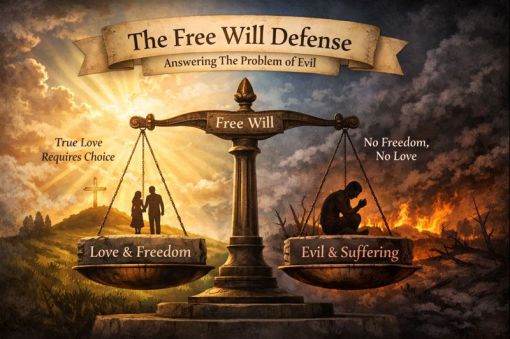 My series on the problem of evil will be wrapping up soon. The last two episodes (186-187) have focused on a potential flaw in the Free Will Defense (FWD), which is arguably one of the best answers to the problem of evil.
The FWD assumes that it is logically impossible to create free creatures who are incapable of freely choosing evil and hate. However, God is free and God can love, but cannot choose evil. So not only is it logically possible to be both free unable to sin, but it’s a metaphysical reality as well. It would seem, then, that God could have created us both free and unable to sin. If so, the FWD fails.
I examined the objection in great detail, and ultimately conclude that the objection fails and the FWD succeeds. If you want to know why, listen to the two episodes wherever you get podcasts or at https://thinkingtobelieve.buzzsprout.com. Or, you can read the paper I wrote on the topic below.
If none of that interests you, perhaps you will be interested by my discussion of why Christians will not sin in heaven – also covered in the podcast and paper. What does that have to do with the FWD? Listen to episode 187 or read the paper to find out.
A Potential Flaw in the Free Will Defense

 Thinking to Believe