Bioethics


Wesley Smith pointed my attention to a wonderful article by Joe Carter detailing how in a period of just 40 years, the Dutch went from allowing voluntary euthanasia for the terminally ill, to allowing it for the chronically ill, to allowing non-voluntary euthanasia for the disabled, to allowing for voluntary euthanasia for the depressed, to allowing for non-voluntary euthanasia of severely handicapped newborns, to debating whether or not healthy elderly people should be able to choose suicide simply because they are sick of living (“suffering through living”).  

This is what happens when you abandon the idea of innate human value, and swallow the pill that says there is such a thing as a life unworthy of life.  Sadly, America has begun its journey down this same road.  Euthanasia begins to be accepted out of sympathy for those suffering with severe pain who are near death, but the logic of euthanasia always expands the circle of those who can be killed so that eventually, it includes many people and situations that no one in the beginning ever wanted to include.

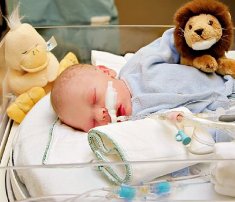
Wesley Smith alerted me to an article in the Winnipeg Free Press (Canada) by Dr. Joel B. Zivot, an associate professor in the department of anesthesiology at the University of Manitoba in Canada.  Dr. Zivot writes about “Baby Isaiah,” a child born with brain damage due to the lack of oxygen during a long birthing process.  Unable to breathe regularly on his own, the baby is hooked up to a ventilator.  A legal battle has ensued when the parents were told last month by Alberta Health Services that all treatment would be withdrawn for baby Isaiah, and that such an action was “medically reasonable, ethically responsible and appropriate.”  Dr. Zivot’s words get to the heart of the debate over human value, showing just why we need to avoid making subjective “quality of life” assessments to determine who should live and who should die:

As a physician, I specialize in the management of the weak and disabled. My task is clear: restore an individual’s health if I am able, and protect my patient’s rights as a human being. … Although the issue before the court is the degree of brain injury incurred by Isaiah, I realize that it is Isaiah’s status as a human being that is on trial. In contemporary thought, once born, humanity is considered automatic and should not be revoked by disability. The yardstick of being a human being is set too high for Isaiah. Discussion on the prediction of degree of disability, including mental capacity, is not relevant as are counter-arguments based on the physical appearance of normalcy. All that really matters, to be blunt, is if Isaiah is dead or alive. … If Isaiah is alive, which includes everything but brain dead, he is entitled to the full rights and privileges of any living Canadian citizen.

(more…)

Back in Marcy 2009 I reported on the fact that teen pregnancy rates were on the rise again.  The Alan Guttmacher Institute (AGI) just released a report providing some details on this.  According to the AGI:

The teen pregnancy rate declined 41% between its peak, in 1990 (116.9 pregnancies per 1,000 women aged 15–19), and 2005 (69.5 per 1,000). Teen birth and abortion rates also declined, with births dropping 35% between 1991 and 2005 and teen abortion declining 56% between its peak, in 1988, and 2005. But all three trends reversed in 2006. In that year, there were 71.5 pregnancies per 1,000 women aged 15–19. Put another way, about 7% of teen girls became pregnant in 2006.

Among black teens, the pregnancy rate declined by 45% (from 223.8 per 1,000 in 1990 to 122.7 in 2005), before increasing to 126.3 in 2006. Among Hispanic teens, the pregnancy rate decreased by 26% (from 169.7 per 1,000 in 1992 to 124.9 in 2005), before rising to 126.6 in 2006. Among non-Hispanic white teens, the pregnancy rate declined 50% (from 86.6 per 1,000 in 1990 to 43.3 per 1,000 in 2005), before increasing to 44.0 in 2006.

They also report that teen abortion rates rose 1% in 2006 as well.

Exodus 21:22 has been used by many pro-abortion advocates, Christian and non-Christian alike, to prove that the Bible is not opposed to abortion.  The passage reads, “If men strive, and hurt a woman with child, so that her fruit depart from her, and yet no mischief follow: he shall be surely punished, according as the woman’s husband will lay upon him; and he shall pay as the judges determine.” (KJV)

Greg Koukl has written a wonderful article demonstrating not only that this verse does not support such a conclusion, but that the pro-choice interpretation is based on a mistranslation of the Hebrew as found in some English translations (such as the one above). 

A free registration at www.str.org may be required to view the article.

Investors Business Daily has an article on California’s Proposition 71 that passed five years ago, which secured $3,000,000,000 dollars for embryonic stem cell research.  They note how the California Institute for Regenerative Medicine, which was created by the proposition and oversees the distribution of the research money, has shifted its focus to adult stem cell research.  Why?  Because ESCR is not panning out to be the promising research the supporters of prop 71 promised it would be.  While this is good, they note how it appears to be a bait-and-switch: 

To us, this is a classic bait-and-switch, an attempt to snatch success from the jaws of failure and take credit for discoveries and advances achieved by research Prop. 71 supporters once cavalierly dismissed. We have noted how over the years that when funding was needed, the phrase ‘embryonic stem cells’ was used. When actual progress was discussed, the word ‘embryonic’ was dropped because ESCR never got out of the lab.

They conclude by noting that “it is ESCR researchers who have politicized science and stood in the way of real progress. We are pleased to see California researchers beginning to put science in its rightful place.”

HT: Wesley Smith

I have a question I would like to ask those who claim that they are personally opposed to abortion, but do not think it should be made illegal: “Let us suppose that the Supreme Court had not declared abortion to be a constitutional right, and let us suppose that a proposition was put on your state’s election ballot to legalize abortion in your state, and you have the opportunity to vote on it.  Would you vote in favor, or in opposition to it?”

The answer to this question is more telling than the simple affirmation that one thinks abortion should be legal even though they are personally opposed to it, because this question helps reveal why someone holds the position they do.  If someone says they would vote in opposition to such a proposition, it reveals that their real concern is not so much that they believe a woman should have the right to abort her unborn child, but rather that they should be able to keep the right once it has been granted to them.  Many people are uncomfortable taking away rights that have already been granted, but would vote against granting such rights in the first place.  If someone says they would vote in favor of such a law, it reveals that they either have a very idealistic view of liberty (that people’s liberty should be nearly autonomous, even when their liberty involves taking the life of an innocent and defenseless human being), they are relativistic when it comes to moral judgments, or they aren’t truly persuaded of the pro-life position and pro-life logic.

1811836304_5ef99f0f89

CIRM is the CA agency that oversees the distribution of 3 billion dollars for stem cell research in CA.  The agency was created by constitutional amendment via a ballot initiative in the 2004 election.  From its inception, it has directed most of its energies and funds to promoting embryonic stem cell research (ESCR).  It seems, however, that they have finally caught on to the fact that ESCR is not the most promising area of stem cell research.  Of the $230 million in grants awarded to 14 institutions yesterday, 10 of them were for adult stem cell research (ASCR).  Good.

HT: Wesley Smith

Lisa Harris, a feminist abortion doctor has written a journal article dealing with the emotional impact on abortion doctors from performing 2nd trimester abortions.  It is one of the most engaging, honest, moving, confusing, and appalling articles I have ever read.  I am amazed that a woman who can be so honest about the violence of 2nd trimester abortions, and the effect it has on those involved, can still support the procedure.  Here are some key excerpts:

When I was a little over 18 weeks pregnant with my now pre-school child, I did a second trimester abortion for a patient who was also a little over 18 weeks pregnant. As I reviewed her chart I realised that I was more interested than usual in seeing the fetal parts when I was done, since they would so closely resemble those of my own fetus. I went about doing the procedure as usual, removed the laminaria I had placed earlier and confirmed I had adequate dilation. I used electrical suction to remove the amniotic fluid, picked up my forceps and began to remove the fetus in parts, as I always did. I felt lucky that this one was already in the breech position – it would make grasping small parts (legs and arms) a little easier. With my first pass of the forceps, I grasped an extremity and began to pull it down. I could see a small foot hanging from the teeth of my forceps. With a quick tug, I separated the leg. Precisely at that moment, I felt a kick – a fluttery “thump, thump” in my own uterus. It was one of the first times I felt fetal movement. There was a leg and foot in my forceps, and a “thump, thump” in my abdomen. Instantly, tears were streaming from my eyes – without me – meaning my conscious brain – even being aware of what was going on. I felt as if my response had come entirely from my body, bypassing my usual cognitive processing completely. A message seemed to travel from my hand and my uterus to my tear ducts. It was an overwhelming feeling – a brutally visceral response – heartfelt and unmediated by my training or my feminist pro-choice politics. It was one of the more raw moments in my life. Doing second trimester abortions did not get easier after my pregnancy; in fact, dealing with little infant parts of my born baby only made dealing with dismembered fetal parts sadder.
(more…)

Fox News picked up a story from The Washington Times reporting on recent drops in support of abortion rights:

Popular support for abortion rights has dropped seven points in the past year due in part to the election of a pro-choice Democratic president, the Pew Forum on Religion and Public Life said Thursday.

(more…)

double-standardElizabeth at the Life Training Institute blog writes of the double standard in the media regarding abortion.  When later-term abortion doctor George Tiller was murdered by a pro-life man a few months ago, it was a media frenzy.  Everybody was talking about it, and speculating that this may be an intimation of where the pro-life movement is heading. 

Last Friday, when a 63 year old pro-life activist, Jim Pouillon, was killed by a pro-choicer in Michigan because he didn’t like the man’s pro-life sign (which had a baby on it with the words “life”), crickets could be heard chirping in the major media.  No one was suggesting that this is an intimation of the future of the pro-choice movement. 

I don’t doubt for a moment that the major media published the daylights out of the George Tiller murder because they knew it would tarnish the pro-life cause, but are mum on the pro-lifer’s murder because that would tarnish their own cause.  I guess news is whatever they say it is!  

oocyteDoes anyone remember the promises from the legislators, scientists, and bioethicists that they would not pay women for their eggs for use in cloning research?  As with most bioethical promises, they are handed out like candy in order to obtain the desired political result, only to be taken back once that result has been realized.  Apparently, New York has decided it will pay as much as $10,000 for women to donate their eggs for cloning research.  What’s the problem with that, you say?  The problem is that the hyper-ovulation drugs used for the procedure can have adverse effects including sterilization, and even death.

empty-pulpitIt’s common in Christian circles to limit our preaching and teaching to Christ’s ability to take care of our sin problem and fix our broken lives.  That is the Gospel message, but that’s not all Christianity has to say about the world in which we live.  Christianity is total truth.  It’s not just truth about salvation, it’s also truth about science, morality, and insofar as morality should affect society, politics as well.  The Christian worldview affects every area of life, both private and public.

Unfortunately the church has typically limited its preaching and teaching to issues surrounding the private life.  We have ignored socio-moral issues such as abortion, embryonic stem cell research, same-sex marriage, cloning, etc.  If they are addressed at all, it will be with a passing condemnation that lacks both intellectual substance and explanation.  I think our lack of dialogue on these issues explains why our socio-political influence is disproportionate to our numbers.

(more…)

saletanWilliam Saletan of Slate once proposed some new rhetoric for abortion-choice politicians to use when they are debating pro-lifers.  His proposal was as follows: “My opponent and I both want to avoid as many abortions as possible. The difference is, I trust women to work with me toward that objective, and he doesn’t.” 

Pretty good!  It makes the abortion-choice candidate look sympathetic to the pro-life and abortion-choice positions, all the while making the pro-life candidate look like someone who doesn’t trust women to make their own choices.  But there are some serious logical problems with this approach. 

First, if you truly want to avoid as many abortions as possible then the ultimate goal should be to eliminate all abortions.  Why?  Because abortion is unnecessary, making it possible to eliminate the procedure altogether.  One might argue that some abortions are necessary, particularly when the mother’s life is at stake.  I can accept that qualification, but since that situation accounts for less than a fraction of 1% of all abortions we’re still talking about the real possibility of eliminating more than 99.9% of all abortions.  Does the abortion-choice candidate truly want to eliminate 99.9% of all abortions?  I highly doubt it.  I would advise a pro-life candidate to call his opponent on this.  Make him say he wishes to eliminate all elective abortions.  I’ll guarantee he won’t do it. 

Secondly, if you want to avoid as many abortions as possible, and you know there are women out there who are opposed to your desire, why would you trust them to work toward your objective?  If you desired to save more Jews during the Holocaust, would you say the difference between you and the Allies is that you trusted the Nazis to work with you toward that objective while they did not?  Of course not!  How about murder?  Would anyone say the difference between them and their opponent is that they trust murderers to work with them to eliminate murder while their opponent does not?  Of course not!  Then how can we trust women who want to murder their babies to work with us to avoid abortion?  We can’t.  We must legislate morality on them just as we do in every other area of the law.

steve wagner“Why do the people of the church continue to affirm things like, ‘I’m against abortion, but I think it should be legal’ and ‘I think everyone should decide for themselves’? Because no teaching on abortion is teaching on abortion: it communicates the implicit message that abortion is not the sort of serious wrong about which we can have knowledge. In other words, we learn from a pastor’s silence that abortion is not a sin. When a practice as pervasive as abortion is not treated as a serious matter of faith and practice from the platform of a church, church members never reconsider the pro-choice beliefs they’ve assimilated from their culture. In short, when the leadership of the church acts pro-choice by not speaking on abortion, the church follows suit and adopts the pro-choice view, both in word and deed.” – Steve Wagner

You may have heard that Oklahoma recently banned sex-selection abortions.  Interestingly, they are only the third state to do so (Illinois and Pennsylvania are the other two).  Considering the fact that the only major news source to pick up the story was the Washington Times, however, you probably have not heard that The National Board of Health and Welfare of Sweden has ruled that sex-selection abortions are legal in that country (since there is no law forbidding them).  Apparently, quite a few “tourists” come to Sweden to abort their children because they do not like their gender.

The vast majority of Americans – even pro-choice Americans – disapprove of sex-selection abortions.  Polls show that about 85% of Americans believe aborting a child because of its gender is a morally insufficient reason (and many countries ban the practice).  But why?  After all, if abortion is not a moral evil, what does it matter why a woman chooses to abort her baby?

(more…)

Abortion--My body my choiceAbortion-choice advocates often argue that they have a right to an abortion because it is their body, and thus their choice.  Their mantra is “I can do what I want with my own body.”  This is what is properly called the bodily-autonomy argument.  The argument is flawed because it rests on the faulty assumption that the unborn “thing” in the womb is the woman’s body.  It is not.  It is separate living being, and we know so because it has its own unique genetic fingerprint.

While that fact alone should put all debate to rest, some may persist in their claim.  A good way to help them see that the thing growing in them is not their body is by asking them: “If I can show you that the unborn is not your body it would undermine your argument, right?” [Yes] Then ask, “Do you have a penis?” [No] “Could your unborn fetus have a penis?” [Yes] “Then the unborn is not your body, is it?” [Uh…no]

If you encounter someone with a very strong will, they might counter that the unborn “thing” is living inside the mother’s body against her will, and since she has control over her own body she gets to decide if she will share it with this “foreign invader.”  But the fact that it is living inside the woman’s body is irrelevant.  As D. Rutherford remarked, it no more gives her the right to kill the unborn than my owning a house gives me the right to kill the tenants!  The bodily-autonomy argument won’t work as a justification for abortion, so long as the unborn are full members of the human species.

TillerIf you haven’t heard by now, the famous late-term abortionist from Wichita, Kansas, George Tiller, was murdered on Sunday while attending a religious service at his local Lutheran church.  It is very likely that he was murdered because of his profession.  Indeed, this was no accidental murder.  He was sought out specifically.  Given how infamous he is for killing late-term babies, it is almost certain that his killer was motivated by his own pro-life ideology.  Given the fact that I am pro-life, and regularly discuss abortion on this blog, I feel it necessary to weigh in on this issue.
First, let me say that I condemn the murder of Mr. Tiller by his assailant.  While I think Mr. Tiller was deserving of death for the thousands upon thousands of babies he murdered over the years, his death should have been administered at the hands of the proper, governing authorities—not a citizen vigilante.  Of course, at this time in our history, what Mr. Tiller did is considered legal, and thus the governing authorities do not consider what he did to be murder, and thus would not execute him for any crime.  While this is a travesty of justice, it is no justification for citizens to take the law into their own hands, setting themselves up as judge and executioner.  We need to work within our unjust legal system to outlaw abortion just as the abolitionists worked within an unjust legal system to ultimately outlaw slavery.  We are not to take the law—or the lack thereof—into our own hands.

(more…)

Frank Beckwith wrote a concise argument against abortion, and for the intrinsic value of all human beings regardless of size, location, level of development, or degree of dependency that I wanted to share with you:

The unborn—from zygote to blastocyst to embryo to fetus—is the same being, the same substance, that develops into an adult.  The actualization of a human being’s potential, e.g. her “human” appearance and the exercise of her rational and moral powers as an adult (which abortion-choice advocates argue determine the unborn’s intrinsic value), is merely the public presentation of functions latent in every human substance from the moment it is brought into being.  A human may lose and regain those functions throughout her life, but the substance remains the same being.

Moreover, if one’s value is conditioned on certain accidental properties then the human equality presupposed by our legal institutions and our form of government…is a fiction.  In that case, there is no principled basis for rejecting the notion that human rights ought to be distributed to individuals on the basis of native intellectual abilities or other value-giving properties, such as rationality and self-awareness.  One can only reject this notion by affirming that human beings are intrinsically valuable because they possess a particular nature from the moment they come into existence.  That is to say, what a human being is, and not what she does, makes her a subject of rights.[1]


[1]Francis Beckwith, “Gimme That Ol’ Time Separation: A Review Essay, Philip Hamburger Separation of Church and StateChapman Law Review, vol. 8:309, p. 324.

prolife6A recent Gallup poll found that the majority of Americans now consider themselves pro-life (51%) rather than pro-choice (42%).  This is a near reversal of public opinion just one year ago, in which 50% of Americans self-identified as pro-choice and 44% as pro-life.  This is the first time since 1995 (when Gallup first began asking this question) that pro-life has been the majority view.  It is also the first time that the majority of women identify as pro-life (49% vs. 44%).  Currently, 54% of men consider themselves pro-life, versus 39% pro-choice.

A full 60% of Americans adults believe abortion should be illegal in all, or most circumstances.  The percentage of people who believe abortion should be illegal in all circumstances has increased from 17% in 2008, to 23% in 2009.

When viewed by political affiliation, the shift toward the pro-life viewpoint has occurred almost entirely among Republicans.  A full 10% more Republicans consider themselves pro-life today, than they did last year.  Among Democrats, however, there has been virtually no change.  I hope the Republican Party takes notice of this poll, since it has been slowly moving away from its pro-life platform.  They are moving in a direction that is opposite of the movement of their base.  Republicans are in enough trouble as it is.  They cannot leave behind their pro-life platform and expect to win future elections.

Sweden’s National Board of Health and Welfare ruled that it legal to abort a baby based solely on its gender.  Let’s see if pro-abortion feminists will stand up in opposition to this practice or not.  Probably not.  And why should they?  After all, if abortion is about choice, it should not matter why one makes the choice they do.  All that matters is that the choice is theirs, and they are free to make it, even if that choice is to kill a baby girl, simply because it is a girl.

« Previous PageNext Page »