 The Senate just passed a bill to make same-sex marriage the law of the land, codify the Supreme Court’s 2015 Obergefell decision into law. While it protects religious organizations from having to use their facilities for sa2me-sex weddings, it does not offer business owners any protections from being forced to render their services for same-sex weddings (e.g. florists, photographers, cake makers).
On a practical level, this law doesn’t change much. Same-sex marriage has already been the law of the land since 2015 due to the Supreme Court’s decision. What is particularly troubling to me is the fact that 12 Republicans voted in favor of this bill: Susan Collins (Maine), Lisa Murkowski (Alaska), Rob Portman (Ohio), Thom Tillis (N.C.), Mitt Romney (Utah), Roy Blunt (Missouri), Cynthia Lummis (Wyoming), Richard Burr (N.C.), Shelley Moore Capito (West Virginia.), Dan Sullivan (Alaska), Joni Ernst (Iowa) and Todd Young (Indiana). They wouldn’t even vote in favor of Mike Lee’s proposed amendment that would provide conscience protections for Americans and non-religious organizations and businesses. That signals to me that the party is moving away from conservatism toward libertarianism.
(more…)
 I’ve started a new podcast series on the topic, Does God Exist? The first couple of episodes will cover agnosticism and atheism, and then I’ll do an in-depth analysis of 5 or 6 of the most powerful arguments for the existence of God. You won’t want to miss it!
 People often say “You only believe in God because it makes you feel better.” They think theism is just wish fulfillment. The idea of God fulfills some deep longing in our heart, so we choose to believe there is a God.
 I said long ago that the normalization of pedophilia was on the horizon. That horizon has arrived. Various academics have written papers in recent years trying to normalize pedophilia. The latest at normalization comes from the United Nations.
 When we respond to the transgender issue by pointing out that biology makes it clear that there are only two sexes, we are attacking a straw man.
 If there was ever a time when nothing existed then there would be nothing still, because nothing has no potential to become something. Out of nothing, nothing comes. And yet there is something, so we know there has never been a time when nothing existed. Something has always existed. What is that something?
 Scientists could never discover that free will does not exist via scientific experimentation, because in a deterministic world, the result of the experiment would, itself, be determined. The conclusion that there is no such thing as free will would not be arrived at because the scientists chose to set up the experiment in a good way and reasoned correctly about the data they received. Instead, physics would determine both the study’s structure and conclusions. As such, the conclusion cannot be trusted.
 I told you about my relativism series in the last post. It is divided up into three sub-series: epistemological relativism (there is no truth at all), moral relativism (there is no moral truth), and religious relativism (there is no religious truth. I finished up the sub-series on epistemological relativism in December, and I’ve posted the first two episodes in the moral relativism sub-series in the last week.
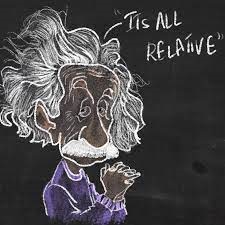 I’ve begun a new podcast series on relativism. I started with the broadest form of relativism – epistemological relativism – which is the idea that no truth can be known. I’ll extend this to more specific forms of relativism: moral relativism and religious relativism (pluralism). In this context, I’ll be dealing with the notions of tolerance and judgmentalism as well. Listen wherever you get your podcasts or at
  Naturalism cannot support the idea that human beings have real, intrinsic value. This is a feature of the Judeo-Christian theology of the imago Dei – that we are made in the image of God. Absent this theological foundation, there is no reason to think human value is real. At best, humans only have a subjective, extrinsic value; i.e. our value is derived from our own estimation of ourselves. Human beings value particular traits that they possess, and thus value the human beings who possess such traits (a circular, biased, and wholly subjective estimation). This sort of value, however, is fictitious. It only exists in our minds, and it only extends to those that we think it extends to. This value is never equal, and it rarely applies to all human beings. Some human beings will be considered to be more valuable than others, and some will be deemed to have no value at all.
 Many Eastern religions make this claim about God. And now, it is being picked up as a popular idea among Westerners. Unfortunately, it is incoherent.
 There is a lot of confusion about what is meant by “moral relativism” and “moral objectivism/realism”
 Thomas would not believe the report of the other disciples who said they had seen Jesus alive. He only believed in Jesus’ resurrection after Jesus appeared to Him as well. Jesus’ words to Thomas on that day have been immortalized in the Gospel of John: “Because you have seen me, you have believed: blessed are those who have not seen, and yet have believed” (John 20:29).
 Back when our country was still debating whether or not we should change the definition of marriage to include same-sex couples, those opposed to the redefinition argued that if we did so, polygamy and polyamory would be next. Opponents argued that this was a crazy slippery slope fallacy. But it wasn’t. It was a valid slippery slope argument. Conservatives were simply noting that the rationale for redefining marriage to include same-sex couples applied equally to all sorts of other relationships, including polygamy and polyamory. If you include same-sex couples, there is no rational basis on which to exclude polygamy. The idea that marriage should be limited to just two people is based on the sex binary. Once the sex binary is replaced with a simple requirement of “love and commitment,” polygamous and polyamorous relationships qualify for marriage as well.
 Thinking to Believe