Apologetics


One of the objections against studying and using apologetics I often hear from fellow Christians is, “It doesn’t work.”  Why do they think this?  Because they learned a few evidences for the Christian faith, tried them out on unbelievers, and discovered that it didn’t make everyone immediately fall down on their face in repentance.  So, they concluded apologetics do not work.  If by “work” they mean successful 100% of the time in causing conversion, I would agree.  But surely this can’t be the standard by which we judge success.  If it is, then we would also have to deem the simple Gospel presentation a failure as well since the majority of people who hear it do not convert to Christianity.  Even Jesus failed to persuade the vast majority of all those He encountered.

The problem is not with the message/method/evidence, but with the heart of man.  According to Paul, unbelievers suppress the knowledge of God so they can continue in their moral rebellion (Romans 1).  Unbelief is primarily moral and volitional in nature, and only secondarily intellectual.  It should be no surprise, then, that intellectual arguments fail to persuade some people: they do not want to be persuaded.  As Winston Churchill once said, “Men stumble over the truth from time to time, but most pick themselves up and hurry off as if nothing happened.”  And yet, rational arguments for the Christian faith can be instrumental in leading the open-hearted to faith in Christ.  Indeed, many former atheists can testify to the fact that apologetics “worked” to bring them to a belief in Jesus Christ.  Apologetics is no magic bullet, but it is a valuable tool in our evangelistic tool box.
Alternative Responses (cont)

 Colin McGinn, philosopher at the University of Miami

As mentioned in my second post, Colin McGinn (echoing Immanuel Kant) makes a distinction between asking why some particular existent within the whole of existence exists, and why the whole of existence itself exists.  The former question can be answered by appealing to some other preexistent existent within the whole of existence, but the latter question appeals to some existent outside the whole of existence to explain the whole of existence.  It is impossible, however, for something to exist outside the set of the whole of existence.  By definition there cannot be additional entities outside the set of “every existing thing.” 

 McGinn thinks this problem can be remedied by reformulating the question as “Is it true of every concrete thing that it exists contingently, or necessarily?”  He affirms that every concrete entity exists contingently.  So far so good, but why do concrete entities exist, then?  Here is where McGinn fumbles.  He affirms that the whole of concrete, contingent existence just exists inexplicably!  Surely this is absurd.  Contingent beings, by definition, derive their being from something outside themselves, and thus there must be an explanation for why they exist.  It is metaphysically absurd to speak of an uncaused contingent being.  Inexplicability is appropriate for a necessary being, but not contingent beings (and all concrete entities are contingent beings).

(more…)

Alternative Responses

Now that I have put my own view on display (See parts 1 and 2 of this mini-series), let us take a look at how a few philosophers have answered this puzzling philosophical question. We will explore the views of Quentin Smith, John Leslie, Colin McGinn, Hubert Dreyfus, and Bede Rundle.

Quentin Smith, philosopher at Western Michigan University

According to Quentin Smith, the answer to why there is something rather than nothing is so simple that it seems rather trite: The reason Y exists at time t4 rather than nothing is because X existed at time t3, and caused Y to exist.  Likewise, X exists at time t2 rather than nothing because W existed at time t1, and caused X to exist, and so on.  In other words, the present something exists because a previous something caused it to exist.  Why did that previous something exist rather than nothing?  The reason is that it, too, was caused by something that existed before it, and so on.  The answer to the question of why there is something rather than nothing, then, is simply that something is always preceded by something else.

The problem with Smith’s answer is two-fold.  First, he shifts the locus of the question from why anything has ever existed to why something exists right now.  The question, however, seeks a reason for the whole of reality, not just each temporal state of reality. 

(more…)

Why is there Something, Rather than Nothing?

“Why is there something rather than nothing?”  This is considered by many to be the most fundamental of all philosophical questions. The question, however, presumes that “nothing” and “something” are two equally possible states – that nothingness is a genuine alternative to something.  If what I have argued thus far is sound, nothingness is metaphysically impossible, and thus it is not a logical alternative to something.  Something must exist.  But what if my reasoning is flawed, and it turns out that non-existence is logically possible?  How would we answer this long-standing philosophical question, then? 

To answer the question we first need to be clear about what is being asked.  For example, what is meant by “why?”  Are we seeking to discover the cause of existence, or the purpose for existence?  If we are seeking a purpose for existence, then we are already presupposing the existence of some supreme mind, because only personal agents create things for particular reasons and with some purpose in mind.  Without access to that mind, it is difficult to discover what purposes it had for creating.  It is much simpler to identify the cause of existence: the what rather than the why. 

(more…)

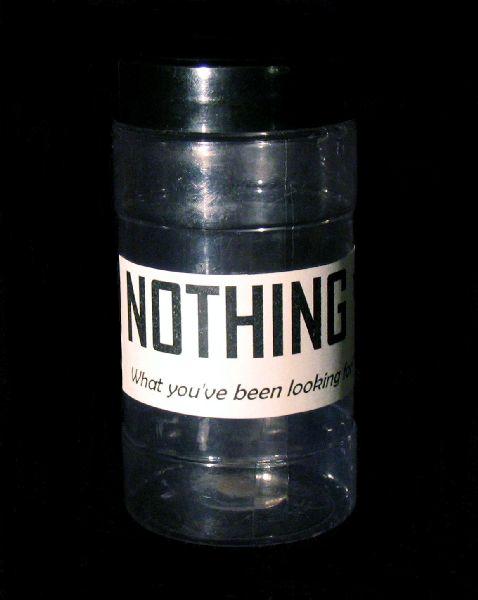
Women often wonder what men are thinking about.  Jerry Seinfeld once joked that the answer is, “Nothing.”  For the past several weeks, I too, have been thinking about nothing – not nothing as in “not anything,” but nothing as in the concept of nothingness.  What is nothing?  Is it possible that there could have been nothing rather than something?  If so, why is there something rather than nothing?

What is Nothing?

Nothing is a very difficult concept to wrap one’s mind around.  As A.J. Ayer pointed out, we are often fooled by the grammar of nothingness into think that since “nothing” is a noun, it must refer to something.

But “nothing” is a term of universal negation, not a term of reference.  It’s similar to words like “no one ” and “nowhere.”  “Nowhere” does not refer to a place, but to the absence of any place (not anywhere).  Likewise, “nothing” does not refer to something, but to the absence of anything (not anything).  If someone asked you what you had for lunch today, and you say “nothing,” you don’t mean you had lunch, and what you ate was called nothing, but rather that you did not have anything for lunch.  If they ask you what nothing tasted like, tell them, “Chicken, of course.”

The minute we begin to think about nothing, we mentally transform nothing into a something; an object to be contemplated.  It is even impossible to imagine nothingness, because every image we conjure up is an image of something.  We often imagine nothing as an infinite expanse of black, empty space (a vacuum) – but empty space is something, not nothing.  Nothing is “not-even-space.”  Nothing is not a little bit of something, or “something-lite,” but literally no-thing; the absence of being.  Perhaps Macbeth said it best when he said, “Nothing is but what is not.”  It is the absence of any and every existent, including the very concept of existence.  Could this kind of nothing “exist”?

(more…)

What is the universe?  Is the universe just a nominal device to refer to the sum of all physical things, similar to the way “team” does not refer to an actual thing but merely to the sum of all players, or does “universe” refer to something above and beyond the sum of all physical things?

In 2003 the Episcopal Church consecrated the first openly gay bishop, Gene Robinson.  Now, they’ve consecrated an openly lesbian, Mary Glasspool, as an assistant bishop for the Los Angeles diocese.

BTW, I know I’ve been pretty inactive lately.  I’ve been busy studying out a topic I plan to blog on soon.

Some scary news on the cultural front.  A Baptist preacher was arrested in the UK for telling a woman homosexuality was a sin.  He is charged with abusive and insulting language.  It won’t be long before this will be commonplace, me thinks.  Scary!

The chimp Y chromosome has now been fully sequenced, and the results are astounding.  A study in Nature reveals that the chimp Y chromosome is radically different than the human Y chromosome.[1]  The chimp’s Y chromosome has only two-thirds the number of distinct genes/gene families, and 47% of the protein coding regions compared to its human counterpart.  Furthermore, more than 30% of the entire chimp Y chromosome has no counterpart in humans.  Even those segments that do have counterparts in the human Y chromosome are often located in different regions of the chromosome. 

One the lead researchers, David Page, told Nature News that “it looks like there’s been a dramatic renovation or reinvention of the Y chromosome in the chimpanzee and human lineages.”[2]  Of course, this reinvention has to be explained in terms of common descent, so they speculate that the chimp Y chromosome experienced a loss of DNA, while humans experienced a gain.  The surprise of the scientists involved, however, demonstrates that this find is counter-intuitive to Darwinian expectations.

HT: Evolution News & Views


[1]Jennifer F. Hughes, David Page, et al, “Chimpanzee and human Y chromosomes are remarkably divergent in structure and gene content”; Nature 463, 536-539 (28 January 2010) | doi:10.1038/nature08700; Received 3 August 2009; Accepted 24 November 2009; Published online 13 January 2010; available from http://www.nature.com/nature/journal/v463/n7280/full/nature08700.html; Internet; accessed 30 April 2010.
[2]Lizzie Buchen, “The Fickle Y Chromosome”; available from http://www.nature.com/news/2010/100113/full/463149a.html; Internet; accessed 30 April 2010/

Hawaii’s Senate approved a bill providing civil unions to same-sex and opposite-sex couples in January 2010.  Yesterday, their House of Representatives approved it as well.  It remains to be seen whether the governor will veto it.

Franklin Graham was invited to the Pentagon to offer a prayer on May 6 for the National Day of Prayer.  The Military Religious Freedom Foundation (of all entities) is objecting to Graham’s invitation because he has called Islam an “evil” religion, and they say his presence will offend Muslim soldiers.  So now the Army is considering rescinding the invitation.  Maybe I failed to get the memo, but the last I checked part of religious freedom is the freedom to think one’s own religion is true, and all others are false (and perhaps even evil).  

This is what religious pluralism gets you: censorship of anyone who thinks their faith is actually true, and is willing to spell out the logical corollary to this belief, namely, that other religions must be false.  That religious view will not be tolerated by the preachers of religious tolerance.

(Note: Read Part 3a of the series before reading this post)

Viruses

The HIV virus mutates at the evolutionary speed limit: 10,000 times faster than most cells such as malaria.[1] And its genome is rather small (nine genes versus thousands in malaria).[2] Its small size combined with a short generation time (1-2 days) and super-rapid mutation rate means every single nucleotide in the HIV genome will mutate 10,000 to 100,000 times in every infected person every day, and thus double point mutations like the one that made malaria immune to Chloroquine occur in every person every day.  In fact, over the past several decades every possible combination of up to six point mutations has occurred in HIV somewhere in the world.  If RM drives macroevolutionary changes in organisms, then we should observe macroevolution in the HIV virus since it experiences more mutations than any other organism.  But we don’t.  HIV has run the gamut of all possible mutations to its genome, and yet with all of these mutations in a population of 100 billion billion viruses, no new cellular machinery has been created, and no new organism has developed! HIV is still HIV.  It still contains the same number of proteins, still performs the same function, and still binds to its host the same way it always has.  There have been no significant biochemical changes.  Even gene duplication has failed to produce any new biological information.

(more…)

President Obama has instructed the Health and Human Services Department to draft rules that grant patients the right to designate who can visit them in the hospital.  Not only would this open the door for non-relatives to visit their loved ones in the hospital, but also gay partners.  I support this law for several reasons.  First, I have always found it ridiculous that hospitals, not patients, determine who can visit the patient.  Secondly, this will remove one of the standard arguments for same-sex marriage (SSM).  Many proponents of SSM argue that SSM is necessary to give them the right to visit their partners when hospitalized.  Apparently, SSM isn’t needed for that after all.  Like so many other practicalities, these privileges can be ascertained via other legal means wholly apart from marriage.

(Read parts 1 and 2 in the series)

The heart of the neo-Darwinian synthesis is that evolution advances via the process of natural selection working on random mutations (RM+NS).  Natural selection itself lacks any creative power – it only eliminates what doesn’t work.  Eliminating the unfit, however, does nothing to “explain the origin of the fit”![1]  The burden falls entirely on RM to create the biological novelties required by Darwinism to drive evolution forward.  It must be asked, then, whether RM has the creative power required by Darwin’s theory.  Can RM produce the new biological information necessary to drive evolution forward and explain the diversification of all life?  What exactly can RM do? 

When the neo-Darwinian synthesis was set forth some 70 years ago, answers to these questions could not be ascertained.  While the theory was plausible on a conceptual level, there was no real way of testing its biological plausibility.  Over the last 30 years, however, we have been able to observe both the power and limits of RM+NS at the biological level.  What have we discovered?  We discovered that while RM can produce variability within an organism, it is not capable of producing the kind of changes required by Darwin’s theory.  RM is severely limited in what it can accomplish. 

(more…)

Nebraska passed and signed a bill into law Tuesday April 13 that prohibits abortion after 20 weeks on the basis that fetuses at that stage of development can feel pain.  This law directly challenges the Supreme Court’s 1992 Casey decision, in which they said a state cannot place an undue burden on a woman’s right to an abortion prior to the point of viability, which is currently ~22-24 weeks.  This law, then, directly challenges the Supreme Court’s ruling, offering an alternative basis for prohibiting abortion, and which results in more restrictions against abortion.  The law will surely be challenged.  If it goes all the way to the Supreme Court, Nebraska will have to persuade the court that fetuses can feel pain at 20 weeks, and that the ability to feel pain should be the standard by which an “undue burden” is judged.  We’ll have to wait and see what happens.

A 34 year old anonymous journalist writes about her abortion experience in Salon.  Her description, like so many others’, makes it clear just how emotionally damaging abortion is for women.  Can you think of any other medical procedure that causes someone so much emotional pain?  I don’t know anyone who agonizes and weeps over the decision to remove their tonsils.  The sort of response described by the author cannot be explained in terms of prior moral sentiments against abortion because the author is clearly pro-choice, and expresses no regret for having an abortion.  Shouldn’t it be obvious that abortion is immoral when even those who think it is morally benign cannot convince their emotions that this is true?  

This is a painful, but good read (despite the very political ending which seems quite out of place and irrelevant).

HT: Jivin Jehoshaphat

(For part 1 in the series, click here)

If macroevolution occurs, it must do so at the biochemical level.  Additional genetic information is needed to build the new proteins and biological systems required for large-scale changes.  Where does the new biological information come from?  Mutations?  No.  Point mutations such as inserting, inverting, or substituting nucleotides in existing genes cannot increase the information content of DNA even if they occur in protein-coding regions, and even if the mutations are beneficial to the organism.  At best they can only replace existing information/function with different information/function, so that the overall information content is merely preserved.[1]  For macroevolution to occur a net increase of information is required, not just a change in existing information.

The origination of new genetic information requires new proteins, which requires hundreds of additional nucleotides arranged in a highly specified order.  How likely is it that chance processes can get the job done?  Next to none.  The chances of producing a functional amino acid sequence of a mere 150 nucleotide bases (which would sequence one of the smallest proteins) is 1:10167.[2]  To put this number in perspective, consider that there have only been 10139 events in the entire universe since the Big Bang.[3]  So even if every event in the history of the universe was devoted to building a single functional protein, the number of sequences produced thus far would be less than 1 out of a trillion trillion of the total number of events needed to give it even a 50% chance of success!  Any reasonable person must conclude, then, that it is beyond the reach of chance to create even the smallest amount of new biological information in an organism.  Add to this the fact that many new proteins are needed to produce new biological systems, and the scenario becomes all the more fantastical.  If chance alone cannot produce the gene for even one protein—yet alone many—macroevolution becomes impossible.

(more…)

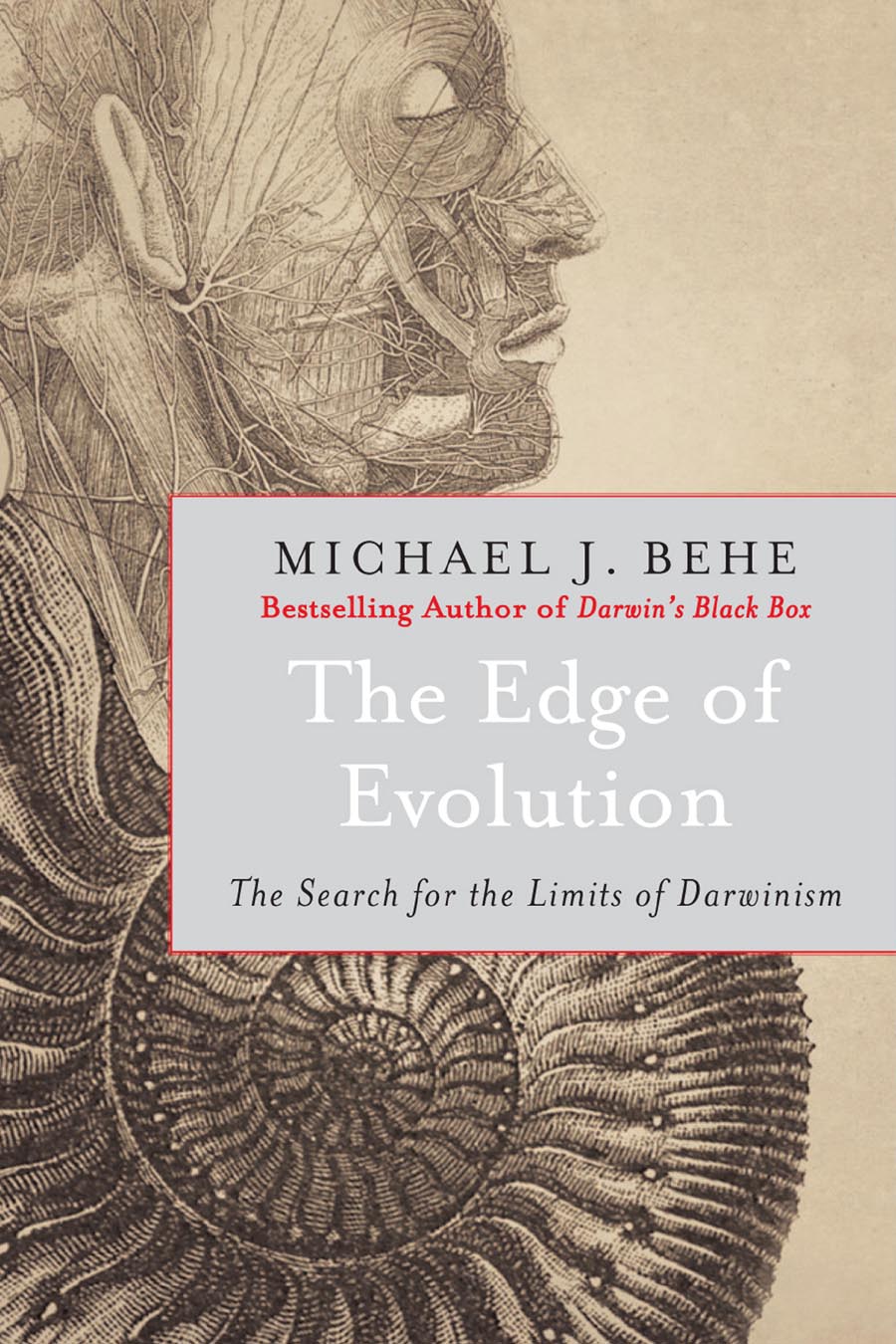
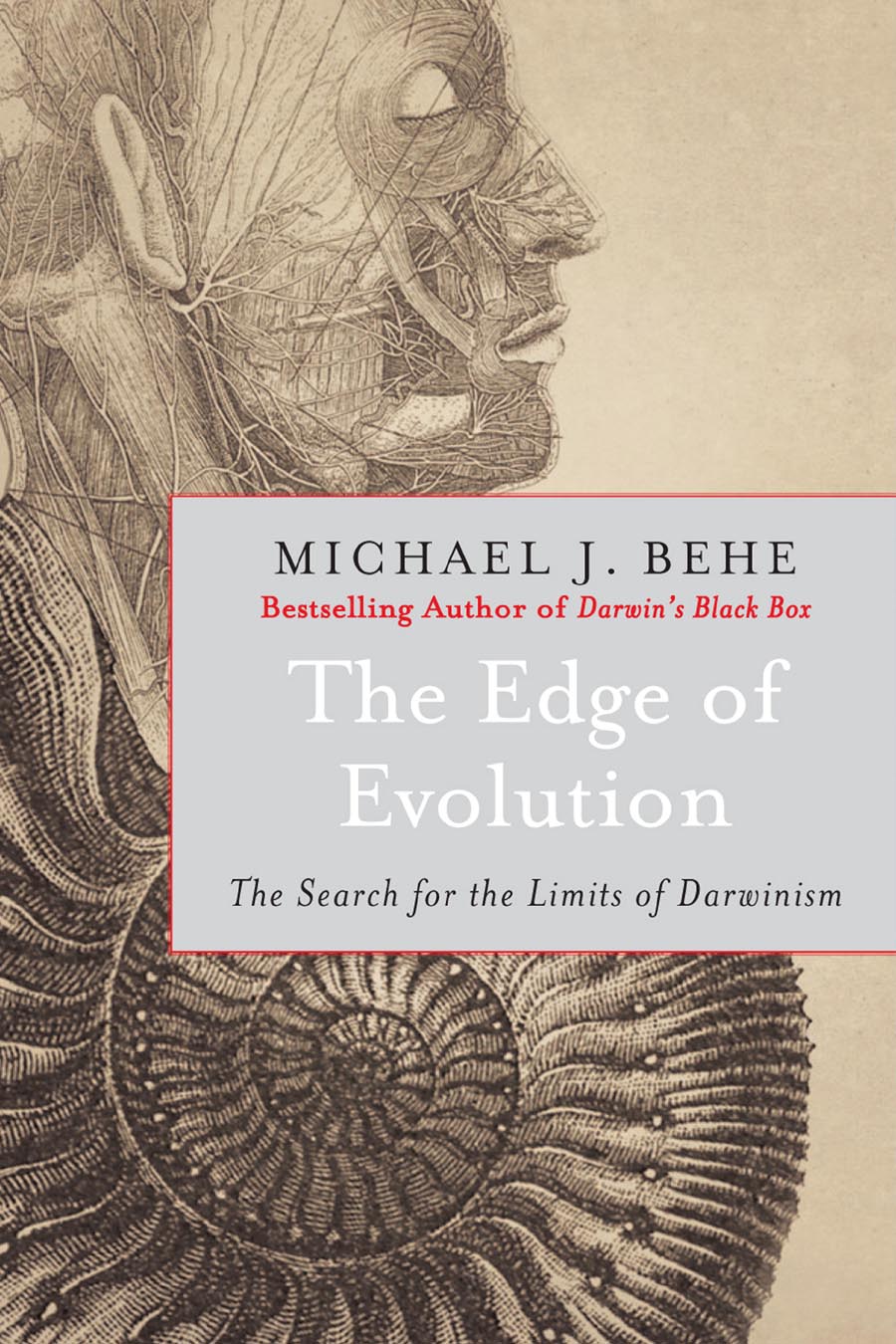
Several months ago I blogged my way through Stephen Meyer’s Signature in the Cell, summarizing his devastating critique of naturalistic origin-of-life theories and powerful argument for the intelligent design of the first life (parts 1, 2, 3, 4, 5, 6, 7a, 7b).  But what about the proliferation of life?  Can a fully naturalistic theory like neo-Darwinian evolution account for the proliferation and variety of life once it began?  To answer this question I am going to summarize Michael Behe’s key argument against a Darwinian account of evolution in The Edge of Evolution (paperback only $6 through Amazon right now, regular $15). 

What Needs to be Explained

To properly evaluate Darwin’s theory of the evolution of life, we must clarify what is meant by “evolution.”  Evolution can refer merely to small biological changes within a species over time.  Called “microevolution,” or the special theory of evolution, this definition of evolution is relatively uncontroversial and has been confirmed empirically (e.g. drug resistance in bacteria, changes in the size of finch beaks, etc.).  Evolution can also refer to large-scale biological changes[1] that, over time, transform one species into another into another ad infinitum.  This kind of evolution is called macroevolution, or the general theory of evolution.  Darwin’s theory entails this latter definition, and thus proof for his theory requires evidence that there are no natural limits to the amount of variation an organism can experience.

(more…)

John Hoopes of the University of Kansas claims to be a scientist, but it is clear to me that he’s no scientist!  How do I know?  Because he has concluded that some intelligent designer is responsible for producing 300 of these:

Surely he knows scientists cannot appeal to intelligent agency as an explanation for natural phenomenon.  Besides, there is no need to appeal to any intelligent designer.  Natural processes such as wind and water erosion are fully capable of producing the spherical shape of these rocks over billions of years.  To appeal to some “rock-designer-of-the-gaps” is to give up on science.  Currently, we may not know the exact pathway by which nature produced these spherical rocks, but given the past successes of science, I am sure we will discover it in the near future.  

If these rocks are the products of some intelligent designer as Hoopes claims, then let him tell us who designed the designer.  Guess what, he doesn’t know!  Clearly, then, these rocks can’t be designed.

« Previous PageNext Page »