 I have a question for my non-theist readers: Why is it that I can chop up a tomato and eat it, but I cannot do the same to a human being?
Tactics
Archived Posts from this Category
July 2, 2012
What’s the difference between fruit and humans?
Posted by Jason Dulle under Apologetics, Atheism, Human Exceptionalism, Philosophy, Relativism, Tactics[33] Comments
May 15, 2012
“I’m not a Christian because there are too many hypocrites in the church”
Posted by Jason Dulle under Apologetics, Hamartiology, Tactics, Theology[18] Comments
 The next time you hear someone say they are not a Christian because there are too many hypocrites in the church, here are a handful of tactful ways to respond:
- What do you mean by “hypocrite?” (You want to make the point that a hypocrite is not merely someone who is morally imperfect, but someone who says he believes X but purposely fails to practice X)
- Yes, there are hypocrites in the church. Jesus told us there would be. But Jesus wasn’t a hypocrite. What do you think about Jesus?
- Yes, there are hypocrites in the church. Jesus told us there would be. But there are also genuine Christians who are following Jesus. Why do you choose to let the hypocrites dictate your response to Christianity rather than the true followers of Jesus?
- What does that have to do with you? Couldn’t Christianity still be true even if a lot of confessing Christians are bad people? The question God is concerned with is not what others do, but what you believe and how you live.
- Are you saying that because other people fail to live up to their ideals you don’t have to even try?
- If you can’t tolerate all the hypocrites in church, why not follow Jesus independently of a local church body—to avoid all of those immoral Christians? (This will get them to tell you the real reasons they are not a Christian)
Do you have any more to add to the mix?
December 8, 2011
“You Shouldn’t Impose Your Morality on Others”
Posted by Jason Dulle under Apologetics, Relativism, Tactics[10] Comments
 When someone says to you, “You shouldn’t impose your morality on other people,” proceed as follows:
YOU: “So you think it is wrong to impose one’s moral point of view on other people?”
THEM: “Yes.”
YOU: “Then why are you imposing your moral point of view on me?
THEM: “What?”
YOU: “To say it is wrong to impose one’s moral point of view on other people is itself a moral point of view, and you are imposing that moral point of view one me by morally condemning me for morally condemning the actions of other people. You are guilty of doing the very thing you say should not be done.”
The fact of the matter is that we all have a moral point of view, and all of us apply that moral standard to others and judge them accordingly. The question is not whether we have moral standards, or whether we will apply them to other people, but rather whether or not our moral standards are true.
November 30, 2011
The Spiritual Trump Card
Posted by Jason Dulle under Epistemology, Hermeneutics, Tactics, Theology, Voice of God[2] Comments
 Frank Beckwith has made the observation that when people cannot refute your argument, they often trump it with spirituality. You know the kind of thing I’m talking about. You state your reasons for believing P rather than Q, and your Christian brother responds by saying, “I know that’s not true because God told me Q is true.” Or your Christian sister responds, “You only believe that because you are carnal.” Don’t fall for this cheap tactic.
You could respond by saying to your brother, “Actually, God told me P is true, so I know you didn’t hear from God.” And to your sister you can respond, “Ok, I’m carnal. So can you tell this carnal brother of yours why my argument is wrong, and why I should believe your position/interpretation?”
April 26, 2011
“I just believe in one less god than you”, Part II
Posted by Jason Dulle under Apologetics, Atheism, Tactics[12] Comments
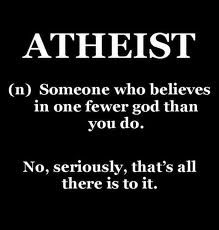 Back in September 2010 I addressed a clever rhetorical gem that has become quite popular among atheists. It’s what I’ve come to call the “one less God zinger.” It appears in several different forms, but could be summed up by the following representation: “We’re all atheists. Christians are atheists with respect to all gods but their own, while I am an atheist with respect to all gods, including your own. When you understand why you reject all other gods, you’ll understand why I reject all gods.”
I invited your criticisms of this zinger, and offered a couple of my own. Since then I have stumbled on other apologists’ response to it, allowing me to further develop my own. What follows is an updated evaluation and counter-responses.
March 22, 2011
Peter Atkins, I thought it was all about the evidence?
Posted by Jason Dulle under Apologetics, Atheism, Logic, TacticsLeave a Comment
 Oxford professor of chemistry, Peter Atkins (atheist) recently engaged in dialogue with Oxford professor of mathematics, John Lennox (theist), on the question of God’s existence. While atheists such as Atkins often portray their atheism as being the result of being brave enough to follow the evidence to where it leads, at one point in the debate Atkins showed his true hand.
LENNOX: Do you think it’s an illegitimate thing from a scientific perspective…to see whether scientifically one can establish whether intelligence needs to be involved in the origin of life?
ATKINS: … Let’s just take the laws of nature as available. And seeing that, letting them run free in the environment that we can speculate existed…billions of years ago, and seeing whether that sort of process leads to life. And if it does, that seems to me to abrogate the need for the imposition of intelligence.
LENNOX: And if it doesn’t?
ATKINS: Then, if we go on trying (we may have to try for a hundred years), and if in the end we come to the conclusion that an external intelligence must have done it, then we will have to accept that.
LENNOX: Would you be prepared to accept that?
February 7, 2011
Judgment Cuts Both Ways
Posted by Jason Dulle under Apologetics, Hamartiology, Tactics, Theology, Thinking[2] Comments
 In today’s society everyone seems to be hyper-sensitive to judgmentalism. The minute you tell someone you disagree with something they are doing, you are accused of being judgmental. Of course, it always escapes their notice that they are judging you for being judgmental, so they are guilty of both judgmentalism and hypocrisy! But the problem runs deeper than mere self-contradiction.
As the term is commonly used today, judgmentalism is thought to be limited to expressions of moral disapproval of X, or attempts to correct some person P for doing X. In reality, judgment involves both moral disapproval and moral approval. Judgment requires that we distinguish what is right/good from what is wrong/evil. Judgments are involved when you say X is good, as well as when you say X is bad. Indeed, the only way to say some X is good is if you know what bad is, and know X is not that. The only way to avoid making judgments is to make no moral distinctions whatsoever. No sane person can do this, nor is this a worthy goal. Moral judgments are indispensable to a healthy society.
December 14, 2010
Freedom, Life, and Abortion: A Strategic Approach to Persuading Pro-Choicers
Posted by Jason Dulle under Abortion, Apologetics, Bioethics, Tactics[14] Comments
When it comes to the issue of abortion, both opponents and proponents support the freedom of choice and the sanctity of human life. Those on the pro-choice side, however, think a woman’s freedom to choose trumps the life of the unborn. Those on the pro-life side think the sanctity of the life of the unborn trumps a woman’s freedom to choose. How do we break the impasse?
September 16, 2010
“I just believe in one less god than you”
Posted by Jason Dulle under Apologetics, Atheism, Tactics[18] Comments
In recent days I have noticed several of the “new atheists” employing a clever and rhetorically effective soundbite while evangelizing for atheism. Richard Dawkins and Christopher Hitchens come to the top of my mind, but no one has encapsulated this sound bite better than Stephen Roberts: “I contend we are both atheists, I just believe in one fewer god than you do. When you understand why you dismiss all the other possible gods, you will understand why I dismiss yours.”
I consider myself a fairly seasoned apologist, but I must admit that this little rhetorical gem stopped me dead in my tracks. “How in the world should I respond to that?”, I thought. Fortunately for me, others have been thinking about this as well. Michael Patton has done a good job formulating the beginning of a response already. I would encourage you to read his thoughts on the matter. He even takes on the claim that belief in God is like belief in Santa Clause, so you get a “two-fer.”
I think my first response would be that the atheist’s claim that “I contend we are both atheists, I just believe in one less god than you” is a misuse of language. To be an atheist means one does not believe in the existence of any God or gods, so it would be inappropriate to call Christians “atheists.” The claim is rhetorically effective, however, because it makes it sound as if the Christian and atheist differ in only one minor detail (the Christian denies all gods but one, while the atheist denies all gods). Nothing could be further from the truth. A world in which even one deity exists is a radically different from a world in which no divine being(s) exists.
How would you respond to the claim?
March 22, 2010
Would you be good if God didn’t exist?
Posted by Jason Dulle under Apologetics, Moral Argument, Tactics[18] Comments
 I just love Greg Koukl! In his most recent issue of Solid Ground he provides a wonderful response to a challenge atheist Michael Shermer likes to lodge against theistic moral objectivists: “If there was no God, would you still be good?”
Shermer expects an affirmative answer from his theist detractors. If theists would be good even without God, he reasons, then God is not necessary for morality as the theist claims. While this is a clever rhetorical device, it misses the point entirely. The theist’s argument is not that one must believe in God to behave in ways people generally consider “good.” Our argument is that if God does not exist, there is no such thing as “goodness” at all. As an individual or as a culture we might prefer to help a grandmother cross the street as opposed to running her over with our car, but neither behavior is morally superior to the other. All human acts are just molecules in motion, and the last I checked, neither molecules nor motion come in “good” and “bad” varieties. Morality is not a quality of matter, but of mind.
January 21, 2010
 Brett Kunkle, the student impact speaker from Stand to Reason, relates a story that typifies the point I was making in Getting to our Kids First:
After my final teaching session, the son approached me, quickly launching into a laundry list of objections to Christianity. A lengthy conversation ensued, covering topics like objective moral truths, utilitarian ethical theory, Kant’s categorical imperative, retributive justice, divine hiddenness, intelligent design, and the experience of the Holy Spirit. From the conversation, I guessed he was a graduate student in philosophy. Wrong. He was a high school senior.
His objections boiled down to this: “I’ve been taught that Christianity’s truthfulness is confirmed by my experience. I am no longer having powerful Christian experiences. In addition, I’m reading arguments against Christianity. I now wonder if it’s rational for me to remain a Christian.”
Let’s hope this kid can be persuaded out of his doubts by the evidence, and let his story serve as a lesson for all of us parents and leaders. We’ve got to get to our kids before the enemies of the faith do.
January 15, 2010
Responding to the “Who are you to say?” Response in the Same-Sex Marriage Debate
Posted by Jason Dulle under Apologetics, Relativism, Same-sex Marriage, TacticsLeave a Comment
Updated 1/19/10
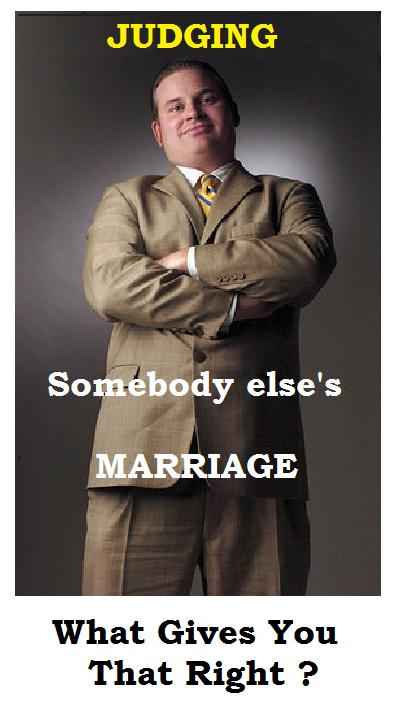 Greg Koukl has a really good response to those who say “Who are you to say?” in response to our disapproval of same-sex marriage:
Who are you to say?” That challenge works both ways. First, if my disapproval isn’t legitimate, then why is my approval legitimate? If I don’t have the right to judge something wrong…, I certainly don’t have the right to judge it right…. Second, why is it that I can’t make a moral judgment here, but apparently you can?
The appeal for a change in marriage laws is an attempt to change the moral consensus about homosexuality. You invite me to make a moral judgment, then you challenge my right to make a judgment when I don’t give the answer you want.
Building on Greg’s thoughts, I think the most concise, tactical response to the “Who are you to say it’s wrong?” challenge is simply to ask in return, “And who are you to say it’s acceptable?” This response makes it clear that both parties are making claims, and those claims need to be justified. The burden of proof is not just on the person in favor of prohibition, but is also on the person in favor of permission.
November 16, 2009
I am reading Antony Flew’s book, There is a God. In an appendix written by Roy Varghese, he relates what appears to be an apocryphal, but nevertheless insightful exchange between a skeptical student and his wise professor. The student asks his teacher, “How can I be sure I even exist,” to which his teacher responded, “Who’s asking?” Classic!
October 27, 2009
 It’s common for those who reject the Christian worldview to accuse Christians of being closed-minded. Often this retort comes on the heels of a Christian’s outspokenness about his/her beliefs. How can you respond when someone tells you you’re being closed-minded, or that you need to be more open-minded?
The first thing you ought to do is ask the person what s/he means by such terms. S/he could mean one of several things, so we should not presume to know the answer. In fact, s/he may not even know exactly what s/he means, and our inquiry may force him/her to think it through for the first time. The truth of the matter is that those who use such terms often sling them blithely at anyone who disagrees with their point of view,[1] never stopping to think about what exactly it is that they mean. And since the accusation is usually effective at silencing their opponents they continue to use it over and over again as the trump card of choice when discussing religion with “right-wing, fundamentalist wackos” such as ourselves. If we can respond thoughtfully to his charge, not only will we rescue ourselves from a distasteful allegation, but we may disarm him/her from using this unfounded charge on other Christians in the future.
While there are several ways people define closed-mindedness, typically it is a label given to anyone who comes to a conclusion on a controversial matter, and believes that conclusion is true to the exclusion of all others. We are told we must be open-, rather than closed-minded, which means we have an intellectual obligation to remain “on the fence” of all divisive issues, never taking a definitive position, and never claiming that one position has more merit than another. There are a few ways to respond to this understanding of open- and closed-mindedness.
October 12, 2009
Tolerance Means “Deal With It!”
Posted by Jason Dulle under Apologetics, Relativism, Tactics[11] Comments
Toleran ce is a two-way street, but in today’s world its application is typically one-way. In the name of tolerance we are told we must tolerate those who do not believe in God, are pro-abortion, pro-same-sex marriage, etc. Interestingly, however, those who hold to those viewpoints often refuse to tolerate us. We are forced to take down religious monuments because somebody is offended that they are forced to look at it. We are forced to forego prayers at school graduation ceremonies because someone who doesn’t believe in God may feel like an outsider. Guess what? The Constitution protects rights, not feelings. Frankly I’m not concerned with how they feel. It’s called disagreement. Everybody experiences it, and the mature person learns how to deal with it.
When you disagree with someone you have one of three options: persuade them to adopt your view, pursue change through democratic initiatives, or suck it up and deal with it. Christians have to suck it up all the time. I disagree with atheists, and I disagree with the way religion is being forced out of the public square because of a few cry-babies supported by an out-of-control judiciary, but you don’t see me shouting “offense” because I didn’t get to participate in a public graduation prayer. No one seems to be concerned about how Christians feel. We are told to lump it when we cry, but when atheists and adherents to minority religions cry they get the whole world changed for them.
While liberals tell us we need to be tolerant, they have need of their own medication. They need to learn to tolerate public prayer, religious talk, religious monuments, and national recognition of the Creator on our money and in our pledge. It’s time they learn that tolerance means “deal with it!”
October 12, 2009
Why Saying Someone is Mistaken is Viewed as a Personal Attack
Posted by Jason Dulle under Apologetics, Relativism, TacticsLeave a Comment
In a day and age in which religious claims have been demoted to mere personal, subjective opinion rather than public knowledge, any suggestion that someone’s religious views may be mistaken is perceived as a personal attack. Why? It’s because they cannot separate themselves from their beliefs. To attack one is to attack the other. Their beliefs are not something that stand outside of themselves to which they subscribe, but an autobiography about their personal tastes. Beliefs do not have a reference “out there” to which we can appeal and evaluate, but are wholly subjective, describing the person who holds them. To say their beliefs are wrong, then, is to say there is something wrong with them.
People believe that so long as they hold to their beliefs sincerely, they are true (for them), and no one else has any business telling them their truth is not true. Of course they have no problem telling us that our sincerely held belief that people can be wrong in what they believe to be true is a wrong belief. This is self-refuting.
If you find yourself in a situation where someone is objecting to your objection to their truth-claim, ask, “If I sincerely believe that sincerely believing something does not make it true, does that make it true that sincerely held beliefs can be false?” If they say yes, then ask why they objected to your objection. If they say no, ask them why it is that their beliefs are made true by their sincerity, but your beliefs are not. What’s good for the goose is good for the gander.
October 9, 2009
Everyone Thinks He is Right
Posted by Jason Dulle under Apologetics, Epistemology, Logic, Tactics[9] Comments
A few years back I watched a debate between an evangelical Christian (Greg Koukl) and a new age guru (Deepak Chopra) on the issue of truth. Mr. Chopra employed a common tactic to dismiss Mr. Koukl’s arguments. The exchange went something like this:
DC: “Everyone thinks they are right. You think you’re right. The Hindu thinks he’s right. The Buddhist thinks he’s right”
GK: Yes, that’s right. And that’s why psychological confidence in one’s faith is not enough. Something more is needed. I am not interested in knowing that someone believes their view is right; I am interested in knowing why they believe their view is right. This requires evidence. We must weigh the evidence to determine who has better reasons supporting their view.
DC: chirp, chirp, chirp, chirp, chirp, chirp…
October 9, 2009
Who are you to say who’s right and who’s wrong?
Posted by Jason Dulle under Apologetics, TacticsLeave a Comment
How many of you have ever been told “Who are you to say who’s right and who’s wrong?” when proclaiming and defending the truth of Christianity? I’m sure most of you have.
This type of response is an attempt to ignore the force of your argument by challenging your authority. Don’t buy into it. Point out that you are not claiming that what you believe is true because you say it is, but because of the evidence in its favor. Our authority is not derived from our self, but from the publicly accessible evidence in support of our beliefs. When you are dealing with objective evidence rather than subjective opinion it makes no sense to say “Who’s to say.” If someone said “2+2 = 4” nobody would respond, “Who are you to say?”
So when someone says, “Who’s to say?” you can respond, “I’m nobody to say, and I wasn’t claiming to be. The authority for my position rests in the strength of my arguments, not in my person. If you can show me where my arguments are in error I would be more than happy to change my position.”
Another response could be, “Not me. I wasn’t claiming to. I am just appealing to the evidence. The evidence can speak for itself.” Or a third alternative might be, “Who’s to say? That would be the person with the best reasons!”
October 8, 2009
That’s Just Your Interpretation
Posted by Jason Dulle under Apologetics, Hermeneutics, Tactics, Theology1 Comment
I was having a conversation with some coworkers some time ago in regards to same-sex marriage. They brought up the relationship of homosexuality to the Christian religion, at which point I affirmed that the Bible—and hence Christianity—is opposed to homosexuality. Immediately I received the “Well, that’s just your interpretation” response. My response to this charge was to explain the process of exegesis, which took several minutes of my time and got us off the real issue at hand. In retrospect I thought of a more efficient and tactful response I would like to share with you.
The next time you are discussing some aspect of Biblical teaching with someone, and they give you the “Well, that’s just your interpretation” response, respond by saying something off-the-wall like, “So you are saying I don’t like pickles?!” A blank and confused stare is sure to follow proceeded by the expected question: “What?!?!” Explain to them that you have just demonstrated the fundamental principle of interpretation. Valid interpretation only comes about when the receiver accurately understands the intent of the sender/author. This is accomplished by correctly employing the use of grammatical and semantic rules, and considering the cultural/historical perspective of the sender. If the sender’s intent is not properly understood, communication has not occurred and the result is misinterpretation. If interpretation is rooted in authorial intent only one interpretation can be valid. As long as the interpreter employs the proper tools they can walk away with the correct interpretation.
The Bible is no different. There is a correct way and an incorrect way to interpret the Bible. The same tools and rules we use to correctly interpret our modern conversations and writings apply equally to the Bible. When those tools and rules are used properly the interpretation we walk away with is sound. No, it’s not just our interpretation. It is the meaning inherent within the text itself, discovered (not invented) by the interpreter using the universal rules and tools of language.
October 7, 2009
Sometimes in an informal debate you will encounter people who dismiss your argument by saying, “Well that’s just your opinion.” This is nothing more than an attempt to relativize your conclusion without rebutting your arguments. There are a few ways you can respond to this.
The first is to ask, “Isn’t it just your opinion that my view is just my opinion? If we ought to dismiss opinions because they are opinions, then your opinion should be dismissed as well.”
The second is to say, “No, this is not just my opinion. I have provided reasons for thinking my opinion is actually true. If you would like to try to rebut my reasons you are more than welcome to do so, but do not dismiss my view with a mere hand-waving as if I have merely provided you with an assertion, rather than an argument.”
The third is to say, “Yes, I have an opinion, but so do you. This much is obvious. But what follows from that observation? The question is not whether we have opinions—we all do—but whether we have an informed opinion. If we both have informed opinions, then the question becomes Whose opinion is better informed? We determine the answer to that question by evaluating the strength of our respective arguments. I have presented you with my argument, and now I am interested to hear your response to that argument.”

 Thinking to Believe