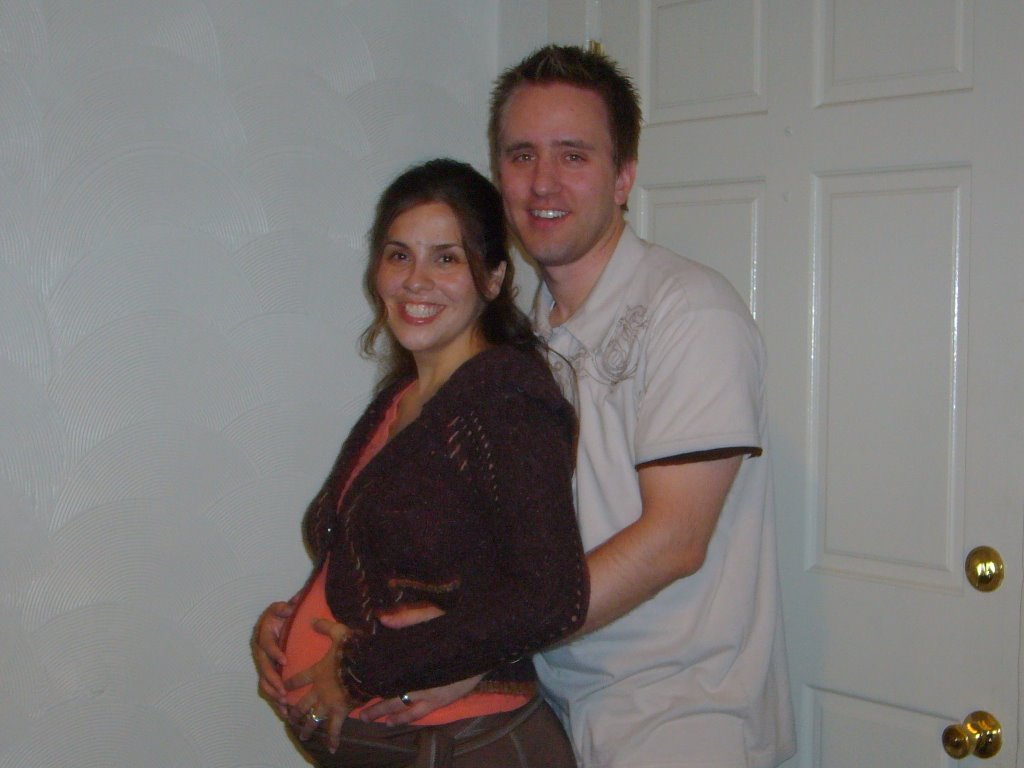
At 5:31 on January 22nd, 2007 Sareya Rain Dulle entered the world weighing 6 lbs., 10 1/2 oz., and 18 1/2″ long. She is the apple of her mommy and daddy’s eyes! Needless to say, I’ll be very busy over the next couple of weeks and not in blogging mode. Stay tuned. There is more to come at Theosophical Ruminations.
Odds & Ends
December 2, 2006
A Nativity Scene Gets Axed from a Christmas Festival
Posted by Jason Dulle under Odds & Ends, Political IncorrectnessLeave a Comment
Sarcasm alert: Of course a nativity scene is improper for a Christmas festival. What were those idiots thinking?! (end sarcasm)R
ead about it here.
November 16, 2006
Medved on Elton John and the Intolerance of the Left
Posted by Jason Dulle under Odds & Ends, Relativism[2] Comments
Michael Medved has an article on Townhall.com about Elton John’s “I would ban religion” comments. He points out how religious adherents are much more tolerant of homosexuality than he, and many on the Left are of religion:
[R]eligious leaders actually express more tolerance to homosexuality (and non-believers) than Sir Elton expresses toward organized faith. Imagine the indignation if a religious leader suggested that we need to “ban homosexuality completely” — or urged an outright prohibition on atheism? It’s true that many believing Christians want to persuade gays to overcome their same-sex urges, or try to get non-believers to replace their doubt with faith, but no factions in the varied array of conservative religious groups has called for “banning” ideas with which they disagree.
Well said! Then he turned his attention to the general intolerance of secularists towards religion:
The controversies about public display of religious symbols nearly all center on secular demonstrations of militancy and narrow-mindedness, involving attempts to remove or suppress expressions of faith (like crosses in parks, or Ten Commandments displays in public buildings, or the words “under God” in the pledge) that have existed innocuously for decades. Very few of these disputes involve efforts by the faithful to impose new symbols in prominent places, or to “ram their faith down the throats” of the unwilling public at large. It’s the secular left that’s consistently intolerant of American society as it’s existed for years, not religious conservatives who express unwillingness to allow public disagreement with their convictions. In the bitter debate about teaching our children about the origins of life on earth, religious activists make no attempt to block the teaching of Darwinism or random natural selection, but it’s pro-evolution fanatics who fanatically resist any messages or questions that even hint at Intelligent Design.
Very well said. The article is worth reading.
November 16, 2006
When to Fight for Your Religious Liberty
Posted by Jason Dulle under Odds & Ends, PluralismLeave a Comment
There’s a good post at Right Reason addressing when we should stand up and fight for a particular religious liberty and when we should not. Given the direction of our society, this is a very relevant piece.
November 14, 2006
The cardinal thinks building a fence is inhuman
Posted by Jason Dulle under Odds & Ends, Politics[3] Comments
Senior Vatican cardinal, Renato Martino, condemned the building of a fence between the U.S. and Mexico as an “inhuman program.” Whatever your views on immigration policy and the building of this fence, shame on the cardinal for belittling the word “inhuman.” No one is being harmed in the least, so how can he legitimately use the word inhuman to describe it? Inhuman is what Hitler did to the Jews. Either Martino doesn’t know what inhuman is, or he is just using rhetoric. My guess is the latter, and I find it despicable.
I find it ridiculous to say a sovereign nation cannot define and protect its borders by building a fence. Apparently, the cardinal thinks it’s wrong to prevent anyone from entering the country who may want to come here. Indeed, if we can’t have a fence, I don’t see how we can have border agents either. In either case we are preventing people from coming into this country illegally (one method is simply more effective than the other). Martino thinks we should just open up our doors, and allow millions of poor people from Mexico and South America flood into our country, overwhelm the job market, and overwhelm our social services until we become bankrupt. I wonder if he would feel the same about the Vatican City?
November 14, 2006
Elton John’s version of tolerance
Posted by Jason Dulle under Odds & Ends, RelativismLeave a Comment
http://www.drudgereport.com/flash1.htm
November 10, 2006
I am trying out a polling service. My first poll is just for fun.
| Do you ever respond to polls? | |
| Yes | |
| No | |
| Free polls from Pollhost.com | |
November 2, 2006
October 24, 2006
October 12, 2006
The NY Times recently ran an article titled “Out-of-Body Experience? Your Brain Is to Blame.” The article opens with these words:
They are eerie sensations, more common than one might think: A man
describes feeling a shadowy figure standing behind him, then turning around to
find no one there. A woman feels herself leaving her body and floating in space,
looking down on her corporeal self.
Such experiences are often attributed by those who have them to
paranormal forces.
But according to recent work by neuroscientists, they can
be induced by delivering mild electric current to specific spots in the brain.
Like the TIME magazine article I blogged about a couple of days ago, this article is an example of reductionistic thinking at its best. It attempts to explain out-of-body experiences (OBE) in purely physicalist terms, eliminating the need to invoke the supernatural. While the scientific find supporting the article’s “thesis” are fascinating, it does not eliminate the supernatural. Indeed, the find does not make sense apart from the existence of the supernatural.
The article describes how, in preparation for surgery, a Swedish neurologist inserted dozens of electrodes into the brains of two women suffering from epilepsy. When the electrode connected to the angular gyrus region of the brain was activated, it produced some bizarre and unexpected experiences. One woman described her experience as “a weird sensation that another person was lying beneath her on the bed.” She said it “felt like a ‘shadow’ that did not speak or move; it was young, more like a man than a woman, and it wanted to interfere with her.” When the current stopped, the feeling of the presence went away. When the current was reapplied, the feeling returned.
The same experiment produced a significantly different experience for another woman a few years earlier. When the electrode in her brain was activated she had a complete OBE. She told the researcher, “I am at the ceiling. I am looking down at my legs.” When the current stopped she said, “I’m back on the table now. What happened?” According to the article “further applications of the current returned the woman to the ceiling, causing her to feel as if she were outside of her body, floating, her legs dangling below her.”
How do researchers explain this? According to the article
researchers have discovered that some areas of the brain combine
information from several senses. Vision, hearing and touch are initially
processed in the primary sensory regions. But then they flow together, like
tributaries into a river, to create the wholeness of a person’s perceptions. …
These multisensory processing regions also build up perceptions of
the body as it moves through the world…. Sensors in the skin provide information
about pressure, pain, heat, cold and similar sensations. Sensors in the joints,
tendons and bones tell the brain where the body is positioned in space. Sensors
in the ears track the sense of balance. And sensors in the internal organs,
including the heart, liver and intestines, provide a readout of a person’s
emotional state.
Real-time information from the body, the space around the body and
the subjective feelings from the body are also represented in multisensory
regions…. And if these regions are directly simulated by an electric current, as
in the cases of the two women he studied, the integrity of the sense of body can
be altered.
More specifically, why did one woman feel a distinct presence that shadowed her own? According to the author, Dr. Blanke postulates that “because the presence closely mimicked the patient’s body posture and position…the patient was experiencing an unusual perception of her own body, as a double. But for reasons that scientists have not been able to explain…she did not recognize that it was her own body she was sensing.”
What about the woman who had the OBE? “Because the woman’s felt position in space and her actual position in space did not match, her mind cast about for the best way to turn her confusion into a coherent experience…. She concluded that she must be floating up and away while looking downward. … [W]hile it may be tempting to invoke the supernatural when this body sense goes awry,…the true explanation is a very natural one, the brain’s attempt to make sense of conflicting information.”
There you have it! It’s all in your brain. No supernatural is needed. Reductionism at its finest. Peter Brugger, a neurologist at University Hospital in Zurich, told the reporter ‘there is nothing mystical about these ghostly experiences.’ According to Brugger “the research shows that the self can be detached from the body and can live a phantom existence on its own, as in an out-of-body experience, or it can be felt outside of personal space, as in a sense of a presence.”
The researchers, and the author reporting it, commit the same logical fallacy as TIME: thinking correlation means causation. I admit that the association between various regions in the brain and certain surreal experiences is quite a discovery, but that association is not tantamount to causation, yet alone identification. I explain the fallacy in my “What Makes Man Different from Chimps” post, so I will not repeat myself here.
The Soul Won’t Go Away That Easily
What I want to focus on is how these experiments fail to eliminate the supernatural (meaning anything beyond the natural world, not necessarily “God”). It seems to me that an appeal to the existence of the supernatural—specifically a human soul—is the only way to make sense of what these women experienced (particularly the woman who had the OBE).
First, notice how Dr. Brugger presupposes that the self is distinct from the body, even though his view reduces the self to the physical constituents of the body. In case you missed it he said “research shows that the self can be detached from the body and live a phantom existence on its own as an out-of-body experience.” If the self can be detached from the body so as to have its own existence apart from the body, then it is not reducible to the body. It must be something other than material; i.e. immaterial. Even reductionists cannot help but to speak of the center of our consciousness as something distinct from the physical body.
Second, if these experiments demonstrate that there is nothing mystical or supernatural about OBEs—and that it’s a purely chemical-physical phenomenon—then how do they explain the details of the experience the woman described? She said she was at the ceiling, looking down at her legs. How could she see her legs from the ceiling if the only way to see is with one’s material eyes, and her eyes were on the ground looking up at the ceiling? As Jonathan Witt noted:
If anything, that only makes it more mysterious that the electrical
stimulation of that bit of tissue can trigger the experience of being up near
the ceiling looking down at one’s own body. Why? How? How can you see without
your eyes? Are those experiences just hallucinations? Is the storied accuracy of
things seen and heard during “near-death” OBEs strictly apocryphal? The purely
material explanation is not the simplest one, the Occam’s Razor close shave.
You’d have to go through contortions to explain why the brain would accurately
record precise details of a scene in the midst of a mortal crisis, then choose
to hallucinate an accurate view of that scene from a physically impossible
perspective.[1]
What we’re talking about here is the transferring of one’s first-person perspective from inside their body, to some location external to their body. If one’s first-person perspective can be located somewhere outside their body, so that they can look upon their own body as if it were someone else’s body, clearly our first-person conscious self must transcend our physical body. It must be immaterial, and capable of existing apart from the body. This is precisely what the Christian doctrine of the soul maintains. I think this research is good scientific evidence for the existence of the soul, and a crushing blow to materialistic reductionism.
Other Errors
While reading the article my mind harkened back to Dean Hamer’s book, The God Gene: How Faith is Hardwired into Our Genes (2004). Both claim to explain away mystical experiences as mere biological misunderstandings. Some of my criticisms of Hamer’s work are equally applicable to the NYT article.
Even if were true that the brain alone is responsible for these sorts of mystical experiences, there is no necessary connection between such experiences and belief in God. Not everyone who has these sorts of mystical experiences believes they are from God. In fact, neither of the two women documented in the experiment interpreted the feeling/experience as being the divine, or divine in origin.
Furthermore, even if the ultimate cause of these experiences is biological in nature, and even if everyone who experienced them interpreted them as being from the divine, this could not explain away religious faith because so few people have ever had such experiences. I would argue that most people who believe in God do so without ever having had a mystical experience. Quite a few believe in God for purely intellectual reasons. Others simply have an intuitive awareness of His existence. If these sorts of experiences do not cause believers to believe, faith in God is not deterred when the experiences are shown to be biological rather than religious in origin and nature.
At best these findings demonstrate that it is not rational to conclude God exists simply because you have experienced a feeling of self-transcendence. But to conclude God is a figment of our biological imagination because people have improperly confused biological malfunctioning for a religious experience is a categorical error. While humans may be guilty of confusing a biological function for a religious experience, it does not follow that God is a figment of our biological imagination.
If the feeling of transcendence is a biological experience rather than religious experience, then studies performed on that experience only tell us about biology, not religion. The question of God’s existence remains a philosophical question, not a biological question. While the sciences can tell us a lot about the physical world, they are not equipped to properly evaluate the spiritual. Only philosophy is equipped to evaluate metaphysical issues such as the existence of God
[1]Jonathan Witt, “This is your brain on materialism”; available from http://www.idthefuture.com/2006/10/this_is_your_brain_on_material.html
October 6, 2006
Is Church Discipline an Invasion of Privacy?
Posted by Jason Dulle under Odds & Ends, Politics, Theology[6] Comments
If a church member commits adultery, and the elders enact church discipline via informing the congregation of their sin, is that an invasion of privacy? That’s the issue a couple of churches in Texas are facing since they have been sued by their congregants for doing just this.
Andy and Seni, I’d be interested to get your legal take on this.
This brings up an important matter: the proper interpretation of I Timothy 5:20–“Those guilty of sin must be rebuked before all, as a warning to the rest.” Many pastors understand this passage to mean they are to publicly rebuke saints for personal moral failure. Many use this passage as an excuse to publicly rebuke saints for violating certain pastoral standards as well. Does this verse give them authority to do either? The answer is a resounding NO! The context makes it abundantly clear that those to be rebuked are elders who sin. Consider the preceding verses:
Elders who provide effective leadership must be counted worthy of double honor, especially those who work hard in speaking and teaching. 5:18 For the scripture says, “Do not muzzle an ox while it is treading out the grain,” and, “The worker deserves his pay.” 5:19 Do not accept an accusation against an elder unless it can be confirmed by two or three witnesses. (5:17-19)
The reason elders are to be rebuked is because of their leadership role. Others are following them as they follow Christ. If they are not following Christ, those following them need to know. Furthermore, if the sin is hidden rather than publicly dealt with it opens the church up to the charge of mishandling and cover-up. Just ask the Catholic Church! But when it comes to non-elders it is a different story. According to Proverbs 10:12 “love covers all sins.” I Peter 4:8 says “love covers a multitude of sins.” Love seeks to hide the moral failures of the repentant, not make them public.
October 3, 2006
The MacLaurin Institute has a page full of great audio lectures by the likes of such intellectual powerhouses as Michael Behe, Robert George, J. Budziszewski, Alvin Plantiga, and Dallas Willard. Check it out.
October 2, 2006
When I first got into church I enjoyed calling everyone “Brother X” and “Sister X.” The use of such titles made everyone seem like a family. Over the years, however, that enjoyment has waned for a couple of reasons. Now I tend to drop the “brother” bit, and simply call people by their first name.
First, I came to realize that the title–meant to express something beautiful–was being used for ugly purposes. Some view the preface more as an honorary title indicative of personal respect than they do a familial and informal way of referring to one another. There have been instances in which certain individuals (admittedly always men, always in positions of authority) have berated fellow-believers for not addressing them as “brother X.” Although this is a minority attitude, the phenomenon did sour my perception of “brother.”
Secondly, the consistent use of the preface seems to keep relationships on too formal of a level. People we are not particularly close to we call Brother X and Sister X; people we are close to we refer to by their first name. Why? Because the preface is too formal. When the relationship deepens the preface tends to fall out of use naturally.
But doesn’t Scripture use such terminology? Yes and no. While the NT commonly uses familial language such as “brother” to refer to fellow-believers in the body of Christ in a generic sense, it only uses “brother” as a personal title for a specific individual on two occasions: Acts 9:17—Ananias called Paul “Brother Saul” (Acts 22:16 recounts same event); Acts 21:20—James called Paul “brother.” (There are 15 additional instances in which specific individuals are named, adding “our brother” or “a brother” (Rom 16:23; I Cor 1:1; 16:12; II Cor 1:1; 2:13; Eph 6:21; Phil 2:25; Col 1:1; 4:7, 9; I Thes 3:2; Phm 1; Heb 13:23; I Pet 5:12; II Pet 3:15; ); however, in every instance “brother” is used as a description, not as a title.) Compare these two occurrences with the hundreds of others in which people were simply called by their first name. Calling someone “Brother X” was the exception, not the norm. The opposite is true in most Pentecostal churches.
Don’t get me wrong. I am not opposed to calling people “Brother X,” or referring to fellow-believers as brothers. I thank God for the appellation! How many times have we had the luxury of addressing those whose names we have forgotten with the generic, “Hi brother. How are you?” What I am opposed to is using the preface as an honorary title, over-using it, or being afraid to address someone without employing it. There are times in which it is appropriate to call someone “Brother X,” or just plain “brother,” but let’s not forget that the name of our birth certificates does not begin with “brother” or “sister.
August 22, 2006
Some of you may not be aware that there is a search engine built into this blog. If you ever want to find a particular post, but don’t want to spend the time looking through each month’s archives, just enter some search words into the upper left corner of the blog and hit the “Search This Blog” button.
July 16, 2006
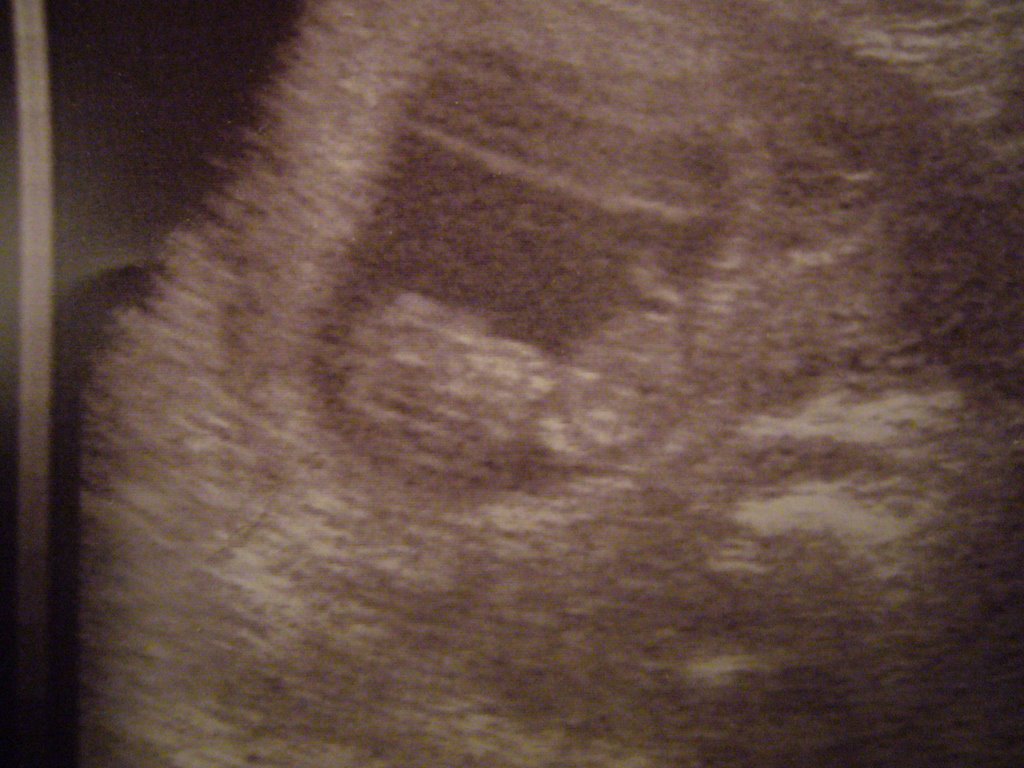
Where have I been? From bombarding you with posts to absolute silence for three weeks! Well, a lot has been going on, not the least of which is pictured below.

Yes, that’s right…my wife is pregnant. She’s 14 weeks along now, and has been having a really difficult pregnancy. The little squirt has given her morning, noon, night, and all night sickness. She’s been on mandatory bedrest for five weeks and doing a lot of this:

I have been taking care of my wife, which hasn’t left much time for blogging…or much of anything intellectual for that matter. The only thing I have been studying is what might help morning sickness, what stroller is the best, what crib I want to buy, etc.
I’ve also been interviewing for a new job (which has been offered to me) and looking into a new place to live. So other than a new baby, a new job, and a new home, my life is pretty much the same!! I hope to respond to the comments on the last string next week, and then resume with some new posts whenever I find a little time.
June 2, 2006
Is it wrong to get a tattoo? Why so?
May 10, 2006
What is the one dreaded question you hope no one ever asks you about Christianity and/or the Bible?
May 9, 2006

While the “What-Would-Jesus-Do?” wristbands are no longer in vogue, the phrase itself has not passed off the scene. People continue to speak of it, and continue to use this question to guide their ethical decision-making process. While the question itself is a good one to ask (it’s good to want to do what Jesus would do), and can be valuable to making difficult ethical decisions, it is too subjective and will not be used properly by most people. I have three reasons for saying so.
First, it has been my experience that most people who use “WWJD?” as a guide for making moral decisions know little about Jesus’ ethical teachings and the kind of life He lived. Why? Because they are Biblically illiterate. It’s kind of difficult to know what Jesus would do if you don’t know the kinds of things Jesus did do, and are not familiar with the ethical principles Jesus taught. There is simply no standard by which to make an accurate and adequate evaluation of what Jesus might do.
Secondly, we tend to think Jesus would do what we think is the right thing to do. We project onto Jesus our own ethical system. We reason that if Jesus were as smart as people say He is, of course He would agree with me! But by doing so we argue in an ethical circle. While we claim we are being guided by what we think Jesus would do, what we think Jesus would do is determined by what we think is right. So we put into Jesus’ mouth our own words and call that our ethical authority. This is circular reasoning at its best.
Both of the above reasons are rooted in an unfamiliarity with Jesus’ moral teachings and way of living. My third reason for doubting the value of the WWJD? principle of ethical decision making, however, applies even to those who are Biblically literate. While I may think I know what Jesus would do based on my knowledge of His life and teachings, the fact of the matter is that I cannot know for certain what Jesus would do in most circumstances. Jesus taught and did some pretty crazy things in His day that surprised even His very morally-minded Jewish followers. What we think Jesus might do in our circumstances based on our knowledge of what He did do in His own circumstances may not be what He would actually do. For these reasons I remain skeptical that WWJD? is a good guide to moral decision-making.