 Many Christians have a negative connotation of the words reason, logic, and philosophy. Their negativity is not altogether unfounded. After all, there’s been more than a few individuals who have rejected Christianity on the grounds that it is irrational and illogical. And we’ve all known or heard of someone who studied philosophy only to lose their Christian faith. The problem in all of these cases, however, is not reason, logic, or philosophy, but rather the improper use of reason, logic, and philosophy. Indeed, all of us use reason and logic, and all of us subscribe to a particular philosophy even if we are unaware of it. It is inescapable. Reason and logic are God-given tools that allow us to think and obtain knowledge. Logic and reason help us to order our thoughts, and enhance our ability to discern truth from error. We can’t think without them, although we can misuse or abuse them in the process of thinking. And that, I think, is where the real problem lies: the abuse of reason and logic.
Philosophy
September 14, 2010
Logic, Reason, and Philosophy are Intellectual and Spiritual Goods
Posted by Jason Dulle under Apologetics, Logic, Philosophy, Thinking[12] Comments
September 9, 2010
Miracles and the Laws of Nature
Posted by Jason Dulle under Apologetics, Philosophy, Science, Theology[7] Comments
 Many non-theists object to the concept of miracles on the grounds that miracles would require a violation of the laws of nature. They reason as follows:
P1 The laws of nature cannot be violated
P2 A miracle would violate the laws of nature
C Miracles are not possible
Both premises of this argument are flawed, and for the same reason: the laws of nature are construed as mind-independent, physical realities possessing causal properties. I think this conception of natural laws is mistaken.
September 2, 2010
Deep Thought of the Day
Posted by Jason Dulle under Philosophy, Quote of the Day, ThinkingLeave a Comment
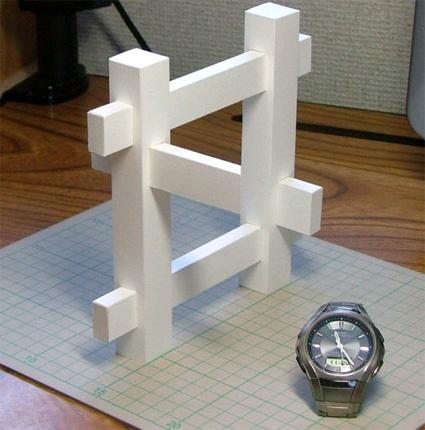 “Nothing happens that is not possible.”–Ellis Potter
August 13, 2010
Certainty and Deductive Arguments
Posted by Jason Dulle under Logic, Philosophy, ThinkingLeave a Comment
It is often believed that valid/sound deductive arguments can provide certainty. This is not quite true. The conclusion of a valid/sound deductive argument is certain in the sense that it follows necessarily from the premises. It does not mean, however, that the conclusion is certainly true. Why? The premises are usually contingent truths discovered inductively, and thus the veracity of the logically certain conclusion depends on the veracity of the probabilistic premises. The more confidence we have in the truth of the premises, however, the more confidence we can have in the veracity of the conclusion.
June 10, 2010
Thinking About a Whole Lotta Nothing, Part 4
Posted by Jason Dulle under Apologetics, Cosmological Argument, Philosophy, Theistic Arguments[17] Comments
 Alternative Responses (cont)
Colin McGinn, philosopher at the University of Miami
As mentioned in my second post, Colin McGinn (echoing Immanuel Kant) makes a distinction between asking why some particular existent within the whole of existence exists, and why the whole of existence itself exists. The former question can be answered by appealing to some other preexistent existent within the whole of existence, but the latter question appeals to some existent outside the whole of existence to explain the whole of existence. It is impossible, however, for something to exist outside the set of the whole of existence. By definition there cannot be additional entities outside the set of “every existing thing.”
McGinn thinks this problem can be remedied by reformulating the question as “Is it true of every concrete thing that it exists contingently, or necessarily?” He affirms that every concrete entity exists contingently. So far so good, but why do concrete entities exist, then? Here is where McGinn fumbles. He affirms that the whole of concrete, contingent existence just exists inexplicably! Surely this is absurd. Contingent beings, by definition, derive their being from something outside themselves, and thus there must be an explanation for why they exist. It is metaphysically absurd to speak of an uncaused contingent being. Inexplicability is appropriate for a necessary being, but not contingent beings (and all concrete entities are contingent beings).
June 9, 2010
Thinking About a Whole Lotta Nothing, Part 3
Posted by Jason Dulle under Apologetics, Cosmological Argument, Philosophy, Theistic Arguments[5] Comments
 Alternative Responses
Now that I have put my own view on display (See parts 1 and 2 of this mini-series), let us take a look at how a few philosophers have answered this puzzling philosophical question. We will explore the views of Quentin Smith, John Leslie, Colin McGinn, Hubert Dreyfus, and Bede Rundle.
Quentin Smith, philosopher at Western Michigan University
According to Quentin Smith, the answer to why there is something rather than nothing is so simple that it seems rather trite: The reason Y exists at time t4 rather than nothing is because X existed at time t3, and caused Y to exist. Likewise, X exists at time t2 rather than nothing because W existed at time t1, and caused X to exist, and so on. In other words, the present something exists because a previous something caused it to exist. Why did that previous something exist rather than nothing? The reason is that it, too, was caused by something that existed before it, and so on. The answer to the question of why there is something rather than nothing, then, is simply that something is always preceded by something else.
The problem with Smith’s answer is two-fold. First, he shifts the locus of the question from why anything has ever existed to why something exists right now. The question, however, seeks a reason for the whole of reality, not just each temporal state of reality.
June 3, 2010
Thinking About a Whole Lotta Nothing, Part 2
Posted by Jason Dulle under Apologetics, Cosmological Argument, Philosophy, Theistic Arguments[34] Comments
 Why is there Something, Rather than Nothing?
“Why is there something rather than nothing?” This is considered by many to be the most fundamental of all philosophical questions. The question, however, presumes that “nothing” and “something” are two equally possible states – that nothingness is a genuine alternative to something. If what I have argued thus far is sound, nothingness is metaphysically impossible, and thus it is not a logical alternative to something. Something must exist. But what if my reasoning is flawed, and it turns out that non-existence is logically possible? How would we answer this long-standing philosophical question, then?
To answer the question we first need to be clear about what is being asked. For example, what is meant by “why?” Are we seeking to discover the cause of existence, or the purpose for existence? If we are seeking a purpose for existence, then we are already presupposing the existence of some supreme mind, because only personal agents create things for particular reasons and with some purpose in mind. Without access to that mind, it is difficult to discover what purposes it had for creating. It is much simpler to identify the cause of existence: the what rather than the why.
June 2, 2010
Thinking About a Whole Lotta Nothing, Part 1
Posted by Jason Dulle under Apologetics, Cosmological Argument, Philosophy, Theistic Arguments[6] Comments
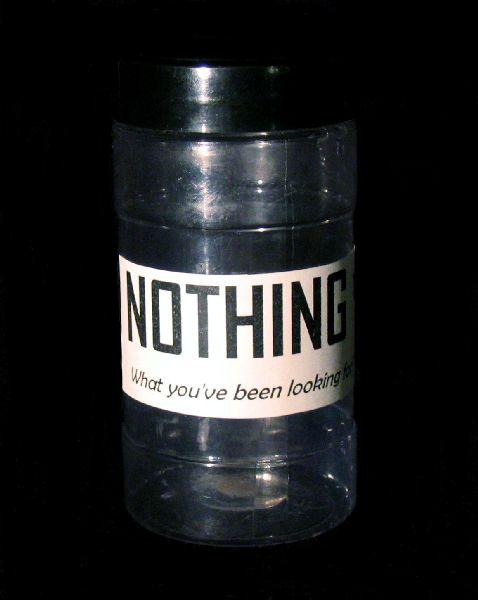 Women often wonder what men are thinking about. Jerry Seinfeld once joked that the answer is, “Nothing.” For the past several weeks, I too, have been thinking about nothing – not nothing as in “not anything,” but nothing as in the concept of nothingness. What is nothing? Is it possible that there could have been nothing rather than something? If so, why is there something rather than nothing?
What is Nothing?
Nothing is a very difficult concept to wrap one’s mind around. As A.J. Ayer pointed out, we are often fooled by the grammar of nothingness into think that since “nothing” is a noun, it must refer to something.
But “nothing” is a term of universal negation, not a term of reference. It’s similar to words like “no one ” and “nowhere.” “Nowhere” does not refer to a place, but to the absence of any place (not anywhere). Likewise, “nothing” does not refer to something, but to the absence of anything (not anything). If someone asked you what you had for lunch today, and you say “nothing,” you don’t mean you had lunch, and what you ate was called nothing, but rather that you did not have anything for lunch. If they ask you what nothing tasted like, tell them, “Chicken, of course.”
The minute we begin to think about nothing, we mentally transform nothing into a something; an object to be contemplated. It is even impossible to imagine nothingness, because every image we conjure up is an image of something. We often imagine nothing as an infinite expanse of black, empty space (a vacuum) – but empty space is something, not nothing. Nothing is “not-even-space.” Nothing is not a little bit of something, or “something-lite,” but literally no-thing; the absence of being. Perhaps Macbeth said it best when he said, “Nothing is but what is not.” It is the absence of any and every existent, including the very concept of existence. Could this kind of nothing “exist”?
May 24, 2010
Thinking About Nothing
Posted by Jason Dulle under Cosmological Argument, Philosophy, Theistic Arguments[2] Comments
November 17, 2009
Are our Senses Reliable?
Posted by Jason Dulle under Apologetics, Epistemology, Philosophy[5] Comments
A young skeptic once called into Greg Koukl’s radio show, Stand to Reason, and asked why we should believe our senses are reliable. Why shouldn’t we believe we are in some computer program like the Matrix, which has fooled us into believing we are experiencing reality when in fact we are not?
Greg’s answer was ingenious: because we’re alive! Survival in the real world depends on our ability to accurately perceive the real world and maneuver safely within it. If our perception was off even a little, the effects would be disastrous. That’s why people who drive cars while intoxicated often end up in fatal accidents: their ability to accurately perceive the outside world is impaired. The fact that we are still alive demonstrates that our senses allow us to perceive reality in a fairly accurate manner.
But couldn’t it be the case that the outside world we think our senses are accurately perceiving isn’t really the outside world at all (like the Matrix)? Yes it’s possible, but why should I believe that to be the case? Just because it’s possible that we could be mistaken in what we perceive about reality does not mean we are mistaken, or should think we might be mistaken. Possibility and probability are not the same things. We are prima facie justified in trusting our senses that what we perceive to be the real world is the real world, until evidence arises to the contrary that would falsify this properly basic belief.
See J.P. Moreland’s short article entitled “Answering the Skeptic” for further reading.
November 13, 2009
What does it mean to say something exists? What exactly is existence? How does it differ from non-existence?
Most of us have a common-sense notion of existence, and thus we have never really thought these questions through. But as with so many other things, we know what existence is until we are asked to define it! Admittedly I’ve never woken up at 4:00 in the morning in cold sweats trying to figure out what existence is and how it differs from non-existence, but it is fun to think about nonetheless.
What is existence, then? Does saying something exists mean it located in space and time? If so God could not exist. In fact, space and time themselves could not exist because space is not located in space, and time is not located in time.
October 13, 2009
How we Came to Privatize Faith
Posted by Jason Dulle under Philosophy, Relativism, Theology[15] Comments
 We find ourselves in a world in which religious truth-claims have been demoted to private, subjective opinions or values. Religious knowledge is not considered “real” knowledge. In fact, religious truth-claims are not even testable, and thus must be taken on blind faith.
How did it come to this? Here I offer a very condensed, if not simplistic path to how we privatized faith, drawing largely on Dr. James Sawyer’s work in this area.
It started with Renee Descartes. He demanded that what we claim to “know” we know with the same level of certainty as mathematical principles. This drove a wedge between faith and knowledge, because religious claims cannot be known with that degree of certainty (virtually nothing can).
Then came the opposite extreme offered by David Hume. Hume argued that there are no innate ideas or truths that serve as a foundation for knowledge. The mind is a blank slate upon which our sense perceptions are received, and from which we gain knowledge. Knowledge, then, does not correspond with reality, but is simply a well-ordered, coherent system within our minds created by sense perception. This left no room for the idea of truth. There is no correspondence between reality and what we perceive to be reality. Each person’s perspective is as valid as the next person’s perspective (relativism).
October 5, 2009
Philosophy is indispensable to theology
Posted by Jason Dulle under Apologetics, Philosophy[5] Comments
Many see philosophy and theology as dichotomous—like oil and water. The only dichotomy, however, is between false philosophy and good theology, or between good philosophy and false theology. Everybody has a philosophy. It’s unavoidable. The only question that remains to be answered is whether our philosophy is good or bad, right or wrong.
Philosophy provides us with the tools of rational thought. As such, philosophy is essential to the task of Biblical interpretation and systematic theology. In terms of the knowing process, philosophy actually precedes theology because we cannot discover the meaning of the text unless we first learn the principles of rationality required for interpretation. That is why the content of our philosophy is so important, and the presuppositions of our philosophy need to be exposed and examined to determine their validity, for if we come to the Biblical text with a bad philosophy, it will ultimately lead to a bad theology.
October 5, 2009
Reality, Belief, and Truth
Posted by Jason Dulle under Apologetics, Epistemology, PhilosophyLeave a Comment
We often use words like reality, belief, and truth without thinking much of what we mean by them. With some inspiration by J.P. Moreland I have devised a brief definition of each that makes it clear how they differ from each other.
Reality is the way the world really is independent of our beliefs about it.
Beliefs are what we think reality is like.
Truth is the corresponding relation between our beliefs and reality. If our beliefs about reality correspond to the way the world really is, truth is obtained. As J.P. Moreland says, truth puts us into contact with reality. We have truth when we have true, justified beliefs about reality.
October 2, 2009
Christians, Philosophy, and the University
Posted by Jason Dulle under Apologetics, Philosophy, Thinking[6] Comments
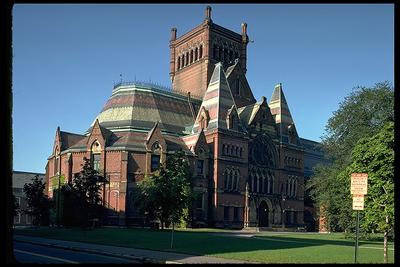 J.P. Moreland and William Lane Craig wrote:
[T]he single most important institution shaping Western culture is the university. It is at the university that our future political leaders, our journalists, our teachers, our business executives, our lawyers, our artists, will be trained. It as at the university that they will formulate or, more likely, simply absorb the worldview that will shape their lives. And since these are the opinion-makers and leaders who shape our culture, the worldview that they imbibe at the university will be the one that shapes our culture. If the Christian worldview can be restored to a place of prominence and respect at the university, it will have a leavening effect throughout society. If we change the university, we can change our culture through those who shape culture.
October 2, 2009
Part-Time Postmodernists, or Verificationist Modernists?
Posted by Jason Dulle under Apologetics, Epistemology, Philosophy, Pluralism, RelativismLeave a Comment
During an interview at Cambridge University William Lane Craig was asked how postmodern students reacted to his “rational approach.” He said:
Frankly, I don’t confront many students who are postmodernists. For all the faddish talk, I think it’s a myth. Students aren’t generally relativistic and pluralistic, except when it comes to ethics and religion. But that’s not postmodernism, that’s modernism. That’s old-style verificationism, which says things that are verifiable through the five senses are factual, but everything else is just a matter of taste (including ethics and religion). I think it’s a deceit of our age to say that modernism is dead.
Craig echoed similar sentiments in To Everyone An Answer on pages 21-22:
[E]nlightenment rationalism is so deeply imbedded in Western intellectual life that these antirationalistic currents like Romanticism and postmodernism are doomed, it seems, to be mere passing fashions. After all, no one adopts a postmodernist view of literary texts when reading the labels on a medicine bottle or a box of rat poison…In the end, people turn out to be subjectivists only about ethics and religion, not about matters provable by science. But this is not postmodernism; this is nothing else than classic Enlightenment naturalism–it is the old modernism in a fashionable new guise.
February 13, 2009
Philosophy: The Last Academic Stronghold of Theism
Posted by Jason Dulle under Apologetics, Atheism, Naturalism, Philosophy, Theism[9] Comments
Philosopher and theologian, William Lane Craig, has frequently made reference to the turn of events in philosophy over the past 40 years. What was once a very secularized field has been “invaded” by theists. As evidence of this phenomenon, consider what atheist philosopher, Quentin Smith, had to say in the journal Philo:
By the second half of the twentieth century, universities and colleges had been become in the main secularized. … Analytic philosophers (in the mainstream of analytic philosophy) treated theism as an antirealist or non-cognitivist world-view, requiring the reality, not of a deity, but merely of emotive expressions…. The secularization of mainstream academia began to quickly unravel upon the publication of [Alvin] Plantinga’s influential book on realist theism, God and Other Minds, in 1967. It became apparent to the philosophical profession that this book displayed that realist theists were not outmatched by naturalists in terms of the most valued standards of analytic philosophy: conceptual precision, rigor of argumentation, technical erudition, and an in-depth defense of an original world-view. … [T]oday perhaps one-quarter or one-third of philosophy professors are theists, with most being orthodox Christians. … God is not “dead” in academia; he returned to life in the late 1960s and is now alive and well in his last academic stronghold, philosophy departments.[1]
In other words, the intellectual respectability of theism was resurrected. Theism was rational after all (even if [as Quentin thinks] it is ultimately false), and formed a beachhead against secularism in university philosophy departments. What I find interesting, however, is the response of naturalists. According to Smith
the great majority of naturalist philosophers react by publicly ignoring the increasing desecularizing of philosophy (while privately disparaging theism, without really knowing anything about contemporary analytic philosophy of religion) and proceeding to work in their own area of specialization as if theism, the view of approximately one-quarter or one-third of their field, did not exist. … [N]aturalist scientists…are so innocent of any understanding of the philosophy of religion that they do not even know that they are innocent of this understanding, as it witnessed by their popular writings on science and religion.[2]
And again,
If each naturalist who does not specialize in the philosophy of religion (i.e., over ninety-nine percent of naturalists) were locked in a room with theists who do specialize in the philosophy of religion, and if the ensuing debates were refereed by a naturalist who had a specialization in the philosophy of religion, the naturalist referee could at most hope the outcome would be that “no definite conclusion can be drawn regarding the rationality of faith,” although I expect the most probable outcome is that the naturalist, wanting to be a fair and objective referee, would have to conclude that the theists definitely had the upper hand in every single argument or debate.[3]
Be sure, this is not because Smith thinks theists have the better arguments. On the contrary, he is persuaded that naturalism is the true ontology. But he recognizes that 99% of naturalists are so ignorant of the philosophy of religion that they would not be able to refute the arguments. I have found this to be true of many naturalists. They continue to speak as if theism requires an irrational, blind leap of faith into the dark, and continue to present tired-old arguments against theism as if those arguments have not been answered by theists both past and present. They are unaware of those responses, because they do not engage the philosophy of religion with the same rigor that theists engage philosophical naturalism.
Furthermore, because most naturalists ignore philosophers of religion, they are also unaware of the fact that theistic philosophers have defeated their arguments for naturalism, and thus ignorant of the fact that their belief in naturalism is not justified (at least until they are able to undercut or rebut those defeaters). As Smith notes, “They may have a true belief in naturalism, but they have no knowledge that naturalism is true since they do not have an undefeated justification for their belief.”[4]
While Smith is concerned about the recent turn of events in philosophy, I find it reason to rejoice. It is a testimony to the intellectual credibility of the Christian faith. Religious faith does not require a commitment of the will in the absence (or in spite of the) evidence, but rather is a persuasion based on reasonable knowledge. Christians need not fear philosophy; we need only avoid the false philosophies of men (Colossians 2:8). As C.S. Lewis once said, “Good philosophy must exist, if for no other reason, because bad philosophy needs to be answered.”
[1]Quentin Smith, “The Metaphilosophy of Naturalism,” Philo, 4:2 (2001); available from http://www.philoonline.org/library/smith_4_2.htm; Internet; accessed 07 January 2009.
[2]Ibid.
[3]Ibid.
[4]Ibid.
November 3, 2008
Is an Unembodied Mind too Abstract a Notion to be the Cause of the Universe?
Posted by Jason Dulle under Apologetics, Cosmological Argument, Philosophy, Theism, Theistic Arguments[19] Comments
A cosmological argument for theism looks something like this:
Everyone intuits the causal principle that every effect/event requires a sufficient cause. What, then, is the cause of the universe? What is causally sufficient to account for the observed effect? Since the effect includes time, space, and matter, the cause must be timeless, non-spatial, and immaterial, not to mention intelligent and powerful to account for the specified complexity of the universe. Only two things fit this description: abstract objects, or an unembodied mind. Since abstract objects are causally impotent by definition (they do not stand in causal relations with concrete objects), they cannot be the cause of the universe. That leaves us with an unembodied mind, who is a personal agent. This makes sense. Not only are we are intimately acquainted with the idea of immaterial minds causing physical effects, but it also makes sense of the design and order we see in the universe.
In response to this argument, some think we should reject the notion of a disembodied mind on the grounds that it is too abstract; i.e. it is something we are not acquainted with, and hence have no reason to believe is possible. There are at least three reasons to reject this line of thinking.
First, there is nothing logically incoherent about a disembodied mind. The notion may not be familiar to us, but we ought not confuse familiarity with plausibility. A person raised in the remote parts of the jungle has never seen ice, but his lack of familiarity with ice does not mean the existence of ice is implausible. Neither would it constitute good grounds on which for him to reject evidence being presented to him that ice exists. Likewise, just because we are not personally acquainted with the idea of an unembodied mind does not mean an unembodied mind does not, or cannot exist. Neither does it constitute good grounds on which to reject the evidence being presented for the existence of such a mind. The cosmological argument provides warrant for believing in something we may not have thought probable otherwise.
Second, even if we are not personally familiar with unembodied minds, we are very familiar with the concept of mind (each of us has one), and its causal powers. In other words, even if the specific form of the mind in question is unfamiliar to us, the function of a mind very familiar to us: minds exercise causal agency. And I see no reason to think this capacity is dependent on our mind being embodied. The property of causal agency belongs to the mind, not the body, so there is no reason to think an unembodied mind is too abstract a concept to be the cause of our universe.
One might respond that it would be impossible for an unembodied mind (immaterial) to cause effects in the physical realm. This must be false. Why? Because our minds cause effects in the physical realm all the time, and our minds are an immaterial entity (it may stand in a causal relationship with the brain, but it cannot be reduced to the brain/physicality). The only difference between our minds and an unembodied mind is embodiment, but I fail to see how embodiment is significant. The fact remains that human minds, as well as a divine mind, are immaterial in nature, and a source of causation which produces effects in the physical world.
A case could even be made that human minds do not have to be embodied, and indeed, become disembodied upon death. I am thinking in particular of empirical studies into near-death experiences. While many of the experiences are unverifiable, a small minority are. And in these instances, there are examples of continued consciousness, even after brain death. In fact, in some cases the person is conscious of things happening outside of the room where their body lies (things they could not have possibly known, even if their body were functioning normally). So I don’t think the idea of an unembodied mind is abstract, or that we are not acquainted with this. Even if most of us are unacquainted with it experientially, we are acquainted with the concept, and there is nothing incoherent about the concept. Strange, maybe, but incoherent, no.
Finally, those who wish to reject both abstract objects and an unembodied mind as the cause of the universe need to offer an alternative. Given the criteria, I cannot fathom what that could be. If no other alternative is possible, then they must either reject the causal principle and say the universe popped into existence uncaused, or else embrace an eternal universe. Given the fact that the causal principle is one of our strongest metaphysical intuitions and enjoys undisputed empirical confirmation, and given the fact that the scientific evidence and philosophical arguments against an eternal universe are more than compelling, neither is a good option. We have good reason, then, to think the cause of the universe was a powerful, intelligent, immaterial, non-spatial, eternal mind. This is an apt description of what most theists have traditionally meant by the term “God.”
October 15, 2008
Existence and Necessity
Posted by Jason Dulle under Apologetics, Philosophy, Theism, Theistic ArgumentsLeave a Comment
*Read previous post before reading this one.*
There is a difference between the question, Is existence necessary?, and Does X exist necessarily? The first question asks about existence in general, whereas the second asks about the existence of some specific thing within the larger domain of existence.
Regarding the first question, is it necessary that something exist? The answer to this question depends on whether one is speaking of historical possibility, or metaphysical possibility. Historically speaking, the answer is an emphatic yes. Something must exist, and must exist eternally. Why? Because something does exist. If there was ever a time when absolutely nothing existed, absolutely nothing would “exist” now, because nothing has no potentiality to ever become something. And yet there is something, so we know there has never been a time when nothing existed.
But from a metaphysical perspective, there is no reason to think existence itself is necessary. We can conceive of absolute nothingness. Furthermore, there is nothing logically incoherent about the concept of non-existence. Existence, then, is not necessary, but contingent, and contingent things require an explanation for their existence. What, then, is the explanation of existence? Why is there something, rather than nothing?
The second question is quite different. It does not ask whether existence itself is necessary, but whether the existence of some particular X is necessary. In cosmological arguments, X stands for the universe. Does the universe exist necessarily?
Some atheists assume the answer to this question is wrapped up in the first: Since something must exist eternally, the universe must be eternal. While it is true that something must have always existed, why think the universe is that something? Not only are there compelling scientific and philosophical reasons to think the universe exists contingently, but this begs the question in favor of atheism. It assumes materialism from the start (i.e. the universe is all that exists), reasoning that since something must be eternal, and the universe exhausts reality, then the universe must be eternal. But that the universe exhausts reality is what stands to be proven.
Secondly, thinking the universe exists by a necessity of its own nature is a grandiose claim that few philosophers are willing to countenance. To say the universe exists by a necessity of its own nature does not merely affirm the necessity of a universe in general, but the necessity of our universe in particular. It is an affirmation that the very fundamental particles of our universe–quarks, neutrons, electrons, etc.–are necessary, not just in kind, but in number and arrangement as well. But this is absurd. There is no reason to think the universe could not have been composed of a different set/number of fundamental particles, arranged in a different way, operating by a different set of physical laws, resulting in a totally different kind of universe. In fact, it is quite possible to conceive of a physically empty universe, or no universe at all. There is no physical or logical law that requires the universe to exist. So modal logic alone demonstrates the universe is not necessary. It is contingent, meaning it is metaphysically possible that it might have never been.
We can agree with the atheist that existence is necessary as a historical fact, and that the universe does not exist necessarily. But these two truths, coupled with the scientific and philosophic evidence for the finitude and contingency of the universe, provide a strong argument for a personal God. Something must exist eternally, and since the universe is not that something, it must be something else. Whatever caused the spatio-temporal-material universe to exist must itself be eternal, non-spatial, and immaterial.
Only two things fit such a description: abstract objects, or an unembodied mind. Since abstract objects are causally impotent by definition, they cannot be the cause of the universe, and thus are unlikely to be that which has always existed. That leaves us with an unembodied mind as the eternal reality. This makes sense. Not only are we are intimately acquainted with the idea of minds creating things, but it also makes sense of the design and order we see in the universe. An intelligent agent best explains why the universe exists as it does. Since an eternal, non-spatial, immaterial, intelligent mind is what most mean by “God,” it is best to conclude that God is that which exists eternally, and hence necessarily. He is a necessary being, who contains within Himself the sufficient reason for His own existence, and is the cause of everything else.
September 18, 2008
To speak of Nothing is to Speak of Something, and Yet it Remains Nothing
Posted by Jason Dulle under Philosophy, ThinkingLeave a Comment
Some concepts are so heady that they are difficult to put into words. For example, how does one talk about what God was doing before creation, when creation marks the beginning of temporality? There cannot be a “before” the beginning, and yet we can conceive of God’s existence before time began. While it is difficult to put this into words, one way of doing so is to speak of God existing “without the universe.” Problem solved.
There are other concepts, however, which are impossible to put them into words. Consider “nothing.” It is impossible for us to even imagine nothingness, yet alone to reduce it to words. For example, according to the Big Bang theory of cosmic origins our universe came into existence from literally nothing about 13.7 billion years ago. But to say our universe came into existence “from” nothing treats nothing as if it were somewhere from which the universe emerged. It isn’t, and that’s not what scientists mean to say, but that is the picture that emerges when we try reducing this concept to words.
We might even conceive of a “time when nothing existed,” but this too is unintelligible. There cannot be a “time” when nothing existed, because a state of nothingness includes the absence of temporality. I’ve done it again. I referred to nothingness as a “state,” but it is not a state. It is nothing! The fact of the matter is that no matter how we choose to refer to the concept, the moment we do so, we reify it in the process. We do the same thing for other concepts. Consider darkness. Darkness, as such, does not exist. It is the absence of all light. And yet the moment we refer to “darkness,” we reify it, as if it were an existent. This is a shortcoming of language we have to live with, but we need to be cognizant of the fact that speaking of nothingness, or of something coming from nothing, does not mean nothing is something. It means no-thing.

 Thinking to Believe