Philosophy


Renee Descartes was the first modern philosopher. He was a rationalist. His goal was to ground knowledge in something that could not be doubted. He found such a grounding in his famous formulation, Cogito, ergo sum (I think, therefore I am). The question to be answered was how he could know he existed. The answer was to be found in his act of contemplation of the very question. To contemplate existence requires a contemplator who exists. That he was thinking about doubt was something he could not rationally doubt, and thus concluded he knows indubitably that he exists. He reasoned deductively as follows:

P1 The act of thinking requires the existence of a thinker
P2 I experience the act of thinking
______________________________________________
I exist as a thinker

Some argue that Descartes key insight actually turns out to depend on a logical fallacy: begging the question. The question is whether there exists a personal subject, “I.” And yet “I” is smuggled into the second premise of the argument. That is question-begging, for it assumes there is an I to experience the act of thinking, and then concludes that there is an I who thinks. I am conflicted about this. On the one hand, this seems reasonable to me. Descartes reasoning does seem to beg the question. On the other hand, Descartes argument seems valid: the ability to contemplate one’s existence requires that they exist. What do you think?

If Descartes did beg the question, invalidating his argument, then it seems there is no non-question-begging argument that could indubitably prove I exist. Of course, this does not mean I do not exist. I do, and I know I do. It simply means we can’t demonstrate how we know this, other than an appeal to basic intuition.

I think this is a helpful lesson for skeptics. One does not need to be able to prove (or know how) X is true in order to know X is true. Some truths are properly basic; i.e. they are self-evident, do not need to be questioned, and do not need evidential demonstration.


UPDATE 3/1/17: Perhaps the supposed question-begging nature of the argument is merely the fault of how analytic philosophers structure the argument. For example, if we state the argument as follows, it does not beg the question:

P1 The act of thinking requires the existence of a thinker
P2 There are acts of thinking ______________________________________________
Thinkers must exist

The law of non-contradiction (LNC) states that A cannot be both A and not A at the same time and in the same way. For example, my car cannot be said to be both in the garage and not in the garage at the same time and in the same way. It could only be both in the garage and not in the garage at the same time if by being “in the garage” in the first instance means something different than it does in the second. For example, it would not be a contradiction if in the first instance I mean to refer to the body shop where my car is being repaired, and in the second instance I mean to refer to its normal storage space where it is currently absent.


Postmodern types disparage the LNC (as with all laws of logic) as a Western invention. No argument is made for such a claim. It is just asserted (any argument offered against the LNC would require them to presuppose its truth, because the premises and conclusion of the argument are not the same as their negation). I have a sneaking suspicion I know why they want to axe the LNC: their worldview is inherently self-contradictory.


Postmodernism claims there is no truth, or that truth cannot be known. And yet, this is a contradiction because the claim that there is no truth, or that truth cannot be known is itself a claim to know something that is true. If the LNC is true, then postmodernism is false. The LNC must be axed to save postmodernism as a worldview.


When you point out the self-referential and incoherent nature of postmodernism, the postmodernist will retort that such an analysis depends on the LNC. Since the LNC is a Western invention, it is inappropriate to subject postmodernism to its criterion. In fact, doing so is just a power play to subjugate others.


What can you say to those who deny the LNC? Greg Koukl has offered a good strategy. When someone claims the LNC is not true, but an invention of Western logic, respond, “So what you are saying, then, is that the LNC is true?” They will protest, “No, I am saying it is not true.” We might respond, “Oh, so you are saying the law of contradiction is true, then. Thank you for clarifying.” Frustratingly they will reply, “No, no. That is not what I am claiming. I am claiming the LNC is not true.” We might graciously answer, “Exactly. That is what I said you said: The LNC is true.”


I would venture to say they would be exasperated with you by this point; aggravated that you would contradict But this exposes the very problem with their claim that the LNC is a Western convention, rather than a universal and necessary feature of human rationality. While they deny the LNC with their lips, they cannot help but to recognize that “is” and “is not” are contradictory, and thus your restatement of their view contradicts their stated view. That is inescapably self-refuting. They cannot deny the existence of contradictions on the one hand, and then correct your contradiction on the other.


For a person who truly believes the LNC is a fiction of Western logic, the only appropriate response to your restatement is a confirmatory, “Yes.” But no one would respond in this way. He would initially seek to correct your contradiction, assuming you have misunderstood him. Even if one dared to respond in this way, I would venture to say he does not believe that which he speaks. For if he believed it, he would have to acknowledge that there was a difference between his believing it, and not believing it. And if such a difference exists, the LNC must be true. The LNC is a first principle of thought that cannot be avoided (rational intuition). It is universal and necessary to all human reasoning—even for those who seek to deny it.


Of course, there are other more persuasive ways of illustrating this truth that guarantee your postmodern friend will come to acknowledge the truth of the LNC. The early 11th century Medieval Muslim philosopher, Avicenna, devised an infamous way for helping someone see the irrationality involved in denying the LNC. Avicenna wrote, “Anyone who denies the LNC should be beaten and burned until he admits that to be beaten is not the same as not to be beaten, and to be burned is not the same as not to be burned” (Metaphysics 1). By no means would I suggest using this tactic, but if this wouldn’t convince your postmodern friend of his error, nothing can!

Beyond Death, by Gary Habermas and J.P. Moreland

This book is a comprehensive examination of the afterlife. The book begins with an examination of traditional arguments for the afterlife, showing both their strengths and weaknesses. It goes on to argue for the existence of the soul, as well as explore the nature of the soul.

The centerpiece of their case rests on near-death experiences. They detail many documented cases, as well as speak of the ongoing research in this area. This section is worth the cost of the book.

They also address the evidence for the resurrection of Jesus, reincarnation, and explore the nature of our existence beyond death.

The Missing Gospels: Unearthing the Truth Behind Alternative Christianities, by Darrel Bock

This book is an introductory look at the so-called lost Gospels some scholars claim challenge the very notion of Christian orthodoxy. The “new school” maintains that the early church held to a diverse set of beliefs, and those who call “orthodox” did not become orthodox until the third century via political maneuvering. The Missing Gospels attempts to show that the new school interpretation of Christian history is mistaken.

Bock contrasts the Gnostic materials with the Biblical and post-apostolic writings of the Fathers on four key ideas: (1) God and creation; (2) the person of Jesus as human and divine; (3) salvation; (4) the purpose of Jesus’ life and death. He concludes that the Gnostic materials present a radically different picture of Christianity than orthodoxy.

I would recommend this book for anyone interested in better familiarizing themselves with the Gnostic materials, as well as providing an answer to those who claim Gnosticism was one of a variety of original Christianities.

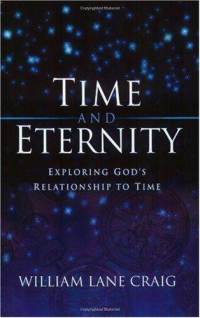
Time and Eternity: Exploring God’s Relationship to Time
by William Lane Craig

If you are interested in exploring the nature of time, and God’s relationship to time, this is an excellent read. Dr. Craig holds a Ph.D. in theology as well as philosophy, so he is well equipped to deal with this topic. In fact, he is one of the world’s premiere experts in the philosophy of time.

Craig argues that while Scripture is clear that God is eternal, it not clear on the nature of God’s eternality. Specifically, is God a timeless or omnitemporal being? In other words, does God exist outside of time, or does God exist throughout all time. Contrary to popular belief, both the Bible and philosophy tend to support the idea that God exists in and throughout all time.

The book is not an easy read, but it is an intellectually pleasurable read for anyone interested in this topic.

I summed up Craig’s argument in my

May 30th post if you want to check it out.


Defending Life: A Moral and Legal Case Against Abortion Choice
by Francis Beckwith


Beckwith is arguably the most able defender of the pro-life worldview. His new book is being branded as the most complete and persuasive pro-life work ever written. Beckwith’s legal, philosophical and theological education make him an excellent source for this topic.

He makes a scientific, philosophical, and legal case for pro-life and against abortion-choice. He tackles both the popular arguments and the sophisticated arguments offered by abortion-choicers in behalf of their position and against the pro-life position. He even tackles stem cell research and cloning toward the end of the book. Excellent read!

Introduction

What is God’s relationship to time? Is He timeless or temporal? Does He remain untouched the by the temporality of His creation, or has He entered into the flow of time with His creation? Does He exist in an “eternal now” outside of time, or does He experience chronology and succession? Does He transcend time so that He has His whole life before Him all at once without the ordering of temporal relations such as earlier than/later than, or does He experience His life moment by moment? Is it the case that from God’s perspective “the entire series of temporal events is real…and thus available for his causal influence at any point in history through a single timeless act,”1 or does God experience and act within the entire series of temporal events successively over time?

I am persuaded that it both Biblically sound and philosophically preferable that we understand God to be timeless without creation, and temporal subsequent to creation. With the act of creation God has entered into the flow of time, experiences chronology and succession, experiences His life moment by moment, and acts within the entire series of temporal events successfully over time. Before I argue for this conclusion, however, let’s consider the nature of time itself. (more…)

Many months ago I dialogued with an atheist-leaning agnostic about the existence of the soul. After I gave him persuasive reasons to believe that our sameness of identity through the process of physical change is grounded in a substantive soul rather than memory (a view held by some materialists) he responded, “I too am in search of a ‘meaning’ of ‘identity’ and the ‘afterlife.’” That was a strange twist to the conversation, but I used it as an opportunity to discuss Christianity with him. I had just finished reading William Lane Craig’s chapter, “The Absurdity of Life Without God” from his book Reasonable Faith, in which he lays out what is necessary for genuine meaning and purpose to exist in the world, and explains why atheism cannot provide it. I built on Craig’s thoughts to produce the following response that I hope you will find both stimulating and evangeliPublishstically useful:


John [not his real name],


You mentioned that you “too” were in search of meaning in life. I find your comment interesting considering the fact that I did not mention anything about my own search for meaning. It is true that we all search for meaning—including myself—but I hope you are not confusing my argument for a substantive soul with my psycho-spiritual desire to find meaning in life. While I may find the idea of a soul that grounds our personal identity and survives physical death to be personally meaningful, I hold to the notion—not because I find it meaningful—but because I find it to be the most rational among options.


Yes, we all search for meaning in life. We all want to know why we are here, what we are to do, and what will bring us ultimate fulfillment. Have you ever stopped to consider why that is? Why does man seek a purpose to life? What makes us ask Why? in the face of calamity? Why do we want to believe there is a grand purpose to everything? Why do we feel empty, as though something were missing in our lives? Why is it that the accumulation of material things cannot satisfy that emptiness? Why is it that what we think will bring us happiness and fulfillment in life—once obtained—fails to deliver as we had hoped, sending us looking for some other thing that will finally bring us fulfillment? I propose that it might be reasonable to conclude that there actually is purpose and meaning in the world. I propose that we seek purpose because we were created with purpose (to serve our Creator), but turned our back to it, and our souls will never rest until we return to fellowship with our Creator.


Some are uncomfortable with such talk, however. They wish to excise the world of a personal Creator, but still hold on to the notion of objective meaning in the world. What most people fail to realize, however, is that for there to be genuine purpose and meaning in life two things must be true: (1) God exists; (2) there is life beyond the grave (immortality). God is necessary because without Him there is no transcendent source from which to receive purpose and draw meaning, and immortality is necessary because without a continued existence beyond the grave our moral choices are ultimately irrelevant. Let me elaborate first on the latter.


Immortality


If there is no life beyond the grave it makes no ultimate difference whether one chooses to live like Hitler or Mother Theresa. “If there is no God, then your life ultimately means nothing. Since there is no enduring purpose to life, there’s no right or wrong way to live it.”<!–[if !supportFootnotes]–>[1]<!–[endif]–> As Dostoyevsky put it: “If there is no immortality then all things are permitted.” We are just left with the bare facts of cold existence. Molecules and atoms know neither right nor wrong, they just are. Richard Dawkins echoed this in his eloquent obituary for meaning, saying, “In a universe of blind physical forces and genetic replication some people are going to get hurt, other people are going to get lucky; and you won’t find any rhyme or reason in it, nor any justice. The universe we observe has precisely the properties we should expect if there is at the bottom no design, no purpose, no evil, and no good. Nothing but blind, pitiless indifference. DNA neither knows nor cares. DNA just is. And we dance to its music.”<!–[if !supportFootnotes]–>[2]<!–[endif]–>


If there is no life beyond the grave there are no ultimate consequences for our actions. Man’s evil deeds will go unpunished, and his good deeds will go unrewarded. The wrongs will never be righted, and justice will never be served. If we experience immortality, however, our moral choices on this side of the grave become extremely significant.


Without immortality our lives will be stomped out into non-existence, reduced to a fleeting moment in the sea of infinity. Like a candle in the wind our flame will be blown out in darkness, never to flicker again.


The Existence of God

Mere duration of existence beyond the grave, however, cannot make our lives meaningful. Ultimate significance requires the existence of God, for without God we would still be asking What is my purpose? and Why am I here?, but for time immemorial rather than for a mere lifetime. Without God we are just a cosmic accident who lives to contemplate just how meaningless our existence really is.


Atheism is inept to provide meaning and purpose to life. The message of atheism is that man came into existence for no purpose, and he will pass out of existence without purpose. The same purposeless cosmic process that brought us into existence will also be responsible for eradicating our existence. Peter Singer, an atheistic philosopher at Princeton University understood the implications of the atheistic worldview clearly when he said, “When we reject belief in a god we must give up the idea that life on this planet has some preordained meaning. Life as a whole has no meaning. Life began [in] a chance combination of molecules; it then evolved through chance mutations and natural selection. All this just happened; it did not happen for any overall purpose.”<!–[if !supportFootnotes]–>[3]<!–[endif]–> In a similar vein G.G. Simpson wrote, “Man is the result of a purposeless and materialistic process that did not have him in mind. He was not planned. He is a state of matter, a form of life, a sort of animal, and a species of the Order Primates, akin nearly or remotely to all of life and indeed to all that is material.”<!–[if !supportFootnotes]–>[4]<!–[endif]–>


In a purely materialist view of reality life is nothing more than a struggle to survive—a struggle that we ultimately lose in the end. Why is it that we continue with the struggle? Why do we want to survive? What is it that we live for? Atheism is incapable of answering these questions to our existential satisfaction. William Lane Craig wrote to this end:

“Who am I?” man asks. “Why am I here? Where am I going?” Since the Enlightenment, when he threw off the shackles of religion, man has tried to answer these questions without reference to God. But the answers that came back were not exhilarating, but dark and terrible. “You are the accidental by-product of nature, a result of matter plus time plus chance. There is no reason for your existence. All you face is death.” Modern man thought that when he had gotten rid of God, he had freed himself from all that repressed and stifled him. Instead, he discovered that in killing God, he had also killed himself. … For if there is no God, then man’s life becomes absurd. It means that life itself is absurd. It means that the life we have is without ultimate significance, value, or purpose.<!–[if !supportFootnotes]–>[5]<!–[endif]–>

On a naturalistic view of the world the end of man is the same as mosquitoes, and thus he is ultimately no more significant than mosquitoes. John Darnton, New York Times journalist and author of The Darwin Conspiracy, wrote in the San Francisco Chronicle: “For ultimately, if animals and plants are the result of impersonal, immutable forces…we are all of us, dogs and barnacles, pigeons and crabgrass, the same in the eyes of nature, equally remarkable and equally dispensable.”<!–[if !supportFootnotes]–>[6]<!–[endif]–>

Cornell’s William Provine, wrote:

How can we have meaning in life? When we die we are really dead; nothing of us survives. Natural selection is a process leading every species almost certainly to extinction and “cares” as much for the HIV virus as for humans. Nothing could be more uncaring than the entire process of organic evolution. Life has been on earth for about 3.6 billion years. In less that one billion more years our sun will turn into a red giant. All life on earth will be burnt to a crisp. Other cosmic processes absolutely guarantee the extinction of all life anywhere in the universe. When all life is extinguished, no memory whatsoever will be left that life ever existed.


Yet our lives are filled with meaning. Proximate meaning is more important than ultimate. Even if we die, we can have deeply meaningful lives. <!–[if !supportFootnotes]–>[7]<!–[endif]–>

The horror of modern man is that “because he ends in nothing, he is nothing.” It’s true that we may have a relative significance because of some impact we had on history, but still no ultimate significance because all will come to naught in the end. The activities of our lives, and even our very existence is utterly without enduring meaning. People may choose to pretend their life has meaning, but it is just that: pretending. The universe does not acquire value simply because we ascribe value to it. Bertrand Russell wrote of the abolition of meaning in this way:

That man is the product of causes that had no prevision of the end they were achieving. That his origin, his growth, his hopes and fears, his loves, his beliefs, are but the outcome of accidental collocations of atoms. That no fire, no heroism, no intensity of thought and feeling can preserve an individual life beyond the grave. That all the labours of the ages, all the devotion, all the inspirations, all the noonday brightness of human genius, are destined to extinction in the vast death of the solar system, and that the whole temple of man’s achievements must be inevitably be buried beneath the debris of a universe in ruins. All these things, if not quite beyond dispute, are yet so nearly certain that no philosophy which rejects them can hope to stand. Only within the scaffolding of these truths, only on the firm foundation of unyielding despair, can the soul’s habitation, henceforth, be safely built.<!–[if !supportFootnotes]–>[8]<!–[endif]–>

Borrowing from Theism

Unfortunately many atheists have not yet to come to terms with the nihilism inherent to their worldview like Russell did. Friedrich Nietzsche, the father of modern nihilism, was aware of this cognitive gap. He illustrates it beautifully in the story of the madman:


Have you not heard of that madman who lit a lantern in the bright morning hours, ran to the market place, and cried incessantly: “I seek God! I seek God!”—As many of those who did not believe in God were standing around just then, he provoked much laughter. Has he got lost? asked one. Did he lose his way like a child? asked another. Or is he hiding? Is he afraid of us? Has he gone on a voyage? emigrated? Thus they yelled and laughed.


The madman jumped into their midst and pierced them with his eyes. “Whither is God?” he cried. “I will tell you. We have killed him—you and I. All of us are his murderers. But how did we do this? How could we drink up the sea? Who gave us the sponge to wipe away the entire horizon? What were we doing when we unchained this earth from its sun? Whither is it moving now? Whither are we moving? Away from all suns? Are we not plunging continually? Backward, sideward, forward, in all directions? Is there still any up or down? Are we not straying, as through an infinite nothing? Do we not feel the breath of empty space? Has it not become colder? Is not night continually closing in on us? Do we not need to light lanterns in the morning? Do we hear nothing as yet of the noise of the gravediggers who are burying God? Do we smell nothing as yet of the divine decomposition? Gods, too, decompose. God is dead. God remains dead. And we have killed him.


“How shall we comfort ourselves, the murderers of all murderers? What was holiest and mightiest of all that the world has yet owned has bled to death under our knives: who will wipe this blood off us? What water is there for us to clean ourselves? What festivals of atonement, what sacred games shall we have to invent? Is not the greatness of this deed too great for us? Must we ourselves not become gods simply to appear worthy of it? There has never been a greater deed; and whoever is born after us—for the sake of this deed he will belong to a higher history than all history hitherto.”


Here the madman fell silent and looked again at his listeners; and they, too, were silent and stared at him in astonishment. At last he threw his lantern on the ground, and it broke into pieces and went out. “I have come too early,” he said then; “my time is not yet. This tremendous event is still on its way, still wandering; it has not yet reached the ears of men. Lightning and thunder require time; the light of the stars requires time; deeds, though done, still require time to be seen and heard. This deed is still more distant from them than most distant stars—and yet they have done it themselves.

It has been related further that on the same day the madman forced his way into several churches and there struck up his requiem aeternam deo. Led out and called to account, he is said always to have replied nothing but: “What after all are these churches now if they are not the tombs and sepulchers of God?”<!–[if !supportFootnotes]–>[9]<!–[endif]–>


What was Nietzsche’s point? His point was that those who deny the existence of God often fail to recognize the logical implications of that belief. The madman understood the significance of atheism, but those in the marketplace did not. The madman had come too early. While he recognized that the death of God meant the death of man as well, this had not yet reached the ears of his contemporaries. They were atheists by confession, but the full implications of that atheism had not yet sunken in. They were still drawing from the benefits of theism, all the while denying its intellectual foundation. They had not yet grasped that the metaphysician’s blade responsible for removing God from the universe also removed all meaning and purpose in life. The madman had come too soon. But Nietzsche predicted a day in which the cognitive gap between the death of God and the death of meaning would be bridged. Eventually man would realize what he had done, and the age of nihilism would be ushered in.

Man cannot live happily in such a state. The only way for him to achieve happiness in such a world is to act in a manner that is inconsistent with his worldview, supposing that the world has meaning, but without the proper foundation on which to build it. The atheist must borrow from the theistic worldview to avoid despair, deceiving himself into believing the Noble Lie: that we have value and purpose when in fact we have none. This blind leap into the recesses of personal fiction to find meaning for life will disappoint over time once it is realized that there is no solid ground on which to land.

One strength of the Christian message is found in its ability to provide what is necessary for genuine meaning and purpose in life. As William Lane Craig observed, “According to the Christian world view God does exist, and man’s life does not end at the grave. In the resurrection body man may enjoy eternal life and fellowship with God. Biblical Christianity therefore provides the two conditions necessary for a meaningful, valuable, and purposeful life for man: God and immortality. Because of this, we can live consistently and happily. Thus, biblical Christianity succeeds precisely where atheism breaks down.”<!–[if !supportFootnotes]–>[10]

This is not an appeal to believe in God on the basis that believing in God is emotionally satisfying. As emotionally satisfying as belief in God may be, the only reason to believe in God is because He exists in reality. My appeal is for you to reflect on why it is that you seek meaning and significance in life. Why do you feel the need to have a purpose, and be part of a purpose larger than yourself? Maybe it’s because you were created with purpose and meaning. Maybe it’s because there truly is meaning and value in life, but you have been searching for it in the wrong places.

The ability of Christianity to provide genuine meaning and purpose in life is not the only, nor the best reason to become a Christian, but it is a good one. Given the choice between atheistic materialism and theistic Christianity, the existential attractiveness of Christianity far outshines its competitor. Thankfully its intellectual viability far outshines its rivals as well, making Christianity not only existentially fulfilling, but rationally satisfying as well.


<!–[endif]–>

[1]Norman Geisler and Frank Turek, I Don’t Have Enough Faith to Be an Atheist (Wheaton, IL: Crossway Books, 2004), 20.

[2]Richard Dawkins, Out of Eden (New York: Basic Books, 1992), 133.

[3]Peter Singer, Practical Ethics, 2d ed . (Cambridge: Cambridge University Press, 1993), 331.

[4]G.G. Simpson, The Meaning of Evolution: A Study of the History of Life and of its Significance for Man [1949] (Yale University Press: New Haven CT, 1960 reprint) 344.

[5]William Lane Craig, “The Absurdity of Life Without God”; available from http://www.bethinking.org/resource.php?ID=129; Internet; accessed 02 September 2005. This is an online excerpt from Craig’s 1994 book, Reasonable Faith, pages 51-75.
[6]John Darnton, “Darwin paid for the fury he unleashed: How a believer became an iconoclast”, San Francisco Chronicle, September 25, 2005; available from http://sfgate.com/cgi-bin/article.cgi?f=/c/a/2005/09/25/INGAUERQK01.DTL&hw=darwin&sn=001&sc=1000; Internet, accessed 26 September 2005.

[7]William Provine, abstract of “Evolution: Free Will and Punishment and Meaning in Life”; available from http://fp.bio.utk.edu/darwin/1998/provine_abstract.html; Internet; accessed 12 October 2005.

[8]Bertrand Russell, Mysticism and Logic and Other Essays (London: Allen & Unwin, 1963), 41.

[9]Friedrich Nietzsche, The Gay Science (1882, 1887) para. 125; Walter Kaufmann ed. (New York: Vintage, 1974), pp.181-82.

[10]William Lane Craig, “The Absurdity of Life Without God”; available from http://www.bethinking.org/resource.php?ID=129; Internet; accessed 02 September 2005. This is an online excerpt from Craig’s 1994 book, Reasonable Faith, pages 51-75.

In the same vein as my post on Richard Dawkins’ comment…in Dennis Overbye’s New York Times review of What the Bleep, Down the Rabbit Hole (a documentary about quantum mechanics and [new age] religion) he explicated his take on free will given his materialist worldview: “Take free will. Everything I know about physics and neuroscience tells me it’s a myth. But I need that illusion to get out of bed in the morning. Of all the durable and necessary creations of atoms, the evolution of the illusion of the self and of free will are perhaps the most miraculous. That belief is necessary to my survival.”


That’s right. I know it’s not true, but I have to live as if it were. I feel the same way about trains. I know the train on the track is not real, but I feel forced to wait for it to pass the crossing as if it were really there! Has Overbye ever stopped to wonder why he needs the illusion of free will to get out of the bed in the morning; why it is necessary for survival? Overbye’s view is incoherent. When one’s worldview is inconsistent with their experience of reality, it is a sure sign that something is wrong with their worldview. Worldviews are snapshots of reality. If they do not help us navigate reality, maybe our snapshot is out of focus, and needs to be changed.


I thought atheists were atheists because atheism is so rational? Hardly! Atheists are atheists despite the irrationality of its implications.

William Dembski reported on his friend’s exchange with Richard Dawkins at a D.C. bookstore, where Dawkins was promoting his new book The God Delusion. Dembski’s friend “asked Dawkins if he thought he was being inconsistent by being a determinist while taking credit for writing his book.” The exchange was recorded. The transcript reveals the bankruptcy of atheism as a worldview:


Questioner: Dr. Dawkins thank you for your comments. The thing I have appreciated most about your comments is your consistency in the things I’ve seen you written. One of the areas that I wanted to ask you about and the places where I think there is an inconsistency and I hoped you would clarify it is that in what I’ve read you seem to take a position of a strong determinist who says that what we see around us is the product of physical laws playing themselves out but on the other hand it would seem that you would do things like taking credit for writing this book and things like that. But it would seem, and this isn’t to be funny, that the consistent position would be that necessarily the authoring of this book from the initial condition of the big bang it was set that this would be the product of what we see today. I would take it that that would be the consistent position but I wanted to know what you thought about that.

Dawkins: The philosophical question of determinism is a very difficult question. It’s not one I discuss in this book, indeed in any other book that I’ve ever talked about. Now an extreme determinist, as the questioner says, might say that everything we do, everything we think, everything that we write, has been determined from the beginning of time in which case the very idea of taking credit for anything doesn’t seem to make any sense. Now I don’t actually know what I actually think about that, I haven’t taken up a position about that, it’s not part of my remit to talk about the philosophical issue of determinism. What I do know is that what it feels like to me, and I think to all of us, we don’t feel determined. We feel like blaming people for what they do or giving people the credit for what they do. We feel like admiring people for what they do. None of us ever actually as a matter of fact says, “Oh well he couldn’t help doing it, he was determined by his molecules.” Maybe we should… I sometimes… Um… You probably remember many of you would have seen Fawlty Towers. The episode where Basil where his car won’t start and he gives it fair warning, counts up to three, and then gets out of the car and picks up a tree branch and thrashes it within an edge of his life. Maybe that’s what we all ought to… Maybe the way we laugh at Basil Fawlty, we ought to laugh in the same way at people who blame humans. I mean when we punish people for doing the most horrible murders, maybe the attitude we should take is “Oh they were just determined by their molecules.” It’s stupid to punish them. What we should do is say “This unit has a faulty motherboard which needs to be replaced.” I can’t bring myself to do that. I actually do respond in an emotional way and I blame people, I give people credit, or I might be more charitable and say this individual who has committed murders or child abuse of whatever it is was really abused in his own childhood. And so again I might take a …

Questioner: But do you personally see that as an inconsistency in your views?

Dawkins: I sort of do. Yes. But it is an inconsistency that we sort of have to live with otherwise life would be intolerable. But it has nothing to do with my views on religion it is an entirely separate issue.


Dawkins actually recognizes that his behavior and emotions are inconsistent with his worldview, and yet he cannot help but to behave and feel the way he does. In his words he can’t bring himself to blame molecules for bad behavior. But who else is there to blame if all we are is a combination of molecules? Dawkins wants to blame a free-will agent, while denying the existence of that which is necessary for free-will agency: an immaterial soul. Atheists are incapable of living out their worldview because their worldview is not true to reality.


Tom Magnuson remarked,


Richard Dawkins is a staunch materialist who simply cannot follow his worldview to its logical conclusions. He follows his innate moral intuition, which cannot be explained by material processes, and concedes that he cannot truly live out his worldview.

Dawkins’ naturalistic determinism requires that anything like consciousness, self-awareness, and freedom must be emergent properties of matter. Humans must deal with this “reality” as best they can. The concession is huge because it means Dawkins’ scientism has no place for “humanness”.


Well said.


-For context see “Inexcusable Ignorance Part I“-

The same could be said of Richard Dawkins. On numerous occasions he has appealed to the supposed problem of the origin of God as an objection to theism and ID. It is central to his argument. I will quote a couple different versions so you can feel the force of his argument. During an interview on NPR Dawkins said:

It was the genius of Darwin to show that organized complexity can come about from primeval simplicity. It precisely does not require an original intelligence in order, or an original complexity in order to get it going. And it’s just as well that it doesn’t, because if it did we would be left with an infinite regress, saying, where does the original intelligence come from? … If life is too complex to have been produced by natural selection, then it’s sure as hell too complex to be produced by another complex agent; namely a divine intelligence. That is an absolutely inescapable piece of logic. If you are going to say that life is too complex to be explained by natural selection, then you cannot invoke an even more complicated agent. … The task of biology is to explain where all that complexity comes from. Now to invoke a complexity-an intelligence, a complex agent-as the designing being is to explain precisely nothing, because you are left asking where did the designer come from?

Some people are tempted to invoke…a creator to fine-tune the constants of the universe. Once again that cannot be right because you are left with the problem of explaining where the fine-tuner comes from. So wherever else the tuning comes from, it cannot come from an intelligent creator.[1]

And again:

Most of the traditional arguments for God’s existence, from Aquinas on, are easily demolished. Several of them, such as the First Cause argument, work by setting up an infinite regress which God is wheeled out to terminate. But we are never told why God is magically able to terminate regresses while needing no explanation himself.

Even before Darwin’s time, the illogicality was glaring: how could it ever have been a good idea to postulate, in explanation for the existence of improbable things, a designer who would have to be even more improbable? The entire argument is a logical non-starter, as David Hume realized before Darwin was born.[2]

Again, it is obvious that Dawkins does not do much reading of theistic apologists because the answer to this question is readily available. Such ignorance is unacceptable for an Oxford scholar.

As I wrote one year ago, science highly suggests and philosophy demands that the universe came into being a finite time ago. Everything that comes into being has a cause, so the beginning of the spatio-temporal-material universe must have had a cause as well. Whatever caused space, time, and matter to come into existence cannot itself be spatial, temporal, and material because you cannot bring something into existence that already exists. That means the first cause of the universe must be eternal, non-spatial, and immaterial.

So who caused God? Nothing. He doesn’t need a cause. As just noted, the First Cause of the universe must be eternal. By definition eternal things never come into being, and thus do not need a cause. The Law of Causality only applies to things that begin to exist. As an eternal being God never began to exist, and thus needs no cause. We conclude, then, that God is a necessary being, acting as the first cause of our contingent universe when He willed it into existence a finite time ago. So much for Dawkins secret weapon!

But let’s say the answer to Dawkins’ objection was not accounted for. Would it matter? Would it lessen the force of the argument that the universe needs a cause, and that the cause must be a personal, powerful, intelligent being? Dawkins thinks so. In The Blind Watchmaker Dawkins wrote, “To explain the origin of the DNA/protein machine by invoking a supernatural Designer is to explain precisely nothing, for it leaves unexplained the origin of the Designer. You have to say something like ‘God was always there’, and if you allow yourself that kind of lazy way out, you might as well just say ‘DNA was always there’, or ‘Life was always there’, and be done with it.”[3]

Clearly this thinking is wrong-headed. We can still identify God as the cause of the universe even if we don’t know what caused Him. Our ignorance of His origin no more argues against His existence and causal necessity than the fact that I don’t know who my great-great-great grandparents were argues against the fact that my great-great grandparents are the cause of my existence.

Biologist, Stephen Jones, responded to Dawkins’s reasoning by pointing out that “if science was required to explain everything along an infinite regress, before it could explain something, then there could be no scientific explanation of anything new.”[4] Delvin Lee Ratzsch had similar sentiments:

Dawkins seems to be presupposing that if explanations are not ultimate they are vacuous. …. He seems to be assuming that no origin has been explained unless the ultimate origin of anything appealed to in the explanation has also been explained. In addition to being mistaken, that principle is surely as dangerous for the naturalist as for the theist. To take the parallel case, one could claim that to explain the origin of species by invoking natural processes is to explain precisely nothing, for it leaves unexplained the origin of natural processes. And, of course, attempts to explain natural processes by invoking the big bang or anything else- will generate an exactly similar problem with anything appealed to in that explanation. Any explanation has to begin somewhere, and the principle that no explanation is legitimate unless anything referred to in the explanation is itself explained immediately generates a regress that would effectively destroy any possibility of any explanation for anything.[5]

Where did God come from? I’m glad we have an answer, but the answer is irrelevant to our recognition that the universe was designed by an Intelligent Designer. ID does not attempt to find the ultimate designer, but only the proximate designer. They could be one and the same, or they could be distinct. That is for philosophy to determine, not science.


[1]Richard Dawkins, interview with Tom Ashbrook on Boston’s NPR radio show, 10 August 2005. Available from http://www.onpointradio.org/shows/2005/08/20050810_a_main.asp and http://realserver.bu.edu:8080/ramgen/w/b/wbur/onpoint/2005/08/op_0810a.rm.
[2]Richard Dawkins, “Richard Dawkins Explains His Latest Book” available from http://richarddawkins.net/mainPage.php?bodyPage=article_body.php&id=170 as of 9/20/06, but subsequently removed on 9/23/06. It was reproduced at http://id-idea.blogspot.com/2006/09/richard-dawkins-explains-his-latest.html; Internet; accessed 03 October 2006.
[3]Richard Dawkins, The Blind Watchmaker: Why the Evidence of Evolution Reveals a Universe Without Design (W.W. Norton & Co: New York NY, 1986), 141.
[4]Stephen Jones, “Frequently Asked Questions”; available from http://members.iinet.net.au/~sejones/idfaqs30.html; Internet; accessed 17 March 2006.
[5]Delvin Lee Ratzsch, The Battle of Beginnings: Why Neither Side is Winning the Creation-Evolution Debate (InterVarsity Press: Downers Grove, IL, 1996), 191-192.

There are several popular objections to theism including the problem of evil, the problem of free-will, and the origin of God. These objections have been answered time and time again. While the answers have been improved upon over the years, some of them are centuries old. I expect the average run-of-the-mill atheist to be ignorant of their existence, but not learned scholars. And yet they are.

Darwinist, Robert Eberle showed his ignorance of theistic apologetics when he addressed the supposedly intractable problem of free agency in light of an omniscient God:

Aside from his simple declarations without any foundation that he believes certain biblical stories and miracles are true, he runs into major problems. One is the claim that God knows what was, is and will be. Collins asserts that there is still free will, but fails to explain his logic for arriving at this extraordinary conclusion. Either what will be is known and fixed or it is not. An infallible god that knows what is going to happen is in conflict with the idea that there is free choice and thus a responsibility for one’s actions.[1]

Not only is this not a difficult problem, it’s not a problem at all. Knowing what someone will choose to do in advance of their actually doing it does not cause them to do it. Yes, what will be is known and fixed, but what fixes God’s knowledge is not His will, but knowledge of our will. If we would will to choose A rather than B on October 12, 2006 God would have known A rather than B. He knows B because that is what He knows we will do. While God’s knowledge is chronologically prior to our acts, our acts are logically prior to God’s knowledge. Was that so hard?

Eberle’s ignorance of this is inexcusable. Either he (1) is totally unacquainted with the literature of his opponents, or (2) he knows his objection has been answered but continues to advance it because the ignorant find it persuasive. Either way, it is inexcusable.


[1]Robert K. Eberle, “The Language of God: If God Could Talk What Would he Say?” Review of Francis Collins’ book, The Language of God: A Scientist Presents Evidence for Belief. Contained in an eSkeptic newsletter dated 02 October 2006.

Greg Koukl’s lecture at the 2006 Master’s Series in Christian Thought was on the topic “Truth is a Strange Sort of Fiction: The Challenge from the Emergent Church.” It was a masterful presentation! He argued that truth and knowledge are essential to the enterprise of Biblical faith, and demonstrated this both Biblically and philosophically. What made it so profound was that He provided the philosophic underpinnings for what all of us know intuitively, explaining why it is that we know what we know. I would recommend you buy the 2+ hour lecture from www.str.org, but I would like to summarize some of the lecture for you here.


Koukl began by arguing that knowledge of the truth is fundamental to our daily survival. If we were not able to know the truth about the world with a high degree of accuracy we would not be able to survive more than a few hours.


Truth is a life or death matter, and people die for the truth all the time. People die for the truth of cancer when they don’t take their doctor’s advice seriously. They die for the truth of drunk driving when they underestimate the power of alcohol to impair their driving abilities. They die for the truth of inertia and mass when they cross the street without looking both ways before crossing. In all these instances people actually die, not for the truth, but because they don’t have the truth. They die because they have false beliefs about important things. Not only must we know the truth, but we must act on that truth if we hope to survive.


Belief


While knowledge of the truth is necessary for survival, what does it mean to say we know something? At the very least it means you believe it is so; i.e. it accurately describes reality. That’s why it makes no sense to say “I believe X, but I’m not saying it’s true” as do so many postmodern thinkers. To say you believe something is to say you think you are right in your belief. If that is not what is meant the statement becomes entirely vacuous and meaningless.


Could our beliefs be mistaken? Yes. That’s why it takes more than merely believing something for it to be true. But at the very least to say you believe something is to say you think it is true, even if your belief turns out to be false.


Why should we believe anything (to be true)? For good reasons (justification). Justification comes in degrees. When the level of justification rises to the level of “beyond reasonable doubt” we can rightly claim to know something even though our level of justification does not reach certainty.


Truth


What is truth? Truth is when your statement corresponds to the way the world really is. It is a relationship between something in the mind of a knowing subject and the objective world. What makes the belief true is the objective world. Reality, then, is the truth maker. Something is not true simply because we believe it to be true.


The Relationship of Knowledge to Faith


Knowledge is critical to the faith project because faith is active trust in what we know to be true. If we do not know what is true (what corresponds to the way the world really is), or cannot know what is true (according to postmodernism), we cannot exercise faith in it. Since knowledge is the basis for our active trust, if we cannot have knowledge we cannot have Biblical faith.


Does knowledge save by itself? No. You can know medicine X will heal you, but if you stop there you will die. An extra step is needed: active trust in that knowledge.


Does faith save by itself? No. Muslims have active trust, but their faith is in the wrong object. Trust can be misplaced. Salvation obtains only when active trust is combined with accurate knowledge. If there is no truth/knowledge (or if we cannot know what the truth is) there can be no saving faith, and if there is no saving faith there can be no Christianity! That is why postmodernism (including the Emergent Church which has adopted postmodern epistemology) and Christianity are philosophically incompatible.

Every one of us has a particular philosophical worldview: a way in which we perceive ultimate reality. Often there are competing philosophical outlooks within a given culture, particularly in one as pluralistic as our own. One way to readily identify someone’s philosophical presuppositions is to ask them their take on some specific issue/problem. I’m going to do that with you to determine your philosophical viewpoint on the issue of personal identity. What gives us our identity? Does our identity remain the same over time?


Let’s say person X suffers a coma at age 35. He is in a coma for 7 years. During that time nearly every cell in his physical body has been replaced. At age 42 he wakes up from his coma but cannot remember anything about his past.


Question: Is he still person X, or has he become a different person: person Y? Why or why not?


Consider another problem. In ancient Greece there was an Athenian king by the name of Theseus. He was both a warrior and a sailor. Plutarch makes reference to his ship:


The ship wherein Theseus and the youth of Athens returned had thirty oars, and was preserved by the Athenians down even to the time of Demetrius Phalereus, for they took away the old planks as they decayed, putting in new and stronger timber in their place, insomuch that this ship became a standing example of the philosophers, for the logical question of things that grow; one side holding that the ship remained the same, and the other contending that it was not the same.

(Plutarch, “The Life of Theseus,” in The Lives of the Noble Grecians and Romans, trans. John Dryden, rev. Arthur H. Clough (New York: Random House, n.d.), 14.)


Question: Was the ship repaired or replaced? Was the ship that existed in Phalereus’ day the same ship that Theseus sailed on? Why or why not?


“Prior” to the creation of the material universe ex nihilo there was no space or time. Because there was no time we conclude that God existed atemporally (timelessly). What about the absence of space? Would this not mean God existed non-spatially without creation? Yes it would. How does that conclusion square with the Biblical teaching that God is omnipresent? How can a being that is spaceless in nature be omnipresent? Is the Bible contradicting itself in its description of God’s nature? What exactly is the nature of God’s omnipresence? Has He always been omnipresent? These questions ought to cause us to think more clearly about what it means to say God is “omnipresent.”

To be all-present requires that there be a “here” and a “there” to be present at. Without the existence of spatial location the notion of omnipresence is meaningless. Seeing that there was no space “prior” to creation it follows that God was not omnipresent prior to creation.1 Omnipresence, then, is not an essential attribute of God’s nature; spacelessness is essential to God’s nature. “God existing alone without creation is spaceless.”2 God became omnipresent concurrent with creation in virtue of the creation of space.3 Omnipresence emerged as a contingent relation between God and the spatial universe. (more…)

Albert Einstein predicted and Edwin Hubble confirmed that the universe is expanding. What I find so amazing is that the universe is not expanding into space, but is expanding space itself. Space is continually being created as the universe expands into what was previously nothingness. While it is well recognized that the singularity (the mathematical point at which the spatio-temporal material universe came into being) “created” space from nothingness, it is not so well recognized that even now new space continues to emerge from” nothingness. What is space expanding into if not space? What does the border of space look like? What is on the other side?

These questions are similar to asking what God was doing before the beginning of time. There can be no such thing. It is a categorical mistake to even pose the question. Likewise, there is nothing on the other side of the border of space. It’s not empty space, but the absence of space. What does the absence of space look like? My spatio-temporal brain can’t even begin to comprehend it.

Tune in tomorrow for a discussion of space and God’s relationship to it.

In Stand to Reason’s February newsletter, Moments of Truth, Greg Koukl addressed the issue of unbelievers who dismiss the Bible as “only written by men.” How do we respond to this? As an apologetics organization you would expect the newsletter to detail the many reasons we can be confident that the Scriptures are divinely inspired, and encourage believers to whip out those evidences for an unbeliever when the first opportunity arises. Greg took another route. He talked about how it is that he—and most other Christians—come to believe the Bible is the Word of God. Interestingly, it did not begin with evidentiary lines of argumentation. I will quote Greg at length:

For years I have taught six of these reasons in a talk called, “The Bible: Has God Spoken?” If you’ve heard the talk and are able to recall the points and explain them, you may get someone thinking. It’s a way of putting a stone in their shoe, so to speak. But this approach is much more effective after something else has happened first. Before I tell you what that is, I have a confession to make. Though I give this talk often, these are not really the reasons I believe the Bible is God’s Word. They are sound evidences and they have their place…, but they are not how I came to believe in the Bible’s authority in the first place. I suspect they’re not the reasons you believe, either, even if you’ve heard the talk and thought it compelling.

I came to believe the Bible was God’s Word the same way the Thessalonians did, the same way you probably did. They encountered the truth firsthand and were moved by it. Without really being able to explain why, they knew they were hearing the words of God and not just the words of a man named Paul. I think I understand better now what happened then. Now I know there is a powerful role the Spirit plays that is very hard for us to describe. This is not something we’re able to explain very well to others.

For one, it is personal, subjective. Two, it’s non-rational. In a sense, we were not persuaded, as such. We were wooed and won over, and that’s very different from weighing reasons and coming to conclusions. Note, I didn’t say it was ir-rational, but non-rational. God used a different avenue to change our minds about the Bible.

Even so, the reasons I give in the talk are still vital. Here’s why: The objective reasons are important to show that our subjective confidence has not been misplaced, that what we’ve believed with our hearts can be confirmed with our minds. The ancients called this, “Faith seeking understanding.” … When you start giving people reasons to change their minds—to believe in the Bible, for instance—their first instinct is to resist, to keep on believing what they’ve always believed. It’s human nature. Don’t get me wrong. I think offering good reasons is a fine approach. I do it all the time. In this case, though, they’ll find reasons for the Bible more compelling if something else happens first. First they must listen.

When soldiers were sent to arrest Jesus, they returned empty handed. Why had they disobeyed orders? They had listened. “Never has a man spoken the way this man speaks,” they said (John 7:46). Jesus didn’t start with reasons why they should believe His words. Instead, he let the words do the work themselves. And this they did because they were the very words of God.

If you want people to believe in the Bible, the best way to succeed is not simply by giving them reasons. First, try to get them to listen to the Word. … Talk about the biblical view of the world. Encourage him to simply listen to Jesus for a while, then draw his own conclusions. Most people respect Jesus. They’ve just never listened closely to what He’s said. They’ve never allowed the words to have their impact.

Don’t get into a tug-o-war with skeptics about inspiration. Instead, invite others to engage the ideas first, then let God do the heavy lifting for you. The truth you’re defending has a life of it’s [sic] own because the Spirit is in the words. Once your friend has listened a bit, any further reasons you give for biblical authority will have the soil they need to take root in. (emphasis mine)

I find this important for three reasons. First, it demonstrates how powerful the Word of God is. If we let it speak for itself it will speak volumes. Secondly, it emphasizes the importance of presenting information in the right order: first the Word of God, then the evidence. Thirdly, it explains why evidentiary apologetics is so important for those who already believe the Bible is the Word of God. It demonstrates to the believer that what he believes is intellectually credible, and rationally justified. It increases his confidence in what he believes. Christianity is not something we believe just because, but rather because.


In its bare essence faith is simple trust. We trust in God rather than in ourselves, or something else. But more specifically faith is a persuasion based on reasonable evidence. Those who initially come to faith in Christ have reasons for placing their trust in Him, even if the reasons for such trust are minimal, not well thought out, or rationally justified. But where faith is really seen to be “a persuasion based on reasonable evidence” the most is in the growth of the believer. While they already possess some level of justification for their decision to trust Christ, they grow in that trust as they discover more and more reasons that their trust is properly grounded in reality; i.e. based on reasonable evidence. Evidence is a vital component of faith. The author of Hebrews made this clear when he said faith is the assurance of things hoped for, and that this assurance comes from the evidence of things unseen. A mature faith is trust based on evidence—trusting in things you have reason to believe are true. As we grow in knowledge we will also grow in faith.

Blaise Pascal is most famous for his “Wager.” He wrote, “If there is a God, He is infinitely incomprehensible, since, having, neither parts nor limits, He has no affinity to us. We are then incapable of knowing either what He is or if He is. [So] you must wager. Let us weigh the gain and the loss in wagering that God is. Let us estimate these two chances. If you gain, you gain all; if you lose, you lose nothing. Wager then without hesitation that he is.”

Many Christians—including myself—have found Pascal’s Wager helpful when talking with unbelievers. But Pascal’s Wager is not without its critics. A while back Steve Ares sent me a list of quotes by, or about atheists that included two criticisms of Pascal’s wager. For example, Alan Dershowitz wrote, “I have always considered ‘Pascal’s Wager’ a questionable bet to place. Any God worth ‘believing in’ would surely prefer an honest agnostic to a calculating hypocrite.” Dershowitz’s complaint implicitly critiques Pascal’s assumptions about God’s identity. Pascal’s Wager assumes the identity of God to be that of the Christian God; a God who is concerned that people believe in and follow Him. If the God who exists is not the Christian God, however, then He or They may prefer an honest agnostic like Dershowitz said. Of course Dershowitz himself is betting on that, and I don’t think it’s a very safe bet! He hopes God doesn’t care simply because he doesn’t care.

In Pascal’s defense his Wager is found in his Pensees, which was aimed at the happy agnostic who did not consider the question of God’s existence worth considering, and was not convinced by traditional proofs for God’s existence. It was a pragmatic argument for belief in God. Pascal argued that belief in God is pragmatically justified because we have everything to gain and nothing to lose for holding such a belief. He reasoned that if we believe God exists and He does, then we will experience infinite gain minus finite loss. If we believe God exists and He does not, we will experience finite loss. If, on the other hand, we do not believe God exists and yet He does, we will experience finite gain minus infinite loss. If we believe God does not exist and He in fact does not exist we will experience finite gain.

Dave Matson is the bearer of Pascal’s second criticism. He wrote, “ ‘Belief’ is not something you can turn on and off like a spigot. No person can truly ‘believe in God’ unless the evidence convinces his or her mind. If you don’t believe me, try believing that the stars are holes punched into a heavenly dome, with the light of heaven shining through. Pascal’s recommendation is inherently impractical.”

What do we make of this? In Pascal’s favor I think the logic of his Wager is unassailable. Belief in the existence of God is clearly the safer of the two bets. In favor of his detractor, however, an unbeliever who is persuaded by this logic will be little better for it. He may be persuaded that placing his bet on the existence of God is the safer of the two bets, but he will be unable to do anything about it. As Matson pointed out, beliefs are not something we have power to change at will. While one may be persuaded by Pascal’s argument, belief in God will not follow. I can no more give up my belief in God than I can my belief that the person I call my mother actually gave birth to me. Likewise, an atheist who sees no reason to believe in God cannot generate that belief just because he is convinced that it is the safer thing to believe. In Pascal’s defense, however, his Wager was not an argument for the existence of God, but for belief in God. The reasons for which one should believe in God are a separate question.

Contra Matson I would argue that the knowledge of God is evident to all on some level, even in the absence of any rational evidence. This is what Paul was talking about in Romans 1 and 2. He argued that all men know God exists through the witness of creation and conscience (general revelation), and even have some basic knowledge about what this God is like. While this knowledge is available to all men, and known by all men to one degree or another, we purposely suppress it, or we are fooled into believing it is false. This leads me to my next point.

While the universal experience of the witness of creation, conscience, and/or the Holy Spirit is often rejected because one’s will is simply bent toward rebellion against God, sometimes it is rejected because an individual has been given intellectual defeaters to those witnesses, and those defeaters stand in the way so that the witnesses are not taken seriously, preventing the individual from being open to the working of the Spirit in their lives. If we can remove those defeaters an individual may be willing to accept the message of those witnesses. This is what apologetics do: remove those defeaters by overcoming the intellectual objections with truth, thereby facilitating the path towards faith. Apologetics do not cause belief in God, but merely remove the barriers that have been erected in the face of that knowledge. As J. Budziszewski wrote, “The knowledge of God belongs to us already; these arguments are not its source, but only responses to objections.” Indeed, one does not need to hear rational arguments in order to know there is a God—that knowledge belongs to them already. But rational arguments may help clear the smoke of deception, showing how the reasons they have been given (or have given themselves) for denying the existence of God are faulty and ill-founded.

The famed Christian philosopher, Alvin Plantinga, makes the case that belief in God is justified apart from any rational justification. He writes:

It is less plausible, however, to suggest that I would or could be going contrary to my intellectual duties in believing, without evidence, that there is such a person as God. For first, my beliefs are not, for the most part, within my control. If, for example, you offer me $1,000,000 to cease believing that Mars is smaller than Venus, there is no way I can collect. But the same holds for my belief in God: even if I wanted to, I couldn’t-short of heroic measures like coma inducing drugs-just divest myself of it. … Clearly I am not under an obligation to have evidence for everything I believe; that would not be possible. But why, then, suppose that I have an obligation to accept belief in God only if I accept other propositions which serve as evidence for it?[1]

And again:

As I say, he [Daniel Dennett] seems to think one could be a sensible believer in God only on the basis of some argument, something like one of the traditional theistic arguments. But why think a thing like that? Why think you need an argument to be rational in believing in God? There are plenty of other things we rationally accept without argument–that there has been a past, for example, or that there are other people, or an external world, or that our cognitive faculties are reasonably reliable. Moreover, one lesson to be learned from the history of modern philosophy from Descartes to Hume and Reid is that there probably aren’t any good arguments for these things–but we are still perfectly rational in accepting them. Couldn’t the same be true for belief in God?

Here Dennett seems to assume that if you can’t show by reason that a given proposed source of truth is in fact reliable, then it is improper to accept the deliverances of that source. This assumption goes back to the Lockean, Enlightenment claim that, while there could indeed be such a thing as divine revelation, it would be irrational to accept any belief as divinely revealed unless we could give a good argument from reason that it was. But again, why think a thing like that? Take other sources of knowledge: rational intuition, memory, and perception, for example. Can we show by the first two that the third is in fact reliable–that is, without relying in anyway on the deliverances of the third? No, we can’t; nor can we show by the first and third that memory is reliable, nor (of course) by perception and memory that rational intuition is. Nor can we give a decent, non-question-begging rational argument that reason itself is indeed reliable. Does it follow that there is something irrational in trusting these alleged sources, in accepting their deliverances? Certainly not. So why insist that it is irrational to accept, say, the Internal Testimony of the Holy Spirit unless we can give a rationally conclusive argument for the conclusion that there is indeed such a thing, and that what it delivers is the truth? Why treat these alleged sources differently? Is there anything but arbitrariness in insisting that any alleged source of truth must justify itself at the bar of rational intuition, perception and memory? Perhaps God has given us several different sources of knowledge about the world, and none of them can be shown to be reliable using only the resources of the others.[2]

I do not agree with everything Plantinga says here[3], but he has elucidated a point that all those involved in the defense of the Gospel must keep in mind: most people come to believe in God apart from any rational justification for those beliefs (more will be said about this in a later post). Contra Matson, then, rational people can believe in God in the absence of rational evidence. This does not make evidentiary apologetics unnecessary; rather it explains their proper role in bringing unbelievers to faith. Apologetics do not generate belief in God, but they can facilitate it.

I think Dershowitz and Matson are being a little hard on Pascal, because Pascal did not leave people to contemplate his Wager without offering any reasons to believe in God. He was persuaded that belief in God was rational, and even offered arguments in favor of faith. But this should serve as a lesson for us. Reciting Pascal’s wager without his evidentiary support will do little to help some unbelievers. We need for them to see both the wisdom of the God-bet as well as the evidentiary basis for making the decision to place their bet on God.


[1]Alvin Plantinga, “Theism, Atheism, and Rationality”; available from http://www.leaderu.com/truth/3truth02.html; Internet; accessed 29 March 2005.

[2]Alvin Plantinga, “Darwin, Mind, and Meaning”; available from http://id-www.ucsb.edu/fscf/library/plantinga/dennett.html; Internet; accessed 23 March 2005.

[3]Particularly, Plantinga seems to argue that belief in the existence of the past, and belief in the external world are epistemologically equivalent to belief in the existence of God. I disagree. While the knowledge of God’s existence is self-evident, it is not self-evident in the same way that belief in the past is self-evident. We have no good reason to doubt the existence of the past and a world external to our minds, but there are formidable reasons for doubting the existence of God. While belief in God is self-evident, arguably belief in the past and the external world are properly basic.


Quote of the day:


“What I didn’t care for about modernism was its tendency toward dogmatism; what I don’t care for about postmodernism is its tendency toward skepticism. I think we’ve jumped out of the frying pan of modernist certainty and into the fire of postmodern uncertainty.”—Dan Wallace


« Previous Page