
I posed a moral dilemma to a few Christian thinkers, but none were able to provide a fully satisfactory answer. While I think most ended up at the right conclusion, no one could really articulate the moral principles used to come to that conclusion. So I thought I would pose the dilemma to AI and see what it had to say. Could it provide any additional insights into Christian moral reasoning? I chose to use ChatGPT and Gemini. I will reproduce the chats below for your reading pleasure, but I would like to make several observations first.

Ethics
July 30, 2025
November 10, 2023
“Hate” is considered a bad word these days. The culture tells us that we should not hate. We have even criminalized hate in the form of “hate crimes.” Many people are under the impression that this attitude toward hate is rooted in Judeo-Christian theology – that the Bible is opposed to all hate. This is not true. While the Bible does condemn certain expressions of hate (e.g. Lev 19:17), it actually teaches us to hate. It’s a matter of who or what we should hate.

June 1, 2023
The American moral standard has long been “as long as it doesn’t hurt anybody” (ALAIDHA), and this has led to the acceptance of all sorts of immoral behavior. There are so many problems with this “moral theory.”
First, why should anyone think that this is the standard of morality we should be living by? The truth of ALAIDHA is never justified – only assumed. It’s not self-evident at all that this is the standard we should use for moral decision-making.
June 17, 2021
God wants you to be holy more than He wants you to be happy
Posted by Jason Dulle under Ethics, Hamartiology, Holiness, Marriage and Divorce, Sin, Theology[4] Comments
If you think “God just wants me to be happy,” you are going to be very disappointed in your Christian life, and inclined toward sin and doubt. False expectations never end well.
The notion that God just wants us to be happy has led many believers to question God’s existence when some evil befalls them or their life is not working out the way they wanted. It has led others to disobey God’s Word, reasoning that God can’t possibly require them to do X since X does not bring them happiness. I see this all the time when it comes to matters of sexuality and divorce/remarriage.
This isn’t to say God wants us to be sad, but merely that God’s purpose for our lives is not our personal happiness per se. His purpose is that we live our lives for His purpose and that our character be conformed to His image. He is primarily interested in our obedience, our dedication, and our faithfulness – not our happiness. While obedience often leads to happiness, sometimes it doesn’t. Sometimes it leads to loss, sorrow, and personal difficulty.
No, God does not want you to be happy. He wants you to obey Him. He wants you to take up our cross and follow Him. Doing so will always bring ultimate fulfillment, but not always ultimate happiness.
October 5, 2020
Damned if we do, damned if we don’t
Posted by Jason Dulle under Apologetics, Ethics, Hamartiology, Problem of Evil, Sin, Theology[10] Comments
Sometimes we are damned if we do and damned if we don’t. Let me give you two examples where Christians cannot seem to win with non-Christians.

Non-Christians will often complain that Christians are hypocrites, by which they mean we do not live up to our own moral codes. While we say people should do X, we ourselves fail to do X. And yet, these same people will complain when one Christian calls out another Christian for their immoral behavior. Now the complaint is “you shouldn’t judge” (not recognizing that they themselves are making a judgement when they say “you should not judge” – and thus being hypocritical themselves – and that they make a judgment when they say Christians are hypocrites). So let me get this straight. Christians are damned if they fail to live up to their own moral standards, and they are damned if they try to encourage each other to live up to their own moral standards. Can we win?
August 19, 2019
Evangelism requires speech, not friendship or love
Posted by Jason Dulle under Ethics, Holiness, Miscellaneous, Soteriology[6] Comments
Evangelism is scary for many people, including myself. Many Christians find it difficult to start a discussion on spiritual things. Others fear that they’ll be pummeled with objections to the faith that they don’t know how to answer. Many fear rejection. As a result, we’ve invented new methods of “evangelism” that don’t require us to actually talk to anyone. I’m thinking of “friendship evangelism” and “love evangelism” in particular.

The premise of friendship evangelism (also known as relationship evangelism or lifestyle evangelism) is that people will be attracted to your way of living (your holy behavior, your happiness, how you treat others, etc.), prompting them to ask you what your secret is, and predisposing them to become a Christian. At that point, you share the gospel with them.
April 7, 2015
Muslim bakeries refusing same-sex wedding cakes
Posted by Jason Dulle under Apologetics, Ethics, Fun, Political Incorrectness, Same-sex Marriage[4] Comments
In light of my recent post regarding religious freedom, Lowder with Chowder has a great video talking about this issue. He illustrates it by showing what happens when a supposedly homosexual man asks a number of Muslim bakeries to bake him a same-sex wedding cake. The end is great too. He addresses the idea that people should not go into business unless they have no conscience or are willing to violate their conscience are willing to provide their services for any purpose.
March 27, 2015
Christian ethics are, but Christianity is not…true
Posted by Jason Dulle under Apologetics, Ethics, Theology[41] Comments
Some people value Christian ethics, but deny that Christianity itself is true. This makes no sense. The truth of Christian ethics is directly dependent on the truth of Christian metaphysics. If Christian metaphysics are mistaken, then the ethics that flow from those metaphysics have no basis in reality (on the Christian worldview).
Granted, it could still be the case that Christian ethics are still true in toto or in part, even if Christian metaphysics is false. But in that case, they are true in virtue of the truth of some other metaphysical worldview or meta-ethical system. So why continue to embrace these ethics as CHRISTIAN ethics if their truth is grounded in something other than Christianity? It’s one thing to affirm that Christian ethics are true even if Christianity isn’t, but it’s another thing to subscribe to Christian ethics as CHRISTIAN ethics while denying that Christianity is true.
October 17, 2012
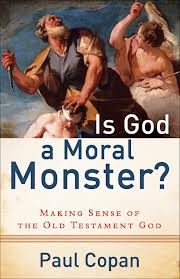
What I’ve Been Reading: Is God a Moral Monster? and God Behaving Badly
Posted by Jason Dulle under Apologetics, Bible Difficulties, Ethics, Gender Issues, Hamartiology, Hell, Hermeneutics, Mosaic Law, Nature of God, Problem of Evil, Theology[18] Comments
One of the distinguishing marks of the new atheists is that they not only think religion is false, but that it is dangerous and immoral too. Even God himself is not above their judgment. They regularly chide the God of the Bible as being a moral monster! They accuse Him of being pro-genocide, anti-women, pro-rape, pro-slavery, etc. Rather than the paradigm of moral goodness, God is an evil despot that is to be shunned. You know it’s a bad day when even God is evil!
Is what they say true? Is God – particularly as He is portrayed in the OT – morally evil? Many Christians are sympathetic to this charge because they themselves struggle to understand God’s actions and commands, particularly as revealed in the OT. Thankfully there have been some well-written responses to the problem of “theistic evil” written in recent years to dispel this negative portrait of God.
July 3, 2012
What Should Christians Make of the “Forgiving God” Meme?
Posted by Jason Dulle under Ethics, Holiness, Nature of God, Theology[20] Comments
Sam Storms has written an insightful analysis of the idea that we can or should “forgive God.” While a few snippets cannot do it justice, the heart of his argument is as follows:
First of all, let me say that I understand where this sort of question comes from. I understand how people quite often are confused by what God does or doesn’t do. … But my struggle is with the language of “forgiving God.” For one thing, I don’t find it ever used in Scripture. That alone ought to give us pause before we incorporate such language into our Christian vocabulary or allow it to shape our theology or our understanding of spiritual formation.
October 25, 2011
Hitler was responsible for killing approximately 11 million people as part of his Final Solution (of which the Holocaust was a part). He is railed against as one of the most evil men in the history of the world, and rightly so. Anyone with any moral sense would agree that the world would have been a much better place had Hitler never been born. What if you had the ability to make that sentiment a reality?
Imagine for a moment that you discovered a way to travel through time, making it possible for you to ensure either that Hitler never be born, or that if born, he would not live long enough to rise to political power. Under what circumstances do you think it would be morally justified to kill to prevent the Final Solution (and for those who can’t get past the emotional problem of what it would be like to personally pull the trigger, assume that you could send someone else to perform the deed)?:
August 25, 2011
Avoiding self-righteousness
Posted by Jason Dulle under Ethics, Hamartiology, TheologyLeave a Comment
One way to avoid self-righteousness when your brother falls is to keep in mind that each of us is capable of the worst evil, because we are all equally fallen. That’s why Paul said, “Brothers, if anyone is caught in any transgression, you who are spiritual should restore him in a spirit of gentleness. Keep watch on yourself, lest you too be tempted” (Gal 6:1) and “Therefore let anyone who thinks that he stands take heed lest he fall” (1 Cor 10:12). See also 1 Cor 9:27.
December 6, 2010
I want to raise an ethical issue for your consideration and input: copying and/or downloading music/movies. Is this a form of theft, or is it morally acceptable? This has become a widespread practice in the culture at large, as well as by Christians.
I am thinking of the following scenarios:
- Your friend purchased a CD you’ve been wanting to listen to. S/he lets you borrow it, and you subsequently download the tracks to your computer and burn them onto a CD to keep for yourself. Is this theft?
- Your friend illegally downloaded a CD you’ve been wanting to listen to. S/he tells you s/he’ll let you borrow it. Should you do so?
- Your friend bought a new Bible study program for his computer. You would like to have it too, but don’t have the money to buy it yourself. Your friend is willing to let you install his copy on your computer. Should you?
- A man on the street is selling bootleg DVDs. Is it morally acceptable to buy them?
- You download movies from the internet for free, and store them on your computer indefinitely, or burn it to a DVD that you keep in your permanent DVD library. Is this theft?
- You download movies from the internet for free, but delete them (or destroy the disk) after you have watched them. Is this theft?