Marcus Borg, like so many other theological liberals (although I must admit that Borg is so liberal that even a lot of theological liberals would disown him as such), claims God is ineffable. During a recent debate between Borg and William Lane Craig, Craig pointed out that to say God is ineffable is to say that no human concept is applicable to God. But since ineffability is a human concept, it doesn’t apply to God either. This is self-refuting, and thus cannot be true. Great point!
Nature of God
Archived Posts from this Category
November 11, 2009
Craig vs. Borg on Divine Ineffability
Posted by Jason Dulle under Apologetics, Nature of God, Pluralism, Theology[8] Comments
October 21, 2009
Arguing from Silence
Posted by Jason Dulle under Apologetics, Logic, Nature of God, Theology[45] Comments
While arguing from silence is a logical fallacy, I think there are times that an argument from silence must be reckoned with. For example, in discussing whether Matthew 28:19 originally read “in the name of the Father, Son, and Holy Spirit” or “in my name,” some Trinitarian scholars argue that the latter is original. “In my name” does not appear in any extant manuscript, so what is there basis? One reason is Justin Martyr’s silence on the passage. In one of Justin’s work he was arguing for “Father, Son, and Holy Spirit” as the appropriate baptismal formula, and yet he never once appealed to Matthew 28:19 for support as we would expect for him to have done if Matthew 28:19 originally read “Father, Son, and Holy Spirit.” Since he did not, it stands to reason that Matthew 28:19 did not read “Father, Son, and Holy Spirit,” in Justin’s day (or at least in the manuscripts he had access to), but rather “in my name.” While this is an argument from silence, it is a strong argument nonetheless.
July 16, 2009
Divine Foreknowledge and Human Free Will are Compatible
Posted by Jason Dulle under Nature of God, Theology[19] Comments
Many have wondered how, if God knows everything we will do in the future, can we be said to have free will? After all, if we freely chose to do something other than what God foreknew, God would be wrong in what He foreknew; but since God cannot be mistaken we must do all that He foreknew we would do. Doesn’t this reduce us to mere actors, playing out the parts written for us by God? Are we puppets who have no control over our own actions? Darwinist, Robert Eberle, encapsulates this supposedly intractable problem of free agency in light of an omniscient God nicely:
Aside from his simple declarations without any foundation that he believes certain biblical stories and miracles are true, he runs into major problems. One is the claim that God knows what was, is and will be. Collins asserts that there is still free will, but fails to explain his logic for arriving at this extraordinary conclusion. Either what will be is known and fixed or it is not. An infallible god that knows what is going to happen is in conflict with the idea that there is free choice and thus a responsibility for one’s actions.[1]
While it is true that the future is fixed because God perfectly knows all that will happen and cannot be mistaken, this does not mean He fixes the future. It does not follow that God’s foreknowledge of our future acts causes us to choose those acts anymore than my knowledge of your past actions would make me the cause of your acts. As William Lane (more…)
June 23, 2009
Why Praise God for Doing Good if He Can’t Do Anything Else?
Posted by Jason Dulle under Apologetics, Nature of God, Theism, Theology[8] Comments
 Some have argued that a God whose essence is good is not worthy of our praise for doing good, since He cannot do otherwise. Being praiseworthy entails merit, but there is no merit in doing what one must do of necessity; therefore, God, is not deserving of praise for doing good.
William Lane Craig offers three points in response (Question #114) to this argument:
(1) While a good act must be free for it to be praiseworthy, this argument falsely assumes that since God cannot do evil, He is not free. Freedom, however, does not require the ability to do otherwise (in this case, to commit evil). It only requires that one’s choices are not causally determined by external factors. In that sense, God’s freedom to do good is a free choice. While God cannot do evil, He freely chooses to do good.
(2) Strictly speaking, “moral praise” is inapplicable to God. According to Craig, “Moral praise and blame have to do with duty fulfillment. Someone who fulfills his moral obligations is morally praiseworthy. But…I don’t think that God has any moral duties. For moral duties are constituted by God’s commands, and presumably God doesn’t issue commands to Himself. Therefore, He has no obligations to live up to. Borrowing a distinction from Kant, we can say that God acts in accordance with a duty but not from a duty. Because God is essentially loving, kind, impartial, fair, etc., He acts in ways that would for us be the fulfillment of our duties.”
(3) God is to be praised, not for choosing to do good, but for being good. As Craig writes, “I think that our praise of God for His goodness is…to be properly understood in terms of adoration. God is the paradigm and source of infinite goodness, and therefore we adore Him for who He is. We don’t offer Him moral praise in the sense of commending Him for living up to His moral obligations; rather we love Him because He is goodness itself.”
August 5, 2008
How Do You Know God is Ineffable?
Posted by Jason Dulle under Apologetics, Nature of God, Pluralism, Theology | Tags: Divine Attributes, God, Ineffability |[10] Comments
It has become quite common for people to assert that we cannot know anything about God, or that anything we ascribe to Him is neither true nor false, but simply meaningless. God is said to be ineffable. This assertion is often offered in the context of evangelism. In our attempt to persuade someone to become a Christian, we make certain truth-claims about God, and are met by the “God is ineffable” response, effectively shutting down the conversation. What can you say to such a person? I would suggest you ask a simple question: why? Why should we think God is ineffable? Typically, the reasons proffered will include “Because God is wholly other,” “Because God transcends language,” or “Because God surpasses human categories of thought.”
Do you notice something amiss about these responses?: They all ascribe certain characteristics to God’s nature, and these characteristics are thought to be true descriptions of God. In essence they are saying it is true that God is wholly other, and transcends human language and categories of thought, and this is why nothing can be true of God. Or similarly, they know God is wholly other, and transcends human language and categories of thought, and this is why nothing can be known of God.
This is self-refuting. They are claiming to know certain truths about God, that make it impossible to know truths about God. The advocate of an ineffable deity is left in the strange situation where he is unable to provide any reason for thinking God to be ineffable, without having to claim to know something true about Him. If the “ineffabalist” cannot provide a reason for thinking God to be ineffable without giving us true knowledge about Him, there is no reason to think God is ineffable.
May 1, 2008
In the reader forum at William Lane Craig’s website, an individual going by the name Dreyshock posed an interesting question: Does God have opinions? Theists agree that God is omniscient—meaning He has the property of knowing all and only true propositions—but does such knowledge include opinions? Does God think Monet was a better painter than Picasso, or that Bach’s music was more beautiful than the Beatles’? Does God think Gothic architecture is beautiful?
There are three options:
(1) God does not have subjective opinions. The property of knowing all and only true propositions excludes the possibility of God having opinions, because opinions are neither true or false.
(2) God does have opinions, and His opinions are the right opinions (someone holding a contrary opinion would be wrong in their opinion).
(3) God does have opinions, but His opinions are neither right nor wrong (someone could hold a contrary opinion without being considered wrong in that opinion).
What do you think? I have some thoughts, but I’ll hold off in sharing them until I hear from you.
September 21, 2007
What I’ve Been Reading: Time and Eternity
Posted by Jason Dulle under Book Reviews, Nature of God, Philosophy, TheologyLeave a Comment
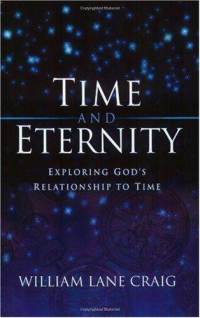 Time and Eternity: Exploring God’s Relationship to Time
by William Lane Craig
If you are interested in exploring the nature of time, and God’s relationship to time, this is an excellent read. Dr. Craig holds a Ph.D. in theology as well as philosophy, so he is well equipped to deal with this topic. In fact, he is one of the world’s premiere experts in the philosophy of time.
Craig argues that while Scripture is clear that God is eternal, it not clear on the nature of God’s eternality. Specifically, is God a timeless or omnitemporal being? In other words, does God exist outside of time, or does God exist throughout all time. Contrary to popular belief, both the Bible and philosophy tend to support the idea that God exists in and throughout all time.
The book is not an easy read, but it is an intellectually pleasurable read for anyone interested in this topic.
I summed up Craig’s argument in my
May 30th post if you want to check it out.
Defending Life: A Moral and Legal Case Against Abortion Choice
by Francis Beckwith
Beckwith is arguably the most able defender of the pro-life worldview. His new book is being branded as the most complete and persuasive pro-life work ever written. Beckwith’s legal, philosophical and theological education make him an excellent source for this topic.
He makes a scientific, philosophical, and legal case for pro-life and against abortion-choice. He tackles both the popular arguments and the sophisticated arguments offered by abortion-choicers in behalf of their position and against the pro-life position. He even tackles stem cell research and cloning toward the end of the book. Excellent read!
July 26, 2007
Is God Unknowable?
Posted by Jason Dulle under Nature of God, Religions, Theology, Theology Proper[4] Comments
Many Eastern religions make this claim about God. So do Muslims. Unfortunately it is incoherent.
To say God is unknowable is either a statement about God, or a statement about ourselves. If it is a statement about God it is an affirmation that he has no properties capable of being known. And yet having at least one property is what differentiates existence from non-existence. If God has no properties, then he doesn’t exist. If it is a statement about ourselves—our ability to know a God with specific properties—then it is self-refuting because the statement itself is a claim to know something about God: he is unknowable. If God was unknowable, we would not even be able to know that He was unknowable. This can be pointed out by asking, “How do you know God is unknowable if nothing can be known of God? Isn’t that something you know about him?”
Either way you look at it, that statement is incoherent.
May 30, 2007
Does God Know When Now Is?: Divine Eternality Revisited
Posted by Jason Dulle under Nature of God, Philosophy, Theology[13] Comments
Introduction
What is God’s relationship to time? Is He timeless or temporal? Does He remain untouched the by the temporality of His creation, or has He entered into the flow of time with His creation? Does He exist in an “eternal now” outside of time, or does He experience chronology and succession? Does He transcend time so that He has His whole life before Him all at once without the ordering of temporal relations such as earlier than/later than, or does He experience His life moment by moment? Is it the case that from God’s perspective “the entire series of temporal events is real…and thus available for his causal influence at any point in history through a single timeless act,”1 or does God experience and act within the entire series of temporal events successively over time?
I am persuaded that it both Biblically sound and philosophically preferable that we understand God to be timeless without creation, and temporal subsequent to creation. With the act of creation God has entered into the flow of time, experiences chronology and succession, experiences His life moment by moment, and acts within the entire series of temporal events successfully over time. Before I argue for this conclusion, however, let’s consider the nature of time itself. (more…)
May 29, 2007
Is God a Megalomaniac for Expecting Our Worship?
Posted by Jason Dulle under Apologetics, Nature of God, Theology[9] Comments
Melinda Penner of Stand to Reason has another terrific post, this time on the topic of the appropriateness of God’s claim to worship and obedience. She writes:
A common objection has been raised by a number of the “new atheists.” In the ABC News debate, Kelly’s remark express it well: Even if there is a God, she “would rather go to hell than go to heaven and worship a megalomaniacal tyrant.” It comes up on Hitchens new book.
It’s one way of interpreting the God of the Bible who expects worship and
obedience. I don’t think it’s the accurate interpretation, and I don’t think it’s how we normally respond to appropriate authority in our lives and society. The expectation of respect, obedience is a very familiar one to us.Do parents expect to be obeyed and respected by their children? Of course, because there is a certain relationship in place. Do we tend to show respect to a boss? Of course. Don’t we naturally show respect, and even awe, when we meet someone for whom we have tremendous respect because of their achievements? Yes. We experience relationships all the time where a certain deference is due the person in the higher station. That’s the case with God. It’s not at all outrageous.
It’s not megalomaniacal for someone to expect the kind of deference due his accomplishments and station. The expectation isn’t arbitrary; it’s appropriate given accomplishments and position.
Now grant for a moment that God is the person who created the universe, created each one of us, sustains us and provides for all of our needs and well-being, if He
is perfect, holy and good, then wouldn’t it be reasonable that respect, obedience, and even worship are due Him? We don’t worship other human beings, but if God is the being the Bible describes, then worship seems like an appropriate expectation, and it’s not a strange, outrageous expectation given familiar human relationships.
Well said.
May 28, 2007
Redux: Does God Know Where There Is?: Omnipresence Revisited
Posted by Jason Dulle under Nature of God, Theology, Theology Proper[12] Comments
“Prior” to the creation of the material universe ex nihilo there was no space or time. Because there was no time we conclude that God existed atemporally (timelessly). What about the absence of space? Would this not mean God existed non-spatially without creation? Yes it would. How does that conclusion square with the Biblical teaching that God is omnipresent? How can a being that is spaceless in nature be omnipresent? Is the Bible contradicting itself in its description of God’s nature? What exactly is the nature of God’s omnipresence? Has He always been omnipresent? These questions ought to cause us to think more clearly about what it means to say God is “omnipresent.”
To be all-present requires that there be a “here” and a “there” to be present at. Without the existence of spatial location the notion of omnipresence is meaningless. Seeing that there was no space “prior” to creation it follows that God was not omnipresent prior to creation.<!–[if !supportFootnotes]–>[1]<!–[endif]–> Omnipresence, then, is not an essential attribute of God’s nature; spacelessness is essential to God’s nature. “God existing alone without creation is spaceless.”<!–[if !supportFootnotes]–>[2]<!–[endif]–> God became omnipresent concurrent with creation in virtue of the creation of space.<!–[if !supportFootnotes]–>[3]<!–[endif]–> Omnipresence emerged as a contingent relation between God and the spatial universe.
What is the Nature of God’s Omnipresence?
While we have determined that God is spaceless without creation and omnipresent subsequent to creation, this does not tell us anything about the nature of His omnipresence. What does it mean to say God is omnipresent? Does it mean He is spatially located within and extended throughout the universe such that He is present at every point, or does it mean He is cognizant of and causally active at every point in the universe though He is neither spatially located in, nor spatially extended throughout it?<!–[if !supportFootnotes]–>[4]<!–[endif]–> While we have typically conceived of omnipresence in the first sense I would argue that God’s omnipresence is more aptly described by the second.
At a minimum God’s omnipresence means He is not localized anywhere within space, and that He lacks both shape and size. But if omnipresence refers to God’s extension through space He would have both shape and size because the universe has both shape and size. God is not extended through space so that He fills it like air fills a container. God is not a physical substance that can fill anything. God’s omnipresence in the universe is more comparable to the way in which our minds are “filled” with thoughts. Our thoughts are not spatially extended throughout our minds, and neither is God spatially extended throughout the universe.
If God were spatially present at every point in the universe He could not distinguish “here” from “there.” For a being that is spatially present at every point in the universe everywhere is here; everything is ever-present before Him. There is no “there” for such a being. If God were spatially extended through space He must believe that two points, separated by millions of light years, are both “here.”<!–[if !supportFootnotes]–>[5]<!–[endif]–> That would mean God could not know the Statue of Liberty is separated from the Eiffel Tower by thousands of miles. That is patently absurd, and impugns God’s omniscience! There must be a better way of understanding God’s omnipresence.
Has God Changed?
Earlier I argued that spacelessness, rather than omnipresence, is essential to God’s nature. Those properties that are essential to a substance cannot be changed without causing the substance to cease to exist. Only accidental properties can be changed if the substance is to retain its essence. If spacelessness is essential to God’s nature, then, how could God become omnipresent at creation without giving up the property of spacelessness and ceasing to be who He was? If God’s omnipresence is understood as a spatial location extended through space this is unavoidable, for He would be required to relinquish the property of spacelessness in order to assume the property of spatiality, and thus He would cease to exist as the divine essence He once was. If, however, God’s omnipresence is understood as God’s immediate mental cognizance of, and causal activity at every point in the universe then God’s omnipresence would not encroach on His essential spaceless nature. Mental cognizance and causal activity do not require spatial presence.
Additionally, there is nothing intrinsic to the act of creation that would require God to be drawn into space (spatialized). Creation was not a spatial act, therefore, we have no compelling reason to believe God surrendered His divine spacelessness and began to exist spatially subsequent to the act of creation. It stands to reason that God remained spaceless even subsequent to creation. If God remained spaceless His omnipresence must mean He is simply “cognizant of and causally active at every point of space”<!–[if !supportFootnotes]–>[6]<!–[endif]–>.
Conclusion
God’s omnipresence is an example of analogous language in which those incomprehensible aspects of God’s nature are described in terms finite humans can comprehend. We run into problems, however, when we take this use of language and apply it to God in literal terms. God is not spatially extended throughout the finite universe, but is cognizant of and causally active in each and every part of it as a non-spatial being. Because God is mentally cognizant of, rather than personally located at every point in the universe He can be both here and there, and know the difference between the two.
<!–[if !supportFootnotes]–>
<!–[endif]–>
<!–[endif]–>
<!–[if !supportFootnotes]–>[1]<!–[endif]–>To speak of that which was prior to creation is a figure of speech, similar to the way scientists speak of temperatures “lower than” absolute zero. It is a mental construct only, having no ontological basis in reality. The beginning of time is a boundary beyond which only our imagination can travel. Trying to find time before the beginning is like trying to cross the boundary of space into spacelessness. There is no space on the other side of space in which to cross over into, and likewise there is no time on the other side of the beginning to go back to.
<!–[if !supportFootnotes]–>[2]<!–[endif]–>William Lane Craig and J.P. Moreland, Philosophical Foundations for a Christian Worldview (Downers Grove, IL: InterVarsity Press, 2003), 510.
<!–[if !supportFootnotes]–>[3]<!–[endif]–>Space was created by God, but that does not mean it was manufactured as if it were some physical substance. To say God “created” space merely expresses the fact that (1) space had a temporal beginning, and that (2) God is its causal agent. Space is not a physical substance, but a relation that obtains in virtue of the presence of finite and material objects. Just as time keeps every event from happening at once, space keeps everything from being located at the same point. In the utter absence of finite and material objects space would not obtain. God no more created something called space than we create the relation “next to” when we place two books side-by-side. Apart from the creation of matter there would be no space (or time for that matter), for it is only the creation of material substance that necessitates there be space in which the matter can exist, and time in which the matter can move. Space and time “came along for the ride” in virtue of the creation of matter, but they were not the objects of creation itself. The relations of space and time emerged with the existence of matter. Space is a contingent relation emerging concomitantly with the presence of material substance.
<!–[if !supportFootnotes]–>[4]<!–[endif]–>William Lane Craig and J.P. Moreland, Philosophical Foundations for a Christian Worldview (Downers Grove, IL: InterVarsity Press, 2003), 510.
<!–[if !supportFootnotes]–>[5]<!–[endif]–>William Lane Craig and J.P. Moreland, Philosophical Foundations for a Christian Worldview (Downers Grove, IL: InterVarsity Press, 2003), 510.
<!–[if !supportFootnotes]–>[6]<!–[endif]–>William Lane Craig and J.P. Moreland, Philosophical Foundations for a Christian Worldview (Downers Grove, IL: InterVarsity Press, 2003), 510.
June 9, 2006
Does God Know Where There Is?: Omnipresence Revisited
Posted by Jason Dulle under Nature of God, Philosophy, Theology, Theology ProperLeave a Comment
“Prior” to the creation of the material universe ex nihilo there was no space or time. Because there was no time we conclude that God existed atemporally (timelessly). What about the absence of space? Would this not mean God existed non-spatially without creation? Yes it would. How does that conclusion square with the Biblical teaching that God is omnipresent? How can a being that is spaceless in nature be omnipresent? Is the Bible contradicting itself in its description of God’s nature? What exactly is the nature of God’s omnipresence? Has He always been omnipresent? These questions ought to cause us to think more clearly about what it means to say God is “omnipresent.”
To be all-present requires that there be a “here” and a “there” to be present at. Without the existence of spatial location the notion of omnipresence is meaningless. Seeing that there was no space “prior” to creation it follows that God was not omnipresent prior to creation.1 Omnipresence, then, is not an essential attribute of God’s nature; spacelessness is essential to God’s nature. “God existing alone without creation is spaceless.”2 God became omnipresent concurrent with creation in virtue of the creation of space.3 Omnipresence emerged as a contingent relation between God and the spatial universe. (more…)
June 8, 2006
Melinda Penner at Stand to Reason had a good blog post
yesterday on the cliché, “Don’t put God in a box”. Among her various criticisms of this cliché she wrote:
The box is one of God’s own nature we’re all just trying to figure out what the box looks like. God should be in a box. What’s the alternative? God has no limitations on what He can be like or act like? That is frightening. God Himself is limited by His own nature. He can’t lie. He can’t sin. He’s can’t go out of existence. God’s box – the definition of what He is like – is what makes Him God and a Person we can love and trust and glorify. If God isn’t in some kind of a box, He would be arbitrary. … Our goal is to get the best idea of what that box looks like.
I love it! God is in a box because God is an ontological reality, and as such there are certain things that are true about Him and a lot of things that are not true about Him. The task of theology is to separate the false notions about God from the true so we can get an accurate picture of who God is, what He is like, and what He wants. So the next time someone tells you “Don’t put God in a box” tell them, “He’s already in a box. I’m just trying to delineate what that box looks like.”

 Thinking to Believe