Theology


A blogger asked a question in the comments section of the “The Oneness of God and Baptism in Jesus’ Name are not Joined at the Hip” thread that deserves its own post. The question had to do with the validity of hybrid baptismal formulas.

Do you think it is acceptable to baptize someone with either of these hybrid baptismal formulas?:

  1. “I baptize you in the name of the Father, the Son, and the Holy Spirit, which is the name of Jesus Christ.”
  2. “In the name of Jesus Christ, I baptize you in the name of the Father, and of the Son, and of the Holy Spirit.”

Why or why not? Do you think someone who was baptized with such a formula is saved? Would you require them to be rebaptized?

I would like to hear your thoughts on this matter.

I remember hearing one of my college teachers say concerning humility, “Humility is one of those things that if you think you have it, you don’t.” I was uncomfortable with that statement. While there was a ring of truth to it, there was also something about it that didn’t seem right, but I couldn’t quit put my finger on it. That was years ago. Just today, however, as I was reflecting on the issue, I think I finally pinpointed why I was uncomfortable with that statement.

We are commanded to be humble, and to resist pride (humility is the absence of pride). The way we know we have obeyed Scripture is by introspection and reflection. For example, Scripture tells us to be patient. We assess our obedience to this command by reflecting on our disposition when confronted by events that put our patience to the test. If, upon reflection, we think we exhibited patience under those circumstances, we conclude that we have obeyed the command to be patient.

The same is true of humility. The only way we could know if we were obeying the command to be humble is if, upon introspection and/or reflection, we recognize the absence of pride in our life. If, however, the moment we think we have obeyed the command to be humble we instantiate or reveal pride, we could never be humble.

The only way out of this vicious cycle is to forego assessing ourselves in this area—to consign everyone to perpetual ignorance concerning their state of obedience. For the moment we assess ourselves, we risk losing the progress we have made. This is counter-intuitive. How can it be that the only way to obey Scripture is to not think one is obeying Scripture?

My teacher’s aphorism would mean that for a truly humble person to remain humble, they must think they are prideful. The moment they recognize the presence of humility in their life they lose their humility. In other words, on this view, one must think they are being disobedient in order to be obedient! The moment they think they have obeyed they have disobeyed. I find no sense in that. What other virtue is there that one must have, but cannot think they have it in order to have it? What other virtue are we commanded to have, but can never think we have obtained it? I know of none, and I highly doubt this is the one exception.

This is not to say there was no truth in what my teacher said. Indeed, I think one could become proud about their humility, but of course, in this case, they were never humble to begin with. They are deceiving themselves. This is vastly different from someone who desires to rid themselves of pride, and upon assessment, believes they have made great progress in this area.

All of my Pentecostal life I have heard how the issues of baptism and the Oneness of God are joined at the hip. It’s been taught over and over again that one will not “see” baptism in Jesus’ name until they “see” the Oneness of God. That idea never sat quite right with me. I saw the connection, but did not see any logical connection. While an understanding of the Oneness of God is sufficient to see that we are to be baptized in Jesus’ name, I do not think it is necessary to see that we are to be baptized in Jesus’ name.

One not need not believe in the Oneness of God to see the validity of Jesus’ name baptism (I have heard there are Trinitarian churches that baptize in Jesus’ name, although I cannot point to any specific church). Indeed, even if God were a Trinity, it would not change the fact that the intended baptismal formula is the Jesus’ name formula. Think of prayer. The Bible is clear that prayer is to be “in Jesus’ name.” No Trinitarian argues that since God is a Trinity, one should pray “in the name of the Father, Son, and Holy Spirit.” They accept the teaching of Scripture that prayer is to be said exclusively in Jesus’ name, and do not see that as detracting from the Trinity. Likewise, the Jesus’ name formula-if the intended formula-poses no challenge to Trinitarian theology.

The question of how many persons are in the Godhead and the question of the proper baptismal formula are two related, but separate issues. To determine the number of persons in the Godhead we examine those passages that teach us about God. To determine the proper baptismal formula we look to those passages that instruct us on that matter. When we do, it becomes apparent that the early church interpreted Jesus’ command in Matthew 28:19 to baptize in the singular name of the Father, Son, and Holy Spirit as a command to baptize in Jesus’ own name, as evidenced by their exclusive use of the Jesus’ name formula in evangelism.

The Jesus’ name formula makes sense given the purpose of baptism: to identify us with Christ’s death, burial, and resurrection (see Romans 6:1-4). In Trinitarian theology, the Father and Spirit did not die, were not buried, and were not resurrected. It was only Jesus. Therefore, even on a Trinitarian view it would be entirely reasonable to be baptized only in the name of Jesus.

I think all can agree that baptism in Jesus’ name makes more sense on a Oneness view of God, but the fact remains that both Trinitarians and Oneness believers alike can see (1) that the Jesus’ name formula is taught in Scripture, (2) that it is the authoritative apostolic interpretation of Jesus’ words in Matthew 28:19, (3) and that it makes theological sense to be baptized using the Jesus’ name formula given the purpose of baptism. We should continue to reach out to Trinitarians to help them understand the nature of God more perfectly, but we should not think their ability to see the validity of Jesus’ name baptism depends on their ability to see the Oneness of God.

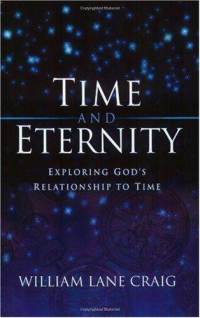
Time and Eternity: Exploring God’s Relationship to Time
by William Lane Craig

If you are interested in exploring the nature of time, and God’s relationship to time, this is an excellent read. Dr. Craig holds a Ph.D. in theology as well as philosophy, so he is well equipped to deal with this topic. In fact, he is one of the world’s premiere experts in the philosophy of time.

Craig argues that while Scripture is clear that God is eternal, it not clear on the nature of God’s eternality. Specifically, is God a timeless or omnitemporal being? In other words, does God exist outside of time, or does God exist throughout all time. Contrary to popular belief, both the Bible and philosophy tend to support the idea that God exists in and throughout all time.

The book is not an easy read, but it is an intellectually pleasurable read for anyone interested in this topic.

I summed up Craig’s argument in my

May 30th post if you want to check it out.


Defending Life: A Moral and Legal Case Against Abortion Choice
by Francis Beckwith


Beckwith is arguably the most able defender of the pro-life worldview. His new book is being branded as the most complete and persuasive pro-life work ever written. Beckwith’s legal, philosophical and theological education make him an excellent source for this topic.

He makes a scientific, philosophical, and legal case for pro-life and against abortion-choice. He tackles both the popular arguments and the sophisticated arguments offered by abortion-choicers in behalf of their position and against the pro-life position. He even tackles stem cell research and cloning toward the end of the book. Excellent read!

I just finished reading an illuminating article by Daniel Hays about Goliath’s height. I was not aware that there is a textual variant at this point in the text (as well as many other points in 1-2 Samuel, and the story of David and Goliath in particular), but there is. While the Masoretic Text contains the 9’9” version we are all familiar with (most English translations of the OT use the Masoretic text), there are earlier manuscripts and translations that say he was 6’9”. Hays shows how both the external and internal evidence support the 6’9” reading over the 9’9” reading. Check it out.

The Gallup Poll released its 2007 polling data back in June regarding Americans’ views on 16 different moral issues: homosexual relations, the death penalty, premarital sex, unwed motherhood, abortion, divorce, doctor-assistance suicide, suicide, embryonic stem cell research, cloning humans, cloning animals, gambling, polygamy, extra-marital affairs, wearing fur, and medical testing using animals.


The poll is interesting on several counts. What do Americans see as morally wrong? In order of most wrong to least wrong:


  1. Extra-marital affairs (91% disapprove)
  2. Polygamy (90%)
  3. Cloning humans (86%)
  4. Suicide (78%)
  5. Cloning animals (59%)
  6. Abortion (51%)
  7. Homosexual relations (49%)
  8. Doctor assisted suicide (44%)
  9. Unwed motherhood (42%)
  10. Premarital sex (38%)
  11. Wearing fur (38%)
  12. Medical testing using animals (37%)
  13. Gambling (32%)
  14. Embryonic stem cell research (30%)
  15. Death penalty (27%)
  16. Divorce (26%)


What is morally acceptable? In order of most accepted to least accepted:


  1. Death penalty (66% accept)
  2. Divorce (65%)
  3. Embryonic stem cell research (64%)
  4. Gambling (63%)
  5. Medical testing using animals (59%)
  6. Premarital sex (59%)
  7. Wearing fur (58%)
  8. Unwed motherhood (54%)
  9. Doctor assisted suicide (49%)
  10. Homosexual relations (47%)
  11. Abortion (40%)
  12. Cloning animals (36%)
  13. Suicide (16%)
  14. Cloning humans (11%)
  15. Polygamy (8%)
  16. Extra-marital affairs (6%)


What surprised me

I was surprised to discover that while 78% of people oppose suicide, only 44% oppose doctor-assisted suicide. The only difference between the two is that in the former instance the person kills themselves without the aid of another person, whereas in the latter instance they seek a doctor’s help. But in both instances you have a person who chooses to end their life. So why the big gap in moral condemnation?


I was surprised that 6 in 10 people oppose cloning animals. I’m not sure what they find objectionable about that. I wasn’t at all surprised to see that 86% oppose human cloning, but the fact that there was only a gap of 27% between animal and human cloning tells me that American’s have an inflated view of animal value. This is especially the case given the fact that more Americans oppose animal cloning than they do abortion, homosexuality, and doctor assisted suicide!


Significant changes in opinion


The most significant change in opinion has been Americans’ increasing acceptance of homosexual relations and embryonic stem cell research. The former increased from 40% acceptance in 2001 to 47% acceptance today. The latter increased from 52% in 2002 to 67% today. We’ve got our work cut out for us in persuading the American public on these two issues. The tide of public opinion is working against us.


Where are we divided?


The data reveals that Americans are most polarized on homosexual relations, abortion, doctor assisted suicide, and unwed motherhood. The relatively even split of opinion means if we can make a persuasive case in the public square, we stand a chance of our views quickly gaining a majority status, thus effecting the realm of both morality and politics.


Abortion and embryonic stem cell research moral disconnect


The fact that there is a 21% difference between those who see abortion as morally wrong and embryonic stem cell research as morally wrong tells me that the public does not understand the logic of the pro-life position. If they did, they would see that the issue of abortion and the issue of embryonic stem cell research are morally tied at the hip. The fact that 1 in 5 do not see this tells me that we have to do a better job of explaining the pro-life logic, and specifically applying it to other areas of bioethics such as embryonic stem cell research.

William Lane Craig has a really good response to those who ask how a just and loving God could command the Israelites to kill every Canaanite (including children). In the same article he makes some poignant distinctions between the Jewish conquest of Canaan and Islamic jihad.

A common attitude toward the gift of prophecy is that those who exercise the gift may get it wrong from time to time, but that’s just the nature of the game. Prophecy is something that must be practiced. We learn the gift by trial and error. We are humans, after all, and we make mistakes. Sometimes we are “spot on”, and sometimes we “miss it.” So the story goes.

I find this view of the prophetic gift to be in stark contrast to the Biblical portrayal of prophecy. If a person claimed to speak for God, and what s/he prophesied did not come to pass, that person was considered a false prophet and was to be executed (Dt 18:20-22). We read of Samuel that “none of his prophecies fell to the ground unfulfilled. All Israel from Dan to Beer Sheba realized that Samuel was confirmed as a prophet of the Lord” (1Sam 3:19-20). What confirmed Samuel as a prophet was that his prophecies were accurate 100% of the time.

Prophets had to get it right 100% of the time. There was no room for trial and error. Indeed, when you understand the nature of prophecy, it’s perfectly understandable why true prophets will always bat 1.000. Prophecy is God’s revelatory communication to humans via a particular individual. God never “misses it,” so how could it be that someone with the gift of prophecy could ever “miss it”?

Could there be a problem with the transmission? God tells the person what to say, but s/he misunderstands what God has spoken. But how could this be? God doesn’t try. He doesn’t try to communicate His message to the prophet but fails to do so. If God wants to communicate something to someone, He will surely succeed in doing so. While the human may choose not to pass on what God has communicated, God will ensure that His message is understood. That’s why God could say that a person who “missed it” even once should be executed. It’s because God is always clear in His communication, making it impossible for the prophet to “miss it.”

Perhaps someone could “miss it” because they mistakenly identify their own thoughts as God’s. But this presupposes that the way God communicates is so unclear that we can mistake our own thoughts for God’s. Where in Scripture do we see God speaking to people in an ambiguous manner? God spoke to both believers and unbelievers alike, and no one ever had any question as to who was speaking or what was spoken. If God desires to speak, He will make Himself and His message clear. There was no mistaking God’s message. No one in the Bible ever said “I think God is speaking to me” or “I think this is what God is saying to me.” Prophesying is not a skill someone learns. If God gives you a prophetic word, you will know it’s coming from God and you will know precisely what to say.

To think that those who prophesy today have the liberty to get it wrong from time to time, one must presuppose that the nature of prophecy in the NT era is different from that of the OT era, but why think this? Is there some NT text that says this? No. So why think NT saints using the gift of prophecy have room for error whereas OT saints using the gift of prophecy did not?

This brings me to my next point: The content of most modern-day prophecies do not resemble the prophetic gift as portrayed in Scripture.

Is it really prophecy?

What passes for prophecy these days rarely bears the marks of Biblical prophecy. The vast majority of prophecies do not predict anything, or communicate things that only God could know. They are usually just words of encouragement that – apart from the introduction “Thus says the Lord” – sound indistinguishable from a mini sermon.

The distinguishing mark of prophecy is that it is predictive in nature, as evidenced by God’s test for a prophet (Dt 18:20-22). According to YHWH, the Israelites could discern a true prophet from a false prophet by observing if their prophecy “came to pass” (Dt 18:22). Something can only come to pass if it pertains to the future. We read that none of Samuel’s prophecies went unfulfilled. A prophecy that has nothing to do with the future cannot be “fulfilled.” This is not to say that all prophecies are predictive in nature, but we should expect at least some prophecies to be predictive in nature.

There are only two examples in the NT where we see the gift of prophecy in operation, and both entailed a prediction regarding the future: Agabus predicted a (1) great famine in Acts 11:28 and (2) Paul’s arrest at Jerusalem in Acts 21:10-11. So why should we think that the gift of prophecy is only for encouragement rather than predicting something about the future?

A genuine prophetic utterance should typically tell us something about the future. Most purported prophetic utterances today, however, do not, and thus I have little reason to believe they are genuine prophetic utterances. It’s easy to speak some encouraging words. It’s not so easy to predict the future.

Wrapping up

Based on what prophecy is – God’s revelatory communication to man – it stands to reason that no one who genuinely has the gift of prophecy could ever “miss it.” They will be right 100% of the time because the God who gives them the information is right 100% of the time and ensures that the person will understand the source and message 100% of the time. If a person claims to be a prophet or claims to be used in the gift of prophecy, but they never give a predictive and testable prophecy, or if they have prophesied something that did not come to pass, then we know that such a person is not a prophet, is not being used in the gift of prophecy, and should not be trusted as an oracle of God.

I think many well-meaning people are mistaking personal ideas/impressions/feelings (self-talk) as words from God, and attaching divine authority to them. Most of these people do not predict anything, but want to be considered prophets. If they do not have a track record of predicting events that have come to pass, then we have no reason to consider them a prophet or a person who is used in the gift of prophecy. Paul told us to judge prophecies (1Cor 14:29). We can only do so if we employ the Biblical criteria for prophecies: (1) they come to pass; (2) the person uttering them is a reliable spokesman for God, evidenced by the fact that s/he has never been mistaken in what s/he has prophesied.
I think it goes without saying that speeding is the breaking of a civil law, not a moral law, and yet Paul and Peter both taught that Christians have a moral obligation to obey the civil laws of the land:

Let every person be subject to the governing authorities. For there is no authority except by God’s appointment, and the authorities that exist have been instituted by God. 13:2 So the person who resists such authority resists the ordinance of God, and those who resist will incur judgment. 13:5 Therefore it is necessary to be in subjection, not only because of the wrath of the authorities but also because of your conscience. (Romans 13:1-2, 5)


Be subject to every human institution for the Lord’s sake, whether to a king as supreme 2:14 or to governors as those he commissions to punish wrongdoers and praise those who do good. 2:15 For God wants you to silence the ignorance of foolish people by doing good. (I Peter 2:13-15)

Neither text says it is morally wrong to disobey civil laws, but is this implied? Yes? No?


What about speeding? It is the breaking of a civil law. If these passages imply that breaking a civil law is a moral failure, that would mean that speeding is morally wrong. But I find it hard to believe that it could be a moral issue, because the speed at which one travels is not a moral matter. Disobedience to established authorities, however, is a moral matter. So could it be that speeding is immoral, not because one is speeding, but because one is disobeying God-established civil authority?


What about this take on the issue? A chunk of the concern that motivated Peter and Paul to pen those words was the preservation of the reputation of Christians as law-abiding citizens, not enemies of the state. If Christians were disregarding the laws of the land, they would be marked out as troublemakers and would be persecuted against. To avoid that, the apostles taught strict adherence to civil law. Given the prevalence of speeding in all segments of our society, do you think Christians who speed would give a bad reputation to Christians as Christians? Would the name of Christ be tarnished because I am going 77 in a 65?

Many Eastern religions make this claim about God. So do Muslims. Unfortunately it is incoherent.

To say God is unknowable is either a statement about God, or a statement about ourselves. If it is a statement about God it is an affirmation that he has no properties capable of being known. And yet having at least one property is what differentiates existence from non-existence. If God has no properties, then he doesn’t exist. If it is a statement about ourselves—our ability to know a God with specific properties—then it is self-refuting because the statement itself is a claim to know something about God: he is unknowable. If God was unknowable, we would not even be able to know that He was unknowable. This can be pointed out by asking, “How do you know God is unknowable if nothing can be known of God? Isn’t that something you know about him?”

Either way you look at it, that statement is incoherent.

I intended to send this out some time back, but never got around to doing so.

J.P. Moreland is a Christian philosopher extraordinaire. I’ve read a lot of his material, and he is a hardcore evangelical intellectual (yes, those terms can go together!). So it was surprising when I heard him speaking of the supernatural during a radio interview with Greg Koukl of Stand to Reason. He spoke of how the Gospel is spreading in other parts of the world—particularly the Muslim world—through supernatural events. I’ve heard a lot of amazing stories of the miraculous in Pentecostal circles, but I have to admit that these stories are even more amazing. And I’m not talking about healings! Listen to the broadcast. You’ll be glad you did!

The interview took place during the second hour of the program, so jump ahead to the 58:00 marker where the interview begins (you may have to wait a few minutes for your computer to download the broadcast to the point where you can jump ahead that far).

Most of the book of Proverbs was written by Solomon, but Proverbs 30 and 31 were authored by Agur and King Lemuel respectively. King Lemuel’s proverbs are said to reflect his mother’s teachings. When it comes to inspiration, when were these proverbs inspired: Was it when King Lemuel’s mother spoke it to Lemuel, when he wrote it down, or when the compiler(s) of the proverbs that became the canonical Book of Proverbs incorporated them into the book?

Psalm 72:20: “This collection of the prayers of David son of Jesse ends here.” Clearly these are the words of a later editor of the psalms, adding a structural marker to the Psalter. These are not the words of the inspired psalmist. Would you say this verse is the inspired word of God, or is it just an ancient editorial comment that is found in the Word of God?

Conservative Christians (such as myself) hold that the Bible is inspired by God. What we often do not think about, however, is how God inspired the Bible. We know God and man were involved in the final product, but what was the relationship between the two parties? I would venture to say that most conservative Christians picture the process of inspiration as some sort of mechanical dictation, in which God is telling the author precisely what to write, and the author writes it. Others hold to a conceptual model of inspiration in which God directs the author’s thoughts and concepts to reflect God’s intentions for the writing, but allows the author to clothe them with their own choice of words.

Can these models account for all we read in Scripture? It seems not. There are select passages of Scripture that seem to indicate that at least some of the authors were unaware that what they were writing was being inspired by the Spirit. Consider the following:

In I Corinthians 1:12-17 Paul addressed the issue of factions developing around certain high-profile Christian personalities. Some were claiming to be followers of Paul, while others claimed to follow Peter, and others Christ. To expose these factions as unchristian, Paul directed their attention back to their baptisms. Rhetorically, Paul asked if they had been baptized in his name. No. They were baptized in the name of Christ, and as such they must be followers of Christ, not Peter or Paul.

Not only were they not baptized in the name of Paul, but only a few of them were even baptized by Paul. Paul wrote, “I thank God that I baptized none of you, but Crispus and Gaius; lest any should say that I had baptized in mine own name” (vs. 14-15). This completes Paul’s thought. In the next verse, however, Paul adds another name to the list: “And I baptized also the household of Stephanas: besides, I know not whether I baptized any other” (v. 16). While Paul was writing verses 14-15, he only recalled baptizing two Corinthians, but then remembers one more and pens verse 16. Is that all Paul? He wasn’t so sure, so added a disclaimer that he does not recall baptizing anyone else.

Did God direct Paul to forget (or write as if he forgot), then remember baptizing the household of Stephanas, and to add a disclaimer to cover himself lest there be someone else he baptized that the Spirit directed him to forget? Is this a case of a divinely directed slip-of-the-mind? Was Paul aware of what the Spirit was doing? On a mechanical dictation model the answer is yes. I find that far-fetched. It seems highly unlikely that mechanical dictation was the means by which Paul inspired Paul to write, and unlikely that Paul was aware of the Spirit’s inspiration as wrote the epistle. He had a genuine experience of momentary forgetfulness.

Even if Paul was aware that he was being inspired by God as he wrote, how do we incorporate I Corinthians 1:14-16 into our view of inspiration? If the Holy Spirit was inspiring Paul to write, why didn’t the Holy Spirit bring back to Paul’s memory all of the people he baptized in Corinth, prior to writing those verses? Why allow Paul to record his forgetfulness? Doesn’t that cast doubt on the Holy Spirit’s superintendence of the writing? Could this mean that divine inspiration is not enough to overcome the human weaknesses of the authors? Could there be other places in which the author’s memory did not serve him well, but he was not able to correct himself as did Paul? How would you respond to these questions?

Or consider II Timothy 4:13. In a very personal letter to Timothy, Paul asked Timothy to bring him his cloak, books, and parchments when he comes to visit. If Paul realized this letter was being inspired for God, would he have made such personal comments? This is not to say God did not inspire Paul to write this, but it is to say it seems unlikely that Paul knew God was inspiring him to write it. From Paul’s perspective, this was a personal request to a friend, in a personal letter. I highly doubt Paul knew this letter was being superintended by the Spirit, and would be collected into a corpus of writings to be used by Christians everywhere for millennia to come.

What do you think? How does this affect your view of inspiration?

For further reading on my view of Biblical inspiration, go here.

Read the article.

The concept is not new. The technology is not new. But when the American Medical Association is talking about its use in humans, that’s a big deal.

Many Christians believe similar technology will be used as the Mark of the Beast. Others believe this technology is the Mark of the Beast. What do you think?

N.T. Wright offered some insight to Acts 23:7-9 in his tome, The Resurrection of the Son of God. Luke said the Sadducees deny the resurrection, angels, and spirits, whereas the Pharisees confessed them all. What is meant by resurrection is quite clear (a return to bodily life after death), but what is meant by angels and spirits? We usually interpret these to be a reference to angelic beings, of both the good and bad sort. The problem with this interpretation is that the Sadducees believed in angelic beings. Did Luke make a mistake? No.


Wright points out that “angel” and “spirit” were terms used in that day to refer to the immaterial part of man that survived death. Think back to Acts 12:14-16. Peter was imprisoned. Believers had gathered at Mary’s house to pray (presumably for him). When Peter was miraculously delivered from the prison, and showed up at Mary’s door, in disbelief the people said it was not Peter, but his “angel.” Apparently they thought he had been executed, and his spirit had come to visit them.


When Luke says the Sadducees deny the resurrection, angels and spirits, what he means is that they deny both an intermediate state, and a final resurrection of the body. The Sadducees were anthropological materialists, if you will. They believed the body and soul terminated at death.

Part of our theodicy for the problem of evil includes the point that it was logically impossible for God to create a world in which humans enjoyed free will (a good thing), and yet were unable to use that freedom to choose evil as well as the good. I accept that as true, and yet Christianity proclaims there is coming a day in which there will be a world consisting of humans with libertarian free-will, who will never choose evil: heaven. The future hope of Christians seems to undermine one of the central premises in our theodicy. Can this be reconciled?


One might point out that the future world void of evil is only possible because God will glorify our humanity. But this is not a solution; it is an admission of the problem. Glorification is being put forward, not to show that such a world cannot exist, but rather to explain how it will become a reality. If in the future God is able—through glorification—to make human beings such that they have free will, and yet will not choose evil, then it falsifies the claim that God cannot create a world in which humans enjoy libertarian free will, and yet never choose evil. Indeed, He will do so in the future. In light of such, we might ask why God did not do this from the onset. Why didn’t He create humans in a glorified state to begin with, if glorified humans can exercise free will and yet not choose evil?


I’ve been mulling these questions around in my mind, and here is a possible explanation I have come up with. Could it be that the presence of sin—and our subsequent struggle against it—are necessary to create the kind of free creatures who will not exercise their free will to choose evil? Is God using evil as an immunization of sorts, in which our experience with it actually creates in us a hatred for it, to the extent that if our fallen nature were removed, we would always choose the good in the future—a choice we would not be able to make without first experiencing evil (a la Adam)? In this schema, evil is used as a divine teaching tool to create in us the ability to always and freely choose the good. Our present problem consists of our inability to actually perform what we presently will to perform because of our fallen nature. But in the end, God will restore humanity to its original state—removing from us our natural propensity toward evil—so that we can truly perform what we have learned to will in this life: the good.


On this proposal, evil is necessary to exercise our moral being to the point of maturity, so that in the next life we will only choose the good, and will do so freely. The purpose of glorification is not to remove the possibility of choosing evil, but to remove the barrier that is currently preventing us from choosing what we want to choose: the good.


What do you think about this proposal? Do you have a different one?

Introduction

What is God’s relationship to time? Is He timeless or temporal? Does He remain untouched the by the temporality of His creation, or has He entered into the flow of time with His creation? Does He exist in an “eternal now” outside of time, or does He experience chronology and succession? Does He transcend time so that He has His whole life before Him all at once without the ordering of temporal relations such as earlier than/later than, or does He experience His life moment by moment? Is it the case that from God’s perspective “the entire series of temporal events is real…and thus available for his causal influence at any point in history through a single timeless act,”1 or does God experience and act within the entire series of temporal events successively over time?

I am persuaded that it both Biblically sound and philosophically preferable that we understand God to be timeless without creation, and temporal subsequent to creation. With the act of creation God has entered into the flow of time, experiences chronology and succession, experiences His life moment by moment, and acts within the entire series of temporal events successfully over time. Before I argue for this conclusion, however, let’s consider the nature of time itself. (more…)

Melinda Penner of Stand to Reason has another terrific post, this time on the topic of the appropriateness of God’s claim to worship and obedience. She writes:

A common objection has been raised by a number of the “new atheists.” In the ABC News debate, Kelly’s remark express it well: Even if there is a God, she “would rather go to hell than go to heaven and worship a megalomaniacal tyrant.” It comes up on Hitchens new book.

It’s one way of interpreting the God of the Bible who expects worship and
obedience. I don’t think it’s the accurate interpretation, and I don’t think it’s how we normally respond to appropriate authority in our lives and society. The expectation of respect, obedience is a very familiar one to us.

Do parents expect to be obeyed and respected by their children? Of course, because there is a certain relationship in place. Do we tend to show respect to a boss? Of course. Don’t we naturally show respect, and even awe, when we meet someone for whom we have tremendous respect because of their achievements? Yes. We experience relationships all the time where a certain deference is due the person in the higher station. That’s the case with God. It’s not at all outrageous.

It’s not megalomaniacal for someone to expect the kind of deference due his accomplishments and station. The expectation isn’t arbitrary; it’s appropriate given accomplishments and position.

Now grant for a moment that God is the person who created the universe, created each one of us, sustains us and provides for all of our needs and well-being, if He
is perfect, holy and good, then wouldn’t it be reasonable that respect, obedience, and even worship are due Him? We don’t worship other human beings, but if God is the being the Bible describes, then worship seems like an appropriate expectation, and it’s not a strange, outrageous expectation given familiar human relationships.

Well said.

“Prior” to the creation of the material universe ex nihilo there was no space or time. Because there was no time we conclude that God existed atemporally (timelessly). What about the absence of space? Would this not mean God existed non-spatially without creation? Yes it would. How does that conclusion square with the Biblical teaching that God is omnipresent? How can a being that is spaceless in nature be omnipresent? Is the Bible contradicting itself in its description of God’s nature? What exactly is the nature of God’s omnipresence? Has He always been omnipresent? These questions ought to cause us to think more clearly about what it means to say God is “omnipresent.”


To be all-present requires that there be a “here” and a “there” to be present at. Without the existence of spatial location the notion of omnipresence is meaningless. Seeing that there was no space “prior” to creation it follows that God was not omnipresent prior to creation.<!–[if !supportFootnotes]–>[1]<!–[endif]–> Omnipresence, then, is not an essential attribute of God’s nature; spacelessness is essential to God’s nature. “God existing alone without creation is spaceless.”<!–[if !supportFootnotes]–>[2]<!–[endif]–> God became omnipresent concurrent with creation in virtue of the creation of space.<!–[if !supportFootnotes]–>[3]<!–[endif]–> Omnipresence emerged as a contingent relation between God and the spatial universe.


What is the Nature of God’s Omnipresence?


While we have determined that God is spaceless without creation and omnipresent subsequent to creation, this does not tell us anything about the nature of His omnipresence. What does it mean to say God is omnipresent? Does it mean He is spatially located within and extended throughout the universe such that He is present at every point, or does it mean He is cognizant of and causally active at every point in the universe though He is neither spatially located in, nor spatially extended throughout it?<!–[if !supportFootnotes]–>[4]<!–[endif]–> While we have typically conceived of omnipresence in the first sense I would argue that God’s omnipresence is more aptly described by the second.


At a minimum God’s omnipresence means He is not localized anywhere within space, and that He lacks both shape and size. But if omnipresence refers to God’s extension through space He would have both shape and size because the universe has both shape and size. God is not extended through space so that He fills it like air fills a container. God is not a physical substance that can fill anything. God’s omnipresence in the universe is more comparable to the way in which our minds are “filled” with thoughts. Our thoughts are not spatially extended throughout our minds, and neither is God spatially extended throughout the universe.


If God were spatially present at every point in the universe He could not distinguish “here” from “there.” For a being that is spatially present at every point in the universe everywhere is here; everything is ever-present before Him. There is no “there” for such a being. If God were spatially extended through space He must believe that two points, separated by millions of light years, are both “here.”<!–[if !supportFootnotes]–>[5]<!–[endif]–> That would mean God could not know the Statue of Liberty is separated from the Eiffel Tower by thousands of miles. That is patently absurd, and impugns God’s omniscience! There must be a better way of understanding God’s omnipresence.


Has God Changed?


Earlier I argued that spacelessness, rather than omnipresence, is essential to God’s nature. Those properties that are essential to a substance cannot be changed without causing the substance to cease to exist. Only accidental properties can be changed if the substance is to retain its essence. If spacelessness is essential to God’s nature, then, how could God become omnipresent at creation without giving up the property of spacelessness and ceasing to be who He was? If God’s omnipresence is understood as a spatial location extended through space this is unavoidable, for He would be required to relinquish the property of spacelessness in order to assume the property of spatiality, and thus He would cease to exist as the divine essence He once was. If, however, God’s omnipresence is understood as God’s immediate mental cognizance of, and causal activity at every point in the universe then God’s omnipresence would not encroach on His essential spaceless nature. Mental cognizance and causal activity do not require spatial presence.


Additionally, there is nothing intrinsic to the act of creation that would require God to be drawn into space (spatialized). Creation was not a spatial act, therefore, we have no compelling reason to believe God surrendered His divine spacelessness and began to exist spatially subsequent to the act of creation. It stands to reason that God remained spaceless even subsequent to creation. If God remained spaceless His omnipresence must mean He is simply “cognizant of and causally active at every point of space”<!–[if !supportFootnotes]–>[6]<!–[endif]–>.


Conclusion


God’s omnipresence is an example of analogous language in which those incomprehensible aspects of God’s nature are described in terms finite humans can comprehend. We run into problems, however, when we take this use of language and apply it to God in literal terms. God is not spatially extended throughout the finite universe, but is cognizant of and causally active in each and every part of it as a non-spatial being. Because God is mentally cognizant of, rather than personally located at every point in the universe He can be both here and there, and know the difference between the two.

<!–[if !supportFootnotes]–>


<!–[endif]–>

<!–[if !supportFootnotes]–>[1]<!–[endif]–>To speak of that which was prior to creation is a figure of speech, similar to the way scientists speak of temperatures “lower than” absolute zero. It is a mental construct only, having no ontological basis in reality. The beginning of time is a boundary beyond which only our imagination can travel. Trying to find time before the beginning is like trying to cross the boundary of space into spacelessness. There is no space on the other side of space in which to cross over into, and likewise there is no time on the other side of the beginning to go back to.

<!–[if !supportFootnotes]–>[2]<!–[endif]–>William Lane Craig and J.P. Moreland, Philosophical Foundations for a Christian Worldview (Downers Grove, IL: InterVarsity Press, 2003), 510.

<!–[if !supportFootnotes]–>[3]<!–[endif]–>Space was created by God, but that does not mean it was manufactured as if it were some physical substance. To say God “created” space merely expresses the fact that (1) space had a temporal beginning, and that (2) God is its causal agent. Space is not a physical substance, but a relation that obtains in virtue of the presence of finite and material objects. Just as time keeps every event from happening at once, space keeps everything from being located at the same point. In the utter absence of finite and material objects space would not obtain. God no more created something called space than we create the relation “next to” when we place two books side-by-side. Apart from the creation of matter there would be no space (or time for that matter), for it is only the creation of material substance that necessitates there be space in which the matter can exist, and time in which the matter can move. Space and time “came along for the ride” in virtue of the creation of matter, but they were not the objects of creation itself. The relations of space and time emerged with the existence of matter. Space is a contingent relation emerging concomitantly with the presence of material substance.

<!–[if !supportFootnotes]–>[4]<!–[endif]–>William Lane Craig and J.P. Moreland, Philosophical Foundations for a Christian Worldview (Downers Grove, IL: InterVarsity Press, 2003), 510.

<!–[if !supportFootnotes]–>[5]<!–[endif]–>William Lane Craig and J.P. Moreland, Philosophical Foundations for a Christian Worldview (Downers Grove, IL: InterVarsity Press, 2003), 510.

<!–[if !supportFootnotes]–>[6]<!–[endif]–>William Lane Craig and J.P. Moreland, Philosophical Foundations for a Christian Worldview (Downers Grove, IL: InterVarsity Press, 2003), 510.

« Previous PageNext Page »