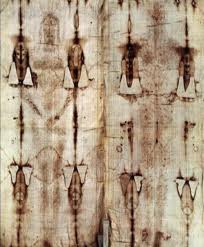
 The Shroud of Turin – the purported burial cloth of Jesus which contains the faint image of a crucified man – was the subject of intense scientific examination in the mid 1980s. Based on a carbon-14 dating of the fibers, scientists dated the shroud to A.D. 1260-1390. For most, this was all the proof they needed to conclude that the shroud was a medieval forgery.
Other evidence, however, suggests that it is genuine. One theory put forward to explain the medieval date determined by C-14 dating is that the fibers used for the test were either contaminated (from either the lab, or from the fire in 1532 that nearly destroyed the Shroud), or were not part of the original Shroud (the Shroud was patched by weaving new threads into the old threads).
Recently, a group of scientists in Italy conducted tests on the fibers using three different dating methods and concluded that the Shroud dates to 33 BC, ±250 years. These dating methods utilized infra-red light, Raman spectroscopy (“the measurement of radiation intensity through wavelengths”), and a mechanical process utilizing electricity.
I cannot speak to the accuracy of these dating methods, but given the fact that three different dating methods all arrived at dates more than a Millennium earlier than the C-14 dates is quite interesting. It gives evidential backing to those who questioned the accuracy of the C-14 tests. At the very least, the authenticity of the Shroud can no longer be dismissed out-of-hand based solely on the C-14 tests. The new data fits perfectly with a first century dating of the Shroud. It will be interesting to see how other scholars respond to this new data.
 My podcast series on the resurrection is still going strong. I’ve recently started my last sub-series within the larger series, focused this time on the Shroud of Turin. If you have never heard of it before, it’s the purported burial cloth of Jesus Christ, bearing the image of a crucified man. Many Protestants have dismissed it as a fake Catholic relic, and most non-Christians have dismissed it as a medieval forgery due to carbon dating tests in the 1980s. However, interest in the Shroud has not gone away, and for good reason. There is much more to the story. In this sub-series, I’m examining the mountains of evidence for its authenticity, and I’ll address questions related to dating, and more.
 I’ve begun a new podcast series on the historical evidence for the resurrection of Jesus. The series will not only cover the historical evidence for Jesus’ resurrection, but also explore alternative (naturalistic) explanations, the evidence for Jesus’ existence, the theological and practical significance of the resurrection, questions and objections, our own future resurrection, an examination of the Shroud of Turin, and a harmonization of the gospel accounts of Jesus’ death and resurrection.

 Thinking to Believe