translationA couple of months ago we had a guest preacher at our church.  He was a seasoned preacher, and overall, his message was edifying.  There was one point he made, however, that had me shaking my head.  He quoted John 14:2 where Jesus says “in my house are many mansions,” and then went on to explain that in the Greek this literally means “spiritual bodies.”

When we got home my wife asked me what I thought of the message.  I told her I liked it, except for his absurd interpretation of John 14:2.  She asked if I had looked up the Greek to know that this was the case.  I told her no.  She asked how I knew it was absurd, then.  Here is what I said, and what I want to share with you: If someone says the correct translation of a certain word is radically different than the translation appearing in mainstream translations, then you can bet your bottom dollar the person is mistaken. Think about it, what are the chances that hundreds of individuals who dedicated their entire lives to understanding the Biblical languages are going to miss the boat by a mile, but an individual who has no specialized training in Biblical languages is going to get it right simply by looking up a few words in Strong’s Concordance?

(more…)

Opponents of ID often argue against ID on the basis that it is not science.  Of course, the definition of science itself is disputable, and it is often disputed.  This is largely a red herring, however, because it shifts the focus away from the merits of ID arguments to the classification of those arguments.  As Thomas Nagel has written, “A purely semantic classification of a hypothesis or its denial as belonging or not to science is of limited interest to someone who wants to know whether the hypothesis is true or false.”[1]

While I think ID is a scientific conclusion, I do not wish to debate here whether ID properly qualifies as science, or whether it is better classified as religion/philosophy.  The question I want to raise is how scientists would respond if it could be demonstrated that ID is both properly categorized as religion/philosophy and ID is true.  Would scientists cease discussing certain subjects in science class?  Would they stop discussing the origin of life or origin of species?  In my estimation, this is doubtful.  I think most would continue to offer naturalistic explanations for these objects because their definition of science requires them to.  After all, if by definition alone science must provide naturalistic answers for all natural phenomena, then scientists must continue to offer naturalistic explanations for all phenomena—even phenomena  ID would have proven do not have naturalistic explanations.

(more…)

If you like the content provided on this blog, then do me a favor and tell your friends about it in 2011!

One of the most common objections against Intelligent Design is that if an intelligent agent is causally involved in the natural world, then science is no longer predictable because at any time the agent could intervene and mess with our experiments.  For example, Michael Ruse writes, ““[T]he relationship of the natural and the supernatural are unpredictable … [if] the cause of a natural event is the whim of a deity, the event is neither predictable nor fully understandable.”[1]

I think this objection is misguided.  First, it is based on a faulty understanding of ID.  ID only claims to have discovered evidence of a designer’s activity in the past.  It takes no position on the question of whether the designer is still in existence, whether the designer is presently involved in the cosmos, or whether the designer will be involved in the cosmos in the future.  Those are philosophical and religious questions.

(more…)

In a previous post I addressed the “lottery” objection to the probabilistic argument against a naturalistic origin of life: “Just as the odds of winning the lottery are low, and yet people win the lottery all the time, so too the odds of forming life by chance may be low, but that doesn’t mean it is impossible.”  I argued that unlike a lottery, the probabilistic resources available to form life are so unfathomably low that there is no reason to expect a winner in chance’s game of life.  To prove my point, I compared the number of possible events in the whole history of the universe (10139)—the probabilistic resources—to the probability of a 250 gene organism forming by chance (1:1041,000).  The odds of life forming by chance came up trillions upon trillions upon trillions of times short, and thus there is no rational basis on which to affirm that life originated by chance.  What I didn’t realize then was that I had severely over-estimated the odds.

(more…)

Justin Taylor pointed to a 2003 essay by Robbie Low in Touchstone magazine discussing a 1994 study in Switzerland on how the church attendance habits of moms and dads affects the future attendance of their children:

  • If dad does not go to church = only 1 out of 50 kids will become a regular churchgoer
  • If dad is a regular churchgoer (regardless of mom’s attendance) = 66-75% of kids will become regular or irregular churchgoers
  • If dad is an irregular churchgoer (regardless of mom’s attendance) = 50-66% of kids will become regular or irregular churchgoers
  • If dad is a regular churchgoer but mom is not = >66% of kids will become regular or irregular churchgoers
  • If dad does not go to church but mom is a regular churchgoer = only 33% of kids will visit a church
  • If neither mom nor dad go to church = only 20% of kids will visit a church

While I suspect American cultural differences could mean these statistics are not entirely transferable to America, clearly a lot rests on our shoulders dads!

A new Gallup poll reveals Americans’ views on creation:

  • 40% believe humans were specially created by God 10,000 years ago (creationism)
  • 38% believe God used evolutionary processes to create human beings from less advanced life forms over millions of years (theistic evolution)
  • 16% believe humans developed from less advanced life forms over millions of years without any aid from a divine being (naturalism/atheism).

The number of theistic evolutionists has not changed much over the past 30 years, while there has been a slight decrease in the number of creationists (down from 47% in 1993) and a slight increase in the number of naturalists/atheists (up 7% from 1982).

One of the weaknesses of this poll is that it presents these three views as if they were the only options.  Jay Richards wrote a short post elaborating on this point.  Nevertheless, it does illustrate an important point: the vast majority of Americans do not buy into the materialistic paradigm of Darwinism.

Switzerland wants to de-criminalize adult, consensual incest.  What do you think of this move?  Do you think incest should be de-criminalized?  All of it, or just certain forms (e.g. de-criminalizing incest between siblings, but keeping father-daughter incest illegal)?  

For Christian readers of this blog who may disagree with it, I would like to know how you reconcile your opposition to incest with examples of incest in the Old Testament.

When it comes to the issue of abortion, both opponents and proponents support the freedom of choice and the sanctity of human life.  Those on the pro-choice side, however, think a woman’s freedom to choose trumps the life of the unborn.  Those on the pro-life side think the sanctity of the life of the unborn trumps a woman’s freedom to choose.  How do we break the impasse? 

(more…)

Check it out here.  Very cool.

A New York Times blog called Disunion is recounting the period of the Civil War in nearly a day-by-day fashion, of what happened 150 years ago.  So for example, yesterday’s post recounted December 9, 1860. 

If you love history, or enjoy learning about the Civil War era, you should follow this blog.  I imagine it will continue for several more years to come, following the Civil War through its completion.  Reading this blog is like reliving the entire era.  I have learned so much. 

They began posting on October 30, so it’s not too late to read all the posts to-date.  Right now, Lincoln has been elected as President, and South Carolina is moving for succession. 

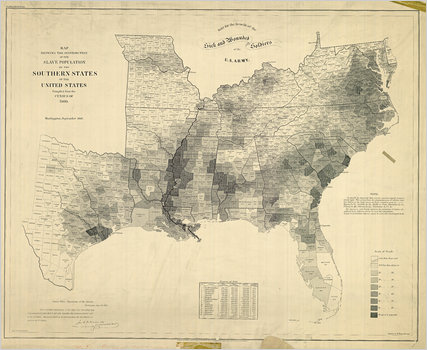
Today’s post is about the distribution of slaves in America.  They have an interactive map you can view, created by the United States Coast Survey shortly after the 1860 census, that provides both a numerical and visual representation of where the slaves resided.  It even tells you how many free people versus slaves inhabited the Southern states.  South Carolina had 402,542 slaves, constituting 57.2% of the state’s population!  In the 15 states represented, nearly 1 in 3 of the citizens were slaves.  Check it out.

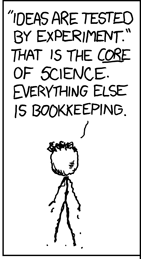
This is pretty funny.

HT: Barry Arrington

In my experience, most opponents and skeptics of theism reject theistic arguments on less than epistemically justifiable grounds. For example, premise one of the kalam cosmological argument proposes that “everything which begins to exist has a cause” (and concludes that since the universe began to exist, the universe has a cause). Some detractors of the argument will counter that since our only experience with cause and effect is within the spatio-temporal world, we cannot be certain that causation is possible outside the spatio-temporal world. While I think this is a fair point to consider, does it really undermine the premise, and hence the conclusion? It doesn’t seem to me that it does. While it is possible that the principle of cause and effect does not apply beyond the temporal framework of our universe, unless one can demonstrate that non-temporal causality is incoherent/impossible, the mere logically possibility that the principle of causality does not hold outside of the universe does not override the warrant we have for thinking all effects require an antecedent cause (and that contingent things require an external cause).

(more…)

I want to raise an ethical issue for your consideration and input: copying and/or downloading music/movies.  Is this a form of theft, or is it morally acceptable?  This has become a widespread practice in the culture at large, as well as by Christians.

I am thinking of the following scenarios:

  1. Your friend purchased a CD you’ve been wanting to listen to.  S/he lets you borrow it, and you subsequently download the tracks to your computer and burn them onto a CD to keep for yourself.  Is this theft?
  2. Your friend illegally downloaded a CD you’ve been wanting to listen to.  S/he tells you s/he’ll let you borrow it.  Should you do so?
  3. Your friend bought a new Bible study program for his computer.  You would like to have it too, but don’t have the money to buy it yourself.  Your friend is willing to let you install his copy on your computer.  Should you?
  4. A man on the street is selling bootleg DVDs.  Is it morally acceptable to buy them?
  5. You download movies from the internet for free, and store them on your computer indefinitely, or burn it to a DVD that you keep in your permanent DVD library.  Is this theft?
  6. You download movies from the internet for free, but delete them (or destroy the disk) after you have watched them.  Is this theft?

(more…)

Our earliest canonical Gospel, Mark, was probably written sometime in the early or mid50s, approximately 20-25 years after Jesus ascended to heaven.  Many have wondered why it took so long for Jesus’ followers to commit His teachings and deeds to writing.  The most common answer is that they did not feel the need because they expected the imminent return of Christ.  If Jesus was coming back soon, why bother?  This answer is not adequate, however.  First, it presumes that Jesus’ followers expected His imminent return.  This is debatable.  More importantly, we know from experience that groups expecting an impending apocalypse are often voluminous writers.  Consider the Qumran community in Jesus’ day.  They were expecting the imminent Day of the Lord, and yet they produced an abundance of written materials.  An even more pertinent example is modern believers who espouse to a pre-tribulation, “at-any-moment” understanding of the return of Christ.  Few have hotter print-presses than this group!

Why, then, did they not write sooner?  Perhaps they did, but those documents were not preserved.  Luke tells us that “many have undertaken [the task] to compile a narrative of the things that have been accomplished among us,” and he utilized at least some of those sources in the production of his own gospel (Luke 1:1-4).  Luke’s gospel was probably written in the late 50s or early 60’s.  For Luke to be aware of these other writings, they must have been written much earlier, possibly much earlier than Mark’s gospel.

(more…)

Randy Alcorn has written a good article on some of the accepted forms of dishonesty in the pulpit, Christian celebrity endorsements, publishing (ghost-writing), and Christian college advertising.  It’s hard hitting, but needs to be said.

HT: Justin Taylor

I have long been interested in the debate over the authenticity of Mark 16:9-20, known as the long ending of Mark (LEM).  Recently, I read Perspectives on the Ending of Mark: 4 Views by Daniel Wallace, David Alan Black, Keith Elliott, Maurice Robinson, and Darrell Bock.  Each author takes a different perspective on the ending of Mark:

  • Wallace = LEM is not original.  Mark ended his gospel at 16:8. (In Bock’s closing summary of the book, he noted his agreement with this position.)
  • Elliott = LEM is not original.  Original ending has been lost.
  • Robinson = LEM is original.
  • Black = LEM is original, but was added by Mark as part of a “second edition” to round our Peter’s lectures.

Of the four, I think Wallace presented the most convincing case, and Black the least convincing.  I will summarize the evidence/arguments for and against the LEM in hopes that this will help you sort through this issue as much as it helped me.

(more…)

Go here to view the many options.  The ESV Study Bible can be purchased for as low as $41!  Sale ends 12/3/10.

Mt 27: 3-8  Now when Judas, who had betrayed him, saw that Jesus had been condemned, he regretted what he had done and returned the thirty silver coins to the chief priests and the elders, 27:4 saying, “I have sinned by betraying innocent blood!” But they said, “What is that to us? You take care of it yourself!” 27:5 So Judas threw the silver coins into the temple and left. Then he went out and hanged himself. 27:6 The chief priests took the silver and said, “It is not lawful to put this into the temple treasury, since it is blood money.” 27:7 After consulting together they bought the Potter’s Field with it, as a burial place for foreigners. 27:8 For this reason that field has been called the “Field of Blood” to this day. (NET)

Acts 1:18  Now this man Judas acquired a field with the reward of his unjust deed, and falling headfirst he burst open in the middle and all his intestines gushed out. (NET)

This is a favorite “contradiction” appealed to by skeptics to demonstrate the unreliability of the Bible.  But are these two passages really contradicting one another?  After all, it’s not as though Matthew tells us Judas hanged himself, and Luke says he didn’t hang himself.  In fact, Luke doesn’t even tell us how he died.  He only tells us that he fell headfirst and his guts gushed out.  Clearly this cannot be referring to the mode of his death because falling down, in and of itself, cannot cause someone’s belly to burst open and expose his intestines!  Falling from a distance, however, could.  If Judas was hanged as Matthew tells us, it would provide the fall-distance necessary to explain the phenomenon Luke records for us.  Indeed, if Judas hanged himself and his body was left on the tree rather than being removed, his body would have begun to decay, and his belly would have swollen.  Once he was caused to fall (for whatever reason: the rope giving way, his head slipping out of the noose, etc.), his belly would have easily burst open and his guts gushed out.  Matthew’s account and Luke’s account are harmonious, not contradictory.

I’ve been researching and writing on the history of the Textus Receptus recently.  There is a data point that I can’t seem to pinpoint.  I’m hoping some of you might be able to help me find the answer.

Erasmus produced five editions of his Greek NT.  Stephanus used Erasmus’ text to create four more editions.  But what edition of Erasmus’ text did Stephanus use?  I don’t see this being addressed much in the literature, and when it is, I am getting conflicting info.  Some say he used Erasmus’ 3rd edition, while others say he used Erasmus’ 4th and 5th editions.  I’m thinking that perhaps Stephanus used Erasmus’ 3rd edition for his own first edition, but then switched course and used Erasmus’ 4th and 5th editions as the basis for his (Stephanus’) 1550 edition.

One thing I’m having trouble understanding is how the mistakes Erasmus introduced into the last six verses of Revelation have made their way into the modern Textus Receptus if Stephanus used Erasmus’ 4th and 5th editions since Erasmus fixed most of those mistakes in his 4th edition.

Is there anybody who has a lot of knowledge about the history of the TR who can help me out on these questions?