Go here for the story.
October 31, 2007
Methodist Council Allows Transgendered Minister to Keep Job
Posted by Jason Dulle under Apologetics, Homosexuality[2] Comments
October 23, 2007
Did Jesus Offer a Bad Argument for the Resurrection?
Posted by Jason Dulle under Resurrection, Theology[12] Comments
In Jesus’ debate with the Sadducees, He defended His resolve that the dead are raised by quoting from Exodus 3:6. Luke records Jesus as saying, “But even Moses revealed that the dead are raised in the passage about the bush, where he calls the Lord the God of Abraham and the God of Isaac and the God of Jacob. Now he is not God of the dead, but of the living, for all live before him.” (Luke 20:37-8, NET Bible).
Jesus’ argument seems to be as follows:
(1) God can only be “the God of…X”, if X exists
(2) God identified Himself as the God of Abraham, Isaac, and Jacob centuries after their death
(3) Therefore, Abraham, Isaac, and Jacob still existed when God spoke to Moses
I don’t see how Jesus’ argument supports His resolve. At best, Jesus demonstrated that man is a dualistic being whose immaterial self lives on beyond death (something the Sadducees denied). But how does it follow that the dead will rise? It could be that they continue in their non-corporeal state for time everlasting. It seems to me that Jesus would have to supply another argument to demonstrate why it is necessary for these non-corporeal persons to return to a bodily existence. No such argument is given.
I confess some trepidation in even writing this, but I don’t find Jesus’ argument persuasive. And yet when you read the text, Jesus’ opponents found it extremely persuasive. They were not able to offer any rebuttal. Am I missing something here? I do not want to say Jesus’ argument missed the point, but I cannot deny the fact that his argument appears to fall short of its intended goal. Does anyone have any insight on this passage they would like to offer me?
October 12, 2007
A blogger asked a question in the comments section of the “The Oneness of God and Baptism in Jesus’ Name are not Joined at the Hip” thread that deserves its own post. The question had to do with the validity of hybrid baptismal formulas.
Do you think it is acceptable to baptize someone with either of these hybrid baptismal formulas?:
- “I baptize you in the name of the Father, the Son, and the Holy Spirit, which is the name of Jesus Christ.”
- “In the name of Jesus Christ, I baptize you in the name of the Father, and of the Son, and of the Holy Spirit.”
Why or why not? Do you think someone who was baptized with such a formula is saved? Would you require them to be rebaptized?
I would like to hear your thoughts on this matter.
October 12, 2007
I remember hearing one of my college teachers say concerning humility, “Humility is one of those things that if you think you have it, you don’t.” I was uncomfortable with that statement. While there was a ring of truth to it, there was also something about it that didn’t seem right, but I couldn’t quit put my finger on it. That was years ago. Just today, however, as I was reflecting on the issue, I think I finally pinpointed why I was uncomfortable with that statement.
We are commanded to be humble, and to resist pride (humility is the absence of pride). The way we know we have obeyed Scripture is by introspection and reflection. For example, Scripture tells us to be patient. We assess our obedience to this command by reflecting on our disposition when confronted by events that put our patience to the test. If, upon reflection, we think we exhibited patience under those circumstances, we conclude that we have obeyed the command to be patient.
The same is true of humility. The only way we could know if we were obeying the command to be humble is if, upon introspection and/or reflection, we recognize the absence of pride in our life. If, however, the moment we think we have obeyed the command to be humble we instantiate or reveal pride, we could never be humble.
The only way out of this vicious cycle is to forego assessing ourselves in this area—to consign everyone to perpetual ignorance concerning their state of obedience. For the moment we assess ourselves, we risk losing the progress we have made. This is counter-intuitive. How can it be that the only way to obey Scripture is to not think one is obeying Scripture?
My teacher’s aphorism would mean that for a truly humble person to remain humble, they must think they are prideful. The moment they recognize the presence of humility in their life they lose their humility. In other words, on this view, one must think they are being disobedient in order to be obedient! The moment they think they have obeyed they have disobeyed. I find no sense in that. What other virtue is there that one must have, but cannot think they have it in order to have it? What other virtue are we commanded to have, but can never think we have obtained it? I know of none, and I highly doubt this is the one exception.
This is not to say there was no truth in what my teacher said. Indeed, I think one could become proud about their humility, but of course, in this case, they were never humble to begin with. They are deceiving themselves. This is vastly different from someone who desires to rid themselves of pride, and upon assessment, believes they have made great progress in this area.
October 9, 2007
Council of Europe Condemns Creationism and Intelligent Design as Dangerous
Posted by Jason Dulle under Apologetics, Evolution, Intelligent Design[4] Comments
The Council of Europe has now condemned Creationism and Intelligent Design as dangerous to democracy and a threat to human rights! Unbelievable. The statements they make about the role of evolution in society are very “religious” in nature. It seems the document is a witch-hunt against those who dare to question Darwinism, and a statement of faith in naturalistic evolution.
October 9, 2007
The Oneness of God and Baptism in Jesus’ Name are not Joined at the Hip
Posted by Jason Dulle under Baptism, Soteriology, Theology, Theology Proper[19] Comments
All of my Pentecostal life I have heard how the issues of baptism and the Oneness of God are joined at the hip. It’s been taught over and over again that one will not “see” baptism in Jesus’ name until they “see” the Oneness of God. That idea never sat quite right with me. I saw the connection, but did not see any logical connection. While an understanding of the Oneness of God is sufficient to see that we are to be baptized in Jesus’ name, I do not think it is necessary to see that we are to be baptized in Jesus’ name.
One not need not believe in the Oneness of God to see the validity of Jesus’ name baptism (I have heard there are Trinitarian churches that baptize in Jesus’ name, although I cannot point to any specific church). Indeed, even if God were a Trinity, it would not change the fact that the intended baptismal formula is the Jesus’ name formula. Think of prayer. The Bible is clear that prayer is to be “in Jesus’ name.” No Trinitarian argues that since God is a Trinity, one should pray “in the name of the Father, Son, and Holy Spirit.” They accept the teaching of Scripture that prayer is to be said exclusively in Jesus’ name, and do not see that as detracting from the Trinity. Likewise, the Jesus’ name formula-if the intended formula-poses no challenge to Trinitarian theology.
The question of how many persons are in the Godhead and the question of the proper baptismal formula are two related, but separate issues. To determine the number of persons in the Godhead we examine those passages that teach us about God. To determine the proper baptismal formula we look to those passages that instruct us on that matter. When we do, it becomes apparent that the early church interpreted Jesus’ command in Matthew 28:19 to baptize in the singular name of the Father, Son, and Holy Spirit as a command to baptize in Jesus’ own name, as evidenced by their exclusive use of the Jesus’ name formula in evangelism.
The Jesus’ name formula makes sense given the purpose of baptism: to identify us with Christ’s death, burial, and resurrection (see Romans 6:1-4). In Trinitarian theology, the Father and Spirit did not die, were not buried, and were not resurrected. It was only Jesus. Therefore, even on a Trinitarian view it would be entirely reasonable to be baptized only in the name of Jesus.
I think all can agree that baptism in Jesus’ name makes more sense on a Oneness view of God, but the fact remains that both Trinitarians and Oneness believers alike can see (1) that the Jesus’ name formula is taught in Scripture, (2) that it is the authoritative apostolic interpretation of Jesus’ words in Matthew 28:19, (3) and that it makes theological sense to be baptized using the Jesus’ name formula given the purpose of baptism. We should continue to reach out to Trinitarians to help them understand the nature of God more perfectly, but we should not think their ability to see the validity of Jesus’ name baptism depends on their ability to see the Oneness of God.
October 1, 2007
In the Lincoln-Douglas senatorial debates, Lincoln argued against Stephen Douglas’ position that while he was personally opposed to slavery, he did not believe the federal government should outlaw it because the majority of each state should be able to choose their own position on the matter. Lincoln said, “When Judge Douglas says that whoever, or whatever community, wants salves, they have a right to have them, he is perfectly logical if there is nothing wrong in the institution; but if you admit that it is wrong, he cannot logically say that anybody has a right to do a wrong.” Frank Beckwith, in Defending Life, says Lincoln’s point was that to claim something is morally wrong is to claim it is morally impermissible. To argue that one has a right to participate in a morally impermissible act is to say the impermissible is permissible.
I find this line of reasoning pertinent to the abortion debate today. Many people—particularly politicians—proclaim their personal opposition to abortion all the while advocating for the continued right to abortion in this country. But they can’t have their cake and eat it too. If they truly believe abortion is a moral evil, then they cannot advocate it as a right in this country. No one would buy the statement, “While I personally oppose annihilating Jews, I think one ought to have the right to do so.” So why does anyone buy it when it comes to abortion?
September 21, 2007
What I’ve Been Reading: Time and Eternity
Posted by Jason Dulle under Book Reviews, Nature of God, Philosophy, TheologyLeave a Comment
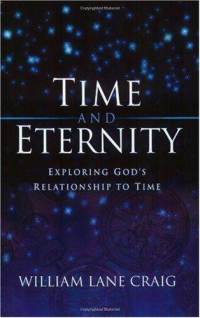 Time and Eternity: Exploring God’s Relationship to Time
by William Lane Craig
If you are interested in exploring the nature of time, and God’s relationship to time, this is an excellent read. Dr. Craig holds a Ph.D. in theology as well as philosophy, so he is well equipped to deal with this topic. In fact, he is one of the world’s premiere experts in the philosophy of time.
Craig argues that while Scripture is clear that God is eternal, it not clear on the nature of God’s eternality. Specifically, is God a timeless or omnitemporal being? In other words, does God exist outside of time, or does God exist throughout all time. Contrary to popular belief, both the Bible and philosophy tend to support the idea that God exists in and throughout all time.
The book is not an easy read, but it is an intellectually pleasurable read for anyone interested in this topic.
I summed up Craig’s argument in my
May 30th post if you want to check it out.
Defending Life: A Moral and Legal Case Against Abortion Choice
by Francis Beckwith
Beckwith is arguably the most able defender of the pro-life worldview. His new book is being branded as the most complete and persuasive pro-life work ever written. Beckwith’s legal, philosophical and theological education make him an excellent source for this topic.
He makes a scientific, philosophical, and legal case for pro-life and against abortion-choice. He tackles both the popular arguments and the sophisticated arguments offered by abortion-choicers in behalf of their position and against the pro-life position. He even tackles stem cell research and cloning toward the end of the book. Excellent read!
September 21, 2007
Scientific Understanding and Belief in Evolution Do not Go Hand-in-Hand
Posted by Jason Dulle under Apologetics, Evolution, Science[2] Comments
Apparently more than 80% of the French believe in evolution, demonstrating their intellectual superiority over us dumb Americans who largely believe in creation. I would venture to say the acceptance of evolutionary theory in France has little to do with their understanding of science. On the French version of Who Wants to be a Millionaire, 56% of the audience thought the sun revolves around the Earth! If you get a scientific fact as basic as this wrong, I wouldn’t trust you to open a science book, yet alone evaluate the veracity of a scientific theory!
Check out the video. Very funny, and yet very sad.
HT: Evolution News
September 14, 2007
Re-measuring Goliath: 9’9” or 6’9”?
Posted by Jason Dulle under Textual Criticism, Theology[2] Comments
I just finished reading an illuminating article by Daniel Hays about Goliath’s height. I was not aware that there is a textual variant at this point in the text (as well as many other points in 1-2 Samuel, and the story of David and Goliath in particular), but there is. While the Masoretic Text contains the 9’9” version we are all familiar with (most English translations of the OT use the Masoretic text), there are earlier manuscripts and translations that say he was 6’9”. Hays shows how both the external and internal evidence support the 6’9” reading over the 9’9” reading. Check it out.
September 14, 2007
New Jersey Supreme Court Perpetrates Common Ignorance on Human Life
Posted by Jason Dulle under Abortion, Apologetics[2] Comments
In December of last year I blogged on how a federal district court judge in South Dakota slapped a preliminary injunction on a law passed by the legislature in 2005 that required abortion doctors to inform mothers seeking an abortion that abortions “terminate the life of a whole, separate, unique, living human being.” Why? Because “unlike the truthful, non-misleading medical and legal information doctors were required to disclose, the South Dakota statute requires abortion doctors to enunciate the state’s viewpoint on an unsettled medical, philosophical, theological and scientific issue — that is, whether a fetus is a human being.” I decried the display of common ignorance by a federal judge on the matter of when a distinct human life begins.
Now it’s New Jersey’s turn. A woman sued a doctor for not telling her the baby she was about to abort was a human being. He told her it was “only blood.” She claims that had she known it was a human being she would not have aborted it, and would have avoided the emotional trauma the abortion caused her.
The case went all the way to New Jersey’s Supreme Court. They ruled that a doctor has no responsibility to tell a woman that the unborn is a distinct human being. Why? Because nobody knows when life begins. Common ignorance strikes again. If we can’t trust supreme court justices to get basic biology right, what can we trust them with?
September 11, 2007
Reverting adult stem cells into embryonic form
Posted by Jason Dulle under Apologetics, Stem Cell ResearchLeave a Comment
Last year scientists were able to reprogram adult mouse stem cells so that they revert back to their embryonic form (pluripotent, rather than multipotent). Now, scientists have made the process more efficient. So far it has only been attempted in mice. Learning how to do it with adult human stem cells may take several years, but it is a promising area of research. If successful, there will no longer be a need to destroy embryos (indeed, I don’t think there is a need even now given the success of adult stem cells).
September 11, 2007
The Fertility Institutes of Los Angeles not only performs embryonic sex selection, but advertises it. Babies…custom ordered. I thought this sort of thing was illegal in this country, but apparently not.
September 5, 2007
It’s been awhile since I posted pics of my little angel. Sareya is 7 1/2 months old now, and owns my heart!


August 31, 2007
Iowa Judge Declares Same-Sex Couples Can Marry in Polk County
Posted by Jason Dulle under Apologetics, Same-sex Marriage[2] Comments
An Iowa judge has ruled that Polk County’s marriage laws are unconstitutional because they forbid same-sex couples from the institution of marriage. Judges forcing same-sex marriage on the citizens is becoming so common. Hopefully the judges decision will be overturned on appeal.
August 31, 2007
Gallup Poll: Americans’ Moral Views on 16 Moral Issues
Posted by Jason Dulle under Hamartiology, Social, Statistics[2] Comments
The Gallup Poll released its 2007 polling data back in June regarding Americans’ views on 16 different moral issues: homosexual relations, the death penalty, premarital sex, unwed motherhood, abortion, divorce, doctor-assistance suicide, suicide, embryonic stem cell research, cloning humans, cloning animals, gambling, polygamy, extra-marital affairs, wearing fur, and medical testing using animals.
The poll is interesting on several counts. What do Americans see as morally wrong? In order of most wrong to least wrong:
- Extra-marital affairs (91% disapprove)
- Polygamy (90%)
- Cloning humans (86%)
- Suicide (78%)
- Cloning animals (59%)
- Abortion (51%)
- Homosexual relations (49%)
- Doctor assisted suicide (44%)
- Unwed motherhood (42%)
- Premarital sex (38%)
- Wearing fur (38%)
- Medical testing using animals (37%)
- Gambling (32%)
- Embryonic stem cell research (30%)
- Death penalty (27%)
- Divorce (26%)
What is morally acceptable? In order of most accepted to least accepted:
- Death penalty (66% accept)
- Divorce (65%)
- Embryonic stem cell research (64%)
- Gambling (63%)
- Medical testing using animals (59%)
- Premarital sex (59%)
- Wearing fur (58%)
- Unwed motherhood (54%)
- Doctor assisted suicide (49%)
- Homosexual relations (47%)
- Abortion (40%)
- Cloning animals (36%)
- Suicide (16%)
- Cloning humans (11%)
- Polygamy (8%)
- Extra-marital affairs (6%)
What surprised me
I was surprised to discover that while 78% of people oppose suicide, only 44% oppose doctor-assisted suicide. The only difference between the two is that in the former instance the person kills themselves without the aid of another person, whereas in the latter instance they seek a doctor’s help. But in both instances you have a person who chooses to end their life. So why the big gap in moral condemnation?
I was surprised that 6 in 10 people oppose cloning animals. I’m not sure what they find objectionable about that. I wasn’t at all surprised to see that 86% oppose human cloning, but the fact that there was only a gap of 27% between animal and human cloning tells me that American’s have an inflated view of animal value. This is especially the case given the fact that more Americans oppose animal cloning than they do abortion, homosexuality, and doctor assisted suicide!
Significant changes in opinion
The most significant change in opinion has been Americans’ increasing acceptance of homosexual relations and embryonic stem cell research. The former increased from 40% acceptance in 2001 to 47% acceptance today. The latter increased from 52% in 2002 to 67% today. We’ve got our work cut out for us in persuading the American public on these two issues. The tide of public opinion is working against us.
Where are we divided?
The data reveals that Americans are most polarized on homosexual relations, abortion, doctor assisted suicide, and unwed motherhood. The relatively even split of opinion means if we can make a persuasive case in the public square, we stand a chance of our views quickly gaining a majority status, thus effecting the realm of both morality and politics.
Abortion and embryonic stem cell research moral disconnect
The fact that there is a 21% difference between those who see abortion as morally wrong and embryonic stem cell research as morally wrong tells me that the public does not understand the logic of the pro-life position. If they did, they would see that the issue of abortion and the issue of embryonic stem cell research are morally tied at the hip. The fact that 1 in 5 do not see this tells me that we have to do a better job of explaining the pro-life logic, and specifically applying it to other areas of bioethics such as embryonic stem cell research.
August 30, 2007
How Could God Command the Killing of Children?
Posted by Jason Dulle under Bible Difficulties, Theology[2] Comments
William Lane Craig has a really good response to those who ask how a just and loving God could command the Israelites to kill every Canaanite (including children). In the same article he makes some poignant distinctions between the Jewish conquest of Canaan and Islamic jihad.
August 23, 2007
“The classic Christian worldview affirms that a supremely powerful and personal God created the world ex nihilo (from nothing) and maintains it; humans may attain knowledge of God through Scripture, sensory perception and introspection; human beings are moral agents subject to God-given immutable moral laws that are as fixed and universal as are physical ones; and human beings are sinful, fallen and in rebellion against God, but they reflect a distorted image of God and are divine right-bearers.
“In contrast, the secular worldview (also called naturalism) denies the existence of God or his personal character; considers creation the result of random events and a battle of the fitters persevering out of biologic selfishness; believes knowledge is limited to sensory perception; believes human beings create their moral order for convenience and enforce it solely through public coercion; and consider human beings different from, but not necessarily more important than, creation except to the extent that our sentience or affinity for the arts distinguishes us.”[1]
[1]Nathan Adams IV, Ph.D, J.D., “An Unnatural Assault on Natural Law” in Human Dignity in the Biotech Century, Charles Colson and Nigel Cameron, eds. (InterVarsity Press: Downers Grove, IL, 2004), 165-6.
August 23, 2007
I have never really discussed my website on this blog before, so for those of you who are not aware of it, I am co-founder and contributing author to The Institute for Biblical Studies. We recently passed the 1/4 million visitors mark! If you haven’t checked out the site before, I invite you to do so. Tell your friends about it too.
August 15, 2007
Is it Crude to Show Pictures of Aborted Babies?
Posted by Jason Dulle under Abortion, Apologetics[10] Comments
The Canadian Center for Bioethical Reform has a way of bringing the abortion issue home: put pictures of aborted babies on the side of trucks accompanied with the word “choice,” and drive them throughout the town of Calgary.
Not everyone is happy with the display of these graphic, but truthful images. Celia Posyniak, executive director of a local abortion clinic said, “I just think in Canadian society, it’s really a rude, crude display. It shows a lack of manners.” If the display of abortion photos is crude, then how much cruder is the abortion itself? If it is a lack of manners to show pictures of what an abortion does, then how much less manners does one have who obtains and performs an abortion? I always find it interesting how pro-abortion advocates find pictures of what an abortion does so offensive, but do not find abortions offensive themselves. They object to showing pictures of what abortion does, but do not object to abortions themselves. Why? Most object to showing the pictures because they don’t want the public to see what abortion really looks like. They don’t want the public to see how developmentally advanced aborted babies really are. They know that when people see the horror of abortion, public support for abortion will fade. I agree. That’s why the public needs to see these graphic images.

 Thinking to Believe