In recent days I have taken up a task I had given up on a number of years ago: harmonizing the resurrection accounts in the Gospels. I hope to blog on this in considerable detail in the future, but wanted to explore a particular anomaly I have encountered that has me befuddled – an anomaly I am hoping you, the community, can help me resolve.
All of the Evangelists – with the exception of Luke[1] – report that Jesus appeared to several of Jesus’ women followers after they saw the angels in the empty tomb, but before they reported the incident to the apostles. Luke, however, does not mention a resurrection appearance to the women. According to Luke the women discover the empty tomb, encounter angels who tell them Jesus is risen, and then leave to tell the disciples what they had seen and heard.[2] If this was all there was to Luke’s account it would not be much of a problem, since each of the Evangelists omit certain details that the others chose to include. While it would be a curious detail to omit, its omission would be just that: a curiosity.
But the story is complicated by the testimony of the two disciples on the road to Emmaus.
(more…)
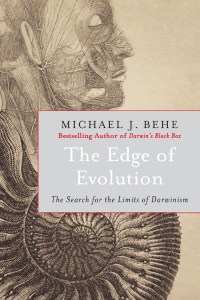 Several months ago I blogged my way through Stephen Meyer’s Signature in the Cell, summarizing his devastating critique of naturalistic origin-of-life theories and powerful argument for the intelligent design of the first life (parts 1, 2, 3, 4, 5, 6, 7a, 7b). But what about the proliferation of life? Can a fully naturalistic theory like neo-Darwinian evolution account for the proliferation and variety of life once it began? To answer this question I am going to summarize Michael Behe’s key argument against a Darwinian account of evolution in The Edge of Evolution (paperback only $6 through Amazon right now, regular $15).
What Needs to be Explained
To properly evaluate Darwin’s theory of the evolution of life, we must clarify what is meant by “evolution.” Evolution can refer merely to small biological changes within a species over time. Called “microevolution,” or the special theory of evolution, this definition of evolution is relatively uncontroversial and has been confirmed empirically (e.g. drug resistance in bacteria, changes in the size of finch beaks, etc.). Evolution can also refer to large-scale biological changes[1] that, over time, transform one species into another into another ad infinitum. This kind of evolution is called macroevolution, or the general theory of evolution. Darwin’s theory entails this latter definition, and thus proof for his theory requires evidence that there are no natural limits to the amount of variation an organism can experience.
(more…)

 Thinking to Believe