This is pretty funny.
HT: Barry Arrington
December 9, 2010
October 22, 2010
 For part 1 of this two-part series, go here.
From a psychological perspective, Spiegel argues that broken/absent father relationships can be a contributing factor in a persons’ rejection of God’s existence. He bases this, in part, from Sigmund Freud’s own psychological analysis that belief in God is a projection of one’s desire for a cosmic version of their earthly father, and, in part, from the research of ex-atheist Paul C. Vitz published in Faith of the Fatherless. Spiegel argues that just as a good relationship with one’s father may contribute to belief in a Cosmic Father, likewise, the lack of a relationship, or a bad relationship with one’s father may contribute to one’s disbelief in a Cosmic Father. Spiegel cites David Hume, Arthur Schopenhauer, Friedrich Nietzsche, Bertrand Russell, Jean-Paul Sartre, and Albert Camus as examples of atheists who experienced the death of their father at a young age. He also cites Thomas Hobbes, Voltaire, Ludwig Feuerback, Samuel Butler, Sigmund Freud, H. G. Wells, Madalyn Murray O’Hair, and Albert Ellis as examples of atheist who had a weak or abusive father (abandonment, neglect, bitter relationship). Contrast these individuals to well-known theists who had good relationships with their father: Blaise Pascal, George Berkeley, Joseph Butler, Thomas Reid, Edmund Burke, William Paley, William Wilberforce, Friedrich Schleiermacher, John Henry Newman, Alexis de Tocqueville, Soren Kierkegaard, G. K. Chesterton, Albert Schweitzer, Martin Buber, Karl Barth, Dietrich Bonhoeffer, and Abraham Heschel.
October 21, 2010
 If you ask the typical atheist why s/he does not believe in God, you are likely to be provided with a list of intellectual objections to theism: the presence of evil is incompatible with a loving and powerful God, science demonstrates the irrelevancy of God, etc. Others will cite a lack of evidence for God’s existence. In either case, atheism is presented as, and perceived to be a purely intellectual conclusion.
James Spiegel begs to differ with this assessment and perception of atheism. In his book, The Making of an Atheist: How Immorality Leads to Unbelief, Spiegel argues that the root cause of atheism is immorality, not intellectual skepticism; disobedience, not evidence. While atheists offer intellectual arguments in support of their position, Spiegel claims that such arguments are not the cause of their unbelief, but mere symptoms of their moral rebellion—the real cause of atheism. As Soren Kierkegaard wrote, “People try to persuade us that the objections against Christianity spring from doubt. The objections against Christianity spring from insubordination, the dislike of obedience, rebellion against all authority. As a result people have hitherto been beating the air in the struggle against objections, because they have fought intellectually with doubt instead of fighting morally with rebellion.”[1]
Spiegel does not expect for atheists to agree with his assessment, but he is not attempting to persuade atheists; he is simply attempting develop a Christian account of atheism. The Biblical data is his starting point, but he offers other supporting data as well. In support of Spiegel’s contention that unbelief is caused by disobedience and moral rebellion, consider the following Scriptures:
September 16, 2010
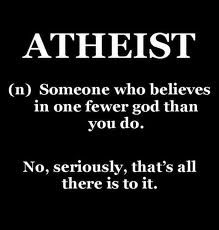 In recent days I have noticed several of the “new atheists” employing a clever and rhetorically effective soundbite while evangelizing for atheism. Richard Dawkins and Christopher Hitchens come to the top of my mind, but no one has encapsulated this sound bite better than Stephen Roberts: “I contend we are both atheists, I just believe in one fewer god than you do. When you understand why you dismiss all the other possible gods, you will understand why I dismiss yours.”
I consider myself a fairly seasoned apologist, but I must admit that this little rhetorical gem stopped me dead in my tracks. “How in the world should I respond to that?”, I thought. Fortunately for me, others have been thinking about this as well. Michael Patton has done a good job formulating the beginning of a response already. I would encourage you to read his thoughts on the matter. He even takes on the claim that belief in God is like belief in Santa Clause, so you get a “two-fer.”
I think my first response would be that the atheist’s claim that “I contend we are both atheists, I just believe in one less god than you” is a misuse of language. To be an atheist means one does not believe in the existence of any God or gods, so it would be inappropriate to call Christians “atheists.” The claim is rhetorically effective, however, because it makes it sound as if the Christian and atheist differ in only one minor detail (the Christian denies all gods but one, while the atheist denies all gods). Nothing could be further from the truth. A world in which even one deity exists is a radically different from a world in which no divine being(s) exists.
How would you respond to the claim?
September 9, 2010
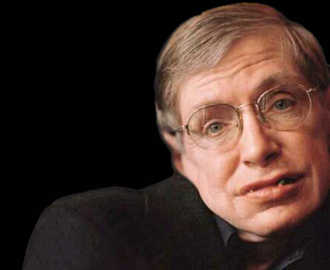 Some of you may have seen a news article circulating every major news outlet. With provocative titles such as “God did not create the universe, says Hawking,” and “Why God Did Not Create the Universe,” one would expect to find some new scientific discovery/argument proving that the universe is capable of creating itself – no God needed. After reading the articles, however, that expectation will quickly turn into disappointment.
Stephen Hawking is probably the most famous physicist alive. While he is clearly a brilliant man, his case for the sufficiency of natural processes to account for the origin of the universe is truly embarrassing. Consider the following claim: “Because there is a law such as gravity, the universe can and will create itself from nothing. Spontaneous creation is the reason there is something rather than nothing, why the universe exists, why we exist. It is not necessary to invoke God to light the blue touch paper and set the Universe going.”
Where to begin! First, while Hawking is attempting to explain how something could come from nothing, he only explains how something (the universe) comes from something else (physical laws, namely gravity). True nothingness is the absence of any and all existents, including physical laws. So from whence come the physical laws?
August 13, 2010
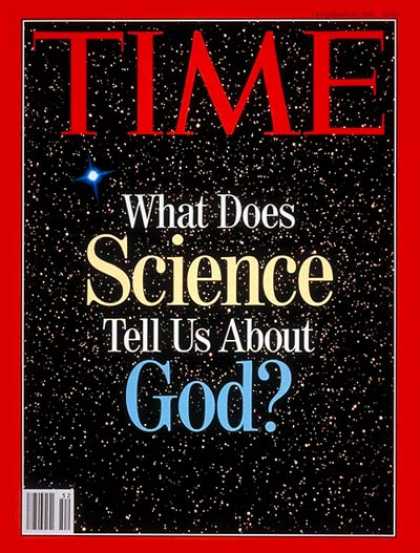 Atheists love to assert that there is no scientific evidence for the existence of God. I have a couple of thoughts on this. First, how do they come to this conclusion? Generally speaking, this conclusion follows from their definition of science. They define science as the search for naturalistic explanations for natural phenomena. If science is defined so as to a priori exclude agent causation as a valid explanation for any natural phenomenon, then it is no surprise that “science” will never yield any evidence for the existence of God. It can’t by definition. To put it in the form an argument, the atheist reasons as follows:
March 31, 2010
 Atheists are fond of comparing belief in God to belief in Santa Clause, claiming that belief in one is as justified as the other. But the two beliefs are not analogous at all. There are plenty of positive rational reasons to believe God exists (the origin of the universe, the fine-tuning of the universe for intelligent life, the origin of life, consciousness, the existence of objective moral values, etc.), but the same cannot be said of Santa. Indeed, when it comes to Santa’s existence, not only are there no good reasons that favor his existence, but there is plenty of evidence against his existence. If Santa exists we would expect to find his home in the North Pole, or have empirical evidence of flying reindeers or elves, and yet despite all the expeditions of the North Pole, we find none. Furthermore, we have widespread evidence from both credit card receipts and personal testimony that the gifts appearing under millions of Christmas trees were purchased by regular human beings from retail stores, not made by elves in Santa’s workshop. Finally, our knowledge of physics proves it impossible for one man to travel the globe in the amount of time allotted to Santa, carrying the number of gifts he would have to carry to supply gifts to all those .
Comparing belief in God to belief in Santa Clause may be rhetorically effective, but it is logically fallacious. As Paul Copan wrote, “To place belief in Santa Claus or mermaids and belief in God on the same level is mistaken. The issue is not that we have no good evidence for these mythical entities; rather, we have strong evidence that they do not exist. Absence of evidence is not at all the same as evidence of absence, which some atheists fail to see.”[1]
I think it is also worth pointing out that while virtually everyone abandons their belief in Santa Clause even prior to reaching adulthood, the same cannot be said of belief in the existence of God(s). The vast majority of people continue to believe in God(s). Why is that? Apparently they recognize that the grounds for believing in the one are not at all comparable to the grounds for believing in the other. Belief in God’s existence is rationally justified, while belief in Santa is not.
January 26, 2010
 William Lane Craig and Chad Meister are the editors of and contributors to the new book God is Great, God is Good, which is a response to the New Atheists. I have not read the book yet, but I have read a review of its contents that makes me think this is one of the best books to-date on this subject. Not only can it boast of the contributions of top-notch scholars such as J.P. Moreland, Alister McGrath, Scot McKnight, and Gary Habermas, but it covers a breadth of issues raised by the New Atheists. If you are looking for a concise introduction and response to the new atheism, I would recommend this book. It was also named best apologetics book by Christianity Today.
January 25, 2010
Theists often offer the moral argument in support of God’s existence. While the argument can take many forms, the essence of the argument is that objective moral values exist, and are best explained by the existence of a transcendent, personal being whose very nature is good. The common response offered by atheists is that one need not believe in God to be moral and loving. “After all,” they say, “I am a moral person and I don’t believe in God. Surely, then, belief in God is not necessary for morality.”
There are two things amiss about this response. First, it misconstrues the theist’s argument. He is not arguing that one must believe in God to recognize moral truths (a claim about moral epistemology) or to behave morally, but rather that God must exist for there to even be such a thing as morality (a claim about moral ontology). God’s existence is necessary to ground moral values in objective reality. If there is no God, there can be no such thing as objective moral values. We might choose to call certain behaviors “good” and certain behaviors “evil,” but such ascriptions are subjective determinations by human communities; i.e. they merely describe the beliefs and preferences of human subjects, not some object that exists transcendent to them.
January 21, 2010
 Brett Kunkle, the student impact speaker from Stand to Reason, relates a story that typifies the point I was making in Getting to our Kids First:
After my final teaching session, the son approached me, quickly launching into a laundry list of objections to Christianity. A lengthy conversation ensued, covering topics like objective moral truths, utilitarian ethical theory, Kant’s categorical imperative, retributive justice, divine hiddenness, intelligent design, and the experience of the Holy Spirit. From the conversation, I guessed he was a graduate student in philosophy. Wrong. He was a high school senior.
His objections boiled down to this: “I’ve been taught that Christianity’s truthfulness is confirmed by my experience. I am no longer having powerful Christian experiences. In addition, I’m reading arguments against Christianity. I now wonder if it’s rational for me to remain a Christian.”
Let’s hope this kid can be persuaded out of his doubts by the evidence, and let his story serve as a lesson for all of us parents and leaders. We’ve got to get to our kids before the enemies of the faith do.
December 7, 2009
November 19, 2009
See comments #22-31. The atheist, awfrick, is responding to some comments I made regarding positive evidence for the existence of God. This little exchange was so typical of my “dialogues” with atheists. Here’s the anatomy of a dialogue with an atheist:
Awfrick, if you are reading this, I invite you back to truly engage on the topic you started. All other atheists, if this is not descriptive of you, I am not claiming it is. I appreciate the atheists who have engaged me on this blog in a serious dialogue. I cannot appreciate those who assert the greatness of their intellectual superiority and strength of evidence, but never deliver on it. If you’ve got the goods, show me the money. If not, play at a different table. This blog is for the serious–for those who want to engage in dialogue on serious matters in a serious, sensible way.
October 15, 2009
“They don’t seem to realize that their moral outrage presupposes an objective moral standard that exists only if God exists. … In effect, they have to borrow from a theistic worldview in order to argue against it. They have to sit in God’s lap to slap his face.”[1]–Frank Turek, speaking about atheists Richard Dawkins and Christopher Hitchens.
August 19, 2009
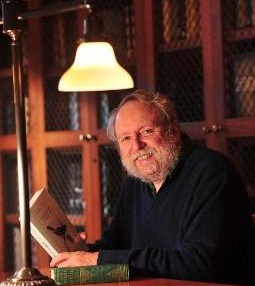 Philosopher of science, Michael Ruse, recently had a few choice words to say about the New Atheists:
Let me say that I believe the new atheists do the side of science a grave disservice. I will defend to the death the right of them to say what they do – as one who is English-born one of the things I admire most about the USA is the First Amendment. But I think first that these people do a disservice to scholarship. Their treatment of the religious viewpoint is pathetic to the point of non-being. Richard Dawkins in The God Delusion would fail any introductory philosophy or religion course. Proudly he criticizes that whereof he knows nothing. As I have said elsewhere, for the first time in my life, I felt sorry for the ontological argument. If we criticized gene theory with as little knowledge as Dawkins has of religion and philosophy, he would be rightly indignant. (He was just this when, thirty years ago, Mary Midgeley went after the selfish gene concept without the slightest knowledge of genetics.) Conversely, I am indignant at the poor quality of the argumentation in Dawkins, Dennett, Hitchens, and all of the others in that group. … I have written elsewhere that The God Delusion makes me ashamed to be an atheist. Let me say that again. Let me say also that I am proud to be the focus of the invective of the new atheists. They are a bloody disaster and I want to be on the front line of those who say so.
July 19, 2009
 In his book The Last Word, Thomas Nagel, an atheist professor of philosophy and law at New York University School of Law, defended philosophical rationalism against subjectivism. At one point he admits that rationalism has theistic implications—implications he does not like. He suggests that subjectivism is due in part to a fear of religion, citing his own fear as a case in point:
I speak from experience, being strongly subject to this fear myself: I want atheism to be true and am made uneasy by the fact that some of the most intelligent and well-informed people I know are religious believers. It isn’t just that I don’t believe in God and, naturally, hope that I’m right in my belief. It’s that I hope there is no God! I don’t want there to be a God; I don’t want the universe to be like that. … My guess is that this cosmic authority problem is not a rare condition and that it is responsible for much of the scientism and reductionism of our time. One of the tendencies it supports is the ludicrous overuse of evolutionary biology to explain everything about life, including everything about the human mind. Darwin enabled modern secular culture to heave a great collective sigh of relief, by apparently providing a way to eliminate purpose, meaning, and design as fundamental features of the world.”
Nagel’s admission is consistent with the Christian claim that those who reject the existence of God do not do so wholly for intellectual reasons—the will plays a vital role as well.
July 10, 2009
 Atheists claim they don’t believe in miracles—that miracles are for religious people—but I beg to differ. Atheists believe in miracles too, although they do not involve a divine being. How so? Atheists believe something came into existence from nothing, out of nowhere, entirely uncaused. They believe life came from non-life, that the rational came from the non-rational, that order came from chaos, and specified information came from randomness. Those are some serious miracles, and require a lot more faith than belief in an intelligent and powerful God who created the universe from nothing, life from non-life, and ordered the universe with specified information! As Norm Geisler says, I don’t have enough faith to be an atheist!
July 10, 2009
J. Budziszewski wrote about an exchange that took place between him and one of his students. The student claimed to be an agnostic, but Budziszewski helped him see that while he may not have an intellectual commitment for or against God’s existence, he cannot avoid a practical commitment to one or the other.
Every agnostic tilts one way or the other in practice: towards theism, or towards atheism. How can you tell where they tilt? Look at how they live their lives. Every agnostic lives his life in one of two ways: (1) as though God does exist; (2) as though God does not exist. To quote Budziszewski, “Commitments are reflected in movements of the will.” If they do not pray and/or are unconcerned about the moral quality of their actions, then they are betting that God does not exist—a “practical atheism” of sorts. If, however, they do pray and/or demonstrate concern for the moral quality of their actions, they are betting that God does exist.
Check out the exchange here. It’s an informative and enjoyable five minute read.
March 29, 2009
There is a popular view held by many atheists that in the absence of positive evidence for God’s existence, we ought to accept atheism as true by default. This view is called the presumption of atheism. I have written a full treatment against it on my website (“Not so Fast: There is no Presumption of Atheism“), but I thought it was fitting to share a great quote from philosopher William Lane Craig on the subject:
I hear all the time that atheism wins by default – in other words, if there aren’t any good arguments for God, then atheism automatically wins. So many of these fellows don’t offer any arguments for atheism; instead, they just try to shoot down the arguments for theism and say they win by default. In reality, however, the failure of arguments for God wouldn’t do anything to establish that God does not exist. The claim that there is no God is a positive claim to knowledge and therefore requires justification. The failure of arguments for God would leave us, at best, with agnosticism, not atheism.[1]
Nobody can say it so succinctly, and so powerfully as Craig!
[1]William Lane Craig, during an interview with Lee Strobel, “Bill Craig on the New Atheism,” available from http://leestrobel.com/newsletters/2009MARCH/thenewatheism.htm; Internet; accessed 18 March 2009.
February 25, 2009
One of my favorite book titles is I Don’t Have Enough Faith to be an Atheist by Norm Geisler and Frank Turek. But I think Ray Comfort’s new book title comes in for a close second: You Can Lead an Atheist to Evidence, But You Can’t Make Him Think. That is classic!
February 25, 2009
 Science-types tend to dismiss theism on grounds that it’s rooted in an ignorance of material explanations for natural phenomena. Science has discovered material explanations for most things once thought to be acts of God (lightning, gravity, etc.). Seeing that the gaps in our understanding (gaps once occupied by God) have increasingly been filled by materialist explanations, so, they say, is the need for theism. Furthermore, given the track record of scientific progress in the last few centuries, even those gaps that remain are likely to be filled with materialistic explanations, leaving no room for theism. Are these conclusions reasonable?
I’ll begin by addressing the question of whether scientific progress eliminates the need for God. To speak of the need for God, in this context, is to speak of His explanatory power. Scientists who think finding materialistic explanations for natural phenomena eliminates the need for God presuppose that God is just a hypothesis, and that this God-hypothesis is only needed to explain the natural world. Both presuppositions are false.
Most people who believe in God do not do so because God explains some X that is otherwise inexplicable. For them, God is not an explanatory entity, but a living reality they encounter. They believe in God because they have experienced Him. There are, however, some theists who believe in God only because of the explanatory power such a being holds. What these science-types miss, however, is that for these individuals, God explains much more than just the natural world. There are non-physical realities that need to be explained such as the existence of objective moral values/duties, the existence of mind/consciousness, and freedom of the will. Materialistic explanation of these phenomena are not plausible. An immaterial being, however, provides a sufficient cause. So even if God was no longer needed to explain all features the universe, His explanatory power would not be obsolete. There would still be a need for the God-hypothesis.
 Theosophical Ruminations
 Thinking to Believe