Naturalism


Several months ago the Discovery Channel aired a television series featuring Stephen Hawking called Curiosity.  Whereas in his book The Grand Design Hawking claimed that God is not necessary to explain the origin of the universe given the existence of physical laws such as gravity, in Curiosity he argued that God could not have created the universe because there was no time in which God could have done so:

[D]o we need a God to set it all up so a Big Bang can bang? … Our everyday experience makes us convinced that everything that happens must be caused by something that occurred earlier in time.  So it’s natural for us to assume that something—perhaps God—must have caused the universe to come into existence.  But when we’re talking about the universe as a whole, that isn’t necessarily so.
(more…)

Evolutionist, Jerry Coyne, has written an article in USA Today promoting the idea that free will is an illusion.  After several paragraphs of attempting to convince his readers that they have no free will, Coyne raises the question of justice: Why punish people if they did not freely choose to do bad?  His answer: “But we should continue to mete out punishments because those are environmental factors that can influence the brains of not only the criminal himself, but of other people as well. Seeing someone put in jail, or being put in jail yourself, can change you in a way that makes it less likely you’ll behave badly in the future. Even without free will then, we can still use punishment to deter bad behavior, protect society from criminals, and figure out better ways to rehabilitate them.”  But wait, what is this talk of “should”?  That presumes some sort of rational or moral obligation, but both are impossible in Coyne’s world since we have no ability to choose, and obligations cannot be met by those who lack the ability to choose to fulfill them.  We can’t decide how we will respond to criminal behavior.  Physics determines that for us.  I may be determined to respond by refusing to punish anyone’s bad behavior or rewarding anyone’s good behavior.  It’s not within my control, nor Coyne’s.  We are just puppets on the strings of physics.

(more…)

Scientists working in origin of life research are fairly candid that they do not know how life originated, but they are quick to point out that they are making progress and that science will eventually be able to provide an answer to this question.  I have always found this sort of faith in science a bit intriguing.  It is just assumed that there must be a naturalistic cause/explanation for the origin of life, and that we will eventually be able to discover it.  But why should we think this to be true?  Given what needs to be explained (the origin of biological information), and given our understanding of the causal powers of naturalistic processes, the origin of life does not appear to be the kind of thing for which natural causes are adequate to explain it even in principle (See 1, 2, 3, 4, 5, 6, 7, 8, and 9).

(more…)

Many naturalists reject the Bible as veridical because it in contains reports of miracles, and yet many of these same individuals say they would be willing to believe the Bible if they ever experienced a miracle.  I’ve heard some Christians cry “Inconsistency!” at this point, noting that the atheist uses miracles as both his grounds for disbelieving as well as his grounds for believing.  If the miraculous is the reason for his disbelief, how could it serve as the basis for his belief?

I don’t think there is any inconsistency here at all.  While they reject the Bible because of their belief that miracles do not occur, they recognize that if they were to personally experience a miracle it would prove that miracles are possible after all, and thus the Biblical report of miracles would become plausible, and perhaps even credible. 

Atheists and naturalists will often argue against miracles as Hume did: by saying they violate the universal human experience; i.e. humans have no experience of miracles.  There are at least three problems with this.

First, there is the confirmation problem.  How could anyone possibly know this to be true?  It would require that every person alive today be interviewed, and each and every one confirms that they have never experienced a miracle.  If even a handful of people claimed to have experienced miracles, then it would not be accurate to say it is the universal human experience that miracles do not occur.

(more…)

Materialists believe that material entities exhaust the nature of reality.  This commits them to believing there is a material/physical cause for every physical effect.  Indeed, on a materialistic worldview physical causes determine a physical effect.  If material cause X is present, material effect Y must occur.  Just like falling dominos, when one domino falls on another, the second domino must fall.  There are many things, however, that cannot be explained in terms of material causes.  Consider communication.  When your friend speaks to you, you will respond in kind.  How can this be explained in terms of deterministic, material causation?  How can his words cause you to respond—yea, even determine your response?  Did his words produce molecular changes in the space between you, which in turn caused physical changes in your body that ultimately determined that you say X (as opposed to Y or Z) in response?  While this seems incredulous on its face, let’s grant that it is possible for the sake of argument since there are other forms of communication that are even more difficult to explain from a materialist perspective.

(more…)

In the August 2011 edition of Scientific American, famed cosmologist, George Ellis, wrote an article titled “Does the Multiverse Really Exist?”  Here are some great excerpts from that article:

“Similar claims [about a multiverse] have been made since antiquity by many cultures.  What is new is the assertion that the multiverse is a scientific theory, with all that implies about being mathematically rigorous and experimentally testable.  I am skeptical about this claim.  I do not believe the existence of those other universes has been proved—or ever could be.  Proponents of the multiverse, as well as greatly enlarging our conception of physical reality, are implicitly redefining what is meant by ‘science.’”—pg 39

(more…)

Just up at the Institute for Biblical Studies: “The (In)adequacy of Darwinian Evolution.”

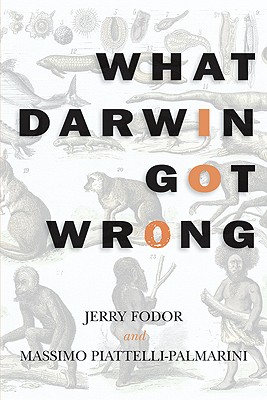
In 2010 Jerry Fodor, a philosophy professor at Rutgers University, and Massimo Piattelli-Palmarini, a biophysicist, molecular biologist, and cognitive scientist at the University of Arizona, published What Darwin Got Wrong.  Fodor and Piattelli-Palmarini (FPP) are, by their own admission, died-in the-wool atheists and committed to a fully naturalistic account of evolutionary development.  And yet, they admit that they do not know how evolution proceeds.  One thing they are sure of is that Darwin’s account of natural selection cannot be it.  Natural selection fails as an explanation on both scientific and philosophical grounds.

(more…)

Over at Uncommon Descent a good point has been raised about materialists (such as evolutionary biologist, Jerry Coyne) who deny the existence of free will and yet get angry at others for believing and doing things they (the materialists) do not agree with:

Another inconsistency of atheists who share Professor Coyne’s views on freedom is that they are nearly always angry at someone – be it the Pope or former President George W. Bush or global warming deniers. I have to say that makes absolutely no sense to me…. But please, spare me your moral outrage, your sermonizing, your finger-wagging lectures and your righteous indignation. That I cannot abide. You don’t lecture the PC on your desk when it doesn’t do what you want. If I’m just a glorified version of a desktop PC, then why lecture me?

Perhaps materialists would respond that they don’t have a choice but to get angry!  Well, perhaps we don’t have a choice but not to care that they are.

Those aren’t my words (although I concur with them).  Those are the words of John Horgan, a science journalist and former editor of Scientific American.  Horgan recently published an article in Scientific American discussing the dismal state of origin-of-life research.  He describes the research as being at an “impasse,” and resorting to “far out…speculation” as exemplified by the theory of panspermia (life originated in outer space and was brought to earth).

Just one week prior to the publication of Horgan’s article, science writer Dennis Overbye published an article in the New York Times on the same subject.  He reported on an origin-of-life conference at Arizona State University in which two dozen top-ranking scientists from a variety of disciplines converged to discuss the problem.  While Overbye touted the RNA World hypothesis, he noted that “one lesson of the meeting was how finicky are the chemical reactions needed for carrying out these simple-sounding functions,” and “even if RNA did appear naturally, the odds that it would happen in the right sequence to drive Darwinian evolution seem small.”

It’s not often that the public is made aware of the fact that scientists have no adequate naturalistic explanation for the origin of life, so it’s refreshing to see this being discussed by ideological opponents in venues as important as the New York Times.

The reigning philosophy of science is methodological naturalism, which requires that scientists explain all natural phenomena in terms of naturalistic causes.  If a scientist thinks the evidence for some biological or natural entity points to an intelligent cause, the possibility is dismissed as unscientific by definition, and the scientist is charged with employing a “God of the gaps” argument in which God is invoked to plug up gaps in our knowledge.

I’ve always found this line of thinking interesting.  Can you imagine if this principle was applied to the non-biological world?  What caused Stonehenge?  “People made it,” you say.  Oh no!  You have broken the rules of science.  This is a physical entity, and thus it must be explained in terms of naturalistic causes.  “But,” you say, “it has all the elements of design.  The arrangement of parts is both complex and specified.”  But this is just the appearance of design, not real design.  While we may not know the natural process by which the pyramids were created, scientists are working on that.  We cannot give up on science by appealing to some unknown “designers.”  To do so is to employ a people of the gaps argument.

(more…)

Opponents of ID often argue against ID on the basis that it is not science.  Of course, the definition of science itself is disputable, and it is often disputed.  This is largely a red herring, however, because it shifts the focus away from the merits of ID arguments to the classification of those arguments.  As Thomas Nagel has written, “A purely semantic classification of a hypothesis or its denial as belonging or not to science is of limited interest to someone who wants to know whether the hypothesis is true or false.”[1]

While I think ID is a scientific conclusion, I do not wish to debate here whether ID properly qualifies as science, or whether it is better classified as religion/philosophy.  The question I want to raise is how scientists would respond if it could be demonstrated that ID is both properly categorized as religion/philosophy and ID is true.  Would scientists cease discussing certain subjects in science class?  Would they stop discussing the origin of life or origin of species?  In my estimation, this is doubtful.  I think most would continue to offer naturalistic explanations for these objects because their definition of science requires them to.  After all, if by definition alone science must provide naturalistic answers for all natural phenomena, then scientists must continue to offer naturalistic explanations for all phenomena—even phenomena  ID would have proven do not have naturalistic explanations.

(more…)

In the latest edition of Philosophia Christi, the Evangelical Philosophical Society’s journal, philosopher Stephen C. Dilley wrote a really nice article titled “Philosophical Naturalism and Methodological Naturalism: Strange Bedfellows?” in which he argued that philosophical naturalists should dispense with the principle of methodological naturalism in science.

For those of you who may be unfamiliar with these terms, philosophical naturalism (PN) is the view that only physical things exist, while methodological naturalism (MN) is the view that we must restrict our method of scientific inquiry to naturalistic processes.  MN does not require one to presuppose the truth of PN, but it does require that one investigate the natural world as if God does not exist, or if He does, as if He has no causal relationship to the natural world.  According to MN, for an explanation to be considered “scientific” it must be naturalistic; i.e. it must appeal to naturalistic entities and processes.

(more…)

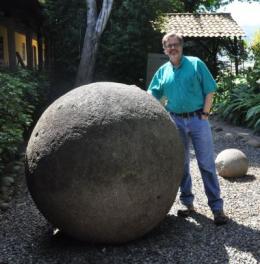
John Hoopes of the University of Kansas claims to be a scientist, but it is clear to me that he’s no scientist!  How do I know?  Because he has concluded that some intelligent designer is responsible for producing 300 of these:

Surely he knows scientists cannot appeal to intelligent agency as an explanation for natural phenomenon.  Besides, there is no need to appeal to any intelligent designer.  Natural processes such as wind and water erosion are fully capable of producing the spherical shape of these rocks over billions of years.  To appeal to some “rock-designer-of-the-gaps” is to give up on science.  Currently, we may not know the exact pathway by which nature produced these spherical rocks, but given the past successes of science, I am sure we will discover it in the near future.  

If these rocks are the products of some intelligent designer as Hoopes claims, then let him tell us who designed the designer.  Guess what, he doesn’t know!  Clearly, then, these rocks can’t be designed.

Here’s another attempt to explain the Biblical plagues without reference to the supernatural: global warming and a volcano eruption.  It’s always funny to me how—in an attempt to avoid the supernatural—people appeal to explanations that are so implausible that it takes more faith to believe them than it does to believe the Biblical account that God was responsible.  

For example, how is it that Moses’ could have known in advance that a plague of frogs would be produced by global warming?  What’s even more unbelievable is the fact that each of the natural phenomena just-so-happened to stop when Moses said it would stop.  And how is it that each of the ten plagues happened one after another, and never simultaneously?  Who do they think they are trying to kid? 

The National Geographic Channel will air a program on this April 4 (Easter day).

Philosopher and theologian, William Lane Craig, has frequently made reference to the turn of events in philosophy over the past 40 years.  What was once a very secularized field has been “invaded” by theists.  As evidence of this phenomenon, consider what atheist philosopher, Quentin Smith, had to say in the journal Philo:

By the second half of the twentieth century, universities and colleges had been become in the main secularized. … Analytic philosophers (in the mainstream of analytic philosophy) treated theism as an antirealist or non-cognitivist world-view, requiring the reality, not of a deity, but merely of emotive expressions…. The secularization of mainstream academia began to quickly unravel upon the publication of [Alvin] Plantinga’s influential book on realist theism, God and Other Minds, in 1967. It became apparent to the philosophical profession that this book displayed that realist theists were not outmatched by naturalists in terms of the most valued standards of analytic philosophy: conceptual precision, rigor of argumentation, technical erudition, and an in-depth defense of an original world-view. … [T]oday perhaps one-quarter or one-third of philosophy professors are theists, with most being orthodox Christians. … God is not “dead” in academia; he returned to life in the late 1960s and is now alive and well in his last academic stronghold, philosophy departments.[1]

In other words, the intellectual respectability of theism was resurrected.  Theism was rational after all (even if [as Quentin thinks] it is ultimately false), and formed a beachhead against secularism in university philosophy departments.  What I find interesting, however, is the response of naturalists.  According to Smith

the great majority of naturalist philosophers react by publicly ignoring the increasing desecularizing of philosophy (while privately disparaging theism, without really knowing anything about contemporary analytic philosophy of religion) and proceeding to work in their own area of specialization as if theism, the view of approximately one-quarter or one-third of their field, did not exist. … [N]aturalist scientists…are so innocent of any understanding of the philosophy of religion that they do not even know that they are innocent of this understanding, as it witnessed by their popular writings on science and religion.[2]

And again,

If each naturalist who does not specialize in the philosophy of religion (i.e., over ninety-nine percent of naturalists) were locked in a room with theists who do specialize in the philosophy of religion, and if the ensuing debates were refereed by a naturalist who had a specialization in the philosophy of religion, the naturalist referee could at most hope the outcome would be that “no definite conclusion can be drawn regarding the rationality of faith,” although I expect the most probable outcome is that the naturalist, wanting to be a fair and objective referee, would have to conclude that the theists definitely had the upper hand in every single argument or debate.[3]

Be sure, this is not because Smith thinks theists have the better arguments.  On the contrary, he is persuaded that naturalism is the true ontology.  But he recognizes that 99% of naturalists are so ignorant of the philosophy of religion that they would not be able to refute the arguments.  I have found this to be true of many naturalists.  They continue to speak as if theism requires an irrational, blind leap of faith into the dark, and continue to present tired-old arguments against theism as if those arguments have not been answered by theists both past and present.  They are unaware of those responses, because they do not engage the philosophy of religion with the same rigor that theists engage philosophical naturalism.

Furthermore, because most naturalists ignore philosophers of religion, they are also unaware of the fact that theistic philosophers have defeated their arguments for naturalism, and thus ignorant of the fact that their belief in naturalism is not justified (at least until they are able to undercut or rebut those defeaters).  As Smith notes, “They may have a true belief in naturalism, but they have no knowledge that naturalism is true since they do not have an undefeated justification for their belief.”[4]

While Smith is concerned about the recent turn of events in philosophy, I find it reason to rejoice.  It is a testimony to the intellectual credibility of the Christian faith.  Religious faith does not require a commitment of the will in the absence (or in spite of the) evidence, but rather is a persuasion based on reasonable knowledge.  Christians need not fear philosophy; we need only avoid the false philosophies of men (Colossians 2:8).  As C.S. Lewis once said, “Good philosophy must exist, if for no other reason, because bad philosophy needs to be answered.”


[1]Quentin Smith, “The Metaphilosophy of Naturalism,” Philo, 4:2 (2001); available from http://www.philoonline.org/library/smith_4_2.htm; Internet; accessed 07 January 2009.

[2]Ibid.

[3]Ibid.

[4]Ibid.

The universe is incredibly finely-tuned, not only for its own existence, but for the existence of complex, intelligent life.  This fact does not set well with naturalists and atheists.  It is enormously difficult to explain the unfathomable specificity and precision of the cosmos on the basis of chance alone.  Indeed, the value of some physical constants were initial conditions present at the universe’s origin, and thus cannot possibly be explained by random chance processes.  So how do non-theists explain how our universe got so lucky?

While there are a few different approaches floating out there, the one garnering the most attention and support recently is the multiverse hypothesis (a.k.a the Landscape).  Multiverse theory proposes the existence of a near-infinite number of universes.  Given the multitude of universes–it is reasoned–there is bound to be at least one that is life-permitting.  As David Berlinski writes, “[B]y multiplying universes, the Landscape dissolves improbabilities.  To the question What are the odds? the Landscape provides the invigorating answer that it hardly matters.”[1]

Scientist who subscribe to the multiverse view it as the only viable naturalistic alternative to a divine creator.  As Tim Folger wrote:

Physicists don’t like coincidences. They like even less the notion that life is somehow central to the universe, and yet recent discoveries are forcing them to confront that very idea. Life, it seems, is not an incidental component of the universe, burped up out of a random chemical brew on a lonely planet to endure for a few fleeting ticks of the cosmic clock. In some strange sense, it appears that we are not adapted to the universe; the universe is adapted to us.

Call it a fluke, a mystery, a miracle. Or call it the biggest problem in physics. Short of invoking a benevolent creator, many physicists see only one possible explanation: Our universe may be but one of perhaps infinitely many universes in an inconceivably vast multi­verse. Most of those universes are barren, but some, like ours, have conditions suitable for life.

The idea is controversial. Critics say it doesn’t even qualify as a scientific theory because the existence of other universes cannot be proved or disproved. Advocates argue that, like it or not, the multiverse may well be the only viable non­religious explanation for what is often called the “fine-tuning problem”-the baffling observation that the laws of the universe seem custom-tailored to favor the emergence of life.[2]

What I find particularly interesting is how fine-tuning is viewed as a problem in the first place.  No theist would view it as a problem.  It is only problematic to atheists and naturalists because it implies a designing intelligence, and such a being is anathema to them.  In order to avoid the obvious conclusion that an intelligent being was responsible for fine-tuning the universe for existence and life, they propose a naturalistic theory that is, admittedly, not even scientific (because it is neither provable nor falsifiable).  Proponents of the multiverse are honest about this fact.  Consider Andre Linde.  When asked if physicists will ever be able to prove the multiverse hypothesis, he responded:

“Nothing else fits the data.  We don’t have any alternative explanation for the dark energy; we don’t have any alternative explanation for the smallness of the mass of the electron; we don’t have any alternative explanation for many properties of particles.  What I am saying is, look at it with open eyes. These are experimental facts, and these facts fit one theory: the multiverse theory. They do not fit any other theory so far. I’m not saying these properties necessarily imply the multiverse theory is right, but you asked me if there is any experimental evidence, and the answer is yes. It was Arthur Conan Doyle who said, ‘When you have eliminated the impossible, whatever remains, however improbable, must be the truth.’?”

In other words, it doesn’t need to be proven by evidence.  It doesn’t even need to be probable.  It only needs to be the last man standing.  I’ll agree with Linde that no other naturalistic hypothesis has more explanatory power than the multiverse (even though it has no empirical support), but when the list of live options is expanded beyond naturalistic hypotheses, there is a better explanation of the data: theism.  But Linde excludes theism a priori from the list of live options.  Why do that?  Theism has more explanatory plausibility and rational evidence in its favor than the multiverse, and thus should be preferred.

The reason those like Linde take the multiverse hypothesis seriously, is not because they are following the evidence where it leads, but because the evidence points to a designer of the universe, and they wish to avoid such a being at all costs, even if it means believing in an improbable, improvable theory.  As Bernard Carr, a cosmologist at Queen Mary University of London said, “If there is only one universe you might have to have a fine-tuner. If you don’t want God, you’d better have a multiverse.”  Apparently “it is better to have many worlds than one God.”[3] If ridding themselves of one supposed fairy tale (theism) requires belief in another, so be it.

The father of multiverse theory, Leonard Susskind, is very clear about the anti-theistic motivations of theories such as the multiverse.  When asked if we are stuck with an intelligent designer if his Landscape theory doesn’t pan out, he responded:

I doubt that physicists will see it that way. If, for some unforeseen reason, the landscape turns out to be inconsistent – maybe for mathematical reasons, or because it disagrees with observation – I am pretty sure that physicists will go on searching for natural explanations of the world. But I have to say that if that happens, as things stand now we will be in a very awkward position. Without any explanation of nature’s fine-tunings we will be hard pressed to answer the ID critics. One might argue that the hope that a mathematically unique solution will emerge is as faith-based as ID.[4]

His point could not be clearer.  The desire of naturalists is to find a plausible naturalistic explanation on par with the design hypothesis is their driving motivation.  Any theory will do, even if, according to Susskind, it is as faith-based as Intelligent Design.  It appears that blind faith is acceptable in science, so long as its object is not God.  They’ll blindly believe in the existence of universes they cannot see, but not in the existence of a God who has made Himself known in the very cosmos they study.


[1]David Berlinski, The Devil’s Delusion: Atheism and Its Scientific Pretensions(New York: Crown Forum, 2008), 124.[2]Tim Folger, “Science’s Alternative to an Intelligent Creator: the Multiverse Theory” in Discover magazine; available from http://discovermagazine.com/2008/dec/10-sciences-alternative-to-an-intelligent-creator; Internet; accessed 11 November 2008.
[3]David Berlinski, The Devil’s Delusion: Atheism and Its Scientific Pretensions (New York: Crown Forum, 2008), 135.[4]Leonard Susskind, in an interview with Amanda Gefter of New Scientist, “Is String Theory in Trouble?”, December 17 2005 edition, p. 48; available from http://www.newscientist.com/channel/fundamentals/mg18825305.800.html; Internet; accessed 5 January 2006.

big-bangFor millennia philosophers maintained that the universe is eternal.  The philosophical payoff of this view was that it avoided the God question.  If the universe has always been, it did not need a creator.  The emergence of the Big Bang theory in the early part of the 20th century, however, changed all of that.  The Big Bang model successfully predicted that the universe–including all spatio-temporal-material reality–had an absolute origin at a point in the finite past, from which it expanded, and continues to expand today.

The theistic implications of this model were recognized instantly.  If the universe began to exist, it seemed to require a supernatural cause (one outside the confines of the natural world).  That’s why it was met with fierce opposition, and why it took several decades and many lines of empirical confirmation to become the reigning paradigm it is today.  Even now, cosmogenists continue to put forth alternative models in hopes of averting the beginning of the universe, many of which are little more than exercises in metaphysical speculation, incapable of both verification and falsification.

While not friendly to an atheistic worldview, many atheists eventually made their peace with the empirical evidence, and accepted the theory.  But the theistic implications of a temporally finite universe have not gone away.  Anything that begins to exist requires a cause.  If the universe began to exist, what caused it to exist?  It could not be a natural law, because natural laws originated with the universe.  It could not be self-caused, because this is incoherent.  Something cannot bring itself into existence, for that would entail its existence prior to its existence.

The atheist has two options.  He can either admit to the existence of an external cause of the universe, or affirm that the universe is uncaused.  For most atheists the first option is out of the question.  An external cause of the universe looks too much like God: immaterial, eternal, non-spatial, intelligent, and personal.  That leaves them the second option.  But this won’t do either.  The causal principle is one of the most basic intuitions we have.  Things don’t just pop into existence uncaused from nothing, so why think the universe did?  If everything that begins to exist has a sufficient cause, on what grounds is the origin of the universe excepted?  If one excepts it on the basis that it is impossible to have a cause prior to the first event, they are guilty of begging the question in favor of atheism, for they are assuming that physical reality is the only reality, and thus the only possible cause of the Big Bang must be a physical cause.  But it is entirely plausible that the external cause of the Big Bang was an eternal, non-physical reality.  The only way to demonstrate that the universe cannot have a cause, then, is to demonstrate that the existence of an eternal, non-physical reality like God is impossible.  But the very beginning of the universe is an argument for such a being’s existence!

Some atheists, recognizing the problem the principle of causal sufficiency makes for the atheistic worldview, cling to an eternal universe despite the scientific and philosophic evidence to the contrary.  They recognize that it is nonsense to think something can come from nothing, uncaused.  Something can only come from something.  From nothing, nothing comes.  If there was ever a time when nothing existed (as the Big Bang model predicts), then of necessity there would be nothing still, because nothing has no potential to become something.  And yet there is something, so there could not have been a time when nothing existed.  As a matter of historical fact, there can’t ever be a time when there was nothing.  Something must exist eternally.  If something must exist eternally, and the universe is not that something, then something resembling the God of theism must exist.  Rather than admit the obvious-that this is evidence for the existence of God-these atheists reject the scientific and philosophical evidence for a finite universe, and assert that the universe must exist eternally.

What’s important to see, here, is that this sort of atheist is not being intellectually honest with the evidence.  He has an a priori philosophical and volitional commitment to atheism, and that commitment biases him to such an extent that he will not accept the destination to which the rational evidence leads.  Only theism is consistent with the evidence, and consistent with reason.  While I commend atheists who reject the notion that the universe could come into being from nothing totally uncaused as an irrational leap of faith, I admonish them to go one step further, and recognize that the principle that something only comes from something, combined with the scientific an philosophical evidence for the finitude of the universe, supports theism, not atheism.  To be consistent and honest with the data, they should accept the finitude of the universe, and admit that its existence requires a personal and supernatural cause.

Philosopher Jerry Fodor made the following remarks in his review of Galen Strawon’s Consciousness and Its Place in Nature, on why materialist explanations for consciousness (particularly Strawson’s) do not work:

So, then, if everything is made of the same sort of stuff as tables and chairs (as per monism), and if at least some of the things made of that sort of stuff are conscious (there is no doubt that we are), and if there is no way of assembling stuff that isn’t conscious that produces stuff that is (there’s no emergence), it follows that the stuff that tables, chairs and the bodies of animals (and, indeed, everything else) is made of must itself be conscious. Strawson, having wrestled his angel to a draw, stands revealed as a panpsychist: basic things (protons, for example) are loci of conscious experience. You don’t find that plausible? Well, I warned you.

Nor, having swallowed this really enormous camel, does Strawson propose to strain at the gnats. Consider, for example: he thinks (quite rightly) that there are no experiences without subjects of experience; if there’s a pain, it must be somebody or something’s pain; somebody or something must be in it. What, then, could it be that has the experiences that panpsychists attribute to ultimate things? Nothing purely material, surely, since that would just raise the hard problem all over again. So maybe something immaterial? But monism is in force; since the constituents of
tables and chairs are made of matter, so too is everything else. So, Strawson is strongly inclined to conclude, the subjects of the experiences that basic things have must be the experiences themselves. Part of the surcharge that we pay for panpsychism (not, after all, itself an immediately plausible ontology) is that we must give up on the commonsense distinction between the experience and the experiencer. At the basic level, headaches have themselves.

I find amazing the lengths to which materialists will go to avoid a non-materialistic perspective of consciousness. They would rather confess that tables and chairs experience consciousness than admit that consciousness is an immaterial phenomenon that cannot be explained in terms of philosophical naturalism, and the sciences. In light of their belief that science can explain everything without an appeal to the immaterial, they spew forth nonsense such as this.

HT: Denise O’Leary at


Mindful Hack

« Previous PageNext Page »