Apologetics


I have written in the past of gay men who opposed same-sex marriage (for various reasons).  While it’s old news at this point, I ran across a couple of more recently.  Rupert Everett, a gay British actor, told The Sunday Times magazine he opposed same-sex marriage (and all marriage for that matter) and same-sex parenting because children need mothers and fathers.

At about the same time, Doug Mainwaring, also a gay man, published an opinion article in The Washington Post:

(more…)

Mary C. JacobsonIn 2006, the New Jersey Supreme Court ruled that the NJ legislature must give same-sex couples all of the same rights and benefits as opposite-sex couples, but did not demand that the state amend its marriage laws.  The legislature responded by creating civil unions that had identical benefits to marriage.

Fast forward seven years, and Judge Mary C. Jacobson of the State Superior Court ruled on September 27, 2013 that this is not enough – the state must call same-sex unions marriage as well starting Monday, October 21, 2013.  Governor Christie vowed to appeal the decision to the NJ Supreme Court, but when that court refused to block the law while Christie challenged it, and made it clear that they would not rule in his favor, he decided to withdraw his appeal, meaning NJ is now the 14th state to offer same-sex marriage.

“The person who can’t or won’t discern good from evil is destined to be a victim of those who are adept at disguising one as the other.  Thus, abstaining from moral judgments is not a hallmark of nice people, but of foolish ones.  And the person who makes judgments while insisting that he doesn’t or shouldn’t is naïve, if not hypocritical.” – Regis Nicoll, “Speak No Evil,” Salvo, Issue 25, Summer 2013, p. 14.

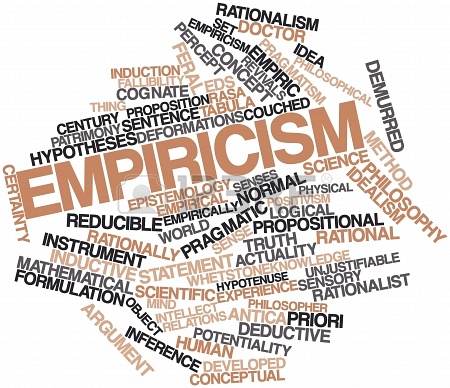
EmpiricismThose who subscribe to empiricism believe that we should not believe the truth of some X based on a competent authority.  We are only justified in believing some X if we have empirically verifiable evidence supporting the truth of X.  It goes without notice that this principle itself is not empirically verifiable, and thus empiricism is self-refuting as a complete theory of knowledge.  But let’s ignore the man behind the curtain for a moment, and explore other deficiencies in an empirical epistemology.

In his book, A Universe from Nothing, physicist and empiricist Lawrence Krauss describes the state of the cosmos in the distant future.  Due to cosmic expansion, in two trillion years all of the evidence for the Big Bang (cosmic microwave background, redshift of distant objects/the Hubble expansion, and the measurement of light elements in the cosmos), and all 400 billion galaxies visible to us now, will no longer be detectable via empirical methods.  Worse yet, all of the evidence for the dark energy that caused the cosmic expansion will be gone as well.  For scientists living in that day, all of the empirical evidence will point to a static universe inhabited by a single galaxy that is no more than a trillion years old (based on the ratio of light elements at the time).

(more…)

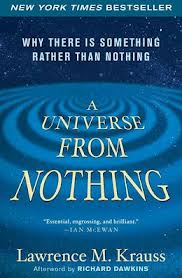
Universe from NothingLast year theoretical physicist and atheist, Lawrence Krauss, wrote a book titled A Universe from Nothing: Why There is Something Rather than Nothing. As the title suggests, Krauss wrote the book to answer the age-old question of why there is something rather than nothing. The book was heralded by many atheists as the definitive answer to theists who claim God is necessary to explain the existence of physical reality. Indeed, in the afterward Richard Dawkins claimed that Krauss’ book devastates theistic arguments based on cosmology just as Darwin’s On the Origin of Species devastated theistic arguments based on design in biology. Other reviewers, however – including scientists, philosophers, and theologians – beg to differ. Having read the book myself (not just once, but two times now), I can see why they were less than impressed with Krauss’ argument.

While my overall assessment of Krauss’ argument is not positive, truth be told, most of the book was quite enjoyable and informative.  That’s because the first 2/3 of the book is a lesson on the historical development of modern cosmology.  Krauss doesn’t make his case for why there is something rather than nothing until the last four chapters.  Unfortunately, that’s where the book falls apart.

(more…)

Empty prisons2Nobody likes the idea of hell – even believers – but many unbelievers simply loathe the concept.  They think punishing sinners in hell is not befitting of a supposedly loving God, and appeal to the doctrine as evidence against the truth of Christianity.  Is hell truly a stain on God’s character?  I don’t think so, and when the skeptic examines his own beliefs about justice a bit more carefully, I think he’ll come to agree that hell is not the egregious concept he claims it is.  Here’s a tactical way to get your skeptical friend to see this point.

(more…)

EuthanizePhysician-assisted suicide and euthanasia advocates always make their case by pointing to the suffering of the terminally ill. They tug on our heart strings, and promise that if only we’ll legalize PAS/EUTH, it will be limited to the terminally ill who are in their last stages of life and cannot bear the pain of their disease and want to die.

That is how it starts out, but eventually, the scope of those eligible for PAS/EUTH always widens to encompass more and more people – either by changing the law, or just flouting the law.  The first requirement to go is usually the time-frame.  If PAS/EUTH is good enough in the last 6 or 12 months of a person’s life, well, why not allow it a little before?  Eventually, time limits don’t matter.  Next to slip is the requirement that one be terminally ill.  Any illness that causes unbearable pain will do.  But, if PAS/EUTH is the answer to pain, and pain comes in both physical and emotional forms, then why limit PAS/EUTH to just those who are suffering from physical pain?  So the tent gets widened to include those who are depressed and cannot bear life as well.  Indeed, if PAS/EUTH is a compassionate answer to pain, then why is consent even needed?  Doctor’s and parents should be allowed to kill babies born with severe medical problems, whose quality of life is deemed to be too low to be worth living (or let live).  The fact of the matter is that there’s no end in sight when death is seen as a good way to end human suffering, which is why every European country that has legalized PAS/EUTH has followed this slippery slope one way or another.

(more…)

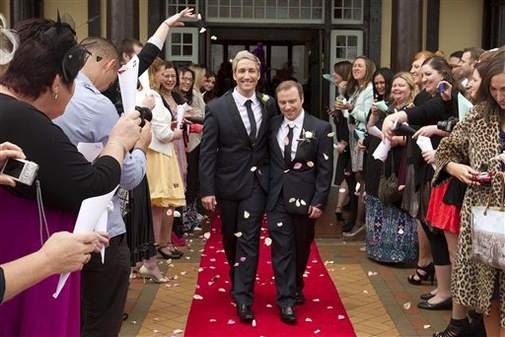
Same-Sex WeddingFor those of us who do not think “same-sex marriages” are legitimate marriages, how should we respond when invited to attend a same-sex wedding?  Al Mohler has some insightful words about this difficult issue, showcased by a recent event in which the elder President Bush and his wife attended a same-sex wedding.

Many people who are opposed to same-sex marriage, nevertheless, say they would attend a same-sex wedding (or have done so). Their reasons for doing so vary. For some, the simple fact of the matter is that they truly don’t see anything wrong with same-sex marriage. Their opposition to same-sex marriage is confessional in nature, and does not reflect their true convictions. It’s just one of those things they pay lip service so they can fit in with their community of peers. They will attend a same-sex marriage because deep down they approve of same-sex marriage. For others who have genuine convictions against same-sex marriage, however, the conflict runs much deeper. As much as they disapprove of same-sex marriage, they feel the need to attend a same-sex wedding to preserve a friendship, to avoid hurting someone’s feelings, to avoid a family feud, or because of social pressure.  While I understand these motivations, the fact remains that attending a same-sex wedding will be viewed by others as your personal approval of the same-sex union (if not same-sex marriage in general).  This is clear from a statement by one of the brides at the wedding attended by former President Bush, who told The Washington Post, “Who would be best to acknowledge the importance of our wedding as our friends and as the former leader of the free world? When they agreed to do so we just felt that it was the next acknowledgement of being ‘real and normal.’”

(more…)

In the beginning of this year I wrote about an article in The Guardian that was sympathetic to pedophilia, and attempted to destigmatize it by using the same sort of talking points used to destigmatize homosexuality.  Now, two articles have appeared in The Atlantic that are offering more of the same.

I, Pedophile” is written by David Goldberg, a Canadian journalist who was convicted of for purchasing and viewing child pornography. While he agrees that child pornography is wrong, he questions whether jail time for such crimes is appropriate. As in The Guardian article, Goldberg describes pedophilia (or the Orwellian term employed by Goldberg, “the cross-generational lifestyle”) as a “sexual orientation”:

The main query that I am convinced will always be without an answer is why I am a pedophile. It is the equivalent of trying to determine why someone is heterosexual or gay. We don’t choose our sexual orientations. If we could, believe me, no one would choose mine.

(more…)

Fox Sports has fired a former ESPN and CBS sports broadcaster, Craig James, after his first day on the job at Fox because it was discovered that he opposes same-sex marriage.  But remember, same-sex marriage will never affect you.

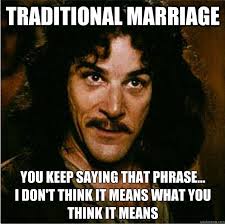
Traditional MarriageIn the debate over marriage, man-woman marriage is often referred to as “traditional marriage” by both liberals and conservatives alike.  For example, it’s very common to hear conservatives speak of the need to “preserve traditional marriage.”  Our use of language concerns me.  What we call something, and how we refer to something reveals a lot about the way we think of that thing.  In this case, the way we refer to marriage reveals a lot about the way we think of marriage, and the way we are arguing for our viewpoint.  I submit to you that part of the reason we are losing the battle over marriage is the fact that we are grounding marriage in tradition rather than biology; in social norms rather than human nature – as evidenced by the way we speak of and describe man-woman marriage.  I propose that instead of speaking of traditional marriage, we should start speaking in terms of natural marriage.

(more…)

An Oregon bakery, Sweet Cakes by Melissa, has been sued by a lesbian couple for refusing to provide a cake for their same-sex wedding.  And now, some of the “tolerance-demanding-but-not-tolerance-giving” pro-homosexual citizens are dishing out heaps of intolerance against the business as well. They have been demonstrating outside of their shop, and threatening to shut down other vendors who work with Sweet Cakes by Melissa. As a result of these tactics, Sweet Cakes by Melissa saw a 50% drop in their business, and have been forced to close their shop and start working out of their home.

No, of course this won’t affect anyone. Carry on. Just remember, tolerance is a one-way street on this issue, and if you aren’t driving with the flow of traffic, prepare for the consequences.

Update: As of July 2015, the family has been fined $135,000 for causing emotional damage to the two lesbians.

NM Supreme CourtIn any given debate over same-sex marriage, invariably same-sex marriage advocates will pose the following question: “How will allowing gay people to marry affect you or your marriage?”

If we are being asked how any particular same-sex couple setting up house and having their relationship called a “marriage” will personally affect me, the answer is probably, “Not much.”  But this question is too narrow, and misses the real significance of same-sex marriage because it focuses too much on the individual and not enough on wider social implications.  The real question is how changing marriage law to say there is no difference between opposite-sex couples and same-sex couples will affect society as a whole.

(more…)

exodus_closesI realize this is not breaking news, but given the importance of this event, I still want to comment on it despite the fact that my hectic schedule (as of late) has prevented me from doing so until now.

Exodus International, the most well-known ministry for gay men and women, announced on June 19 that it was closing up shop under its current name, and reopening under a new name with a new focus and new mission.  Just hours before that bombshell announcement, Exodus International president, Alan Chambers, issued an unexpected apology to those who his organization has hurt over the years (sexual misconduct, false expectations, etc.), as well as to the gay community in general for Exodus’ past teaching that one’s sexual orientation can change…among other things.

(more…)

Reasonable Faith, the ministry of William Lane Craig, recently released a great new visual depiction of the kalam cosmological argument.


You can view the video above (from YouTube), as well as on the kalam cosmological argument page at Reasonable Faith.

Apologetics DefenseSome Christians think that if we appeal to reason and evidences to demonstrate that the Bible is truly God’s Word, then we are elevating reason and evidence to a place of authority over God’s Word.  I think this conclusion is misguided for several reasons.  First, I don’t think it is legitimate to consider reason an “authority.”  Reason is merely a tool for assessing reality.  It is basic to all human thought.  Indeed, one cannot even understand God’s revelation apart from reasoning.  It would be a mistake, then, to pit reason against revelation as if they are two competing authorities.  As Greg Koukl has argued, using reason to assess whether or not the Bible is God’s revelation to man no more puts reason above the Bible than using grammar to understand God’s revelation puts grammar above the Bible.

Secondly, this confuses the order of being (ontology) with the order of knowing (epistemology). While the Bible is first in terms of authority, it is not first in terms of the order of knowing. Knowledge of the divine origin and revelatory status of the Bible is not innate. We must acquire this knowledge.  Knowledge of a proposition requires three elements: (1) belief that the proposition is true; (2) justification for the belief that the proposition is true; (3) the proposition must actually be true.  Put another way, knowledge is justified true belief.  Given the fact that knowledge requires justification, it cannot be wrong to require justification for believing the Bible is God’s Word.  We could not know the Bible is God’s Word apart from such justification.  As Kelly Clark has pointed out, reason is not autonomous as the standard of truth, but it is the best tool for discovering the truth. 

A proper use of reason is not an exercise of subjecting God’s Word to a higher authority, but an examination of the Bible to determine if it is truly what it claims to be.  We use our God-given reason to discover the truth that the Bible is a product of divine revelation.
coyne_jerry-209x300Scientists say the darndest things.  Last January I blogged on an article Jerry Coyne wrote in USA Today regarding free will.  At one point he said, “So if we don’t have free will, what can we do? One possibility is to give in to a despairing nihilism and just stop doing anything. But that’s impossible, for our feeling of personal agency is so overwhelming that we have no choice but to pretend that we do choose and get on with our lives.”

Coyne is still spinning the same gobbledygook.  Recently, on Coyne’s own blog, a commentator took Coyne to task for acting as though humans have freedom, while being adamant that they do not.  Coyne responded:

(more…)

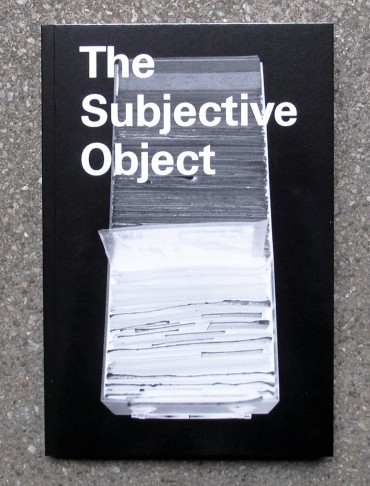
Subjective ObjectWhen talking about subjective and objective truths, I’ve heard it claimed that every truth claim is “subjective” since humans are subjects.  On this view, there can be no such thing as objective truth since all truth claims are made by subjects.

This is often applied in the context of the moral argument.  Theists argue that morality is objective, and finds its ontological grounding in the character of God.  In response, some will argue that since God is a subject, His moral commands are subjective, and hence even theistic ethics cannot provide an objective basis for morality.

This is a gross misunderstanding of the terms.  Subjective and objective tell you what a statement is about – not where it comes from.  To say a truth is “subjective” is to say it is about the subject himself; to say a truth is “objective” is to say it is about a mind-independent object in the world.

Nigerian HouseIn contrast to the trend of countries and states legalizing same-sex marriage, today Nigeria voted to ban same-sex marriage in their country.  The bill goes much further than that, as well.  It also outlaws the organization of any group supporting the legalization of same-sex marriage, and criminalizes any public show of affection between same-sex couples (10 year prison sentence). Gay sex is already banned in the country, which is common in many African countries.

Newborn babyKermit Gosnell just got three life sentences for killing newborn babies in his abortion clinic because the law does not permit infanticide.  Most people, even those who support abortion, recognize that infanticide is morally wrong.  But some bioethicists disagree, and they are being increasingly vocal about it, advocating for infanticide in prominent scholarly journals. 

Recently, Alberto Giubilini and Francesca Minerva wrote an article in the Journal of Medical Ethics titled “After-birth abortion: why should the baby live?”  This caused a stir in the press, to say the least.  In response to the outcry, the Journal of Medical Ethics has dedicated their May 2013 edition to responses, both pro and con, to the article. 

Philosopher and ethicist Michael Tooley added his voice to the mix in an article titled “Philosophy, critical thinking and ‘after-birth abortion: why should the baby live?’”  Tooley says we ought to question our basic beliefs, including the belief that infanticide is murder, and hence morally wrong.  

(more…)

« Previous PageNext Page »