Apologetics


ImperviousThe kalam cosmological argument (KCA) for God’s existence can be stated as follows:

(1) Anything that begins to exist requires a cause
(2) The universe began to exist
(3) Thus, the universe requires a cause

Additional logical inferences allow us to identify this cause as God.  Whatever caused space, time, and matter to begin to exist cannot itself be spatial, temporal, or material.  Furthermore, whatever caused our orderly, life-permitting universe to come into being a finite time ago must be immensely powerful, intelligent, conscious, and hence personal.  These are apt descriptions of a being theists have long identified as God.

Both premises have been challenged on scientific grounds.  Premise one is typically challenged on the basis of quantum mechanics, while premise two is challenged by new cosmological models that seek to restore an eternal universe.  I am going to argue that neither premise of the argument can be undermined by scientific evidence, and thus the argument itself is impervious to scientific refutation.  Only philosophical arguments are capable of undermining either premise of the argument.

(more…)

disembodiedSome atheists claim that God cannot exist because unembodied minds are impossible; i.e. that persons must be physical beings.  I spoke to this in a 2008 post.  Prayson Daniel recently blogged on the subject as well.  I would encourage you to read his post.  I commented on his post, and wanted to share some points I made that supplement the points I made in my previous post. 

This argument begs the question in favor of materialism and atheism. It merely assumes that minds/persons are reducible to brains; that we have no immaterial mind that is capable of existing apart from our bodies. No reason is given for thinking that a mind/person needs a body other than the fact that we are not familiar with it. That’s a very poor reason.  It confuses common properties of persons with essential properties of persons. 

(more…)

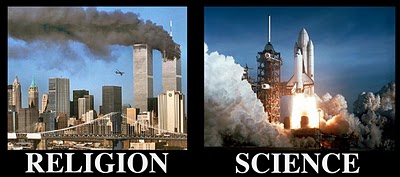
Retired particle physicist and outspoken atheist Victor Stenger developed a rhetorically powerful aphorism against religion: “Science flies men to the moon, religion flies men into buildings.”

I think Stenger is being a bit too selective in what he chooses to highlight about science and religion, though.  Science has also been responsible for great moral atrocities, and religion has also been responsible for great moral goods.  To demonstrate how worthless this rhetoric is, I could just as easily develop an aphorism modeled on Stenger’s to make the opposite point: “Science builds atomic bombs to kill millions of people, religion builds hospitals to save billions of people.”

queen-james-gay-bibleIf the title itself doesn’t give it away, the Queen James Bible is a new “gay Bible” based on the King James Version, complete with a rainbow-styled cross on the cover.  It was named “Queen James Bible” because King James I of England, who authorized the creation of the Bible that bears his name, was rumored to be bisexual.

According to the unnamed editors[1] of this version, “The Queen James Bible seeks to resolve interpretive ambiguity in the Bible as it pertains to homosexuality.[2] … We edited the Bible to prevent homophobic interpretations.”[3]  It is a near-identical reproduction of the KJV, but with gay-friendly edits made to eight verses that have been traditionally been interpreted as speaking negatively against homosex.  What follows is a comparison of the KJV to the QJV (changes in bold), followed by my comments on their changes:

(more…)

Reasonable FaithDr. William Lane Craig is my favorite Christian apologist.  I’ve read countless articles he has authored and several of his books, listened to virtually every debate he has participated in as well as his podcasts and Defenders lectures, and even read his weekly Q&A on reasonablefaith.org.  I could rightly be called a Craigite, and yet I had never read his signature book, Reasonable Faith, which is now in its third edition.

I finally purchased the book and read through it with slobbering delight.  I must confess that having followed Craig for so long, there wasn’t much in the book that I had not encountered before.  But that is more of a personal commentary, and does nothing to detract from the wealth of information contained in this book.

Craig begins the book by answering the question, How can one know Christianity is true?  After surveying what important past and present thinkers have to say on the matter, Craig adopts a Plantingian-based model in which we can know Christianity is true in virtue of the witness of the Spirit in our hearts.  Craig makes an important distinction, however, between how we personally know Christianity to be true, and how we demonstrate to others the truth of Christianity.  While the witness of the Holy Spirit is sufficient for the believer to be persuaded of the truth of Christianity, we demonstrate the truth of Christianity to unbelievers through evidence and rational argumentation.

(more…)

Baby atheistsI have heard several atheists claim that “all people are born atheists.”  One popular slogan says “I’ll die like all believers are born: an atheist.”

If the point of such slogans is merely that no one is born with a belief in God’s existence, and that such a belief develops later, I agree.  Babies do not have beliefs regarding such things.  This much is obvious (although it is irrelevant to the question of the truth of theism).  But if their point is that babies should be described as atheists, this is patently absurd.  Indeed, it’s because babies do not have any beliefs regarding God that they can be neither a theist nor an atheist.

No one is born an atheist.  To claim otherwise is to employ a faulty definition of atheism as “a lack of belief in God.”  So defined, atheism is relegated to a psychological state rather than a rational claim regarding the veracity of a particular proposition.  This is not only a departure from the historic definition of atheism, but it guts it of any rational significance.  Atheism is not a lack of belief in God.  That is more properly described as “agnosticism.”  Atheism is the belief that the proposition “God exists” is false.  No baby is born with that belief, and thus no baby is born an atheist. (more…)

Atheism and the Burden of ProofIn recent years there has been a lot of debate regarding the proper definition of “atheist,” even on this blog.  Traditionally, atheism has been defined as the claim that God does not exist. In the mid-20th century, however, atheist philosopher Antony Flew attempted to redefine atheism.  Noting that the Greek prefix “a” is a term of negation, Flew said the proper definition of a-theism is simply “not a theist.”  Another popular way of cashing this out has been to define atheism as “one who lacks belief in God.”

What’s the difference between these definitions?  The traditional definition is an ontological claim (God is not included among the entities that exist) while the new definition is a psychological description (“I have no belief regarding the existence or non-existence of God”).  We might label these two ways of defining atheism as  “ontological atheism” and “psychological atheism.”

Why does it matter how we define atheism?  It matters because of the burden of proof.  A principle of rational discourse is that he who makes a claim bears the burden to defend it.  If someone claims that God does not exist (ontological atheism), he bears a burden to demonstrate how he knows this to be true.  On the other hand, one who lacks any beliefs with respect to God’s existence (psychological atheism) bears no burden of proof because he is not making a claim to knowledge.  He is merely describing the content of his beliefs – that his stock of beliefs does not include a belief regarding the existence or non-existence of God.  Flew understood this.  He purposely redefined atheism to make it a psychological description so as to absolve atheists from their burden to defend the claim that God does not exist.

(more…)

New Scientist published an article last week explaining why the universe must have had a beginning.  While they end the article with speculative physics that try to place that beginning so far back into the past so as to be virtually indistinguishable from an eternity ago, a beginning to the universe remains.  And if physical reality began to exist a finite time ago, then it must have a transcendent, immaterial, eternal, spaceless cause.

We're all atheistsIn two separate posts I have addressed a common piece of atheist rhetoric that I like to call the “one less God zinger.”  It goes roughly as follows: “We’re all atheists.  Christians are atheists with respect to all gods but their own, while I am an atheist with respect to all gods, including your own.  When you understand why you reject all other gods, you’ll understand why I reject all gods.”

While this is rhetorically effective, it does not stand up to scrutiny.  While much could be said of this zinger, I only want to focus on the first two sentences.  Is it true that we are all atheists?  Can Christians be properly described as atheists because we deny the existence of all gods other than YHWH?  Not at all.

(more…)

“Apologetics” is a difficult word.  Most people have never heard of it and have no idea what it means.  It sounds like something that involves saying “I’m sorry.”  For others, it connotes something that only concerns academics.  To avoid these concerns, Brian Auten has come up with a helpful list of alternative expressions that conveys the purview and purpose of apologetics without using the word itself:

  • defending Christianity
  • the defense of the faith
  • thinking through the issues
  • being thoughtful about your convictions
  • being thoughtful about the faith
  • (more…)

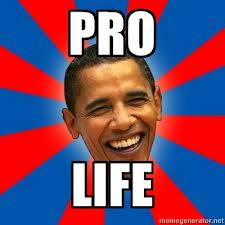
What would you say if I told you that a politician supported a man’s legal right to physically abuse his wife under any circumstance, but is “a pro-woman hero” because his policies will help undermine the root causes of spousal abuse?  You’d say I was nuts, right?  Well, this same sort of argument is made all the time when it comes to pro-abortion politicians.

Eric C. Miller seems to have drunk this same Kool-Aid.  The title of my post is the title of his article in Religion Dispatches Magazine.  The title is as oxymoronic as “Adolph Hitler, Zionism Hero” or “Chick-fil-A, PETA hero.”  How does one come to the conclusion that the most pro-abortion president this nation has ever seen is actually a pro-life hero?  Birth control.

President Obama’s “Obamacare” will require all health insurance companies to cover contraceptives free of charge.  And according to a recent study by researchers at the Washington University School of Medicine, access to free birth control can reduce unintended pregnancies by up to 75%.  Miller reasons that since virtually all abortions are due to unintended pregnancies, access to free contraception will lower the number of unintended pregnancies, and thus severely lower the abortion rate.

(more…)

Science can only describe; it cannot explain.  Surely this is wrong, you say.  Science explains a lot.  Well, that depends on what you mean by “explain.”  Science can tell us why we don’t float off into space (gravity), and can even tell us what creates gravity (the warping of space-time), but these are not explanations.  They are merely descriptions of physical phenomena.  The deeper questions go unanswered.  For example, why gravity exists in the first place, and why does it assume the value it does?  Scientists can describe the history of the universe all the way back to the Planck time, but they cannot explain why the universe started the way it did, or what caused the universe to come into being.

If science can only describe physical phenomena but cannot explain it, then it is naïve to think science alone is sufficient to answer every question of human inquiry.  Science is an amazing discipline that has been wildly successful in doing what it is intended to do, but it cannot do everything.  The role of science should not be diminished below its usefulness, but neither should it be exalted above its limits.  If you want explanations, you’ll have to look beyond science.

Elections tell you a lot about the worldview of Americans.  Last night’s election is no exception.  It reveals a lot about our moral views.  This election reveals that our nation has become very accepting of homosexuality and same-sex marriage, as well as smoking pot.

Homosexuality and Same-Sex Marriage

Wisconsin elected the first openly gay U.S. Senator.  Maine (53% vs. 47%) and Maryland (52% vs. 48%) voted to support the legalization of same-sex marriage.  Maryland voters merely confirmed their support of a law allowing same-sex marriage that was recently signed into law by the governor.  Maine chimed in on this same issue in 2009 after their legislature passed a bill legalizing same-sex marriage, and they rejected same-sex marriage with 53% of the vote.  Look how quickly public opinion is shifting!

The significance of what happened in Maine and Maryland cannot be underestimated.  This is the first time in history that same-sex marriage has been approved by the people of a state as opposed to the courts or legislature.

Washington also had an initiative to legalize same-sex marriage (same-sex marriage was already legal in all but name).  Only half of the votes have been counted thus far, but at present 52% have voted in favor of same-sex marriage, and thus it is likely to become legal there as well.  If so, nine states will have laws allowing same-sex marriage.

Minnesota tried to change their constitution to limit marriage to a man and a woman, but the initiative was defeated 51% to 48%.  The measure’s defeat, however, does not mean that same-sex marriage is legal.  It’s just not on the books as being illegal.

On the international front, France is now in the process of trying to legalize same-sex marriage there.  If it passes, they will become the 12th country in the world where same-sex couples can marry.  And yesterday, Spain’s high court upheld a 2005 law that legalized same-sex marriage.

(more…)

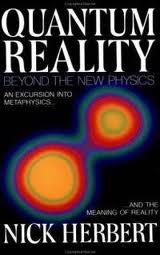
William Lane Craig once recommended physicist Nick Herbert’s book, Quantum Reality: Beyond the New Physics, as a great introduction to quantum theory.  I picked up a copy to tackle this strange and oft-misunderstood topic.

Quantum mechanics is not for the faint-hearted.  It is difficult to grasp.  Even after reading this book I still can’t say I understand quantum mechanics well enough to explain it with confidence, but at least now I have a better understanding of what I don’t understand.  Apparently I’m in good company.  Richard Feynman once said, “I think it is safe to say that no one understands quantum mechanics.”

One thing I did glean from this book is what the debate is all about.  It’s not about the quantum facts.  We know the facts well.  And it’s not even so much over quantum theory (the mathematics used to describe the quantum facts).  Rather, the debate is about the physical interpretation of quantum theory.  What is the reality of the quantum world?

(more…)

This is crazy.  A mentally handicapped women is pregnant.  While both she and her parents want to give birth the baby and give it up for adoption (6 couples are already waiting to adopt the baby), a judge is considering forcing her to have an abortion and undergo sterilization.  Outrageous!

New Scientist has a short video discussing the proper understanding of reality.  It’s a 2:30 philosophical mess!  It’s almost as bad as their video on how the universe came from nothing, but I won’t go there.

They present two definitions of reality.  Their first definition is that “reality is everything that would still be here if there was no one around to experience it.”  But they find this view problematic because “as far as we know, we humans actually do exist, and a lot of the things that we can all agree are real, like language, or war, or consciousness, wouldn’t exist without us.”  What?

This objection is irrelevant.  Yes, humans exist, but how does that count against this definition of reality?  The definition doesn’t assume or require that people do not exist.  It merely holds that some X is real if and only if X would still obtain in the absence of a mind to think about it.  While it goes without saying that those things germane to humans would not exist if humans did not exist, what does that have to do with everything else non-human?  The question is whether anything else would exist if we didn’t exist, not whether things unique to humans would exist if humans did not exist.

(more…)

Oh the irony!  The chief diversity officer at Gallaudet, a university in Washington D.C. that serves the deaf, was put on a leave of absence for signing a petition to get an initiative on the ballot to decide the legality of same-sex marriage.

Apparently the school is not interested in diversity.  Everyone must subscribe the politically correct viewpoint.  But remember, the government’s sanction of same-sex relationships will have no affect on those who disagree.  And I’ve got beachfront property in Nevada to sell you too.

Luke A. Barnes, a specialist in astro-physics and researcher at the Sydney Institute for Astronomy, University of Sydney, has an excellent quote responding to those who claim it’s possible that the universe could have come into being from nothing: 

The claim regarding a universe coming from nothing is either nonsensical or a non-explanation. If we use the dictionary definition of ‘nothing’ – not anything – then a universe coming from nothing is as impossible as a universe created by a married bachelor. Nothing is not a type of thing, and thus has no properties. If you’re talking about something from which a universe can come, then you aren’t talking about nothing. ‘Nothing’ has no charge in the same sense that the C-major scale has no charge – it doesn’t have the property at all. Alternatively, one could claim that the universe could have come from nothing by creatively redefining ‘nothing’. ‘Nothing’ must become a type of something, a something with the rather spectacular property of being able to create the entire known universe. It’s an odd thing to call `nothing’ – I wouldn’t complain if I got one for Christmas.[1]

Love it!


[1]Luke A. Barnes, “The Fine-Tuning of the Universe for Intelligent Life,” 21 December 2011; available from http://arxiv.org/abs/1112.4647; Internet; accessed 16 April 2012; page 67.

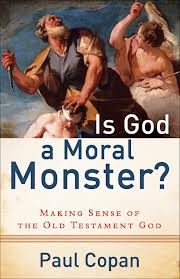
One of the distinguishing marks of the new atheists is that they not only think religion is false, but that it is dangerous and immoral too.  Even God himself is not above their judgment.  They regularly chide the God of the Bible as being a moral monster!  They accuse Him of being pro-genocide, anti-women, pro-rape, pro-slavery, etc.  Rather than the paradigm of moral goodness, God is an evil despot that is to be shunned.  You know it’s a bad day when even God is evil!

Is what they say true?  Is God – particularly as He is portrayed in the OT – morally evil?  Many Christians are sympathetic to this charge because they themselves struggle to understand God’s actions and commands, particularly as revealed in the OT.  Thankfully there have been some well-written responses to the problem of “theistic evil” written in recent years to dispel this negative portrait of God.  

(more…)

In a previous post I noted that while people may pay lip service to moral relativism, no one does, and no one can live consistently as a moral relativist.  Not only do moral relativists fail to live out their moral philosophy, but I am convinced that on existentially deep level (if not an intellectually deep level), they know moral relativism is false.  

If moral relativism is true, and if the moral relativist truly believes it is true, then why do they continue to believe and act as if some things are objectively wrong for everyone?  Why is it that they can’t help but to make moral judgments about what is right (tolerance, fairness, open-mindedness, etc.) and what is wrong (intolerance, homophobia, discrimination, forcing one’s morality on others, etc.), and act as if these truths apply to everyone?  It’s because there is such a thing as moral truth, and they know it.  All of us are made in the image of God and reflect His moral nature.  We all possess moral knowledge.  In the same way all of us possess rational intuitions to distinguish what is true from what is false, we possess moral intuitions to distinguish between what is good and what is evil.  People are free to deny these intuitions, but the fact that they live in the real world in which moral values are an objective feature means they cannot escape moral knowledge and the making of moral judgments to one degree or another.  

(more…)

« Previous PageNext Page »