Apologetics


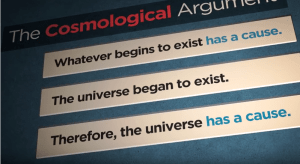
Here is a very concise version of the Kalam Cosmological Argument:

Things that begin to exist require an external cause. The universe began to exist, so it requires an external cause. As the cause of all physical reality, the first cause cannot itself be part of physical reality, but must be immaterial, non-spatial, eternal, powerful, and personal, which is a basic description of the theistic God.

Here is another way of presenting the gist of the argument without the technical-sounding language:

(more…)

Here is a summary of the argument from personal experience:

I have experienced God. I have no reason to doubt that my experience was veridical. And given the religious, social, and temporal context of this experience, it is most reasonably interpreted as an experience of the divine. Since I could not experience God if God does not exist, God must exist.

Now that I have concluded my podcast discussion of six major arguments for God’s existence, I’m going to post short summations of each argument. Today’s summation is for the argument from the impossibility of nothingness:

If there was ever a time when nothing existed, there would still be nothing because nothing has no potential to become something. Something exists, however, so we know that something must have always existed. The universe is not that something since it originated at the Big Bang, so the eternal “something” must transcend the universe. The eternal something must be immaterial, spaceless, personal, and eternal, which is the basic description of a theistic God.

Here is another, more conversational way of putting it:

(more…)

The sixth argument I offer for God’s existence in my “Does God Exist?” podcast series is the teleological argument, or argument from design. Teleological arguments affirm that there is evidence of design in the universe, and this design is best explained by theism.
I just posted my first episode in the mini-series, which is a 1-N-Done episode summarizing a form of the teleological argument based on the fine-tuning of the initial conditions and physical constants of our universe. You can listen to it wherever you get podcasts, or from https://thinkingtobelieve.buzzsprout.com.
You can also read a paper I have written on the topic, available at the link below:

Fine-Tuned for Life: A Teleological Argument for God’s Existence

The paper is 29 pages long, so if that’s more than you have time to read, I’ve also written a couple of shorter versions of the paper that will be easier to digest.

Fine-Tuned for Life: A Teleological Argument for God’s Existence – A Short Case (7 pages)

Fine-Tuned for Life: A Teleological Argument for God’s Existence – A Very Short Case (4 pages)

Also, check out Dr. William Lane Craig’s video on the teleological argument:

I just published my last podcast episode in my mini-series on the moral argument for God’s existence (you can listen to the series at https://thinkingtobelieve.buzzsprout.com, or wherever you get podcasts). That means I have updated the original post to include my paper on the topic. Give it a read. I have different papers of varying lengths for those who don’t have a lot of time to read.

And in case you missed it, I also posted my papers for the Kalam and contingency arguments a while back too.

Next week I’ll begin a new mini-series on the fine-tuning argument. Stay tuned!

Currently, I am in the midst of my podcast series on the moral argument for God’s existence. This reminded me of an article that the famed atheist and philosopher of science, Michael Ruse, wrote in The Guardian back in 2010 as a response to the question, What can Darwin teach us about morality? Ruse’s multifaceted answer is intriguing, and at times, incoherent, but also quite enlightening about where atheistic and evolutionary thought leads.

Ruse admits that without God “there are no grounds whatsoever for being good.” Morality, he says, is just a matter of emotion and personal taste on the same level as “liking ice cream and sex and hating toothache and marking student papers.” But he’s quick to point out that just because there are no grounds for being good, it doesn’t mean we should be bad. While this is true insofar as it goes, it fails to answer the more important question: Why – in the absence of a moral law giver, and thus in the absence of any objective moral law – should anyone behave in ways traditionally thought to be “good” if and when it is in their own self-interest to do otherwise? In the name of what should they deny their own impulses? In the name of the Grand Sez Who?

(more…)

Politically speaking, the same-sex marriage debate is over – at least for the foreseeable future. The Supreme Court declared same-sex marriage a Constitutional right. Even Republican lawmakers have caved on the issue when they passed The Respect for Marriage Act in December 2022 (39 Republicans in the House of Representatives and 12 Republicans in the Senate voted for it). Even on the social front, the debate seems to be over. Not only do 63% of Americans currently approve of same-sex marriage[1], but conservatives have disengaged from any public debate on the matter. We have conceded defeat with our silence. So why keep talking about the issue, then? While the debate is essentially over in the political and social arenas, it is still raging on in the church. While conservatives may still have the numbers on our side for the time being, the pro-LGBT and pro-same-sex marriage crowd has gained a momentum that may undermine our majority in the near future. Christians still need to know why same-sex marriage is morally incompatible with Christianity (theological), and still need to understand why we think that same-sex marriage should not be legal (political). This post will focus on the political issue (for a Biblical case against homosex, see my article “Homosexuality and the Bible”).

Many Christians take the “personally opposed, but…” approach to same-sex marriage. They say they personally believe that same-sex marriage is immoral, but they think it would be wrong to “impose” their religious beliefs on others in a secular society. But is it an imposition of our religious beliefs if we don’t expand the institution of marriage to include same-sex couples? Not at all. The argument against calling same-sex relationships a “marriage” does not require any religious presuppositions, yet alone Christian presuppositions. So what does a Christian argument against expanding the institution of marriage to include same-sex couples look like? Here’s one such argument:

(more…)

The pope has officially jumped the shark. While a number of mainline Protestant denominations and prominent Evangelical pastors have changed their position on homosexuality and same-sex marriage in recent years, I never expected that the Catholic Church would do so. On Monday, the pope issued a declaration (Fiducia Supplicans) allowing priests to bless same-sex couples. To be fair, the Catholic Church is still officially saying homosexual behavior is sinful and still rejects same-sex marriage as genuine marriage, but blessing same-sex couples is at least tantamount to a moral approval of homosexual behavior.

(more…)

The fifth argument I offer for God’s existence in my “Does God Exist?” podcast series is the moral argument. Moral arguments argue from the reality of morality to the existence of God. If morality is real > God is real.

I just published the first of nine episodes, which is a 1-N-Done episode. In the series, I explain why God is the only adequate explanation for our moral experience, and then address the most common objections against the moral argument.

(more…)

Trans people are 4-6 times as likely as normal people to experience a mental health condition.[1] A 2019 study found that 58% of trans people have at least one mental health issue, so why do we take them seriously when they claim they are a different gender?[2]

Remember, transgenderism is a mismatch between the mind and the body. Trans advocates claim that when the two conflict, the mind is right and the body is wrong. But why should we trust the minds of people that are known to have problems with their mind? The fact that so many transgender people have mental health issues is the best reason to conclude that the problem is with their mind, not their body. Thinking that we should trust the judgment of mentally unhealthy people regarding their gender is like thinking we should trust the judgment of those on psychedelic drugs. Neither is capable of accurately assessing reality. Trans people need mental help, not affirmation of their mental delusion.

(more…)

The fourth argument I offer for God’s existence in my “Does God Exist?” podcast series is the Contingency Argument.

The contingency argument for God’s existence is a cosmological argument, but unlike the kalam argument, it does not require a temporally finite universe. The contingency argument holds that even an eternal universe requires a cause, and that cause is God.

(more…)

It’s become popular to describe sin as “not God’s best for you.” I understand why some people prefer this language. It is not as confrontational or judgmental as saying “X is a sin,” and may make it easier for the sinner to acknowledge his moral wrongdoing. This language, however, may be interpreted as minimizing the severity of sin as well as diminishing the need for repentance. After all, nobody always does what is best for them. We often settle for less-than-best and are fine with it.

(more…)

The third argument I offer for God’s existence in my “Does God Exist?” podcast series is the Kalam Cosmological Argument. This is my favorite argument for God’s existence.
The argument reasons to God based on the temporal finitude of the universe. The essence of the argument is that temporally finite things require a cause for their existence. Since the universe began to exist in the finite past, it also requires a cause. An examination of the properties required of such a cause match the properties of the theistic God.

(more…)

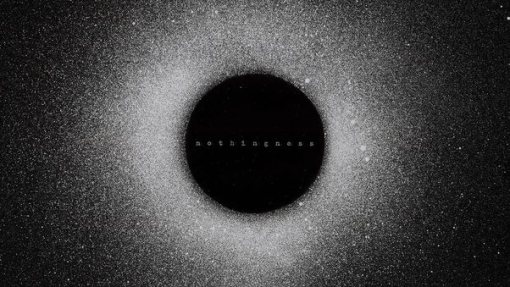
The second argument I offer for God’s existence on the Thinking to Believe podcast is the Argument from the Impossibility of Nothingness. This is a lesser-known argument for God’s existence, but I think it is quite powerful.

Here’s the essence of the argument: If there was ever a time when nothing existed, there would still be nothing now because nothing has no potential to become something. And yet something exists, so there could never be a time in the past when nothing existed. Something must have always existed. The universe is not that something since physical reality came into existence at the Big Bang, so the eternal something must transcend physical reality. The eternal something must be immaterial, spaceless, and eternal, which is a basic description of God.

(more…)

As you know, I am working through a podcast series on the evidence for God’s existence. The first argument I examined is the argument from personal experience.

The essence of the argument is that if one has had a personal experience of God, they are justified in concluding that God exists unless they have good reasons to doubt the veracity of their experience. Believing in God based on personal experience is entirely rational, even if your personal experience is not sufficient to convince others that God is real.

You can listen to the episode wherever you get your podcasts (search for “Thinking to Believe” or “Jason Dulle”), or at https://www.buzzsprout.com/1958918/13496572.

I am also including the argument in written form. You can download the PDF here.

Argument from personal experience (updated 12/31/24)

In the latest episode of the podcast, I began my conversation on theism. I examine the relationship between reason and belief in God, discuss two kinds of reasons, explain why scientific evidence is not the appropriate kind of evidence for God’s existence, and answer the question of whether or not we can prove God’s existence. I ended the episode by showing the best way to argue for God’s existence, and explored a tactical approach of making people want God to exist before we give them evidence that He exists.

You can listen to the episode at https://www.buzzsprout.com/1958918/13459789 or wherever you get your podcasts.

If you would prefer to read about it instead, here is the paper:

Reason and Belief in God

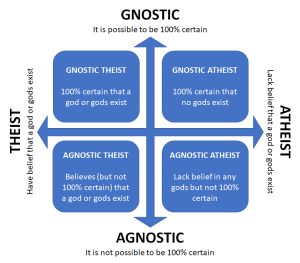
I’ve started a new podcast series on the topic, Does God Exist? The first couple of episodes will cover agnosticism and atheism, and then I’ll do an in-depth analysis of 5 or 6 of the most powerful arguments for the existence of God. You won’t want to miss it!

Episode 1 is already live. Listen wherever you get your podcasts, or at https://www.buzzsprout.com/1958918/13352213.

If a man who thinks he is a woman sleeps with a woman who knows she is a woman, is that gay sex or straight sex? Is homosex based on one’s biology or one’s gender identity? Given transgender ideology, the LGBT community needs to rethink what it means to be gay.

We’ve traditionally defined homosexuality in terms of biology (sex), but according to gender ideology, gender is more important than sex. When it comes to defining homosexual and heterosexual, then, shouldn’t the gender identity of the sexual partners matter more than their biological sex? If so, then homosexuality should not be defined as sexual behavior between two people of the same sex, but as sexual activity between two people of the same gender. This would mean a biological man and a biological woman could be in a homosexual relationship so long as one of them has a trans identity. For example, a trans woman (a biological man who thinks of himself as a woman even though he has male sex organs) who engages in sexual activity with a biological woman would be in a homosexual relationship despite the fact that they are having normal sexual intercourse. If the only difference between heterosexual sex and homosexual sex is the beliefs of the participants, then the meaning of “heterosexual” and “homosexual” is relative.

(more…)


People often say “You only believe in God because it makes you feel better.” They think theism is just wish fulfillment. The idea of God fulfills some deep longing in our heart, so we choose to believe there is a God.

This is not a good reason to think God doesn’t exist. Maybe belief in God makes me feel better because there is a real God who is meeting a real existential need that results in me feeling better. Could you imagine if we approached medicine this way?: “You only believe in medicine because it makes you feel better.” Yes, it makes us feel better because medicine is an objective reality that changes the way we feel. Similarly, God is an objective reality that changes the way we feel about life, about ourselves, and about the future.

(more…)

I said long ago that the normalization of pedophilia was on the horizon. That horizon has arrived. Various academics have written papers in recent years trying to normalize pedophilia. The latest at normalization comes from the United Nations.

The United Nations has essentially declared that it is a human right for minors to consent to sex with whomever they want, including adults. In a March 2023 report written by the International Commission of Jurists (an international group of 60 judges and lawyers), it’s declared that “sexual conduct involving persons below the domestically prescribed minimum age of consent to sex may be consensual in fact, if not in law. In this context, the enforcement of criminal law should reflect the rights and capacity of persons under 18 years of age to make decisions about engaging in consensual sexual conduct and their right to be heard in matters concerning them. Pursuant to their evolving capacities and progressive autonomy, persons under 18 years of age should participate in decisions affecting them, with due regard to their age, maturity and best interests, and with specific attention to non-discrimination guarantees.”

(more…)

« Previous PageNext Page »