Apologetics


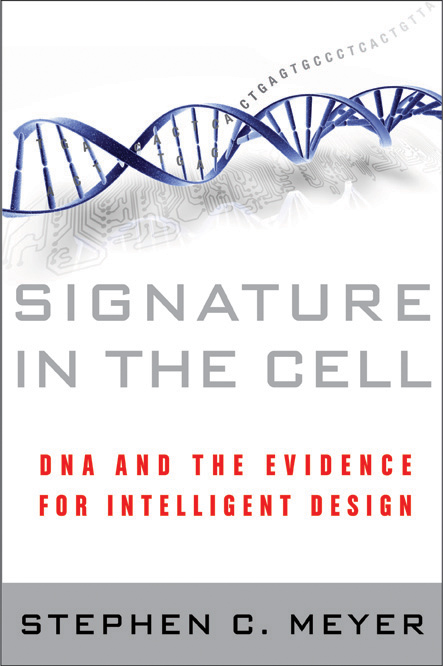
It’s been a month, but I haven’t forgotten!  For new readers, this is part 6 in my series of posts summarizing Stephen Meyer’s argument for design from his new book, Signature in the Cell.  Past posts can be found here: Parts 1, 2, 3, 4, and 5.

In the last two installments we demonstrated that the OOL cannot be explained by either chance or necessity.  Now we’ll turn our attention to the possibility that the OOL can be explained by a combination of both chance and necessity.  While many models could be examined—and were examined by Meyer—I will only examine the RNA-first, a.k.a. the RNA World hypothesis, since this is the prevailing OOL model today.

The cell presents OOL researchers with a chicken-and-the-egg paradox of which came first: the DNA that makes proteins, or the proteins necessary for replicating DNA?  The paradox was insoluble, so another solution was required.  If neither DNA nor proteins could arise first, what did?

Carl Woese, Francis Crick, and Leslie Orgel proposed an RNA-first model in the late 1960s, followed by Walter Gilbert (Harvard biophysicists) who developed it in the 1980s and gave it its common name.[1]  This model proposes that the first cell consisted of a much simpler self-replicating, self-catalyzing RNA (RNA is similar to DNA, but it is a single strand rather than a double helix, and the nucleotide, thymine, is replaced by uracil).[2]  This model was largely fueled by the discovery of Thomas Cech and Sidney Altman in the early 1980s that sometimes RNA can catalyze chemical reactions like an enzyme does, and thus RNA could serve the dual purpose of information storage (like DNA) and enzymatic functions (like proteins).  “The paradox of the chicken and the egg was thus resolved by the hypothesis that the chicken was the egg.”[3]
(more…)

Something I was thinking about today.  While we think with language, thought is not dependent on language.  Thought precedes the development of language.  If that were not so, language would never develop.  Learning a language is the process of learning established signs and symbols that correspond to, and help us express our pre-existing thoughts.  If we had no thoughts, there could be no correspondence, and we would be incapable of using the signs and symbols of language to convey meaning.

So what would it be like to think without the use of language?  I don’t know.  Infants must do it, but none of us remember what it was like to be an infant, so I imagine this is an unanswerable question.  It’s interesting nonetheless.

Back in Marcy 2009 I reported on the fact that teen pregnancy rates were on the rise again.  The Alan Guttmacher Institute (AGI) just released a report providing some details on this.  According to the AGI:

The teen pregnancy rate declined 41% between its peak, in 1990 (116.9 pregnancies per 1,000 women aged 15–19), and 2005 (69.5 per 1,000). Teen birth and abortion rates also declined, with births dropping 35% between 1991 and 2005 and teen abortion declining 56% between its peak, in 1988, and 2005. But all three trends reversed in 2006. In that year, there were 71.5 pregnancies per 1,000 women aged 15–19. Put another way, about 7% of teen girls became pregnant in 2006.

Among black teens, the pregnancy rate declined by 45% (from 223.8 per 1,000 in 1990 to 122.7 in 2005), before increasing to 126.3 in 2006. Among Hispanic teens, the pregnancy rate decreased by 26% (from 169.7 per 1,000 in 1992 to 124.9 in 2005), before rising to 126.6 in 2006. Among non-Hispanic white teens, the pregnancy rate declined 50% (from 86.6 per 1,000 in 1990 to 43.3 per 1,000 in 2005), before increasing to 44.0 in 2006.

They also report that teen abortion rates rose 1% in 2006 as well.

William Lane Craig and Chad Meister are the editors of and contributors to the new book God is Great, God is Good, which is a response to the New Atheists.  I have not read the book yet, but I have read a review of its contents that makes me think this is one of the best books to-date on this subject.  Not only can it boast of the contributions of top-notch scholars such as J.P. Moreland, Alister McGrath, Scot McKnight,  and Gary Habermas, but it covers a breadth of issues raised by the New Atheists.  If you are looking for a concise introduction and response to the new atheism, I would recommend this book.  It was also named best apologetics book by Christianity Today.

Theists often offer the moral argument in support of God’s existence.  While the argument can take many forms, the essence of the argument is that objective moral values exist, and are best explained by the existence of a transcendent, personal being whose very nature is good.  The common response offered by atheists is that one need not believe in God to be moral and loving.  “After all,” they say, “I am a moral person and I don’t believe in God.  Surely, then, belief in God is not necessary for morality.”

There are two things amiss about this response.  First, it misconstrues the theist’s argument.  He is not arguing that one must believe in God to recognize moral truths (a claim about moral epistemology) or to behave morally, but rather that God must exist for there to even be such a thing as morality (a claim about moral ontology).  God’s existence is necessary to ground moral values in objective reality.  If there is no God, there can be no such thing as objective moral values.  We might choose to call certain behaviors “good” and certain behaviors “evil,” but such ascriptions are subjective determinations by human communities; i.e. they merely describe the beliefs and preferences of human subjects, not some object that exists transcendent to them.

(more…)

Brett Kunkle, the student impact speaker from Stand to Reason, relates a story that typifies the point I was making in Getting to our Kids First:

After my final teaching session, the son approached me, quickly launching into a laundry list of objections to Christianity.  A lengthy conversation ensued, covering topics like objective moral truths, utilitarian ethical theory, Kant’s categorical imperative, retributive justice, divine hiddenness, intelligent design, and the experience of the Holy Spirit.  From the conversation, I guessed he was a graduate student in philosophy.  Wrong.  He was a high school senior.

His objections boiled down to this:  “I’ve been taught that Christianity’s truthfulness is confirmed by my experience.  I am no longer having powerful Christian experiences.  In addition, I’m reading arguments against Christianity.  I now wonder if it’s rational for me to remain a Christian.” 

Let’s hope this kid can be persuaded out of his doubts by the evidence, and let his story serve as a lesson for all of us parents and leaders.  We’ve got to get to our kids before the enemies of the faith do.

In September I wrote about our tendency to justify the religious traditions and belief system we find ourselves in.  Things we would not believe, and evidence we would not be persuaded by if we were on the outside looking in, somehow seem so believable and persuasive when we are on the inside looking out.  As someone once said, the easiest person to deceive is yourself.  I think all of us are guilty of doing so in one matter or another.  There are strong social and emotional motivations for justifying the beliefs we were raised with, or the beliefs those in our social community collectively hold.  The cost of denying them is often too high to assess them as objectively as we should, and might otherwise do if we belonged to a different tradition.

I was reflecting further on this today as I was reading the attempts of a New Testament scholar to justify monism (the belief that man is only physical—he has no soul) from the Bible.  Such a position is so evidently contradicted by Scripture as to be near-laughable.  “How could anyone believe such a thing?,” I thought to myself.  Then I began to reflect on other attempts to justify positions that so manifestly contradict Biblical teaching.  There are those who attempt to argue that the Bible is neutral toward, or even positive about homosexuality.  Others argue that Jesus is a created deity.  The list could go on.

(more…)

Some theists and religious pluralists claim that God is wholly other; so transcendent as to be incomprehensible to finite minds.  They assert that nothing can be known about God – He is ineffable.  No propositions we humans can formulate about Him can be true.  

This perspective is fundamentally flawed.  Not only is it self-refuting and contradictory, to say no human concept of God can be true of God (since the concept of ineffability is a human concept), it also results in absurdities.  For example, if there can be no true propositions about God, then the proposition “God exists” cannot be a true proposition.  But surely this is absurd.  The ineffability of a being, X, depends on the existence of X.  If God is a real entity, then at the very least the proposition “God exists” must be a true proposition about God.  

If God’s transcendence means there is no congruence between the thoughts of God and the thoughts of man, so that whatever we know God does not know and vice versa, that would mean if we know the proposition “God exists,” God Himself cannot know it.  But surely any conscious being must be aware of its own existence, and thus it is false that our thoughts can never match God’s thoughts.  Indeed, as Christopher Neiswonger once noted, if we can’t know God’s thoughts, then we can’t know anything at all because God knows everything!

While humans cannot know every truth about God, this does not mean we cannot know any truths about God.  Indeed, on the Christian worldview, God is not wholly other, purely transcendent, and absolutely silent.  We are made in His image, He is immanent, and He has revealed Himself to mankind, communicating to us many truths about Him.  While we cannot comprehend the depths of these truths, they can be known and apprehended.

Updated 1/19/10

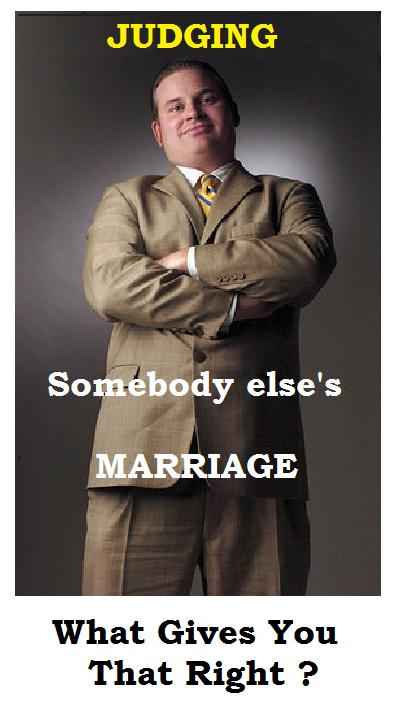
Greg Koukl has a really good response to those who say “Who are you to say?” in response to our disapproval of same-sex marriage:

Who are you to say?”  That challenge works both ways.  First, if my disapproval isn’t legitimate, then why is my approval legitimate?  If I don’t have the right to judge something wrong…, I certainly don’t have the right to judge it right….  Second, why is it that I can’t make a moral judgment here, but apparently you can?

The appeal for a change in marriage laws is an attempt to change the moral consensus about homosexuality.  You invite me to make a moral judgment, then you challenge my right to make a judgment when I don’t give the answer you want.

Building on Greg’s thoughts, I think the most concise, tactical response to the “Who are you to say it’s wrong?” challenge is simply to ask in return, “And who are you to say it’s acceptable?”  This response makes it clear that both parties are making claims, and those claims need to be justified.  The burden of proof is not just on the person in favor of prohibition, but is also on the person in favor of permission.

Exodus 21:22 has been used by many pro-abortion advocates, Christian and non-Christian alike, to prove that the Bible is not opposed to abortion.  The passage reads, “If men strive, and hurt a woman with child, so that her fruit depart from her, and yet no mischief follow: he shall be surely punished, according as the woman’s husband will lay upon him; and he shall pay as the judges determine.” (KJV)

Greg Koukl has written a wonderful article demonstrating not only that this verse does not support such a conclusion, but that the pro-choice interpretation is based on a mistranslation of the Hebrew as found in some English translations (such as the one above). 

A free registration at www.str.org may be required to view the article.

Unless you have been vacationing in a cave somewhere in the nether regions of the Congo, you’ve probably heard of the brouhaha that has developed over Brit Hume’s advice to Tiger Woods:

Tiger Woods will recover as a golfer. Whether he can recover as a person I think is a very open question, and it’s a tragic situation with him. I think he’s lost his family. It’s not clear to me that — whether he’ll be able to have a relationship with his children.

But the Tiger Woods that emerges once the news value dies out of this scandal — the extent to which he can recover seems to me depends on his faith. He’s said to be a Buddhist. I don’t think that faith offers the kind of forgiveness and redemption that is offered by the Christian faith.

So my message to Tiger would be, “Tiger, turn your faith — turn to the Christian faith and you can make a total recovery and be a great example to the world.”

Many liberals are furious that Brit Hume would make such comments, for a variety of reasons.  The primary reason appears to be that he is claiming Christianity is true over and against Buddhism.  That is a politically correct no-no, labeled “intolerant.”  We’re supposed to act like our religious beliefs are no more true than the next religion’s.  How tolerant is that requirement?!  The fact of the matter is that religious claims are usually exclusive and contradict competing religious claims.  Given this fact, if one really believes the tenets of their religion, they cannot help but to think their religion is true and others’ false.

(more…)

Investors Business Daily has an article on California’s Proposition 71 that passed five years ago, which secured $3,000,000,000 dollars for embryonic stem cell research.  They note how the California Institute for Regenerative Medicine, which was created by the proposition and oversees the distribution of the research money, has shifted its focus to adult stem cell research.  Why?  Because ESCR is not panning out to be the promising research the supporters of prop 71 promised it would be.  While this is good, they note how it appears to be a bait-and-switch: 

To us, this is a classic bait-and-switch, an attempt to snatch success from the jaws of failure and take credit for discoveries and advances achieved by research Prop. 71 supporters once cavalierly dismissed. We have noted how over the years that when funding was needed, the phrase ‘embryonic stem cells’ was used. When actual progress was discussed, the word ‘embryonic’ was dropped because ESCR never got out of the lab.

They conclude by noting that “it is ESCR researchers who have politicized science and stood in the way of real progress. We are pleased to see California researchers beginning to put science in its rightful place.”

HT: Wesley Smith

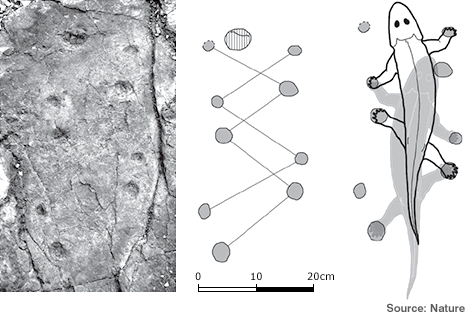
In 2004 three fossilized fish were found in the Canadian Arctic that were hailed to be an important missing link in the evolution of fish to tetrapods (vertebrates with four limbs).  The newly discovered specimens, called Tiktaalik, have been touted as one of the best proofs for Darwinian evolution (common descent), providing solid evidence for the transition from water to land animals. 

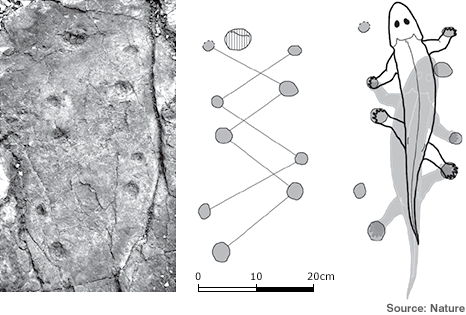
But now a paper in Nature is reporting that approximately a dozen fossilized tetrapod footprints have been discovered in Poland that date to 397 million years ago, at least 10 million years prior to Tiktaalik, forcing biologists to push the origin of tetrapods back about 20-30 millions years earlier than previously believed.  Tiktaalik cannot be a transitional form between fish and tetrapods if tetrapods existed prior to Tiktaalik!  Like so many other supposed transitional forms touted in scientific circles and the press (think Archaeopteryx and Ida), Tiktaalik is a dead end.

Well, kind of.  In 2006 the NJ Supreme Court ruled that the state’s legislature had to provide equal benefits to same-sex couples as it did to heterosexual couples seeking legal recognition of their relationship.  The legislature complied, but chose to call same-sex unions “civil unions” rather than “marriage” (which was an upgrade from the “domestic partnerships” they implemented in 2004).  A bill introduced last year sought to make it law that same-sex unions be termed “marriages” rather than “civil unions.”  Today, the NJ Senate voted 20-14 against that bill.  

I say the Senate “kind of” voted against same-sex marriage because same-sex marriage already exists in New Jersey; it’s just called by a different name.  Same-sex couples would not have gained anything material had this bill passed, and they have not been denied anything material with its defeat.  They have merely been denied being able to call their state-recognized relationships “marriage.”  While there is something to be said about the value of a name, the fact of the matter is that the fight over same-sex marriage is not (or at least should not be) over who gets to use the “M” word, but over the legal recognition and sanction of same-sex relationships.  If you give same-sex couples all of the benefits and privileges of opposite-sex couples, you have de facto legalized same-sex marriage, whatever you call it.  Marriage by any other name is still marriage.

As a result of the failure of the chance hypothesis to explain the origin of life, Dean Kenyon and Gary Steinman proposed a novel solution: life’s origin is due to physical necessity, not chance (Biochemical Predestination, 1969).  Like many others in their day, Kenyon and Steinman were proponents of the protein-first model, maintaining that the first life was based on proteins rather than DNA (DNA came later).  They got around the utterly implausible odds of forming proteins by chance by just denying that chance was involved at all.  They suggested that law-like processes direct the self-organization of chemicals, making the origin of life inevitable, not some lucky happenstance.  Just like electrostatic forces draw sodium and chloride together in ordered patterns to form crystals, some (yet-to-be-discovered) natural law organized biochemicals to form the biological information that makes life possible. 

As evidence for their view that proteins could self-organize to form the basis of life, they pointed to the fact that amino acids bond with certain other amino acids better than others, making certain sequences more likely than others.  This explained how the biological information necessary for life could arise without DNA, RNA, and the transcription-translation process.[1]

Eventually, however, Kenyon came to question his model.  He recognized that even if it could explain the origin of biological information, he still needed to explain the origin of DNA as well as how protein synthesis transformed itself from a self-organizing and self-originating process to one that depended entirely on DNA transcription and translation.  He dismissed the possibility that proteins constructed DNA because the information flow in modern cells is unidirectional, and it’s in the complete opposite direction: information flows from DNA to proteins, not vice-versa.  Because DNA wholly determines the amino acid sequencing of proteins, and because there is no evidence suggesting or reason to think this order was ever different in the past he eventually abandoned the protein-first model.  DNA must have come first.  But based on his knowledge of its chemical properties, he doubted that DNA possessed the same sort of self-organizational properties he thought were present in amino acids.  He was forced by the evidence to abandon his proposal that life originated by necessity.

(more…)

Now that we have established what needs explaining (biological information, and the origin and functional interrelatedness of cellular machinery) and the scientific method biologists employ to formulate an explanation, we turn our attention to the four possible explanations for life’s origin: (1) Chance; (2) Necessity; (3) Combination of chance and necessity; (4) Intelligent agency.  In this post I will examine the possibility that life can be explained in terms of chance processes alone.

Just like the lottery, specific probabilities can be assessed for the origin of life by chance.  To illustrate how probabilities are assessed, consider a combination lock.  What are the chances of someone guessing the correct combination of a lock with four dials containing 10 digits each?  To determine the chances one must multiply the number of digits on each dial (10) by itself four times (because there are four dials): 10 x 10 x 10 x 10 = 10,000 different possible combinations.  The chances of guessing the correct combination, then, are 1 in 10,000.  If one more dial was added to the lock, it would decrease the odds by a factor of 10 (1 in 100,000).  If one is given only one try, the odds of getting the right combination are overwhelmingly against him—so much so that if the lock opened everyone would suspect that his selection was not random, but based on intelligence, or that the lock was faulty.  The odds of cracking the combination increase, however, as one increases the number of attempts.  If one is given 100,000 tries to guess the combination, then the odds are that he will eventually guess the combination through random attempts alone (if each try took 10 seconds, you could crack the 4-dial code in about 28 hours, and the 5-dial code in about 11 days).

(more…)

In May of this year the District of Columbia passed a law recognizing the legality of same-sex marriages performed in states where they are legal.  Today, they voted 11-2 to legalize same-sex marriages performed in D.C.  The mayor of D.C., Adrian Fenty, has vowed to sign it.  Because of D.C.’s unique status, the U.S. Congress has 30 legislative days to review the bill.  If they do not act to overturn it during that time, it becomes law (and there’s not much chance they will).  It looks like D.C. will be the sixth jurisdiction in the U.S. to legalize same-sex marriage.

What is the scientific method?  Everyone who sat through grade-school science class knows the answer to this question, right?: observation, hypothesis, prediction, experimentation, conclusion.  What may surprise you is that there is no such thing as the scientific method.  There are a variety of methods scientists employ in their quest to discover the truth about the natural world, none of which can be claimed as the scientific method.  Which method a scientist uses depends on what he is studying.  While the method outlined above works well for “experimental scientists” such as chemists and physicists, it doesn’t apply to “historical scientists” (i.e. those who study the past) such as paleontologists, astronomers, and evolutionary biologists.  Those in the historical sciences require a different method.

Historical scientists study the past, not the present.  They seek to discover the historical causes responsible for past events – effects that we observe in the present.  For such a task the scientific method outlined above simply won’t work.  It’s the wrong tool.  To explain the structure of the fossil record, for example, one cannot engage in experimentation.  Likewise, there is no need for making predictions since predictions address the future, not the past.  How, then, do historical scientists test their theories?

(more…)

In my first post on Meyer’s Signature in the Cell I discussed information theory, and claimed that the cell exhibits functional information—information that cannot be explained in terms of the physical machinery of the cell.  In this post I want to provide some background on the machinery and inner workings of the cell to provide evidence for the claim that the cell contains complex specified information (functional information), and explain why biologists have come to recognize that DNA stores and transmits “genetic information,” contains a “genetic blueprint” with “assembly instructions,” and expresses a “digital code.” 

The two most basic components of the cell are DNA and proteins.  DNA is made up of a 4 character chemical alphabet: adenine, thymine, guanine, cytosine (these are called nucleotides).  These nucleotides always appear in complimentary pairs: adenine is paired with thymine, and guanine is paired with cytosine. 

Proteins—the workhorses of the cell—are composed of amino acids.  The cell contains 20 different kinds of amino acids.  To create functional proteins, these amino acids must be sequenced together in a specific order, forming a “chain” of amino acids (proteins come in varying lengths, with shorter proteins consisting of ~100 amino acids, most proteins consisting of several hundred, and some as large as 34,350 [titin]).  While there are a number of ways in which amino acids can be sequenced, the vast majority of combinations are functionless.  They sequence must be specified if the protein is to have function (functionality also requires the protein to be folded into a particular shape).

(more…)

If you are interested in the history of when the celebration of Christmas began and how the date was determined, this article from Biblical Archaeological Review is a good one.  And if you think the answer is that Christians co-opted the Roman feasts of Saturnalias and/or Sol Invictus, you need to read the article.

« Previous PageNext Page »