Greg Koukl was taken to task by a caller on his Christian apologetics radio broadcast (Stand to Reason—str.org) for a statement he often used at the end of his discussions on spiritual and moral things: “At least that’s the way I see it.” Greg was asked if he truly believed that he could be wrong in his views, and about Christianity in general. His answer was “yes,” and his reasoning was as follows:
There are two categories of truth: necessary truths, contingent truths. Necessary truths are truths that cannot be otherwise. For example I cannot be mistaken about my own existence. Renee Descartes made this clear when he pointed out that we cannot doubt our own existence. It requires the existence of a mind to doubt, so the presence of doubt proves that there is a personal mind doubting, and thus we must exist. This led to his famous dictum: Cogito Ergo Sum (I think, therefore I am). Neither can we be mistaken that about the fact that there are no square circles because this is an inherently contradictory concept. We know these things necessarily.
 Atheists claim they don’t believe in miracles—that miracles are for religious people—but I beg to differ. Atheists believe in miracles too, although they do not involve a divine being. How so? Atheists believe something came into existence from nothing, out of nowhere, entirely uncaused. They believe life came from non-life, that the rational came from the non-rational, that order came from chaos, and specified information came from randomness. Those are some serious miracles, and require a lot more faith than belief in an intelligent and powerful God who created the universe from nothing, life from non-life, and ordered the universe with specified information! As Norm Geisler says, I don’t have enough faith to be an atheist!
 On February 25, 2009, Hugh Ross and Fuzale Rana from Reasons to Believe debated Michael Shermer (of Skeptic magazine fame) on the question of the scientific testability of divine creation. Gary Whittenberger wrote an article on the debate for eSkeptic, a weekly email report produced by Skeptic magazine. According to Whittenberger, “Ross asserted that God caused the beginning of time at the moment of the Big Bang. As other Creationists often do, Ross seems to ignore the fact that an act of a person causing something is itself an event in time, and so he backs himself into the corner of contradiction by implying there was time before the beginning of time. Of course this makes no sense, but Ross is unfazed; he simply imagines that there is a supernatural time and a natural time and supposes that this solves everything.”
 Why does somebody need to believe in Jesus to be saved? Our stock answer is so that they will go to heaven, not hell. While true in itself, it obscures the real message of the Gospel because it doesn’t explain why Jesus is necessary, only what the consequences are. It makes God sound petty, and unbelievers are quick to point this out.
 Nancy Pearcey described a worldview as a mental map that helps us effectively navigate our world. The better our worldview, the more effectively we ought to be able to navigate reality with it. Faulty worldviews are easy to spot because they always run contrary to our pre-theoretical experience of reality at one point or another. For example, scientific naturalists claim the material world—working according to natural processes—is all there is to reality. There is no God, there are no angels, and there are no souls. All that exists is what we can put in a test-tube. This creates a problem for the concept of free-will, which in turn creates a problem for the concept of moral responsibility.
 Some have argued that a God whose essence is good is not worthy of our praise for doing good, since He cannot do otherwise. Being praiseworthy entails merit, but there is no merit in doing what one must do of necessity; therefore, God, is not deserving of praise for doing good.
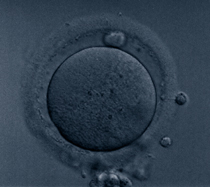 Does anyone remember the promises from the legislators, scientists, and bioethicists that they would not pay women for their eggs for use in cloning research? As with most bioethical promises, they are handed out like candy in order to obtain the desired political result, only to be taken back once that result has been realized. Apparently, New York has decided it will
  It’s common in Christian circles to limit our preaching and teaching to Christ’s ability to take care of our sin problem and fix our broken lives. That is the Gospel message, but that’s not all Christianity has to say about the world in which we live. Christianity is total truth. It’s not just truth about salvation, it’s also truth about science, morality, and insofar as morality should affect society, politics as well. The Christian worldview affects every area of life, both private and public.
 William Saletan of Slate once proposed some new rhetoric for abortion-choice politicians to use when they are debating pro-lifers. His proposal was as follows: “My opponent and I both want to avoid as many abortions as possible. The difference is, I trust women to work with me toward that objective, and he doesn’t.”
  “Why do the people of the church continue to affirm things like, ‘I’m against abortion, but I think it should be legal’ and ‘I think everyone should decide for themselves’? Because no teaching on abortion is teaching on abortion: it communicates the implicit message that abortion is not the sort of serious wrong about which we can have knowledge. In other words, we learn from a pastor’s silence that abortion is not a sin. When a practice as pervasive as abortion is not treated as a serious matter of faith and practice from the platform of a church, church members never reconsider the pro-choice beliefs they’ve assimilated from their culture. In short, when the leadership of the church acts pro-choice by not speaking on abortion, the church follows suit and adopts the pro-choice view, both in word and deed.” –
  Generally speaking, lying is when we present something as being true that is not actually true. And generally speaking, lying is a sin. But not every lie is a sin. Sometimes lying can be our moral obligation. Consider the scenario in which your moral obligation to protect life is pitted against your moral obligation to tell the truth. Protecting life is the weightier moral imperative of the two, and thus lying to protect that life would be the right thing to do. This happened frequently in Nazi Germany when those who harbored Jews lied to Nazi officers to protect the Jews’ lives.
 Abortion-choice advocates often argue that they have a right to an abortion because it is their body, and thus their choice. Their mantra is “I can do what I want with my own body.” This is what is properly called the bodily-autonomy argument. The argument is flawed because it rests on the faulty assumption that the unborn “thing” in the womb is the woman’s body. It is not. It is separate living being, and we know so because it has its own unique genetic fingerprint.
 If you haven’t heard by now, the famous late-term abortionist from Wichita, Kansas, George Tiller, was murdered on Sunday while attending a religious service at his local Lutheran church. It is very likely that he was murdered because of his profession. Indeed, this was no accidental murder. He was sought out specifically. Given how infamous he is for killing late-term babies, it is almost certain that his killer was motivated by his own pro-life ideology. Given the fact that I am pro-life, and regularly discuss abortion on this blog, I feel it necessary to weigh in on this issue.
 Thinking to Believe