Apologetics


I just received an email from Greg Koukl, president of Stand to Reason ministries.  He penned a short article (what I like to call a “shorticle”) clarifying the sense in which moral relativism is relative, and the sense in which it is not.  His insights are worth producing in their entirety:

“Moral relativism is a kind of subjectivism. When it comes to moral rules-principles of right and wrong-it’s up to the subject, the individual, to decide because there are no true, universal, ethical obligations or moral principles that apply equally to all people. Since no universal standard exists to govern all groups, each decides right and wrong only for itself without judging those that hold other values.

“Even with this brief description, I think you can see a problem beginning to emerge.  A relativist is not going to be able to get any traction if he wants to condemn (in any ultimate sense) any behavior, regardless how evil it seems to be.

“Since this is the relativist’s fatal weakness, I’m not surprised when I get pushback on this point.  “No relativist believes that anything goes,” I’ve been told.  “You’re twisting our view.  Every culture has its own framework of right and wrong.  Even if there are no universal standards of morality, that doesn’t mean it’s a free-for-all within a given group.”

“Fair enough.  Let me answer this charge with a simple illustration.  Let us pretend that you want to play the classic board game, Monopoly. Like every other game, Monopoly has rules. There are standards, a framework of right or wrong of sorts that works within the Monopoly “community.”  According to the rules of the game, for example, you cannot have houses and hotels on the same piece of property. That would be wrong. Parker Brothers, the inventors of the game, said so.

“Relativism is like Monopoly. In one sense, it’s not the case that “anything goes.” Rather, standards set by the community (Parker Brothers, in this case) govern behavior.

These laws are “true,” though, in an entirely different way than, say, the laws of gravity are true. They are not true because of the way the world is structured, but because of the way human beings (subjects) have arranged the game. If you don’t like the rules, you can change them (variations that are sometimes called “house rules”), or play a different game, or play no game at all. It’s completely up to you.

“You can’t do that with gravity. If you don’t like the laws of physics, too bad. Adapt or die. Reality will punish you if you don’t take it seriously.

“Yes, even in relativistic systems you can get punished by the group if you break the rules and get caught. But I think you can see this is a contrived sort of “punishment” based merely on human conventions (“Go directly to Jail. Do not pass go. Do not collect $200.”), not on transcendent standards.

“In the end, as I said, anything goes.  That’s always the case with relativism.

If you are a moral realist (objectivist), you think moral rules are real things, not individual whims or social conventions created by culture.  They are like gravity, not Monopoly.  If you are a relativist, you are playing Monopoly with right and wrong.

Of course, this would not make relativism false.  It might be that, given the nature of the world, all we are left with when it comes to ethics are human conventions. But if that’s the case, then an intellectually honest relativist will have to admit that, given his view of the world, ultimately, anything goes.”

QuentinSmithThe kalam cosmological argument for God’s existence goes as follows:

(1) Anything that begins to exist requires a cause
(2) The universe began to exist
(3) Thus, the universe requires a cause

With some additional philosophical reasoning, the cause of the universe is ultimately identified as God.  Many atheists object to the first premise, claiming that the universe just exists inexplicably.  Such include Frank Wilczek, Chrispen Wright, Bob Hale, and John Post.  Atheist philosopher, Quentin Smith, rejects this response as intellectually inadequate.  He agrees that the universe needs a cause, but identifies that cause as the universe itself.  He is not the first to do so.  Daniel Dennett et al have made similar claims, but Smith’s version is much more sophisticated.  Unlike most others, his version is rationally coherent (even if it is ultimately untenable), and thus deserving of attention.[1]

In Smith’s cosmogeny,[2] the beginning of the universe consists of an infinite number of simultaneous events, each causally connected to the next so that nothing popped into existence uncaused.  Since the chain of events is infinite, there is no first event that lacks a causal explanation, and thus there is no need to posit God as the first cause of the universe.  Each part of the universe is fully caused by another.

The events are identified by Smith as elementary particles (such as electrons and quarks).  If we let t = 0 stand for the beginning of the universe, “…” stand for an infinite regress, e stand for electrons, q stand for quarks, and > stand for simultaneous causal relations, we can picture the beginning of Smith’s imagined universe as follows:

(more…)

Christian “apologist” Rob Bowman had some interesting things to say about the connotation “apologist” evokes among many non-Christians: 

Although some of us actually consider the role of a Christian apologist to be an honorable vocation and ministry, the term apologist is now largely used as a pejorative. The Jerusalem Post, for example, refers to Jimmy Carter as “Hamas’s apologist.” Similarly, Robert Spencer of Jihad Watch calls John Esposito, a Western scholar on Islam funded by Saudi royalty, an Islamic “apologist.” Salon.com refers to Holocaust denier David Irving as “Hitler’s apologist.” Various scholars and critics of groups commonly called “cults” have referred to those scholars whose treatment of these groups was more sympathetic or exculpatory as “cult apologists.”

The connotation of apologist in this usage is pretty clear: an apologist is someone who defends the indefensible, for whatever reason (prejudice, power, and money are among the most common accusations). In popular usage, apologists are not truth-seekers but rather truth-benders, sophisticates skilled at making the irrational seem reasonable, the immoral seem moral, and the false seem true. Their intention is simply to defend the position they have chosen to take, come what may, facts and evidence to the contrary notwithstanding.

I think Bowman’s assessment is dead-on.  I’m just not so sure what I should call myself now.  Saying “I am a man who presents rational arguments in support of the veracity of Christianity” to everyone who asks me what I do seems a bit much!

LiveScience reported on a new “breakthrough” in origin-of-life (OOL) research.  Robert Roy Britt began the article by describing the current state of OOL research: “One of life’s greatest mysteries is how it began.  Scientists have pinned it down to roughly this: Some chemical reactions occurred about 4 billion years ago – perhaps in a primordial tidal soup or maybe with help of volcanoes or possibly at the bottom of the sea or between the mica sheets – to create biology.” 

I like how Britt “pinned it down” to chemical reactions in a soup, or maybe volcanoes, or maybe the sea, or maybe between mica sheets.  The specificity is overwhelming.  Can you imagine if homicide detectives worked like this?: “Captain, we haven’t caught the killer yet, but we’ve pinned it down to a human being, living on some continent, on this planet.”  Good work guys.  I’m glad you narrowed it down for us.  Now I can check outer-space off my list as a possible location for the origin of life.  Oh wait, some scientists think life did originate in outer-space!  Maybe the killer isn’t living on this planet after all.  Someone better alert the detectives to broaden their search.  End of sarcasm.

So what was the big breakthrough?: a self-replicating RNA molecule.  Some background information will be helpful.  One theory of how life originated from inorganic material by purely chance, natural processes is the RNA-world hypothesis.  According to this hypothesis, RNA strands formed from nucleotides, which later gave rise to DNA, proteins, and the basic cell.  Among its many problems, however, is the fact that no RNA strand has ever self-replicated in the lab.  But Gerald Joyce and his team at the Scripps Research Institute was able to get RNA to do just that.  This isn’t much of a breakthrough, however, at least not as it concerns OOL research. 

Joyce was able to get RNA to replicate only by engineering the RNA molecules to copy “word-by-word” rather than letter-by-letter (nucleotide by nucleotide).  But that is not how RNA replicates in natural conditions, so why think this experiment tells us anything about how RNA might have been able to self-replicate on the early Earth, and how life got started?  If anything, it seems to demonstrate that for RNA to replicate apart from the cell requires an intelligent agent to manipulate it into behaving in ways it does not behave in nature.  And if that’s what we’re doing, then the results of the experiment don’t tell us anything about the chance, physical process by which life emerged. 

Then there is the matter of the nucleotide strings Joyce and his team put in the beaker with the RNA.  These raw materials are necessary for RNA replication, but why think they would have been available in the early Earth, and/or available in the quantities and locations needed?  If an ancient RNA molecule needed thousands of nucleotides at location X for replication to occur, but only 50 were present at location Y, there would be no replication.  As Stuart Kauffman wrote:

The rate of chemical reactions depends on how rapidly the reacting molecular species encounter one another-and that depends on how high their concentrations are. If the concentration of each is low, the chance that they will collide is very much lower. In a dilute prebiotic soup, reactions would be very slow indeed. A wonderful cartoon I recently saw captures this. It was entitled ‘The Origin of Life.’ Dateline 3.874 billion years ago. Two amino acids drift close together at the base of a bleak rocky cliff; three seconds later, the two amino acids drift apart. About 4.12 million years later, two amino acids drift close to each other at the base of a primeval cliff…. Well Rome wasn’t built in a day.[1]

Is it any surprise that if you provide the right kind of “RNA food” in the right quantities, in the right location, and re-program the RNA so that it is able to join itself to those nucleotides, that it does so?  No.  Because it is not surprising that when an intelligent agent involves itself in the process, what is naturally impossible becomes possible.  Take away that intelligent agent, however, and you are left with the impossible.  Joyce’s work was not a breakthrough for OOL research, but a reaffirmation of what we already know: intelligent agents can do things nature cannot do on its own.


[1]Stuart Kauffman, At Home in the Universe: The Search for Laws of Self-Organization and Complexity, [1995] (Penguin: London, 1996, reprint), 34-35.

Last month Amanda Gefter opined in New Scientist that when it comes to explaining the fine-tuning of the universe “It Isn’t as Simple as God vs the Multiverse.”  She was referring to recent comments made by Steven Weinberg and Tim Folger to the effect that cosmic fine-tuning can only be explained by a supernatural cosmic designer or a multiverse.  While Gefter thinks the multiverse hypothesis is a good one, she takes exception with this dichotomy as being unscientific:

There are plenty of reasons to take the multiverse seriously. Three key theories – quantum mechanics, cosmic inflation and string theory – all converge on the idea. But the reason physicists talk about the multiverse as an alternative to God is because it helps explain why the universe is so bio-friendly. From the strength of gravity to the mass of a proton, it’s as if the universe were designed just for us. If, however, there are an infinite number of universes – with physical constants that vary from one to the next – our cosy neighbourhood isn’t only possible, it’s inevitable.  But to suggest that if this theory doesn’t pan out our only other option is a supernatural one is to abandon science itself.

How so?  According to Gefter it is because “science never boils down to a choice between two alternative explanations.  It is always plausible that both are wrong and a third or fourth or fifth will turn out to be correct.”  While I would object to an absolutist interpretation of “never,” in general I would agree that in principle, at least, there could be explanations of the cosmic fine-tuning other than a supernatural creator or the multiverse.

But what might they be?  After all, the reason folks like Weinberg and Folger have reduced the debate to a dichotomy between a supernatural creator and the multiverse is because to-date, no other explanations fit the data.  Gefter postulates that maybe we “endow the universe with certain features by the mere act of observation. … [O]bservers are creating the universe and its entire history right now.  If we in some sense create the universe, it is not surprising that the universe is well suited to us.”  What is surprising, however, is the fact that Gefter entertains this wild and incoherent speculation as a rational, scientific possibility (in her own words, “That’s speculative, but at least it’s science.”).

To say we create the universe through our observation is to say we cause the universe (including its past and present forms) to exist, and to exist in a certain way.  But this is absurd for several reasons:

  1. It would require backward-causation, in which present causes (our observations) produce historical effects.  What philosophical or scientific reason is there to believe this is plausible, yet alone possible?
  2. If our act of observation is the sufficient cause of the universe’s existence, then prior to our observation (the cause) there was no universe (effect).  If there was no universe, what were we observing?  Nothing.  If there was nothing to observe, there was no effect to affect.
  3. Where did observers come from?  If, for observers to exist, the universe must be finely-tuned to produce them, then the universe must precede its observers both causally, logically, and temporally.  If a finely-tuned universe must precede its observers, then it is the cause of us-we are not the cause of it.
  4. If observers cause the universe to exist, and the universe in turn causes observers to exist, then we must exist prior to existing, which is incoherent.
  5. If observers endow the universe with certain features by the act of observation, and observers observe different (and sometimes conflicting) things, why isn’t the universe endowed with different laws, and a different history simultaneously?  Why doesn’t the universe have an eternal past when observed by a proponent of the Steady-State model, and a finite past when observed by a proponent of the Big Bang model?  If the universe is a real existent, it cannot be both eternal and past-finite simultaneously.  One of the observers must be mistaken.  If that observer cannot alter reality by his observation, then it follows that our observing the universe has no causal relationship to the universe.

Far from demonstrating the inadequacy of the creator-multiverse dichotomy, Gefter confirms it.  If the dichotomy can only be avoided by postulating something so absurd as the notion that we create the universe by observing it, surely it is more rational to stick with the dichotomy.

HT: Colliding Universes

443909a-i10Many attempts have been made to ground morality outside of a personal God, but all fall miserably short.  At best, non-theistic ethical systems offer a rationale, or principle by which one can justify a system of prescriptions and proscriptions, but in what do they ground the rationale?  The guiding principle may provide for a consistent system of ethical thought, but just because a system is consistent does not mean it is true, or that anyone is obliged to adopt it.  Offering a rationale for saying one ought to do X is very different from grounding that moral imperative itself.

The only way to ground a moral imperative is to anchor it in some transcendent source.  Any system that is grounded on principles created by man cannot transcend man because it has no objective value.  It is entirely subjective; a social convention; morality by the people, of the people, and for the people.  Society could choose to adopt a totally different rationale that supports a totally different set of prescriptions and proscriptions without violating any moral truths, because non-theistic moral systems are not representations of moral reality.  Indeed, there is no such thing as moral reality (moral anti-realism).  In the end, non-theistic moral systems provide no ontological basis on which to hang objective moral rules, and thus offer no compelling reason to abide by the rules of the system.

Some atheists believe objective moral rules exist as part of the fabric of the universe (they are moral realists).  These moral laws are said to exist as inexplicably as the laws of nature itself.  If so, the grounding problem would be solved, because there would be an objective basis for moral prescriptions and proscriptions.  But why think we are obliged to align our lives with these moral rules?  Obligations are grounded in relationships, and relationships entail personal agents.  If moral rules are not grounded in a transcendent moral being, it makes no sense to think we are obligated to follow them.  They can be safely ignored without enduring consequence.

But what if we chose to follow them anyway?  Would it matter?  No.  Our moral choices would be insignificant because the finality of the grave allows for no moral accountability.  I will not be rewarded for having obeyed the natural moral laws, and you will not be punished for having ignored them.  The outcome is the same.  In the end, it becomes meaningless.  A moral realism that is meaningless is no better than a moral anti-realism that is meaningless.  Only theism can ground objective moral values, our duty to submit to those values, and supply us with a rational reason to fulfill our moral obligations.

I should make it clear that the question is not whether non-theists can recognize objective moral laws apart from belief in God, or even keep them apart from belief in God.  They can, and do.  The question is how they can make sense of that which they recognize, and make sense of that which they do.  Apart from theism, I think the answer is negative.

Which sounds more appropriate?:

1.  My opinion is that vanilla ice-cream is the best flavor of ice-cream.
2.  My conviction is that vanilla ice-cream is the best flavor of ice-cream.

I think most people would go with option 1, but why?  The denotative meaning of “opinion” and “conviction” allows for both usages, but the connotative meaning is quite different.  “Opinion” connotes a weak epistemic viewpoint.  When someone says they have an opinion on a matter, we tend to think there was little, if any research that went into forming their viewpoint.  “Opinion” has subjectivity and personal taste written all over it.  “Conviction,” on the other hand, connotes a much stronger epistemic viewpoint.  When we hear someone say their conviction is that X is true, we tend to think there was at least a fair amount of research that was instrumental in forming their conclusion.  A conviction is not entirely subjective, but based in some facts.

I would not make a doctrine out of this, but it seems to me that when we are speaking of our perspective on matters of objective truth, that we couch them in terms of our “conviction” rather than in terms of our “opinion.”  Opinion seems better reserved for matters of subjective truth like one’s favorite flavor of ice-cream.  Conviction bespeaks rational persuasion.  This is important in a culture in which religious claims are presumed to be flavors of ice-cream, with everyone simply picking the flavor that appeals to their tastes.  We need to make it clear that we do not have mere opinions on religious matters, but have developed genuine convictions through researching matters of objective fact.

The kalam cosmological argument (KCA) for God’s existence goes as follows:

(1) Anything that begins to exist requires a cause
(2) The universe began to exist
(3) Thus, the universe requires a cause

With some additional philosophical reasoning, the cause of the universe is ultimately identified as God.  Some seek to undermine this causal argument for God’s existence by defining causality as a wholly physical principle limited to physical reality, rather than a metaphysical principle with broad application to both physical and non-physical reality.  If this assessment is correct, then the causal principle does not apply to the question of cosmic origins because it came into being concomitantly with the universe, thereby exempting the origin of the universe itself from its influence.  This would effectively undermine premise 1 of the KCA, because the universe would be an example of something that begins to exist, and yet does not require a cause.

But why think causality is a wholly physical principle?  I have yet to hear an argument to substantiate this claim that does not beg the question in favor of naturalism/atheism.  The most common argument is that causes necessarily precede their effects in time.  Since time began concomitantly with the universe, there was no time prior to the universe in which a cause could have occurred, and thus the universe must be an effect without a cause.  This begs the question in favor of naturalism/atheism, for only by assuming the truth of naturalism/atheism does it follow that causes necessarily precede their effects in time.  But it’s the truth of naturalism/atheism that the causal argument brings into question!  It is fallacious to argue the causal argument is meaningless because it posits a cause outside the spatio-temporal universe, when the causal argument itself is grounds for calling into question the naturalistic/atheistic assumption that causation is a wholly physical principle, limited to the spatio-temporal universe.

While temporal priority may be a common property of causation (particularly as we experience the causal principle in a temporal world), it is not a necessary property.  Causes can be prior to their effects in one of two ways: temporally, logically.  Even Immanuel Kant recognized this.  As an example of logical causal priority, he asks us to imagine a heavy ball resting on a cushion from eternity past.  The physical proximity of the ball and cushion forms a concave depression in the cushion that is coeternal with the ball and cushion.  What, then, is the cause of the concavity?  Neither the ball nor the cushion enjoys temporal priority over the other (the ball never began to rest on the cushion, and the cushion never existed apart from the ball’s resting on it), so there is no temporally prior cause.  If we adopt the naturalist’s assumptions, we should conclude it is uncaused.  But surely this is unreasonable!  As a contingent property, the concavity of the pillow begs for a causal explanation.  If the cause-effect relationship cannot be temporal in nature, then it must be logical in nature.  The ball is the logically prior to the pillow’s concavity (surely the concavity of the pillow does not cause the sphericity of the ball!), and thus is the cause of the concavity.  Likewise, as a contingent being, the universe demands a causal explanation.  That cause cannot be temporally prior to the universe, so it must be logically prior.  If there can be causal relations independent of temporality, then the naturalist’s objection to the KCA’s first premise fails.  Everything that begins to exist, including the universe, requires a cause.

Up to now I have granted the objector’s presupposition that causes precede their effects in time, but I think there are good reasons to believe that causes are concomitant with their effects.  If so, then the cause of the universe would be temporal after all, and the objection against premise 1 of the KCA fails.  William Lane Craig makes a good case for the temporal simultaneity of cause and effect:

Imagine C and E are the cause and the effect. If C were to vanish before the time at which E is produced, would E nevertheless come into being? Surely not! But if time is continuous, then no matter how close to E’s appearance C’s disappearance takes place, there will always be an interval of time between C’s disappearance and E’s appearance. But then why or how E came into being when it does seems utterly mysterious, for there is no cause at that moment to produce it.[1]

God’s causing the universe to come into being, then, may be simultaneous to the universe’s coming into being (effect).  If so, the temporal necessity objection against the KCA fails, and the conclusion stands: the universe requires a cause.

Even if all of my previous responses to the temporal necessity objection fail, we can know it is false because time itself does not cause anything even in the spatio-temporal world.  Time is not part of the causal equation.  While cause and effect occur within a temporal framework, time is not causing any effect.  Time is incidental to cause and effect, not essential to it.  If time is not part of the causal relationship, then there is no reason to reject the idea that the universe needs a cause on grounds that the cause would have to be outside of time.


[1]William Lane Craig, “Causation and Spacetime”; available from http://www.reasonablefaith.org/site/News2?page=NewsArticle&id=7935; Internet; accessed 17 Deceber 2010.

Mark Simpson, a gay writer from the UK, had some interesting words to say about California’s Prop 8-a proposition CA voters passed last month to amend the CA constitution to define marriage as between a man and woman only: 

Gay marriage is being presented by many gay people and liberals on both sides of the Atlantic as the touchstone of gay equality. … But not all gay people agree. This one [the author] sees gay marriage so much as a touchstone as a fetish. A largely symbolic and emotional issue that in the US threatens to undermine real, non-symbolic same-sex couple protection: civil unions bestow in effect the same legal status as marriage in several US states – including California. … Amidst all the gay gnashing of teeth about the inequality of Proposition 8, it’s worth asking: when did marriage have anything to do with equality? Respectability, certainly. Normality, possibly. Stability, hopefully. Very hopefully. But equality? 

First of all, there’s something gay people and their friends need to admit to the world: gay and straight long-term relationships are generally not the same. How many heterosexual marriages are open, for example? In my experience, many if not most long term male-male relationships are very open indeed. Similarly, sex is not quite so likely to be turned into reproduction when your genitals are the same shape. Yes, some gay couples may want to have children, by adoption or other means, and that’s fine and dandy of course, but children are not a consequence of gay conjugation. Which has always been part of the appeal for some. 

More fundamentally who is the “man” and who is the “wife” in a gay marriage? Unlike cross-sex couples, same-sex partnerships are partnerships between nominal equals without any biologically, divinely or even culturally determined reproductive/domestic roles.

It’s always nice to hear the opposition making the same points you do.  Simpson is right.  Granting “marriage” to same-sex couples is not about rights; it’s about respect.  And like Elton John, he doesn’t think homosexuals need marriage.  Furthermore, same-sex relationships are not the same as heterosexual relationships.  They do not function the same way in society, and they are inherently different (both biologically and behaviorally).  Why, then, should they be identified by the same name?

Over the past 60 years, the branch of science known as cosmology (studies the history of the universe) has become infested with scientists who engage in metaphysical speculations masquerading as real science.  There’s been everything from Fred Hoyle’s Steady State universe, to the modern multiverse theory.  But few theories have been as speculative and bizarre as Max Tegmark’s.  According to Tegmark, the universe is just math.  In fact, every mathematical “structure” is its own separate universe.  Math is all that really exists.  In his words, “I have this sort of crazy-sounding idea that the reason why mathematics is so effective at describing reality is that it is reality. That is the mathematical universe hypothesis: Mathematical things actually exist, and they are actually physical reality.”  No Max, it doesn’t just sound crazy-it is crazy!  Read the whole piece.

What I find disheartening is that many in the public, because they think scientists only believe that which has been empirically proven, might mistake this bologna for real scientific knowledge.  Sorry folks, not only are scientists biased, but their conclusions often reflect certain philosophical presuppositions and speculations as well.

The universe is incredibly finely-tuned, not only for its own existence, but for the existence of complex, intelligent life.  This fact does not set well with naturalists and atheists.  It is enormously difficult to explain the unfathomable specificity and precision of the cosmos on the basis of chance alone.  Indeed, the value of some physical constants were initial conditions present at the universe’s origin, and thus cannot possibly be explained by random chance processes.  So how do non-theists explain how our universe got so lucky?

While there are a few different approaches floating out there, the one garnering the most attention and support recently is the multiverse hypothesis (a.k.a the Landscape).  Multiverse theory proposes the existence of a near-infinite number of universes.  Given the multitude of universes–it is reasoned–there is bound to be at least one that is life-permitting.  As David Berlinski writes, “[B]y multiplying universes, the Landscape dissolves improbabilities.  To the question What are the odds? the Landscape provides the invigorating answer that it hardly matters.”[1]

Scientist who subscribe to the multiverse view it as the only viable naturalistic alternative to a divine creator.  As Tim Folger wrote:

Physicists don’t like coincidences. They like even less the notion that life is somehow central to the universe, and yet recent discoveries are forcing them to confront that very idea. Life, it seems, is not an incidental component of the universe, burped up out of a random chemical brew on a lonely planet to endure for a few fleeting ticks of the cosmic clock. In some strange sense, it appears that we are not adapted to the universe; the universe is adapted to us.

Call it a fluke, a mystery, a miracle. Or call it the biggest problem in physics. Short of invoking a benevolent creator, many physicists see only one possible explanation: Our universe may be but one of perhaps infinitely many universes in an inconceivably vast multi­verse. Most of those universes are barren, but some, like ours, have conditions suitable for life.

The idea is controversial. Critics say it doesn’t even qualify as a scientific theory because the existence of other universes cannot be proved or disproved. Advocates argue that, like it or not, the multiverse may well be the only viable non­religious explanation for what is often called the “fine-tuning problem”-the baffling observation that the laws of the universe seem custom-tailored to favor the emergence of life.[2]

What I find particularly interesting is how fine-tuning is viewed as a problem in the first place.  No theist would view it as a problem.  It is only problematic to atheists and naturalists because it implies a designing intelligence, and such a being is anathema to them.  In order to avoid the obvious conclusion that an intelligent being was responsible for fine-tuning the universe for existence and life, they propose a naturalistic theory that is, admittedly, not even scientific (because it is neither provable nor falsifiable).  Proponents of the multiverse are honest about this fact.  Consider Andre Linde.  When asked if physicists will ever be able to prove the multiverse hypothesis, he responded:

“Nothing else fits the data.  We don’t have any alternative explanation for the dark energy; we don’t have any alternative explanation for the smallness of the mass of the electron; we don’t have any alternative explanation for many properties of particles.  What I am saying is, look at it with open eyes. These are experimental facts, and these facts fit one theory: the multiverse theory. They do not fit any other theory so far. I’m not saying these properties necessarily imply the multiverse theory is right, but you asked me if there is any experimental evidence, and the answer is yes. It was Arthur Conan Doyle who said, ‘When you have eliminated the impossible, whatever remains, however improbable, must be the truth.’?”

In other words, it doesn’t need to be proven by evidence.  It doesn’t even need to be probable.  It only needs to be the last man standing.  I’ll agree with Linde that no other naturalistic hypothesis has more explanatory power than the multiverse (even though it has no empirical support), but when the list of live options is expanded beyond naturalistic hypotheses, there is a better explanation of the data: theism.  But Linde excludes theism a priori from the list of live options.  Why do that?  Theism has more explanatory plausibility and rational evidence in its favor than the multiverse, and thus should be preferred.

The reason those like Linde take the multiverse hypothesis seriously, is not because they are following the evidence where it leads, but because the evidence points to a designer of the universe, and they wish to avoid such a being at all costs, even if it means believing in an improbable, improvable theory.  As Bernard Carr, a cosmologist at Queen Mary University of London said, “If there is only one universe you might have to have a fine-tuner. If you don’t want God, you’d better have a multiverse.”  Apparently “it is better to have many worlds than one God.”[3] If ridding themselves of one supposed fairy tale (theism) requires belief in another, so be it.

The father of multiverse theory, Leonard Susskind, is very clear about the anti-theistic motivations of theories such as the multiverse.  When asked if we are stuck with an intelligent designer if his Landscape theory doesn’t pan out, he responded:

I doubt that physicists will see it that way. If, for some unforeseen reason, the landscape turns out to be inconsistent – maybe for mathematical reasons, or because it disagrees with observation – I am pretty sure that physicists will go on searching for natural explanations of the world. But I have to say that if that happens, as things stand now we will be in a very awkward position. Without any explanation of nature’s fine-tunings we will be hard pressed to answer the ID critics. One might argue that the hope that a mathematically unique solution will emerge is as faith-based as ID.[4]

His point could not be clearer.  The desire of naturalists is to find a plausible naturalistic explanation on par with the design hypothesis is their driving motivation.  Any theory will do, even if, according to Susskind, it is as faith-based as Intelligent Design.  It appears that blind faith is acceptable in science, so long as its object is not God.  They’ll blindly believe in the existence of universes they cannot see, but not in the existence of a God who has made Himself known in the very cosmos they study.


[1]David Berlinski, The Devil’s Delusion: Atheism and Its Scientific Pretensions(New York: Crown Forum, 2008), 124.[2]Tim Folger, “Science’s Alternative to an Intelligent Creator: the Multiverse Theory” in Discover magazine; available from http://discovermagazine.com/2008/dec/10-sciences-alternative-to-an-intelligent-creator; Internet; accessed 11 November 2008.
[3]David Berlinski, The Devil’s Delusion: Atheism and Its Scientific Pretensions (New York: Crown Forum, 2008), 135.[4]Leonard Susskind, in an interview with Amanda Gefter of New Scientist, “Is String Theory in Trouble?”, December 17 2005 edition, p. 48; available from http://www.newscientist.com/channel/fundamentals/mg18825305.800.html; Internet; accessed 5 January 2006.

Pro-life apologist extraordinaire, Scott Klusendorf, has written an excellent post today on the topic of why so many Americans have a hard time grasping the humanity and moral quality of human embryos.  In brief, it is because they see human beings as things that are constructed rather than formed.  To quote Klusendorf:
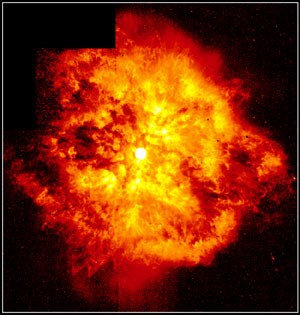
Most people think an embryo is constructed piece by piece rather than something that develops from within. Consider a car, for example. When does the car come to be? Some might say it’s when the body is welded to the frame, giving the appearance of a vehicle. Others insist there can be no car until the engine and transmission are installed, thus enabling the car to move. Others still point to the addition of wheels, without which a vehicle cannot make functional contact with the road.

But no one argues the car is there from the very beginning, as, for example, when the first two metal plates are welded together. After all, those same metal plates can be used to construct some other object like a boat or plane. Only gradually does the assemblage of random parts result in the construction of a car.

…[M]ost Americans see the fetus exactly the same way-as something that’s constructed part by part. It’s precisely this understanding…that renders pro-life arguments absurd to so many people. As they see it, embryos are no more human beings in early stages of their construction than metal plates are cars in the early stages of theirs.

[T]he construction analogy is deeply flawed. Embryos aren’t constructed piece by piece from the outside; they develop themselves from within. That is to say, they do something no constructed thing could ever do: They direct their own internal growth and maturation-and this entails continuity of being. Unlike cars, developing embryos have no outside builder. They’re all there just as soon as growth begins from within. In short, living organisms define and form themselves.

Unlike cars, then, human embryos are human from the onset of development, not at the terminus of development (or any other point along the way).  In fact, if they weren’t human at the beginning, they could not develop themselves in a human fashion throughout the process.  I think this distinction between construction and development is a powerful and important point to incorporate into our pro-life apologetic.

big-bangFor millennia philosophers maintained that the universe is eternal.  The philosophical payoff of this view was that it avoided the God question.  If the universe has always been, it did not need a creator.  The emergence of the Big Bang theory in the early part of the 20th century, however, changed all of that.  The Big Bang model successfully predicted that the universe–including all spatio-temporal-material reality–had an absolute origin at a point in the finite past, from which it expanded, and continues to expand today.
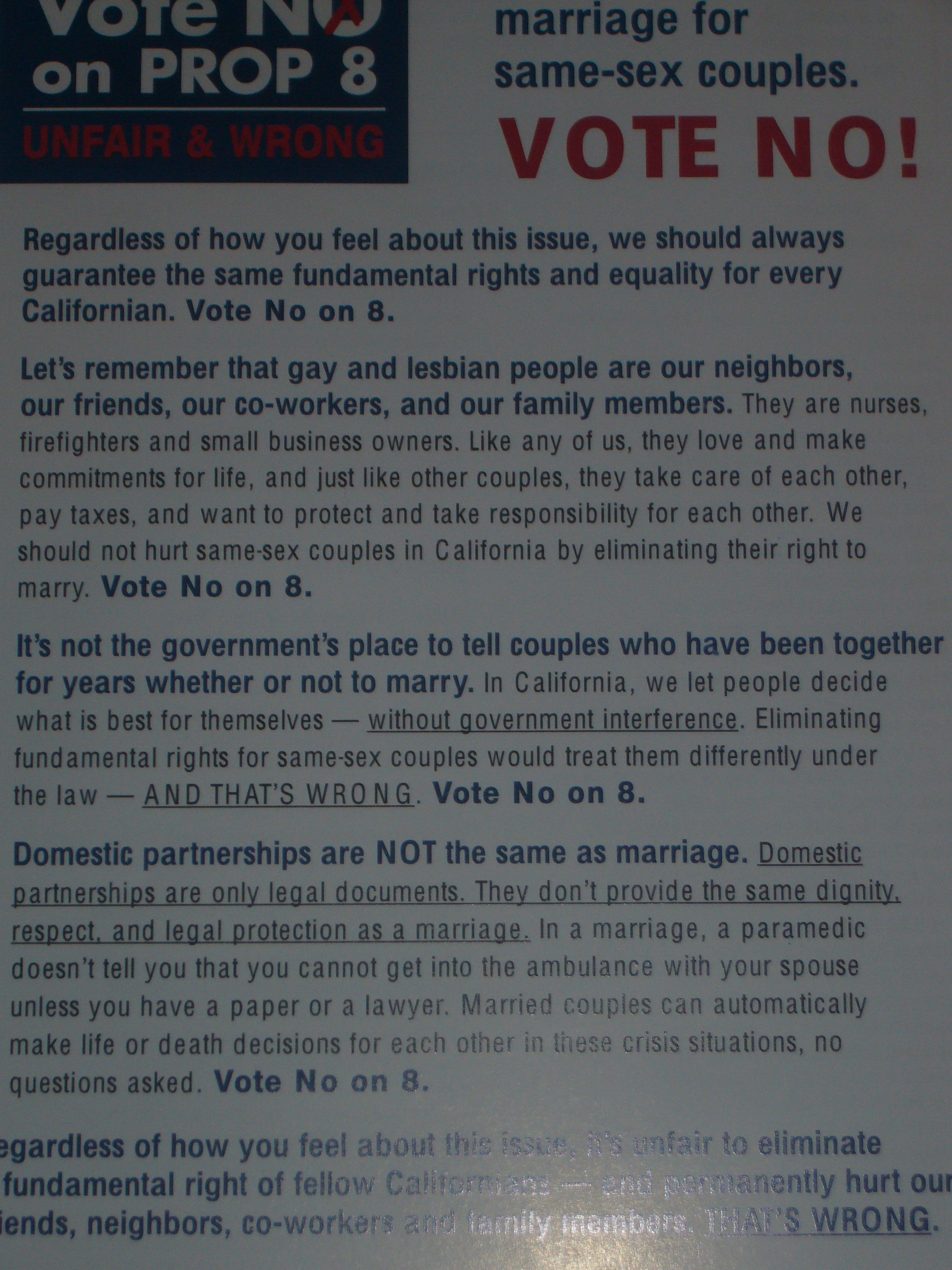
The theistic implications of this model were recognized instantly.  If the universe began to exist, it seemed to require a supernatural cause (one outside the confines of the natural world).  That’s why it was met with fierce opposition, and why it took several decades and many lines of empirical confirmation to become the reigning paradigm it is today.  Even now, cosmogenists continue to put forth alternative models in hopes of averting the beginning of the universe, many of which are little more than exercises in metaphysical speculation, incapable of both verification and falsification.

While not friendly to an atheistic worldview, many atheists eventually made their peace with the empirical evidence, and accepted the theory.  But the theistic implications of a temporally finite universe have not gone away.  Anything that begins to exist requires a cause.  If the universe began to exist, what caused it to exist?  It could not be a natural law, because natural laws originated with the universe.  It could not be self-caused, because this is incoherent.  Something cannot bring itself into existence, for that would entail its existence prior to its existence.

The atheist has two options.  He can either admit to the existence of an external cause of the universe, or affirm that the universe is uncaused.  For most atheists the first option is out of the question.  An external cause of the universe looks too much like God: immaterial, eternal, non-spatial, intelligent, and personal.  That leaves them the second option.  But this won’t do either.  The causal principle is one of the most basic intuitions we have.  Things don’t just pop into existence uncaused from nothing, so why think the universe did?  If everything that begins to exist has a sufficient cause, on what grounds is the origin of the universe excepted?  If one excepts it on the basis that it is impossible to have a cause prior to the first event, they are guilty of begging the question in favor of atheism, for they are assuming that physical reality is the only reality, and thus the only possible cause of the Big Bang must be a physical cause.  But it is entirely plausible that the external cause of the Big Bang was an eternal, non-physical reality.  The only way to demonstrate that the universe cannot have a cause, then, is to demonstrate that the existence of an eternal, non-physical reality like God is impossible.  But the very beginning of the universe is an argument for such a being’s existence!

Some atheists, recognizing the problem the principle of causal sufficiency makes for the atheistic worldview, cling to an eternal universe despite the scientific and philosophic evidence to the contrary.  They recognize that it is nonsense to think something can come from nothing, uncaused.  Something can only come from something.  From nothing, nothing comes.  If there was ever a time when nothing existed (as the Big Bang model predicts), then of necessity there would be nothing still, because nothing has no potential to become something.  And yet there is something, so there could not have been a time when nothing existed.  As a matter of historical fact, there can’t ever be a time when there was nothing.  Something must exist eternally.  If something must exist eternally, and the universe is not that something, then something resembling the God of theism must exist.  Rather than admit the obvious-that this is evidence for the existence of God-these atheists reject the scientific and philosophical evidence for a finite universe, and assert that the universe must exist eternally.

What’s important to see, here, is that this sort of atheist is not being intellectually honest with the evidence.  He has an a priori philosophical and volitional commitment to atheism, and that commitment biases him to such an extent that he will not accept the destination to which the rational evidence leads.  Only theism is consistent with the evidence, and consistent with reason.  While I commend atheists who reject the notion that the universe could come into being from nothing totally uncaused as an irrational leap of faith, I admonish them to go one step further, and recognize that the principle that something only comes from something, combined with the scientific an philosophical evidence for the finitude of the universe, supports theism, not atheism.  To be consistent and honest with the data, they should accept the finitude of the universe, and admit that its existence requires a personal and supernatural cause.

Here is my thought for the day: You can generally judge the depth of a thinker and the value of his/her thoughts by how familiar s/he is with the thoughts of others. 

There is a difference between a person who has formed ideas, and a person who has formed ideas in the context of other thinkers’ ideas.  Generally speaking, those who are ignorant of the insights and developments of others in the past and present, have a very limited, and often skewed perspective.  They are likely to miss the big picture, repeat the mistakes of others in the past, or fail to account for something simply because they have yet to consider it. 

Those who form their thoughts in a vacuum from other thinkers tend toward error.  I often hear preachers preface some remark by saying, “I didn’t get this from no man.  The Lord revealed to me straight from the Good Book.”  Whenever I hear that, I know chances are that what I’m about to hear is probably off-base.  And it usually is.  As Charles Spurgeon said, “It seems odd, that certain men who talk so much of what the Holy Spirit reveals to themselves, should think so little of what he has revealed to others.”  Those who try to reinvent the wheel without knowledge of past wheel makers, never do a very good job at it. 

Those who have conversed with the thinkers of today and yesteryear, however, will tend to have a much better, more informed perspective.  They tend to be more balanced, and aware of their intellectual limitations.  When I read something someone wrote on the topic of theology or philosophy, I’m looking at the footnotes to see what sources, if any, the author has used.  It’s usually a good indication of the quality of work I’m about to read.

When it comes to theology and philosophy, we would be stupid not to pay attention to what others have said before us.  It is the epitome of hubris to think others (particularly those in the past) have little or nothing to offer us.  99.99% of what we know is inherited from the intellectual labor of those who came before us.  If we ignore them, we are only left with 0.01% of true knowledge.  Woe to us if we attempt to think in an intellectual vacuum.

Same-sex marriage advocates gain a lot of support for their position by painting the opposing side as anti-gay homophobes.  Nobody wants to be thought of as anti-gay, a homophobe, or discriminatory.  To avoid such labels and associations, they acquiesce to the cause of same-sex marriage.  Much could be said in response to this tactic, but I will limit my response to four related points. 

First, as Dennis Prager recently observed, opposition to same-sex marriage is no more anti-gay than opposition to incestual marriage is anti-family.  What one thinks about the union of parts cannot be extrapolated to reflect their thoughts on each component of that union when considered apart from the union.  In the same way that opposition to incestual marriages does not mean one hates brothers and sisters, opposition to same-sex marriage does not mean one hates gays.  One can be opposed to social recognition of same-sex relationships as “marriage,” while fully supportive of gay individuals. 

Secondly, this claim ignores the fact that an argument can be made against same-sex marriage independent of any moral assessment of homosex or sexual orientation.  I have made such a case in “I Now Pronounce You Man and Husband?”: An Argument Against Same-Sex Marriage.

Thirdly, some homosexuals have publicly argued for homosexual rights, but oppose same-sex marriage because they believe it would be bad for society.  This proves that opposition to same-sex marriage cannot be equated with opposition to homosexuality.

Finally, few people who oppose homosexuality, yet alone same-sex marriage, are homophobic.  A homophobe is someone who fears homosexuals.  I have never met such an individual.  I have met a multitude of people, however, who object to homosex on moral and social grounds.  So the next time someone wants to equate your opposition to same-sex marriage with being anti-gay, challenge them on it.

I was reading the San Francisco Examiner the other day, when I ran across a “Viewpoints” article by Wayne State University professor of philosophy, John Corvino (the November 10th edition, page 13).  Mr. Covino was opining on the passage of Proposition 8, a proposition in California that amended the state’s constitution to define marriage as being between a man and woman only (and overturning the state Supreme Court’s recent decision to extend the institution of marriage to same-sex couples).  

In essence, his viewpoint was that this was only a temporary setback.  The tide is on the side of those who favor same-sex marriage, and they will ride that tide in due time.  I hate to admit it, but he is probably right.  Prop 8 passed by a mere 2%.  That’s hardly a safe margin of victory.  What’s worse, popular support for traditional marriage dropped 10% from 2000, when California voters passed a similar proposition (it passed by 62%).  Given the fact that opposition to same-sex marriage is fading by an average of 1.25% each year, and given the fact that those who oppose same-sex marriage tend to be older and more religious, there is good reason to believe same-sex marriage would be approved by the electorate if put to a vote four years from now.  Why?  Older people die at higher rates than younger people, so the anti-same-sex marriage voting block will lose supporters at a faster rate than the pro-same-sex marriage voting block, even if no one in either camp changes their position in the future.  Furthermore, religious conviction is a major reason people oppose same-sex marriage.  Given the fact that religion plays a less significant role in the political views of younger Americans, and it is the largely the young who become new voters, it is unlikely that those who age-in to the social debate will object to same-sex marriage.  Only a major public education campaign and/or religious revival can stop the eventual legalization of same-sex marriage in the United States.  

Given the length of the above paragraph, one might think my purpose in writing this post was to evaluate the future of marriage in California.  It’s not.  What I found particularly interesting about Corvino’s article was the following statement: 

A bare majority of California voters sent a discriminatory message: You are not good enough for marriage.  Your relationships-no matter how loving, how committed, how exemplary-are not “real” marriage.  But “real” marriage transcends state recognition of it.  And that’s another reason why this debate will continue.  Because it’s not just about what California should or should not legally recognize.  It’s also about what sort of relationships are morally valuable, and why.  And that’s a debate that, slowly but surely, gay-rights advocates are winning.

Corvino’s claim could not be more clear: same-sex marriage is a right that transcends human law.  This is quite a claim.  Rights have to be grounded in something.  Rights come in two forms: those belonging to us by nature, and those given to us by those in power.  The right to drive is an example of the latter, while the right to life is an example of the former.  To say homosexuals have the right to marry someone of the same gender, even if the political powers that be do not wish to extend them that right is to say the right to same-sex marriage is a natural right that transcends human law, and to which human law has an obligation to conform (i.e. if human law denies homosexuals the right to marry, a moral injustice is being done).  But from whence cometh this right?  What is it grounded in?

It cannot be a natural right, like the right to life, the right to procreate, or the right to believe what one chooses to believe.  Why?  Because marriage is not a fundamental right.  Civil marriage is just society’s way of managing procreation for the good of, and in the interest of society.  But society is under no moral obligation to formally recognize and regulate anybody’s relationships.  They do so only in their own self-interest.  In fact, if they got out of the marriage business tomorrow, people would continue to fall in love, make relational commitments to one another, and continue to have children just as before.  Nothing would stop them from doing so.  If marriage itself is not a fundamental right, then by no means can one argue that same-sex marriage in particular is a fundamental right.

The only other source in which to ground a transcendent right is God.  The problem with this is that no major religion claims God approves of homosex, yet alone same-sex marriage.  It’s kind of hard to ground the right to same-sex marriage in God, when God doesn’t recognize the right! 

If same-sex marriage is not a right that can be grounded in God or nature, then it is not a transcendent right.  It is a legal right, and a legal right depends entirely on the will of the people to grant it.

Many argue for abortion on the grounds that no one knows when life begins.  Unfortunately this is patently false.  We do know when life begins (even if we didn’t, this is good grounds for outlawing abortion, not permitting it).  Embryologists are clear in their affirmation that a new human being comes into being at fertilization.  That’s why informed pro-abortion apologists do not argue for abortion in this way.  Instead, they argue that pre-born human beings are not of equal worth to those of us on this side of the womb, because they are developmentally inferior to us (the emphasis is usually placed on their psychological inferiority).  The real debate over abortion, then, is whether we should consider unborn human beings to be of equal moral worth to human beings who have been born.  The renowned bioethicist and legal scholar, Robert George, conveyed this beautifully in a recent article of his:

When we debate questions of abortion, assisted reproductive technologies, human embryonic stem cell research and human cloning, we are not really disagreeing about whether human embryos are human beings. The scientific evidence is simply too overwhelming for there to be any real debate on this point. What is at issue in these debates is the question of whether we ought to respect and defend human beings in the earliest stages of their lives. In other words, the question is not about scientific facts; it is about the nature of human dignity and the equality of human beings.

On one side are those who believe that human beings have dignity and rights by virtue of their humanity. They believe that all human beings, irrespective not only of race, ethnicity, and sex, but also irrespective of age, size, and stage of development, are equal in fundamental worth and dignity. The right to life is a human right – therefore all human beings, from the point at which they come into being (conception) to the point at which they cease to be (death), possess it.

On the other side are those who believe that those human beings who have worth and dignity have them in virtue of having achieved a certain level of development. They deny that all human beings have worth and dignity and hold that a distinction should be drawn between those human beings who have achieved the status of “personhood” and those (such as embryos, fetuses, and, according to some, infants and severely retarded or demented individuals) whose status is that of human non-persons.

Election results did not favor the pro-life cause, but they did favor the traditional marriage cause.  Here is a brief survey of the most important issues:

Abortion

California’s Prop 4 sought to require parental notification prior to a minor receiving an abortion.  It was defeated (52% to 48%).

Colorado’s Colorado Definition of Person Initiative of 2008 (aka Amendment 48) sought to define all human beings from the moment of fertilization as “persons.”  It was defeated (73% to 27%).

Obama was elected President of the United States.  If he does what he says he will do given the chance, he will repeal virtually every restriction on abortion (including partial birth abortion), will repeal the ban on using federal tax dollars to fund abortion, will repeal the ban on funding abortions outside the U.S., and will nominate liberal justices to the Supreme Court (ensuring that Roe v Wade will not be overturned for at least another 20-30 years).  This is probably the greatest setback to the pro-life cause since the Supreme Court re-affirmed Roe in 1992 (Planned Parenthood v Casey).  Not only does he stand

Embryonic Stem Cell Research

Michigan passed a constitutional amendment authorizing the use of “leftover” embryos for stem cell research by a margin of 53% to 47%.

Assisted Suicide

The voters in Washington passed Washington Initiative 1000, a bill legalizing assisted suicide.  It passed with a 59% to 41% margin.  Washington is now the second state to pass such a law (Oregon is the other).

Same-Sex Marriage

Voters in California, Arizona and Florida approved constitutional amendments defining marriage only as the union of a man and woman.

California’s Prop 8 passed 52% to 48%
Arizona’s Prop 102 passed 56% to 44%
Florida’s Amendment 2 passed 62% to 38%

California’s win was particularly important, because the state Supreme Court had just forced same-sex marriage on the state by judicial fiat earlier this year.  California is the first state to rescind the right to same-sex marriage once it has been created by a judiciary.

A cosmological argument for theism looks something like this:

Everyone intuits the causal principle that every effect/event requires a sufficient cause.  What, then, is the cause of the universe?  What is causally sufficient to account for the observed effect?  Since the effect includes time, space, and matter, the cause must be timeless, non-spatial, and immaterial, not to mention intelligent and powerful to account for the specified complexity of the universe.  Only two things fit this description: abstract objects, or an unembodied mind.  Since abstract objects are causally impotent by definition (they do not stand in causal relations with concrete objects), they cannot be the cause of the universe.  That leaves us with an unembodied mind, who is a personal agent.  This makes sense.  Not only are we are intimately acquainted with the idea of immaterial minds causing physical effects, but it also makes sense of the design and order we see in the universe.

In response to this argument, some think we should reject the notion of a disembodied mind on the grounds that it is too abstract; i.e. it is something we are not acquainted with, and hence have no reason to believe is possible.  There are at least three reasons to reject this line of thinking.

First, there is nothing logically incoherent about a disembodied mind.  The notion may not be familiar to us, but we ought not confuse familiarity with plausibility.  A person raised in the remote parts of the jungle has never seen ice, but his lack of familiarity with ice does not mean the existence of ice is implausible.  Neither would it constitute good grounds on which for him to reject evidence being presented to him that ice exists.  Likewise, just because we are not personally acquainted with the idea of an unembodied mind does not mean an unembodied mind does not, or cannot exist.  Neither does it constitute good grounds on which to reject the evidence being presented for the existence of such a mind.  The cosmological argument provides warrant for believing in something we may not have thought probable otherwise.

Second, even if we are not personally familiar with unembodied minds, we are very familiar with the concept of mind (each of us has one), and its causal powers.  In other words, even if the specific form of the mind in question is unfamiliar to us, the function of a mind very familiar to us: minds exercise causal agency.  And I see no reason to think this capacity is dependent on our mind being embodied.  The property of causal agency belongs to the mind, not the body, so there is no reason to think an unembodied mind is too abstract a concept to be the cause of our universe.

One might respond that it would be impossible for an unembodied mind (immaterial) to cause effects in the physical realm.  This must be false.  Why?  Because our minds cause effects in the physical realm all the time, and our minds are an immaterial entity (it may stand in a causal relationship with the brain, but it cannot be reduced to the brain/physicality).  The only difference between our minds and an unembodied mind is embodiment, but I fail to see how embodiment is significant.  The fact remains that human minds, as well as a divine mind, are immaterial in nature, and a source of causation which produces effects in the physical world.

A case could even be made that human minds do not have to be embodied, and indeed, become disembodied upon death.  I am thinking in particular of empirical studies into near-death experiences.  While many of the experiences are unverifiable, a small minority are.  And in these instances, there are examples of continued consciousness, even after brain death.  In fact, in some cases the person is conscious of things happening outside of the room where their body lies (things they could not have possibly known, even if their body were functioning normally).  So I don’t think the idea of an unembodied mind is abstract, or that we are not acquainted with this.  Even if most of us are unacquainted with it experientially, we are acquainted with the concept, and there is nothing incoherent about the concept.  Strange, maybe, but incoherent, no.

Finally, those who wish to reject both abstract objects and an unembodied mind as the cause of the universe need to offer an alternative.  Given the criteria, I cannot fathom what that could be.  If no other alternative is possible, then they must either reject the causal principle and say the universe popped into existence uncaused, or else embrace an eternal universe.  Given the fact that the causal principle is one of our strongest metaphysical intuitions and enjoys undisputed empirical confirmation, and given the fact that the scientific evidence and philosophical arguments against an eternal universe are more than compelling, neither is a good option.  We have good reason, then, to think the cause of the universe was a powerful, intelligent, immaterial, non-spatial, eternal mind.  This is an apt description of what most theists have traditionally meant by the term “God.”

While leaving work today I was handed a “No on Prop 8” leaflet.  For those of you not living in CA, prop 8 seeks to undo our state Supreme Court’s recent decision to remove gender requirements from the institution of marriage.  In CA, same-sex couples in a domestic partnership already had identical rights and obligations as their married counterparts.  Their “package” was simply being called by a different name (domestic partnership vs. marriage).  In effect, the Supreme Court simply demanded that they be given a name change.  And they have been, against the express will of the people.  In response, the people of CA organized a ballot initiative to amend our state constitution to define marriage as being between one man and one woman only.  The people handing out the leaflet I received today oppose this initiative.

As I expected, the leaflet was a propaganda piece full of half-truths and sophistry.  Rather than reproducing this piece, I’ll just refer you to the picture above.  To read the text just click the picture (it will magnify it).  I would like to bring some of the most blatant rhetoric to your attention.  There are five paragraphs, but I will only respond to the first four:

#1 They claim same-sex marriage is a fundamental right, but since when?  It has not been recognized by any society in history until a decade ago.  A right no one recognized until 10 years ago can hardly be considered fundamental.  Just because a handful of people in black robes declare it to be a fundamental right by judicial fiat, does not make it one in reality.

As for equality, I agree.  But the law already afforded equality to all Californians.  Everyone had an equal right to marry a non-relative of the opposite sex.  The law did not stipulate that homosexuals could not marry.  Homosexuals are just as free to take advantage of the institution of marriage as are heterosexuals, but if they wish to avail themselves of this right, they need to marry someone of the opposite sex.  The fact that they choose not to afford themselves of this right is not grounds for radically changing the historic understanding of marriage.

#2 Yes, same-sex couples are our neighbors, but what follows from that?  People in Utah have polygamists as their neighbors, but does that mean society must redefine the number of participants in a marriage?  No, so why should the fact that we have gay neighbors cause us to redefine the gender requirements of civil marriage?

They claim that same-sex couples are hurt by not giving their legally-recognized unions the name “marriage,” but how?  Because they are not accorded the same social approval?  First, we do not alter fundamental social institutions so that some people won’t feel bad.  Second, marriage is a social institution intended to provide social support to relationships society deems important to the success of society.  People in society are free to choose whom to give their support to and whom to deny it.  And many do not wish to extend it to same-sex couples because they do not think their relationships are beneficial to the social fabric (indeed, they may be detrimental).

#3 No, “it’s not the government’s place to tell couples who have been together for years whether or not to marry,” but that is not the issue.  This sentence was either framed poorly, or strategically, because the government isn’t telling anyone-heterosexual or homosexual-whether or not to marry.  It only tells them the requirements they must meet if they wish to marry.  But if they were to have worded it this way, it is clearly wrong.  The government represents the people, and the people of this country have the right to define the requirements for marriage; i.e. which relationships they will and will not extend their social approval and support to.  That’s not to say they can be arbitrary in their definition, but clearly that is not the case in this country.  There are principled reasons we define marriage the way we do, and those reasons make no room for same-sex couples.

They claim we let people decide what’s best for themselves in CA.  No, we don’t.  I decided it’s best for me to be able to talk on my cell phone in my car, but the government decided it wasn’t.  Taken at face-value, what they are advocating is anarchy.  And I find it ironic that the pro-Prop 8 prop are speaking negatively of “government interference” when they have been working ferociously over the last 20 years to intimately involve government in this issue.  If they truly eschewed government interference, they would not be asking for the state of CA to recognize and regulate their relationships.

#4 In one sense it’s true that domestic partnerships are not the same as marriage.  But where do they differ?  You might be surprised to know that in CA they are the same in all but the name.  Domestic partnerships afford same-sex couples all the same rights and responsibilities as marriage.  That’s why it is disingenuous on their part to bring up the issue of medical power-of-attorney.  Domestic partnerships already give same-sex couples such rights.  The only thing domestic partnerships do not afford same-sex couples is “the same dignity” and “respect.”  But why ought they be given such when their relationships do not function in the same way in society, and when many people consider their sexual mores immoral?  I see no reason to.

I hope my fellow Californians will join me in voting YES on prop 8.

« Previous PageNext Page »