Same-sex Marriage


The M WordA proposal to legalize same-sex marriage in Britain in 2014 has passed its first major hurdle to becoming law when the lower house of Parliament passed the proposal 400-175 on Tuesday.

British law already allows for civil unions, which offer the exact same rights and privileges of marriage.  Since same-sex marriage is already recognized in England in-all-but-name, the legal ramifications of this law should be negligible.  The real impact of this law will be social.  I’ll explain how, but first let me make the case against calling same-sex unions “marriage” even if they enjoy the exact same rights afforded to married couples.

Treated as equals vs. being thought of as equals

Personally, I oppose any legal recognition and/or regulation of same-sex relationships, including civil unions.  If you are going to create civil unions as an alternative institution to marriage, however, it is foolish to make it identical to marriage in every respect but the name.  It’s like saying “you can work at the same place I work at, make the same money I make, get the same health insurance I have, but you can’t call it a ‘job.’”[1]  Nevertheless, that is what England and other countries (including various states in the U.S.) have done.  They have created two institutions that are identical in all-but-name.
(more…)

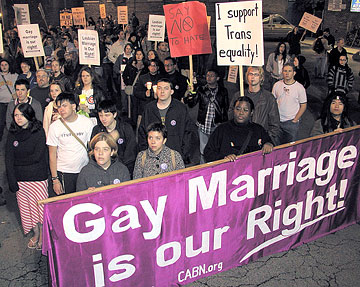
gay_marriage_banner_rightsWhile there exists a natural right to form marriages, and while we have a right to form those marriages without government interference (a negative right), we do not have the right to government recognition of our marriages (a positive right).  The State regulates marriage because it is in their best interest to manage the procreative potential of opposite sex couples, not because they have a moral obligation to do so.  The institution of marriage is a natural union that exists prior to, and wholly independent of government recognition.

What basis is there, then, for SSM advocates to claim they have a right to civil marriage?  While those with homosexual orientations have a right to form same-sex relationships[1], they have no corresponding right to have their relationships recognized and regulated by the government.

(more…)

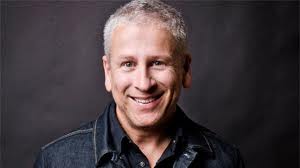
Louie GiglioThat’s the headline.  Perhaps it should have read “Christian pastor withdraws from Obama inauguration after it is discovered that he’s a Christian.”

A website, ThinkProgress, published a sermon Reverend Louie Giglio preached in the 90’s in which he said these “shocking” words:

If you look at the counsel of the word of God, Old Testament, New Testament, you come quickly to the conclusion that homosexuality is not an alternate lifestyle… homosexuality is not just a sexual preference, homosexuality is not gay, but homosexuality is sin. It is sin in the eyes of God, and it is sin according to the word of God. You come to only one conclusion: homosexuality is less than God’s best for his creation.”

(more…)

Elections tell you a lot about the worldview of Americans.  Last night’s election is no exception.  It reveals a lot about our moral views.  This election reveals that our nation has become very accepting of homosexuality and same-sex marriage, as well as smoking pot.

Homosexuality and Same-Sex Marriage

Wisconsin elected the first openly gay U.S. Senator.  Maine (53% vs. 47%) and Maryland (52% vs. 48%) voted to support the legalization of same-sex marriage.  Maryland voters merely confirmed their support of a law allowing same-sex marriage that was recently signed into law by the governor.  Maine chimed in on this same issue in 2009 after their legislature passed a bill legalizing same-sex marriage, and they rejected same-sex marriage with 53% of the vote.  Look how quickly public opinion is shifting!

The significance of what happened in Maine and Maryland cannot be underestimated.  This is the first time in history that same-sex marriage has been approved by the people of a state as opposed to the courts or legislature.

Washington also had an initiative to legalize same-sex marriage (same-sex marriage was already legal in all but name).  Only half of the votes have been counted thus far, but at present 52% have voted in favor of same-sex marriage, and thus it is likely to become legal there as well.  If so, nine states will have laws allowing same-sex marriage.

Minnesota tried to change their constitution to limit marriage to a man and a woman, but the initiative was defeated 51% to 48%.  The measure’s defeat, however, does not mean that same-sex marriage is legal.  It’s just not on the books as being illegal.

On the international front, France is now in the process of trying to legalize same-sex marriage there.  If it passes, they will become the 12th country in the world where same-sex couples can marry.  And yesterday, Spain’s high court upheld a 2005 law that legalized same-sex marriage.

(more…)

Oh the irony!  The chief diversity officer at Gallaudet, a university in Washington D.C. that serves the deaf, was put on a leave of absence for signing a petition to get an initiative on the ballot to decide the legality of same-sex marriage.

Apparently the school is not interested in diversity.  Everyone must subscribe the politically correct viewpoint.  But remember, the government’s sanction of same-sex relationships will have no affect on those who disagree.  And I’ve got beachfront property in Nevada to sell you too.

That is what some Christians and secularists suggest.  They think marriage should be a private institution handled by churches and others, while the government sits by as a neutral observer.  That may salve over the current political and cultural debate over the definition of marriage, but is this a good idea?  Jennifer Roback Morse thinks not, and wrote a three-part series explaining why (1, 2, 3).  She argues that privatizing marriage is not only impossible in practice, but that it would result in more state power and would unnecessarily hurt children.

(more…)

A lot of people think the government can recognize same-sex unions as “marriage” without any detrimental effects on religious institutions and religious liberties.  I think this is a delusion.  The legal recognition of same-sex unions will almost inevitably result in religious discrimination on a social level, and likely on a legal level as well.  

How can the government say on the one hand that a failure to legally recognize same-sex unions as “marriage” and treat them as equal to opposite-sex unions in every way is to engage in discriminatory behavior, and yet at the same time permit churches to discriminate against same-sex couples by refusing to marry them?  Talk about legal schizophrenia!  Consider the logic involved: 

(more…)

On January 30, 2011 the governor of Illinois signed “The Religious Freedom Protection and Civil Union Act” into law, thereby enacting same-sex civil unions that are equal in rights and responsibilities to marriage in the state.  While religious organizations who did social service work were specifically exempted from the non-discrimination elements of the law, the State of Illinois moved to cancel more than $30 million dollars worth of contracts with Catholic charities who worked with the state to provide foster care and adoption services because they would not pair children with same-sex couples.  The state began sending referrals to other foster care agencies.  The Catholic charities challenged the state in court and lost at both the circuit and appellate levels.  They ultimately had to drop the case due to a lack of funds to appeal it further up the chain.  The lack of state cooperation and funding will virtually ascertain the closure of these adoption agencies, which have more than 90 years of experience in this area.

The lawyer who represented the Catholic charities, Peter Breen of the Thomas Moore Society, commented, “This stands as a stark lesson to the rest of the nation that legislators promising ‘religious protection’ in same sex marriage and civil union laws may not be able to deliver on those promises.”  Indeed.

Yesterday, the 9th circuit federal court of appeals upheld District Judge Vaughn Walker’s August 2010 decision that California’s Proposition 8 is unconstitutional by a 2-1 vote.  Prop 8 was a voter referendum to amend the CA constitution to declare that marriage is only valid between a man and a woman.  While the CA Supreme Court ruled that the amendment is constitutional (when judged against the California Constitution), their decision was appealed and Judge Walker ruled that it violates the U.S. Constitution.  The 9th circuit court agrees.

(more…)

I would highly recommend that you watch the video clips at http://www.massresistance.org/media/video/brainwashing.html. They are from a documentary showing how elementary and junior high kids can be indoctrinated to believe homosexuality and same-sex marriage are morally acceptable (something the film extols as a virtue). If you think homosexuality is wrong, but that the issue of homosexuality is a private matter that isn’t going to hurt anybody so we should just sit back and do nothing, you need to watch this video. The gay rights movement has gone beyond the “just leave us alone to do what we want to do in the privacy of our own homes” days and into the day of approval advocacy. They are not content to be allowed to live how they want to live–now they want to make sure that you approve of their lifestyle as well. It’s too difficult to change adults’ minds, so they are targeting the young.

(more…)

During one of his recent radio shows, Greg Koukl of Stand to Reason made an important observation about the debate over same-sex marriage (SSM) that virtually all advocates of SSM miss: the debate over SSM has virtually nothing to do with what same-sex couples (SSCs) do, and everything to do with what we (society) do.

No one is regulating the behavior, love, living situation, or commitments of SSCs.  SSCs are free to live with one another, have sex with one another, create legal contracts with one another, and even engage in public ceremonies to celebrate their love and commitment to one another.  Being granted access to the institution of marriage would not give SSCs any additional freedoms.  What it would give them is a new social standing.  Why?  Because marriage is society’s way of putting their stamp of approval on a particular kind of relationship.  It’s society’s way of declaring what a family is.  To say SSCs can participate in the institution of marriage would be a social declaration that there is no difference between heterosexual and homosexual unions.  Whether society should make such a declaration stands at the heart of the debate over SSM.  Do we, as a society, want to declare same-sex relationships to be socially equivalent to heterosexual relationships?

(more…)

The latest Census data indicates that 131,729 same-sex couples “claim” to be married.  I say “claim” because this number exceeds the number of legal same-sex marriages in the United States (where currently only 5 states and D.C. have legalized same-sex marriage).  Indeed, it exceeds the number of same-sex marriages and same-sex civil unions combined (which is closer to 100,000).  Apparently many of these couples are basing their marital status on the way they feel about each other rather than on an actual legal status.  The Census also revealed that there are 646,464 same-sex households in the United States, which constitutes slightly more than ½ of 1% of the population.  Taking the 131,729 same-sex marriages at face-value, this would mean 20.2% of same-sex households are married.  If we look only at the number of legally recognized same-sex relationships (including both marriages and civil unions), then only 15.5% of same-sex couples have a legally recognized relationship.  Given the fact that there are more same-sex relationships than there are same-sex households, the percentage of same-sex marriages among same-sex couples would be even lower.

(more…)

I have often said that when you think marriage is arbitrary and can be defined any way a society chooses to define it, then marriage can mean and be anything.  I have even predicted that if marriage can be redefined to include same-sex couples, then marriage could be redefined to be a temporary institution.  I must be a prophet, because this is exactly what Mexico City is proposing (and it is important to note that Mexico City also legalized same-sex marriage in 2009).

If you don’t want marriage to be until death do you part, Mexico City will allow you to enter into a two-year marriage.  At the end of the two years the marriage will expire, and each of you can go your separate ways without any hassle of divorce paperwork if you choose not to renew the contract.  How convenient!  The article notes how half of the marriages in Mexico City end in divorce after two years.  So how exactly will this help?  It will not curtail marital dissolutions; it will simply not call them “divorces.”  It will make marital dissolution even easier, which always spells “bad news” for the children involved.  Shame on Mexico City.

Once you abandon the notion that marriage is a natural institution that is recognized, not defined, by the state, marriage can become anything, and ceases to be something.

The Department of Defense has announced that military chaplains can officiate at same-sex marriages “on or off a military installation,”  even using Defense Department property to do so.  Do you see this as a federal endorsement of same-sex marriage?

Those who wish to change the historic definition of marriage so as to include couples of the same sex often argue that marriage is a fluid institution with an evolutionary history.  One of their favorite examples is polygamy.  Polygamy used to be an acceptable form of marriage, but such is no longer the case in most societies.  They think it follows that if the definition of marriage is flexible enough to change in this fashion, then it should be capable of including people of the same sex as well.


The problem with this argument is that polygamy is not an exception to the “male and female” understanding of marriage.  Rather, it is an exception to the concept of monogamy.  Polygamy did not involve multiple partners in a single marriage, but rather multiple, concurrent marriages.  This can be demonstrated by the following:

  1. Each wife entered into a marriage with the man at different points in time.
  2. It was possible for the man to divorce one wife without divorcing all his wives.
  3. The women in the relationship only viewed the man as their spouse, not the other women.

(more…)

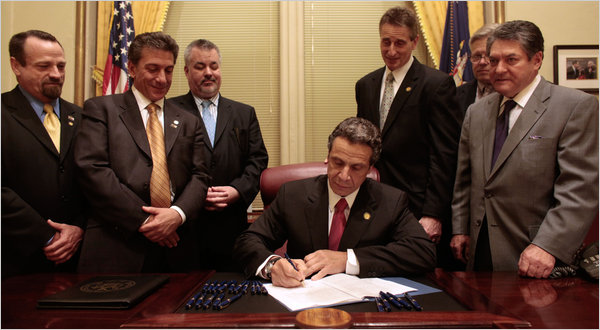
Just a little over 1 ½ years ago the Senate of New York rejected a bill legalizing same-sex marriage, 38-24.  On Friday June 24, 2011, however, they approved a similar bill, 33-29, and Governor Cuomo signed it into law.  Beginning July 24, 2011, same-sex couples will be allowed to marry in New York.

New York is the 9th state/district to legalize same-sex marriage (Massachusetts in 2003 by court order, California in 2008 by court order, Connecticut in 2008 by court order, Iowa in 2009 by court order, (more…)

McCormick Professor of Jurisprudence at Princeton University, Robert George, et al have written what is arguably one of the best defenses for the traditional understanding of marriage available in print.  Titled “What is Marriage?”, this paper was first published in the Harvard Journal of Law & Public Policy, and later expanded into a book by the same title.[1]

I’ve often said the reason support for same-sex marriage has grown so fast in the West is because our culture has long forgotten what marriage is.  George et al understand that when it comes to the marriage debate, everything hinges on the question, What is marriage?  Does marriage have a fixed nature independent of cultural norms, or is it a mere social construction that can be whatever society wishes it to be?  The authors rightly begin their paper by defining and contrasting these two perspectives (what they call the “conjugal view” and “revisionist view”):

(more…)

Pete Stark has introduced a bill in the U.S. House of Representatives that would prohibit any foster care or adoption agency who receives government funding (or is associated with an entity who does) from discriminating against prospective foster/adoptive parents on the basis of sexual orientation, gender identity, or marital status.  This is not the first time he has introduced a bill like this, so we’ll see what becomes of it.  But if this is passed, it will force many agencies to shut down their doors or violate their ethical principles.  As I wrote about previously, the debate over same-sex marriage and homosexuality matters, and has practical consequences that affect us all.

Go here for a legal analysis of the bill.

That is the finding of the Public Religion Research Institute.  Not only do Catholics support same-sex marriage in higher numbers than other religious groups, but they even support same-sex marriage in higher numbers than the non-religious (even though the percentage of support for SSM is higher among the non-religious than Catholics–56% vs. 42%–since there are more Catholics than non-religious Americans, the actual number of Catholics who support SSM is higher than the number of non-religious citizens who support SSM).

According to PRRI: (more…)

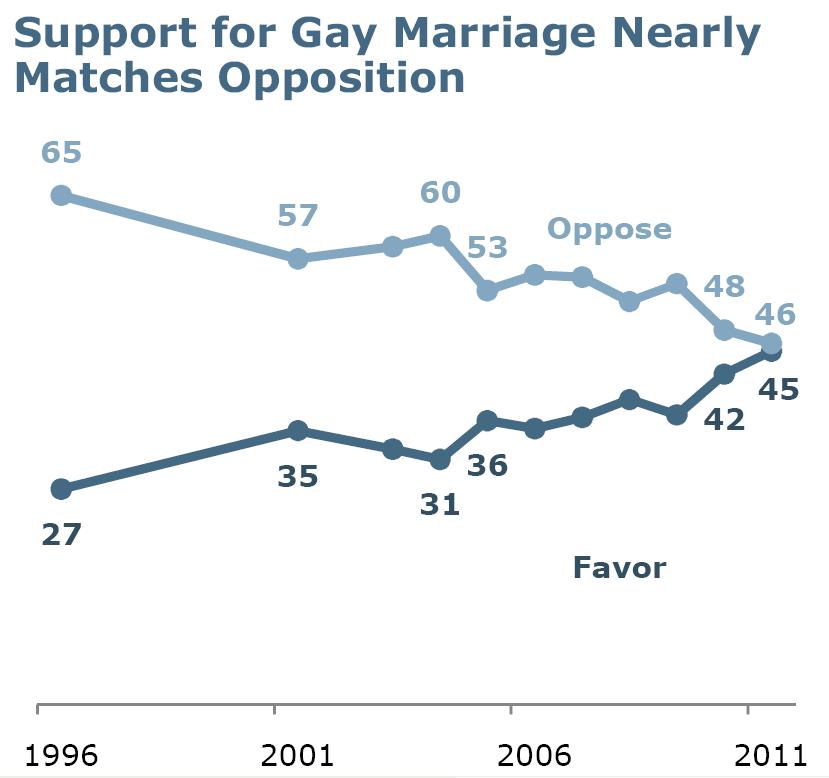
The most recent polling data from the Pew Research Center has found that support same-sex marriage has risen to 45%, up from 42% last year.  Opposition currently stands at 46%.  As you can see from the chart, support for same-sex marriage has steadily increased, and opposition has steadily decreased since 1996.  It doesn’t take a prophet to predict that unless social conservatives start making a persuasive case in the public square real quick, those who oppose same-sex marriage will be in the minority within two years.  In some parts of the country (Northeast, West), this has already happened.

Support for abortion rights has also risen back to 2008 levels, after a substantial dip in 2009 (47% in 2009, 54% now).  I have a feeling the dip in 2009 was due to some sort of sampling error.  It seems too unlikely to me that public opinion would change so fast, and then change back just as quickly.

« Previous PageNext Page »