Science


The kalam cosmological argument (KCA) for God’s existence goes as follows:

(1) Anything that begins to exist requires a cause
(2) The universe began to exist
(3) Thus, the universe requires a cause

Additional reasoning leads us to conclude that the cause of the universe is God.  Given that whatever caused space, time, and matter to begin to exist cannot itself be spatial, temporal, or material.  Furthermore, whatever caused our orderly universe to come into being a finite time ago must be immensely powerful, intelligent, conscious, and hence personal.  These are apt descriptions of a being theists have long identified as God.

Some seek to undermine this causal argument for God’s existence by denying the first premise.  They point to quantum mechanics and virtual particles as evidence that there are exceptions to the causal principle.

(more…)

Opponents of ID often argue against ID on the basis that it is not science.  Of course, the definition of science itself is disputable, and it is often disputed.  This is largely a red herring, however, because it shifts the focus away from the merits of ID arguments to the classification of those arguments.  As Thomas Nagel has written, “A purely semantic classification of a hypothesis or its denial as belonging or not to science is of limited interest to someone who wants to know whether the hypothesis is true or false.”[1]

While I think ID is a scientific conclusion, I do not wish to debate here whether ID properly qualifies as science, or whether it is better classified as religion/philosophy.  The question I want to raise is how scientists would respond if it could be demonstrated that ID is both properly categorized as religion/philosophy and ID is true.  Would scientists cease discussing certain subjects in science class?  Would they stop discussing the origin of life or origin of species?  In my estimation, this is doubtful.  I think most would continue to offer naturalistic explanations for these objects because their definition of science requires them to.  After all, if by definition alone science must provide naturalistic answers for all natural phenomena, then scientists must continue to offer naturalistic explanations for all phenomena—even phenomena  ID would have proven do not have naturalistic explanations.

(more…)

One of the most common objections against Intelligent Design is that if an intelligent agent is causally involved in the natural world, then science is no longer predictable because at any time the agent could intervene and mess with our experiments.  For example, Michael Ruse writes, ““[T]he relationship of the natural and the supernatural are unpredictable … [if] the cause of a natural event is the whim of a deity, the event is neither predictable nor fully understandable.”[1]

I think this objection is misguided.  First, it is based on a faulty understanding of ID.  ID only claims to have discovered evidence of a designer’s activity in the past.  It takes no position on the question of whether the designer is still in existence, whether the designer is presently involved in the cosmos, or whether the designer will be involved in the cosmos in the future.  Those are philosophical and religious questions.

(more…)

In a previous post I addressed the “lottery” objection to the probabilistic argument against a naturalistic origin of life: “Just as the odds of winning the lottery are low, and yet people win the lottery all the time, so too the odds of forming life by chance may be low, but that doesn’t mean it is impossible.”  I argued that unlike a lottery, the probabilistic resources available to form life are so unfathomably low that there is no reason to expect a winner in chance’s game of life.  To prove my point, I compared the number of possible events in the whole history of the universe (10139)—the probabilistic resources—to the probability of a 250 gene organism forming by chance (1:1041,000).  The odds of life forming by chance came up trillions upon trillions upon trillions of times short, and thus there is no rational basis on which to affirm that life originated by chance.  What I didn’t realize then was that I had severely over-estimated the odds.

(more…)

A new Gallup poll reveals Americans’ views on creation:

  • 40% believe humans were specially created by God 10,000 years ago (creationism)
  • 38% believe God used evolutionary processes to create human beings from less advanced life forms over millions of years (theistic evolution)
  • 16% believe humans developed from less advanced life forms over millions of years without any aid from a divine being (naturalism/atheism).

The number of theistic evolutionists has not changed much over the past 30 years, while there has been a slight decrease in the number of creationists (down from 47% in 1993) and a slight increase in the number of naturalists/atheists (up 7% from 1982).

One of the weaknesses of this poll is that it presents these three views as if they were the only options.  Jay Richards wrote a short post elaborating on this point.  Nevertheless, it does illustrate an important point: the vast majority of Americans do not buy into the materialistic paradigm of Darwinism.

In the latest edition of Philosophia Christi, the Evangelical Philosophical Society’s journal, philosopher Stephen C. Dilley wrote a really nice article titled “Philosophical Naturalism and Methodological Naturalism: Strange Bedfellows?” in which he argued that philosophical naturalists should dispense with the principle of methodological naturalism in science.

For those of you who may be unfamiliar with these terms, philosophical naturalism (PN) is the view that only physical things exist, while methodological naturalism (MN) is the view that we must restrict our method of scientific inquiry to naturalistic processes.  MN does not require one to presuppose the truth of PN, but it does require that one investigate the natural world as if God does not exist, or if He does, as if He has no causal relationship to the natural world.  According to MN, for an explanation to be considered “scientific” it must be naturalistic; i.e. it must appeal to naturalistic entities and processes.

(more…)

In a previous post I argued that chance cannot account for the origin of the first living cell because the odds are too low to have any reasonable chance of being met.  The odds of a single, functional protein forming by chance is 1 in 10164.  That’s 1 chance in 100 trillion trillion trillion trillion trillion trillion trillion trillion trillion trillion trillion trillion trillion trillion trillion trillion trillion trillion trillion trillion trillion trillion trillion trillion trillion trillion trillion.  But the simplest life form would need at least 250 different proteins, lowering the odds to 1 in 1041,000!

While the numbers appear staggering, many people will immediately raise the “lottery objection”: Just as the odds of winning the lottery are low, and yet people win the lottery all the time, so too the odds of forming life by chance may be low, but that doesn’t mean it is impossible.  While I understand the analogy, are the lottery and the OOL truly analogous?  No, not by a long shot.

(more…)

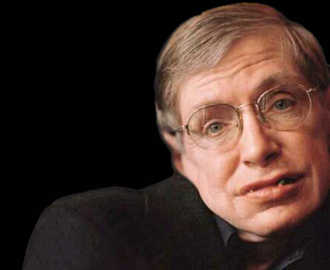
Some of you may have seen a news article circulating every major news outlet.  With provocative titles such as “God did not create the universe, says Hawking,” and “Why God Did Not Create the Universe,” one would expect to find some new scientific discovery/argument proving that the universe is capable of creating itself – no God needed.  After reading the articles, however, that expectation will quickly turn into disappointment.

Stephen Hawking is probably the most famous physicist alive.  While he is clearly a brilliant man, his case for the sufficiency of natural processes to account for the origin of the universe is truly embarrassing.  Consider the following claim: “Because there is a law such as gravity, the universe can and will create itself from nothing.  Spontaneous creation is the reason there is something rather than nothing, why the universe exists, why we exist.  It is not necessary to invoke God to light the blue touch paper and set the Universe going.”

Where to begin!  First, while Hawking is attempting to explain how something could come from nothing, he only explains how something (the universe) comes from something else (physical laws, namely gravity).  True nothingness is the absence of any and all existents, including physical laws.  So from whence come the physical laws?

(more…)

Many non-theists object to the concept of miracles on the grounds that miracles would require a violation of the laws of nature.  They reason as follows:

P1  The laws of nature cannot be violated
P2  A miracle would violate the laws of nature
C    Miracles are not possible

Both premises of this argument are flawed, and for the same reason: the laws of nature are construed as mind-independent, physical realities possessing causal properties.  I think this conception of natural laws is mistaken.

(more…)

Elaine Howard Ecklund has written a book titled Science vs Religion: What Scientists Really Think.  A summary of her research findings was published in USA Today (July 19, 2010): “Myths Widen the Science-Religion Divide.”

Ecklund surveyed 1,700 natural and social scientists and conducted interviews with 275 of them.  She found that: (more…)

Atheists love to assert that there is no scientific evidence for the existence of God.  I have a couple of thoughts on this.  First, how do they come to this conclusion?  Generally speaking, this conclusion follows from their definition of science.  They define science as the search for naturalistic explanations for natural phenomena.  If science is defined so as to a priori exclude agent causation as a valid explanation for any natural phenomenon, then it is no surprise that “science” will never yield any evidence for the existence of God.  It can’t by definition.  To put it in the form an argument, the atheist reasons as follows:

(more…)

Darwinists routinely put forth the fossil record as the best, most objective evidence for evolution (common descent).  They find it so compelling that they think it proves evolution happened, even if they cannot be sure of the mechanism by which it happened.  As Jerry Coyne writes in Why Evolution is True, “[T]he issue is not whether macroevolutionary change happens – we already know from the fossil record that it does – but whether it was caused by natural selection, and whether selection can build complex features and organisms.”[1]

Critics of Darwinism have often responded by asking a rhetorical question: “How do you that life evolved if you do not know how life evolved?”  In the absence of a plausible mechanism to propel macroevolutionary changes in organisms, how can Darwinists be so sure that organisms have experienced macroevolutionary changes?  As Sean McDowell wrote:

I am amazed at how frequently Darwinists admit that there is debate about HOW life evolved but not THAT life evolved. … If there is debate about the how of evolution, then what right do Darwinists have to claim that we evolved with such confidence…? Evolution is a theory specifically about how life developed. The significant debate (and lack of evidence) for the mechanism of evolution undermines the theory itself.[2]

On the face of it this line of reasoning is compelling.  I myself found it persuasive for quite some time.  When I came to examine the logic a little more deeply, however, I found the response to be fallacious.  To see the fallacy let me spell out the response in syllogistic form:

(more…)

What is the universe?  Is the universe just a nominal device to refer to the sum of all physical things, similar to the way “team” does not refer to an actual thing but merely to the sum of all players, or does “universe” refer to something above and beyond the sum of all physical things?

The chimp Y chromosome has now been fully sequenced, and the results are astounding.  A study in Nature reveals that the chimp Y chromosome is radically different than the human Y chromosome.[1]  The chimp’s Y chromosome has only two-thirds the number of distinct genes/gene families, and 47% of the protein coding regions compared to its human counterpart.  Furthermore, more than 30% of the entire chimp Y chromosome has no counterpart in humans.  Even those segments that do have counterparts in the human Y chromosome are often located in different regions of the chromosome. 

One the lead researchers, David Page, told Nature News that “it looks like there’s been a dramatic renovation or reinvention of the Y chromosome in the chimpanzee and human lineages.”[2]  Of course, this reinvention has to be explained in terms of common descent, so they speculate that the chimp Y chromosome experienced a loss of DNA, while humans experienced a gain.  The surprise of the scientists involved, however, demonstrates that this find is counter-intuitive to Darwinian expectations.

HT: Evolution News & Views


[1]Jennifer F. Hughes, David Page, et al, “Chimpanzee and human Y chromosomes are remarkably divergent in structure and gene content”; Nature 463, 536-539 (28 January 2010) | doi:10.1038/nature08700; Received 3 August 2009; Accepted 24 November 2009; Published online 13 January 2010; available from http://www.nature.com/nature/journal/v463/n7280/full/nature08700.html; Internet; accessed 30 April 2010.
[2]Lizzie Buchen, “The Fickle Y Chromosome”; available from http://www.nature.com/news/2010/100113/full/463149a.html; Internet; accessed 30 April 2010/

(Note: Read Part 3a of the series before reading this post)

Viruses

The HIV virus mutates at the evolutionary speed limit: 10,000 times faster than most cells such as malaria.[1] And its genome is rather small (nine genes versus thousands in malaria).[2] Its small size combined with a short generation time (1-2 days) and super-rapid mutation rate means every single nucleotide in the HIV genome will mutate 10,000 to 100,000 times in every infected person every day, and thus double point mutations like the one that made malaria immune to Chloroquine occur in every person every day.  In fact, over the past several decades every possible combination of up to six point mutations has occurred in HIV somewhere in the world.  If RM drives macroevolutionary changes in organisms, then we should observe macroevolution in the HIV virus since it experiences more mutations than any other organism.  But we don’t.  HIV has run the gamut of all possible mutations to its genome, and yet with all of these mutations in a population of 100 billion billion viruses, no new cellular machinery has been created, and no new organism has developed! HIV is still HIV.  It still contains the same number of proteins, still performs the same function, and still binds to its host the same way it always has.  There have been no significant biochemical changes.  Even gene duplication has failed to produce any new biological information.

(more…)

(Read parts 1 and 2 in the series)

The heart of the neo-Darwinian synthesis is that evolution advances via the process of natural selection working on random mutations (RM+NS).  Natural selection itself lacks any creative power – it only eliminates what doesn’t work.  Eliminating the unfit, however, does nothing to “explain the origin of the fit”![1]  The burden falls entirely on RM to create the biological novelties required by Darwinism to drive evolution forward.  It must be asked, then, whether RM has the creative power required by Darwin’s theory.  Can RM produce the new biological information necessary to drive evolution forward and explain the diversification of all life?  What exactly can RM do? 

When the neo-Darwinian synthesis was set forth some 70 years ago, answers to these questions could not be ascertained.  While the theory was plausible on a conceptual level, there was no real way of testing its biological plausibility.  Over the last 30 years, however, we have been able to observe both the power and limits of RM+NS at the biological level.  What have we discovered?  We discovered that while RM can produce variability within an organism, it is not capable of producing the kind of changes required by Darwin’s theory.  RM is severely limited in what it can accomplish. 

(more…)

(For part 1 in the series, click here)

If macroevolution occurs, it must do so at the biochemical level.  Additional genetic information is needed to build the new proteins and biological systems required for large-scale changes.  Where does the new biological information come from?  Mutations?  No.  Point mutations such as inserting, inverting, or substituting nucleotides in existing genes cannot increase the information content of DNA even if they occur in protein-coding regions, and even if the mutations are beneficial to the organism.  At best they can only replace existing information/function with different information/function, so that the overall information content is merely preserved.[1]  For macroevolution to occur a net increase of information is required, not just a change in existing information.

The origination of new genetic information requires new proteins, which requires hundreds of additional nucleotides arranged in a highly specified order.  How likely is it that chance processes can get the job done?  Next to none.  The chances of producing a functional amino acid sequence of a mere 150 nucleotide bases (which would sequence one of the smallest proteins) is 1:10167.[2]  To put this number in perspective, consider that there have only been 10139 events in the entire universe since the Big Bang.[3]  So even if every event in the history of the universe was devoted to building a single functional protein, the number of sequences produced thus far would be less than 1 out of a trillion trillion of the total number of events needed to give it even a 50% chance of success!  Any reasonable person must conclude, then, that it is beyond the reach of chance to create even the smallest amount of new biological information in an organism.  Add to this the fact that many new proteins are needed to produce new biological systems, and the scenario becomes all the more fantastical.  If chance alone cannot produce the gene for even one protein—yet alone many—macroevolution becomes impossible.

(more…)

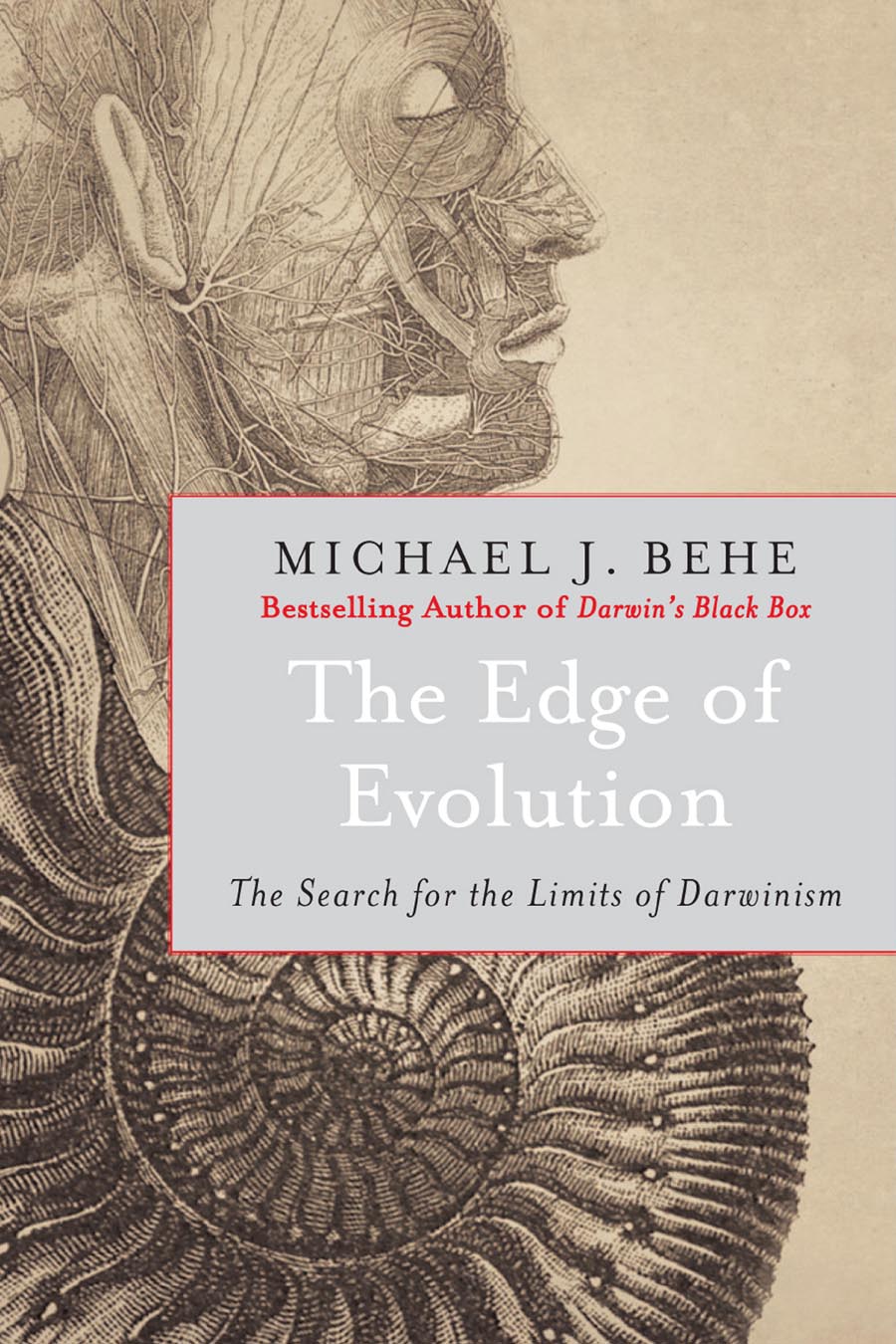
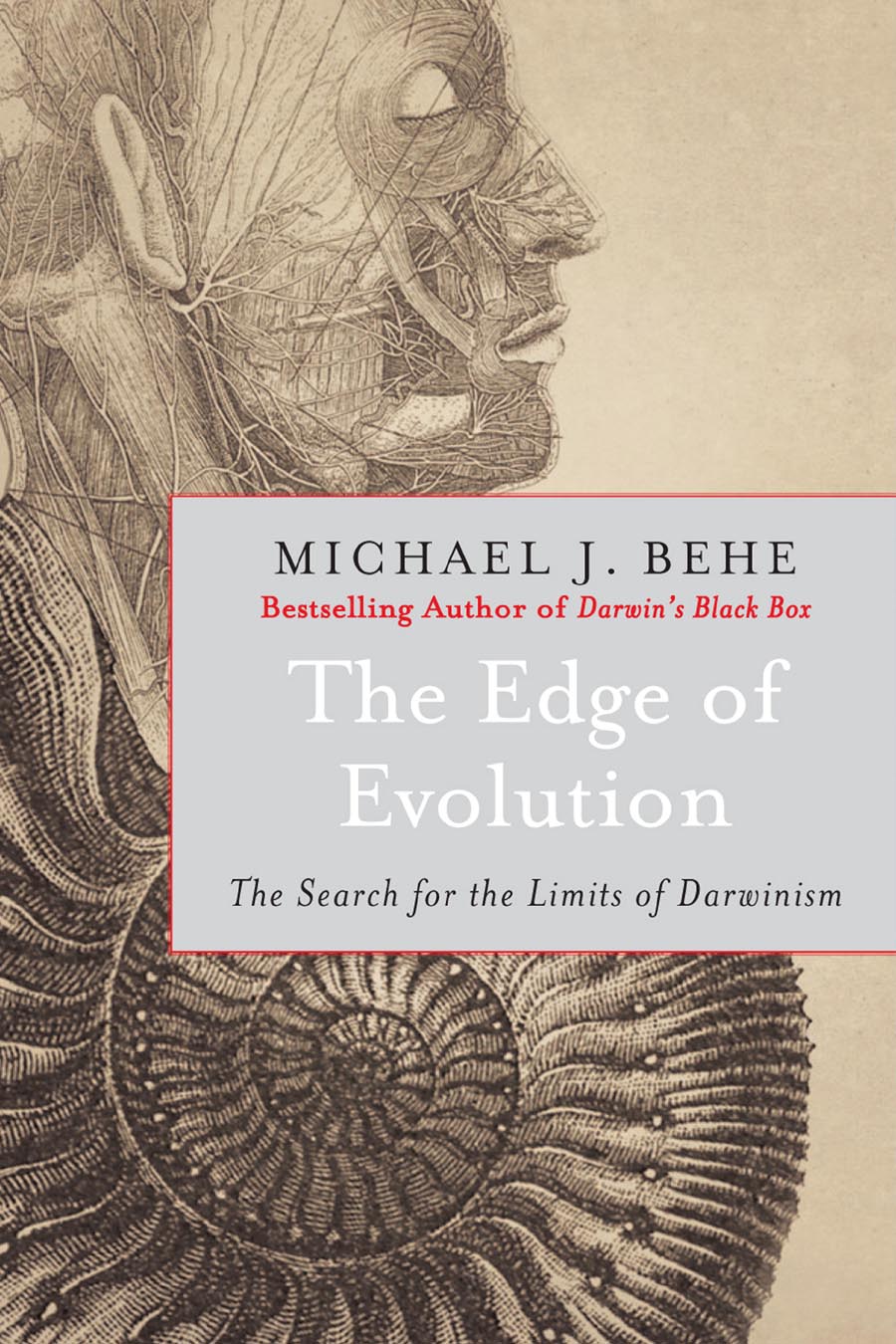
Several months ago I blogged my way through Stephen Meyer’s Signature in the Cell, summarizing his devastating critique of naturalistic origin-of-life theories and powerful argument for the intelligent design of the first life (parts 1, 2, 3, 4, 5, 6, 7a, 7b).  But what about the proliferation of life?  Can a fully naturalistic theory like neo-Darwinian evolution account for the proliferation and variety of life once it began?  To answer this question I am going to summarize Michael Behe’s key argument against a Darwinian account of evolution in The Edge of Evolution (paperback only $6 through Amazon right now, regular $15). 

What Needs to be Explained

To properly evaluate Darwin’s theory of the evolution of life, we must clarify what is meant by “evolution.”  Evolution can refer merely to small biological changes within a species over time.  Called “microevolution,” or the special theory of evolution, this definition of evolution is relatively uncontroversial and has been confirmed empirically (e.g. drug resistance in bacteria, changes in the size of finch beaks, etc.).  Evolution can also refer to large-scale biological changes[1] that, over time, transform one species into another into another ad infinitum.  This kind of evolution is called macroevolution, or the general theory of evolution.  Darwin’s theory entails this latter definition, and thus proof for his theory requires evidence that there are no natural limits to the amount of variation an organism can experience.

(more…)

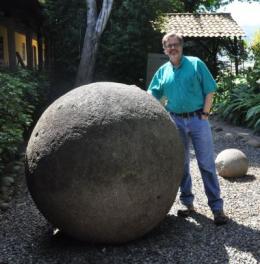
John Hoopes of the University of Kansas claims to be a scientist, but it is clear to me that he’s no scientist!  How do I know?  Because he has concluded that some intelligent designer is responsible for producing 300 of these:

Surely he knows scientists cannot appeal to intelligent agency as an explanation for natural phenomenon.  Besides, there is no need to appeal to any intelligent designer.  Natural processes such as wind and water erosion are fully capable of producing the spherical shape of these rocks over billions of years.  To appeal to some “rock-designer-of-the-gaps” is to give up on science.  Currently, we may not know the exact pathway by which nature produced these spherical rocks, but given the past successes of science, I am sure we will discover it in the near future.  

If these rocks are the products of some intelligent designer as Hoopes claims, then let him tell us who designed the designer.  Guess what, he doesn’t know!  Clearly, then, these rocks can’t be designed.

In the human genome, only 1.5% of our 3.2 billion base pairs of DNA codes for proteins.  For a long time evolutionists though the other 98.5% was “junk” DNA: DNA that was preserved in the genome, but had no function; the byproduct of billions of years of aimless mutations.  Over the past seven years, however, scientists keep discovering more and more function for this “junk.”  For example, it has been discovered that ~90% of our genome codes for RNA products.  Junk DNA also:

  1. Regulates DNA replication
  2. Regulates transcription
  3. Marks sites for programmed rearrangement of genetic material
  4. Influences the proper folding and maintenance of chromosomes
  5. Controls the interactions of chromosomes with the nuclear membrane
  6. Controls RNA processing, editing, and splicing
  7. Modulates translation
  8. Regulates embryological development
  9. Repairs DNA
  10. Aids in fighting disease[1]

And now, biologist Richard Sternberg has brought my attention to a very interesting find related to a specific kind of “junk” DNA called Short Interspersed Nuclear Elements (SINEs).  SINEs are mobile DNA that can insert themselves in various locations within the genome, and are thought to be functionless according to evolutionary biologists.

The rat and mouse are said to have diverged from one another 22 million years ago.  Since that time, each is thought to have experienced hundreds of thousands—if not millions—of SINE insertion events.  Given so many insertion events, we would expect for the location of SINEs to be very different in the mouse genome than in the rate genome (in the same way we would expect a moon that split in two 22 million years ago to evidence a very different asteroid bombardment pattern on its surface).  And yet, when we compare the location of SINEs in the mouse and rate genomes this is what we find:

They are virtually identical!  This is not what we would expect from a degenerative process like mutations and random insertions over millions of years.  We would expect radical divergence, not a nearly-identical pattern.  While the SINE sequences are not the same in the rat and mouse genomes, the placement of the SINEs is nearly identical (and they are concentrated in gene-coding regions of the genome).

How do we account for this pattern?  Can it be the result of a degenerative process?  Surely not.  Patterns are indicative of design, and hence purpose.  Contrary to the expectations of evolutionary biologists, SINEs do have purpose and function, even if we are only beginning to understand them.


[1]Stephen C. Meyer, Signature in the Cell: DNA and the Evidence for Intelligent Design (New York: Harper One, 2009), 404-7.

« Previous PageNext Page »