
Theistic Arguments


The final argument for God’s existence in my podcast series, Does God Exist?, is a version of the existential argument. I argue that our deepest existential longings can only be explained by and satisfied by a theistic God: the desire for meaning and purpose in life, objective morality, immortality, free will, and love. People must either (1) believe there is a God who can satisfy our deepest longings or (2) believe there is no God and that our deepest longings are misguided and can never be satisfied.

The final episode just got published today. Check it out at https://thinkingtobelieve.buzzsprout.com, or wherever you get podcasts.
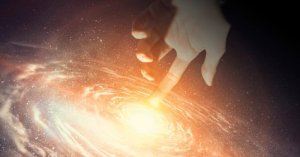
The design argument for God’s existence that I presented in my “Does God Exist?” podcast series could be succinctly summarized as “the universe looks designed because it was designed.”

This could be fleshed out a bit more as follows: “Our universe exhibits a level of specificity and complexity that cannot be explained by chance or physical necessity, but only by a designing intelligence who transcends the universe and intentionally designed the universe to be inhabited by advanced lifeforms such as ourselves.”

I will offer one final version with a bit more detail: “There are many features of our universe that have to be just right for intelligent life to exist, including the initial conditions. The level of precision involved defies human comprehension. It can’t be explained by pure chance and there’s no reason to think it is due to physical necessity, so the best explanation is that these features were designed by a transcendent source. Design requires a designer > A designer requires intelligence > Intelligence requires a personal being = God.”

I just wrapped up my podcast discussion of Aquinas’ Five Ways by examining his Fourth and Fifth Ways. The Fourth Way argues that the grades of perfection we observe in the world can only be explained by the existence of a maximally perfect being. The Fifth Way argues for the existence of an intelligent being who guides everything towards their natural ends.

Check it out wherever you get your podcasts, or at https://thinkingtobelieve.buzzsprout.com. Feel free to comment on the episode here as well.

There are so many ways to summarize the moral argument for God’s existence that I have a hard time boiling it down to just one or two. The most concise summary of the deductive moral argument for God’s existence could be stated as follows: “If objective morality exists (and it does), then God exists.”

This summary is so concise, however, that it does little more than state the logic of the argument. Why think that only God can explain morality? Here is a concise summary that also attempts to explain the connection in a bit more detail: “If God didn’t exist, there would be no moral laws and no moral obligations. But all of us know that moral laws exist and that we have an obligation to obey those laws, so God must exist. Laws require law-givers and obligations require persons to be obligated to. God is the source of moral values and the One to whom we are obligated.”

(more…)

My episode on Aquinas’ Third Way is now live. This is his argument from contingency. Aquinas argues that the existence of contingent beings can only be explained by the existence of a necessary being whose essence is identical to His existence.

Listen wherever you get podcasts, or at https://thinkingtobelieve.buzzsprout.com.

I published my episode on Aquinas’ Second Way for God’s existence on Friday. Aquinas argues that a causal series can only be explained by a first, uncaused cause who is the source of all causation (which we call “God”).

I also covered a related argument (the existential proof) that Aquinas offers in a different work. The existential proof argues that things whose essence is distinct from their existence can only be explained by a being whose essence and existence are identical; i.e. a being who just is existence itself.

Give the episode a listen (https://thinkingtobelieve.buzzsprout.com) and feel free to comment on the arguments presented on this blog post.

As I continue to examine additional arguments for God’s existence, I have finally come to Thomas Aquinas’ Five Ways. The first episode on the First Way went live today.

The First Way is Aquinas’ argument from motion. Aquinas argued that only God can explain why things change. Change can only be explained by a First, Unmoved Mover; i.e. a Being who is the ultimate source of all change, but is itself not changed by anything.

Check out this episode (and the ones to follow) wherever you get your podcasts, or from https://thinkingtobelieve.buzzsprout.com

Here is my most concise summary of the contingency argument for God’s existence: Things that don’t have to exist, but do, can only be explained by something that does have to exist.
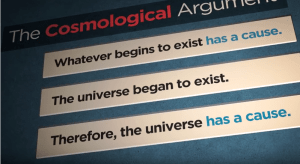
Here is a version that is more fleshed out:

Things that did not have to exist, but do exist (contingent beings), require an explanation for why they exist, and that explanation must be found in some external cause. If everything that exists had an external cause, however, then there would have to be an infinite number of beings and an infinite regress of causes, and ultimately there would be no explanation for why anything that exists, exists. To explain why things that did not have to exist do exist, there must be at least one being that must exist and cannot not exist. This necessary being has being in Himself, and gives being to all other contingent beings.

(more…)

I’ve been discussing the evidence for God’s existence on the podcast for something like seven months. I’ve gone in-depth on a number of important arguments for God’s existence. I just finished up the teleological argument and planned to shift my focus to addressing objections to theism or starting a new series on the resurrection. However, there are still a number of important arguments I want to share, so I’ve decided to continue on with the evidence for God’s existence with a good number of additional arguments including Aquinas’ Five Ways, the ontological argument, the argument from consciousness, the origin of life, free will, human value, etc. I will explore these arguments at a higher level.

(more…)

Here is a very concise version of the Kalam Cosmological Argument:
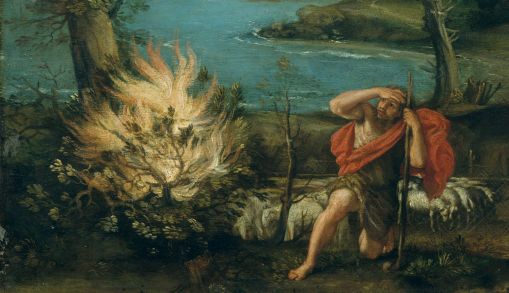

Things that begin to exist require an external cause. The universe began to exist, so it requires an external cause. As the cause of all physical reality, the first cause cannot itself be part of physical reality, but must be immaterial, non-spatial, eternal, powerful, and personal, which is a basic description of the theistic God.

Here is another way of presenting the gist of the argument without the technical-sounding language:

(more…)

Here is a summary of the argument from personal experience:

I have experienced God. I have no reason to doubt that my experience was veridical. And given the religious, social, and temporal context of this experience, it is most reasonably interpreted as an experience of the divine. Since I could not experience God if God does not exist, God must exist.

Now that I have concluded my podcast discussion of six major arguments for God’s existence, I’m going to post short summations of each argument. Today’s summation is for the argument from the impossibility of nothingness:

If there was ever a time when nothing existed, there would still be nothing because nothing has no potential to become something. Something exists, however, so we know that something must have always existed. The universe is not that something since it originated at the Big Bang, so the eternal “something” must transcend the universe. The eternal something must be immaterial, spaceless, personal, and eternal, which is the basic description of a theistic God.

Here is another, more conversational way of putting it:

(more…)

The sixth argument I offer for God’s existence in my “Does God Exist?” podcast series is the teleological argument, or argument from design. Teleological arguments affirm that there is evidence of design in the universe, and this design is best explained by theism.
I just posted my first episode in the mini-series, which is a 1-N-Done episode summarizing a form of the teleological argument based on the fine-tuning of the initial conditions and physical constants of our universe. You can listen to it wherever you get podcasts, or from https://thinkingtobelieve.buzzsprout.com.
You can also read a paper I have written on the topic, available at the link below:

Fine-Tuned for Life: A Teleological Argument for God’s Existence

The paper is 29 pages long, so if that’s more than you have time to read, I’ve also written a couple of shorter versions of the paper that will be easier to digest.

Fine-Tuned for Life: A Teleological Argument for God’s Existence – A Short Case (7 pages)

Fine-Tuned for Life: A Teleological Argument for God’s Existence – A Very Short Case (4 pages)

Also, check out Dr. William Lane Craig’s video on the teleological argument:

I just published my last podcast episode in my mini-series on the moral argument for God’s existence (you can listen to the series at https://thinkingtobelieve.buzzsprout.com, or wherever you get podcasts). That means I have updated the original post to include my paper on the topic. Give it a read. I have different papers of varying lengths for those who don’t have a lot of time to read.

And in case you missed it, I also posted my papers for the Kalam and contingency arguments a while back too.

Next week I’ll begin a new mini-series on the fine-tuning argument. Stay tuned!

Currently, I am in the midst of my podcast series on the moral argument for God’s existence. This reminded me of an article that the famed atheist and philosopher of science, Michael Ruse, wrote in The Guardian back in 2010 as a response to the question, What can Darwin teach us about morality? Ruse’s multifaceted answer is intriguing, and at times, incoherent, but also quite enlightening about where atheistic and evolutionary thought leads.

Ruse admits that without God “there are no grounds whatsoever for being good.” Morality, he says, is just a matter of emotion and personal taste on the same level as “liking ice cream and sex and hating toothache and marking student papers.” But he’s quick to point out that just because there are no grounds for being good, it doesn’t mean we should be bad. While this is true insofar as it goes, it fails to answer the more important question: Why – in the absence of a moral law giver, and thus in the absence of any objective moral law – should anyone behave in ways traditionally thought to be “good” if and when it is in their own self-interest to do otherwise? In the name of what should they deny their own impulses? In the name of the Grand Sez Who?

(more…)

The fifth argument I offer for God’s existence in my “Does God Exist?” podcast series is the moral argument. Moral arguments argue from the reality of morality to the existence of God. If morality is real > God is real.
I just published the first of nine episodes, which is a 1-N-Done episode. In the series, I explain why God is the only adequate explanation for our moral experience, and then address the most common objections against the moral argument.

(more…)

The fourth argument I offer for God’s existence in my “Does God Exist?” podcast series is the Contingency Argument.

The contingency argument for God’s existence is a cosmological argument, but unlike the kalam argument, it does not require a temporally finite universe. The contingency argument holds that even an eternal universe requires a cause, and that cause is God.

(more…)

The third argument I offer for God’s existence in my “Does God Exist?” podcast series is the Kalam Cosmological Argument. This is my favorite argument for God’s existence.
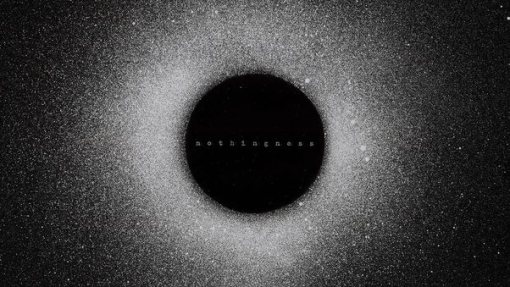
The argument reasons to God based on the temporal finitude of the universe. The essence of the argument is that temporally finite things require a cause for their existence. Since the universe began to exist in the finite past, it also requires a cause. An examination of the properties required of such a cause match the properties of the theistic God.

(more…)

The second argument I offer for God’s existence on the Thinking to Believe podcast is the Argument from the Impossibility of Nothingness. This is a lesser-known argument for God’s existence, but I think it is quite powerful.

Here’s the essence of the argument: If there was ever a time when nothing existed, there would still be nothing now because nothing has no potential to become something. And yet something exists, so there could never be a time in the past when nothing existed. Something must have always existed. The universe is not that something since physical reality came into existence at the Big Bang, so the eternal something must transcend physical reality. The eternal something must be immaterial, spaceless, and eternal, which is a basic description of God.

(more…)

As you know, I am working through a podcast series on the evidence for God’s existence. The first argument I examined is the argument from personal experience.

The essence of the argument is that if one has had a personal experience of God, they are justified in concluding that God exists unless they have good reasons to doubt the veracity of their experience. Believing in God based on personal experience is entirely rational, even if your personal experience is not sufficient to convince others that God is real.

You can listen to the episode wherever you get your podcasts (search for “Thinking to Believe” or “Jason Dulle”), or at https://www.buzzsprout.com/1958918/13496572.

I am also including the argument in written form. You can download the PDF here.

Argument from personal experience (updated 12/31/24)

Next Page »