Theology


The next time you hear someone say they are not a Christian because there are too many hypocrites in the church, here are a handful of tactful ways to respond: 

  1. What do you mean by “hypocrite?” (You want to make the point that a hypocrite is not merely someone who is morally imperfect, but someone who says he believes X but purposely fails to practice X)
  2. Yes, there are hypocrites in the church.  Jesus told us there would be.  But Jesus wasn’t a hypocrite.  What do you think about Jesus?
  3. Yes, there are hypocrites in the church.  Jesus told us there would be.  But there are also genuine Christians who are following Jesus.  Why do you choose to let the hypocrites dictate your response to Christianity rather than the true followers of Jesus?
  4. What does that have to do with you?  Couldn’t Christianity still be true even if a lot of confessing Christians are bad people?  The question God is concerned with is not what others do, but what you believe and how you live.
  5. Are you saying that because other people fail to live up to their ideals you don’t have to even try?  
  6. If you can’t tolerate all the hypocrites in church, why not follow Jesus independently of a local church body—to avoid all of those immoral Christians? (This will get them to tell you the real reasons they are not a Christian) 

Do you have any more to add to the mix?

It’s long been the conclusion of scholars that Esther and Nehemiah are the only books of the OT not represented among the Dead Sea Scrolls.  The May/June 2012 issue of Biblical Archaeology Review (BAR), however, reports that Norwegian scholar, Torleif Elgvin of the Evangelical Lutheran University College in Oslo, Norway, and Esther Eshel of Bar-Ilan University are publishing a collection of two dozen previously unknown DSS fragments from Cave 4, the Bar-Kokhba caves, and Wadi ed-Daliyeh in a book titled Gleanings from the Caves (T&T Clark publishers).  If this checks out, then Esther would remain the only book not found in the DSS.  Of course, if Nehemiah and Esther were written on the same scroll as most scholars believe, then while we may not have an extant copy of Esther from the DSS, there is good reason to believe the text was present in the community as part of the Nehemiah scroll.

What do you think of the pericope of the rich man and Lazarus in Luke 16?  Do you think it is a parable or a historical event?  Why?

In the early 20th century German theologian Walter Bauer proposed that Christian orthodoxy is a historical fiction.  Heretics were not those who departed from the original teachings of Jesus and the apostles, but those on the losing side of a political battle for dominance by one group of Christians over another.  Orthodoxy represents the side who won, not the side of those who remained faithful to Jesus’ teachings.  There is no such thing as Christianity per se, but rather a collage of various Christianities.

While Bauer’s proposal was severely critiqued by other scholars and joined the ash-heap of theological history, as is the case with most bad ideas, someone comes along later, picks up the idea, brushes off the ashes, repackages it, and tries to sell it again.  Such is the case with the Bauer thesis.  Today it is being peddled by people such as Bart Ehrman and Elaine Pagels.  Speaking to a postmodern generation that prizes diversity, detests absolute truth claims, and thinks truth claims are an attempt to gain power and exert control, they have found a receptive audience for their pluralistic view of Christian origins and history.  For them, the only true heresy is orthodoxy itself: the claim that there is one enduring truth, and one Christian faith that was once and for all delivered to the saints.

(more…)

That’s the claim Daniel Wallace made during his most recent debate with Bart Ehrman at UNC Chapel Hill.  In his summary of the debate at Parchment and Pen, Wallace writes:

We have as many as eighteen second-century manuscripts (six of which were recently discovered and not yet catalogued) and a first-century manuscript of Mark’s Gospel! … Bart had explicitly said that our earliest copy of Mark was from c. 200 CE, but this is now incorrect. It’s from the first century. I mentioned these new manuscript finds and told the audience that a book will be published by E. J. Brill in about a year that gives all the data. … I noted that a world-class paleographer, whose qualifications are unimpeachable, was my source.”

Later he described the newly discovered manuscript as “just a small fragment.”  Nevertheless, if this is a manuscript copy of Mark’s gospel, and if it can be reliably dated to the 1st century AD, this would be the greatest NT manuscript find to date, surpassing even p52 (a small portion of John’s Gospel, dated to ~125 AD)!  We’ll have to wait and see.

UPDATE 2/16: Dr. Wallace has written specifically on this issue on the Dallas Theological Seminary website and added a tiny bit more information by saying “it was dated by one of the world’s leading paleographers. He said he was ‘certain’ that it was from the first century.” In the comments I have also quoted Dr. Ben Witherington III regarding the owner of the fragment, and a bit more detail about it.  Witherington made it sound as if it is much more than a “small fragment.” I guess we’ll have to wait until next year to see how small is small.

In the latest edition of Philosophia Christi[1], Jerry Walls argues that no Christian should be a theological determinist.  What is a theological determinist?  It’s someone who believes that God’s sovereignty extends meticulously to every aspect of the world, including human “choice.”  The problem with determinism is that it eliminates human freedom since there are factors external to humans sufficient to determine our choices, such that we could not do otherwise (or even want to do otherwise since even our desires are the product of God’s sovereign acts).

Most theological determinists are compatibilists.  Compatibilists think determinism can be reconciled with free will: If one acts according to their desires, then their choices are free.  But this is a veneer.  At best this shows that we may feel like we our will is free, even though it is not.  The fact remains that both our desires and our choices are determined by God wholly independent of our own volition.  It should be no surprise when our desires match our actions when God has determined both.  Given theological determinism, there can be no freedom of human will, despite attempts by some to evade the obvious.

(more…)

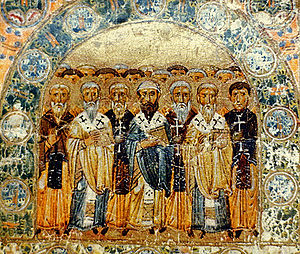
Have you ever heard it said—or said it yourself—that if all the Bibles and Biblical manuscripts in the world were destroyed tomorrow, we could reconstruct all but 11 verses of the NT from the writings of the Ante-Nicene Church Fathers alone?  Recently, while listening to an interview featuring NT textual critic, Daniel Wallace, I learned that this claim is demonstrably false.[1]  Unfortunately this has been repeated in one form or another by many individuals, including prominent NT textual critics.

Apparently this misinformation began to circulate widely in 1841 with the publication of Robert Philip’s memoir of John Campbell titled The Life, Times, and Missionary Enterprises of the Rev. John CampbellThe Life contains a written anecdote of Campbell, who was rehearsing a story told to him by Reverend Dr. Walter Buchanan pertaining to the research David Dalrymple conducted into the church fathers’ citations of the NT.  According to Campbell, Buchanan and Dalrymple were both in attendance at a literary party when someone raised the question: “Supposing all the New Testaments in the world had been destroyed at the end of the third century, could their contents have been recovered from the writings of the three first centuries?”  No one had an answer.  According to Campbell, two months later Dalrymple contacted Buchanan and reported to him that he had taken up the question raised at the party, researched the writings of the church fathers, and had an answer to the question.  According to Campbell, Buchanan told him that Dalrymple told Buchanan he discovered that all but 7 or 11 verses (Dalrymple could not recall the exact number) of the NT were quoted in the early church fathers.

(more…)

I recently taught on the historical reliability of the Gospels and the historical evidence for the resurrection of Jesus.  One of the areas I focused on was the apparent contradictions and errors in the Gospels, demonstrating how most of these are easily resolvable, and thus not contradictions/errors at all.  But not all Biblical difficulties are so easily resolved.  In fact, there are some for which I do not presently have a good answer.  If you are a careful reader of Scripture, I’d bet there are Biblical difficulties you have encountered for which you lack a good answer as well.  What are we to do with such difficulties given the doctrine of Biblical inerrancy?  What should our posture be toward the Christian faith once having discovered irresolvable difficulties in the text?

Some individuals respond by concluding that Christianity is not true.  Some go so far as to conclude that God does not even exist!  I submit to you that these responses are ill-founded; the result of elevating the doctrine of inerrancy to a status it should not be accorded in one’s theological taxonomy.  While the Bible is an indispensable aid to our faith and Christian growth, an inerrant Bible is not necessary for the truth of Christianity, and thus the doctrine of inerrancy—and Bibliology in general—should be subservient to more central doctrines such as the resurrection of Jesus in our theological taxonomy.  Let me explain.

(more…)

Mk 1:10  And just as Jesus was coming up out of the water, he saw the heavens splitting apart [schidzo] and the Spirit descending on him like a dove. (NET)

Mk 15:37-38  But Jesus cried out with a loud voice and breathed his last. 38 And the temple curtain was torn [schidzo] in two, from top to bottom. (NET)

Mark seems to be making a connection between the response of heaven at Jesus’ baptism and the response of heaven at Jesus’ death through his use of the Greek term schidzo (meaning split, divide, or tear) — a connection that is obscured by most translations because they translate the word differently in each of the two verses.  At the beginning of Jesus’ ministry the heavens were opened to Him and He was personally anointed by the Holy Spirit from the Father.  At the end of His ministry, however, it was not the heavens that were opened, but the Holy of Holies itself, signifying that the presence of God is no longer confined to a specific locale, or available solely to the high priest. Now all have access to the presence of God because of Jesus.

J.P. Moreland rightly asks, Why is it that if you want to be a chemist or teach literature you have to have training, but if you want to be a minister all you need is to feel a call on your life? Where is the need for knowledge?

Think about it this way. Would you seek the services of a physician who only had a master’s degree in medicine? Would you allow a physician who had no training at all in medicine, but merely felt the “call” to be a doctor, to operate on you? No, because your health is too important to entrust to someone who lacks the knowledge necessary to fix your body. Why then, do we think it is acceptable for ministers of the gospel to “operate” on people’s eternal souls—which is much more important than operating on temporal bodies—with just a call to ministry? Jesus’ disciples sat at His feet for 3+ years before they entered into full-time ministry. Theological education (whether formal or not) should be viewed as a precondition for ministry. Too much is at stake for anything less. Attempting spiritual surgery without sufficient knowledge can lead to others’ spiritual death rather than life. Let’s get educated!

Frank Beckwith has made the observation that when people cannot refute your argument, they often trump it with spirituality. You know the kind of thing I’m talking about. You state your reasons for believing P rather than Q, and your Christian brother responds by saying, “I know that’s not true because God told me Q is true.”  Or your Christian sister responds, “You only believe that because you are carnal.” Don’t fall for this cheap tactic.

You could respond by saying to your brother, “Actually, God told me P is true, so I know you didn’t hear from God.” And to your sister you can respond, “Ok, I’m carnal. So can you tell this carnal brother of yours why my argument is wrong, and why I should believe your position/interpretation?”

How do we know God is good rather than evil?  After all, there is a mix of both good and evil in the world.  Which one is God responsible for?  As Christians, we look to the Bible to tell us about God’s moral nature, but what if we didn’t have Scripture?  Could we discern that God is good from natural theology alone?  Yes, and here’s how.

Most people would agree that the concept of God is best described as “the greatest conceivable being.”  If we posited a being, Q, as God, and yet we could conceive of another being, X, who is greater than being Q, then being X—not being Q—must be the true God since nothing can be greater than God.  If God qua God is the greatest conceivable being, then He must be omnibenevolent (OB) because it is greater to be good than it is to be evil, and it is greater to be all-good than it is to be partially good.  So if there is a God, He must be OB.[1]

(more…)

Greg Koukl recently made a great observation about “Christians” who are dismissive of the Bible in favor of their own ideas and revelations. Such individuals have a low view of the Bible’s authority because it was written by man, and man can get things wrong. Not only does this fail to take the Bible’s claim of divine inspiration seriously, but it fails to recognize that since they are also human, their thoughts and revelations may be mistaken as well! Other than personal bias, what reasons do they have for thinking previous holy men of God couldn’t get it right, but they can?

I have a theory about racism.  While I know racism is real, I think a lot of what passes for racism is actually a misdiagnosis of ethnocentrism (the idea that one’s culture is superior to others).

Each culture has its own unique worldview, values, and practices.  Humans tend to be suspicious of worldviews/values/practices that differ from their own.  In some cases, we can even despise all or some aspect of certain cultures (often for illegitimate reasons such as “I had an experience in which a person of X race did me wrong, therefore I don’t like people of X race”).  Many times, the skin color of the people in the culture we despise differs from our own as well.  But is the color of their skin the cause of the animosity?  No, I don’t think so.  The person from culture A with skin color B despises people from culture X with skin color Y, not because he hates skin color Y, but because skin color Y serves to identify the people who belong to the culture who thinks/acts in ways he despises.  In other words, race is incidental to the animosity, not the source.

(more…)

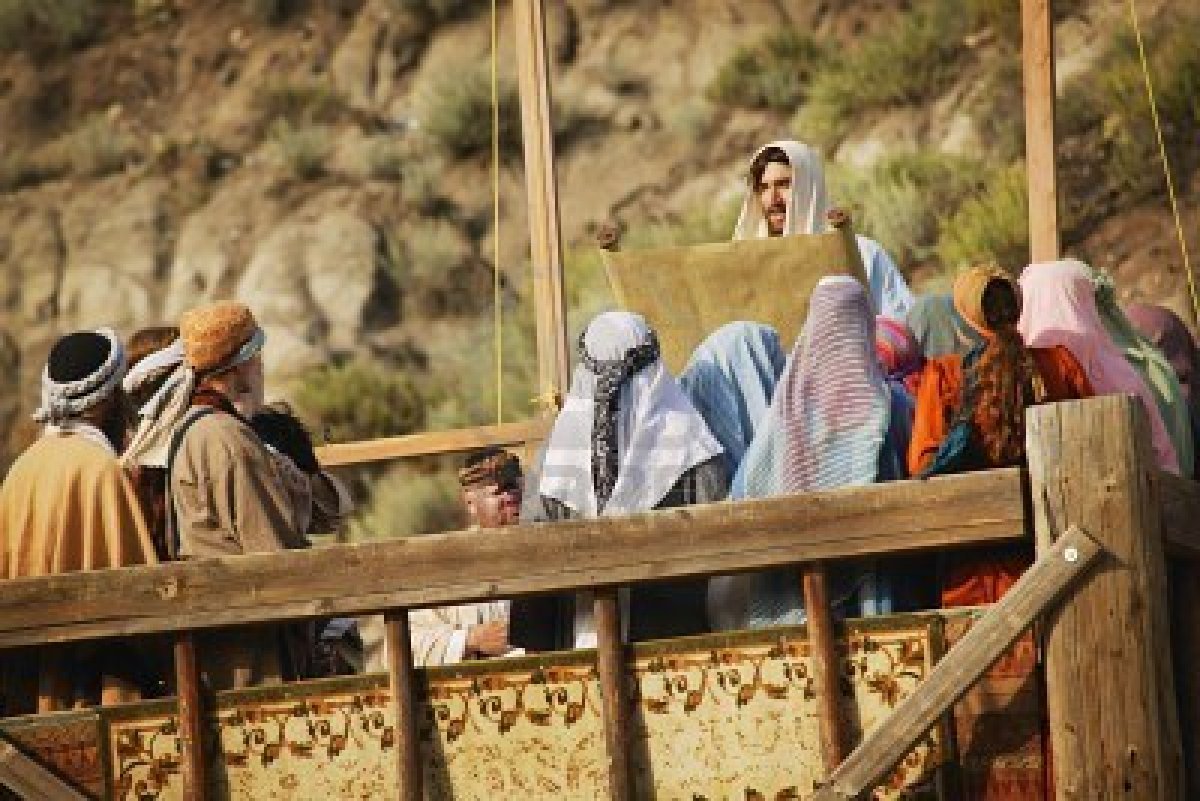
Ben Witherington has written a short series of blog posts (part 1, 2, and 3) on the question of literacy in first-century Israel.  He makes an important point that is often overlooked in these discussions: There is a difference between being able to converse in a language, read a language, and write a language.  By today’s standards, literacy in a language refers to the ability to both read and write a language.  But if we apply this standard to antiquity—particularly to the Jewish people— we will minimize the number of people who were truly literate since many could read, but few could write.

Could Jesus read?  Yes.  The Jewish literacy rates were higher than the Greco-Roman world because of the Jews’ strong emphasis on male education for purposes of Torah-reading.  Furthermore, Jesus was not a peasant.  His family were artisans, and they owned land.   Evidence that Jesus could read is as follows:

That was the headline of the Daily Mail.  While I am fully aware that not all conservative Christian teens practice abstinence, I was stunned at the idea that there is virtually no difference in the rates of premarital sex between Christians and non-Christians.  According to Relevant magazine, a 2009 study revealed that 80% of evangelicals between 18-29 years of age had sex, compared to 88% of their peers.

Do you find this statistic shocking?  Do you have reason to doubt the validity of these findings?  Assuming the stats are accurate, I’m not too surprised myself.  In a sex-crazed culture like our own, it takes a lot of moral fortitude to abstain from sex before marriage.  And when you couple that with a culture that discourages young adults from marriage until their late 20s or early 30s, it’s no wonder so many young Evangelicals are succumbing to this sin.

UPDATE: Kevin DeYoung provides some good reasons to trust the accuracy of this report.

There has been an on-going and interesting exchange between Sam Storms and Michael Patton at Parchment and Pen on the issue of the charismata.  Storms has written a good article giving 10 bad reasons for being a cessationist and 10 good arguments for being a continuationist.  Patton has responded with his case for cessationism.  Unlike most traditional cessationists, Patton doesn’t claim that the Bible teaches cessationism per se.  He admits that his primary reasons for holding to cessationism are experiential in nature: both his own lack of experience of the charismata, as well as the general lack of the charismata throughout church history.  He calls this a de facto cessationism.  This differs from traditional cessationism in that it claims the gifts have ceased as a matter of fact, rather than because of a matter of necessity.  While he finds Biblical support to show reasons for this de facto cessation of the charismata, he does not believe the Bible demands that the charismata cease.

Storms also has a great treatment of tongues, clearing up many of the misconceptions about the gift, as well as demonstrating how so many of the non-charismatic criticisms of the gift miss the Biblical mark.  Patton also addressed tongues, which Storms’ responded to.  I would highly recommend reading through the dialogue.

Hitler was responsible for killing approximately 11 million people as part of his Final Solution (of which the Holocaust was a part).  He is railed against as one of the most evil men in the history of the world, and rightly so.  Anyone with any moral sense would agree that the world would have been a much better place had Hitler never been born.  What if you had the ability to make that sentiment a reality?

Imagine for a moment that you discovered a way to travel through time, making it possible for you to ensure either that Hitler never be born, or that if born, he would not live long enough to rise to political power.  Under what circumstances do you think it would be morally justified to kill to prevent the Final Solution (and for those who can’t get past the emotional problem of what it would be like to personally pull the trigger, assume that you could send someone else to perform the deed)?:

  1. (more…)

A team of artists, medievalists, theologians, biblical scholars, and art historians headed up by Donald Jackson “brought together the ancient techniques of calligraphy and illumination with an ecumenical Christian approach to the Bible rooted in Benedictine spirituality” to produce an illuminated, hand-written Bible (New Revised Standard Version).  Such an undertaking has not been made in centuries.

Six scribes have been at work writing in a modern calligraphic script using hand-cut quills on calfskin vellum.  Each page is 3’ tall and 2’ wide.  Work began in 2000.  The final volume of seven volumes (includes the Pauline and catholic epistles and Revelation) was just recently completed on May 9, 2011.  The final product is ~1150 pages, contains 775,000 words, and weighs 165 pounds.  The project cost about 8 million dollars.  You can get a facsimile for the small sum of $140,000! Put that on your Christmas wishlist!

(more…)

« Previous PageNext Page »