We’re still here, and Harold Camping is still a false teacher. I wonder what his excuse will be this time for his failed prediction.
Theology
Archived Posts from this Category
October 19, 2011
 In several previous posts (here, here, and here) I addressed the problem of differences in the Gospels, pointing out that what are often taken for contradictions are really just examples of 21st century Westerners trying to impose unrealistic and modern standards of historical reporting on ancient Easterners. Here is another one.
Mk 14:47-54 But one of those who stood by drew his sword and struck the servant of the high priest and cut off his ear. 48And Jesus said to them, “Have you come out as against a robber, with swords and clubs to capture me? 49 Day after day I was with you in the temple teaching, and you did not seize me. But let the Scriptures be fulfilled.” 50 And they all left him and fled. 51 And a young man followed him, with nothing but a linen cloth about his body. And they seized him, 52 but he left the linen cloth and ran away naked. 53 And they led Jesus to the high priest. And all the chief priests and the elders and the scribes came together. 54 And Peter had followed him at a distance, right into the courtyard of the high priest. And he was sitting with the guards and warming himself at the fire. (See also Mt 27:55-8)
In verse 50 we are told that “all” the disciples fled the scene, and yet in verse 54 we are told that Peter followed Jesus from a distance. Because both statements appear in the same Gospel no one complains. But what if Mark only said that all fled, and Luke only said that Peter followed Jesus from a distance? People would claim it was a contradiction. How could Peter be following Jesus if he fled the scene? Of course, the Christian would respond by trying to harmonize the two texts. We would propose that all of the disciples did flee the scene when Jesus was arrested, but Peter returned, and followed Jesus at a distance. Our critics would say we are being imaginative, and the only reason to offer such a harmonization is to avoid concluding that the Gospels are, indeed, contradictory. But when both statements appear in the same Gospels within just a few verses from each other, no one claims contradiction. And guess what, most would agree that Peter must have fled with the rest of the disciples, but returned shortly afterward to learn of Jesus’ fate. Indeed, that would explain why he followed from a distance. He did not want to be seen by the guards lest he be arrested too—the very reason he fled in the first place. I think this goes to show both how overblown the charge of “contradiction is,” as well as why harmonization is a perfectly legitimate enterprise when it comes to reading historical reports.
October 14, 2011
 People often talk about “struggling” with some particular sin. What they want you to believe is that they are really trying to stop doing X, but keep being overcome by the sin despite their strong desire to the contrary. It’s not their fault; sin made them do it! While there is no question that we genuinely struggle with sinful desires, when we sin, we always sin by choice. So the next time someone wants to make excuses for their sin by labeling it a struggle, call them on the carpet. What they are really struggling with is the conviction they feel whenever they choose to sin. To lessen the guilt they call it a “struggle,” and claim to be sin’s victim rather than its perpetrator. Do they want to stop sinning? But if one continues in the same sin, it is probably due to the fact that their desire to keep sinning is stronger than their desire to stop sinning. None of us is forced to sin. Paul said God will always provide a way of escape when we are tempted. We sin by choice. Let’s not try to kid ourselves or others by continuing in our sin and labeling it a “struggle.”
October 10, 2011
All in the Family: Identifying Jesus’ Relatives
Posted by Jason Dulle under Historical Jesus, Theology[2] Comments
 In the former post I mentioned The Burial of Jesus, a collection of essays published by the Biblical Archaeology Society. All but one of the essays in that collection addressed ancient tombs. One essay, however, written by Richard Bauckham and titled “All in the Family: Identifying Jesus’ Relatives,” attempted to provide information regarding Jesus’ family in the early history of the church from both Biblical and extra-biblical sources. I found the topic and article quite interesting, and wanted to share Bauckham’s findings with you here.
The NT tells us very little about Jesus’ family. First Corinthians 9:5 and Galatians 1:19 speak of “the brokers of the Lord.” Matthew 13:55 and Mark 6:3 identify them by name: James, Joseph/Joses, Judas, and Simon. They also tell us Jesus had sisters, but do not specify how many or identify them by name (although I would argue that Matthew’s reference to “all His sisters” makes better sense if Jesus had at least three sisters since one would ordinarily refer to a group of two individuals using “both” rather than “all”). The Protoevangelium of James 19:3–20:4, the Gospel of Philip 59:6–11, and Epiphanius Panarion 78.8.1 and 78.9.6 identify Jesus’ sisters as Mary and Salome. Since the name Salome was very popular in Palestine and very rare outside of Palestine, this tradition may be historically accurate.
October 6, 2011
The Tomb of Jesus
Posted by Jason Dulle under Apologetics, Historical Jesus, Resurrection, Theology[29] Comments
I recently read The Burial of Jesus, a collection of essays published by the Biblical Archaeology Society (the organization that publishes Biblical Archaeology Review). It provided very valuable archaeological data regarding ancient Jewish tombs, and assessed whether or not the Garden Tomb or the Church of the Holy Sepulchre could possibly be the tomb of Jesus. What follows is a summary of the articles, as well as my own personal contribution.
The Gospels tell us that after Jesus’ death, He was hastily buried in a cave tomb owned by Joseph of Arimathea, a wealthy man who was also a member of the Sanhedrin (Mt 27:57-60; Mk 15:42-46; Lk 23:50-53; Jn 19:38-42). Only upper-middle and upper class Jews could afford a rock-hewn tomb.[1] The poor in the 1st century buried their dead in trench tombs. Trench tombs were about 5-7’ deep, and had a niche in the bottom for the bodies.[2] Bodies would be wrapped in a shroud (and sometimes placed in wood coffin) and lowered into the niche.[3] Had Joseph not buried Jesus, Jesus may have been buried in a trench tomb, or thrown into a field as the Romans were oft to do with crucified victims.
October 3, 2011
A Resurrected Christ: The Most Unlikely of All Conclusions
Posted by Jason Dulle under Apologetics, Resurrection, Theology[5] Comments
 There were many messianic movements in the first and second centuries. All of them ended with the death of their messiah, with one exception: the messianic movement centered around Jesus of Nazareth. This is a historical anomaly that requires explanation. Jews expected the coming Messiah to be a political and military victor, among other things. He was to set Israelfree from Roman rule. The fact that Jesus was crucified by the Romans rather than triumphing over them in a military victory should have been proof positive to any followers of Jesus that He was not the Messiah. His group of followers should have disbanded in despair, and set their sights on finding the true messiah. And yet, unlike all other messianic movements, Jesus’ disciples continued to believe that He was the Messiah, and some even gave their lives for that belief. Why? According to their own testimony, it was because they saw Him raised from the dead. Even many skeptics who deny a real resurrection of Jesus will admit that Jesus’ disciples must have had experiences in which they thought they saw Jesus alive from the dead. So what did they see and experience, if not the resurrected Christ?
September 26, 2011
Our life for God’s plan, not God’s plan for our life
Posted by Jason Dulle under Odds & Ends, Theology, Voice of GodLeave a Comment
 JFK famously said, “Ask not what your country can do for you, ask what you can do for your country.” Greg Koukl says something similar regarding God’s will for our life. Paraphrasing: ‘We should not ask what God’s plan is for our life, but how our life can be used for his plan.’ The distinction is subtle, but important. While God’s plan includes us, it is much bigger than us. If we are doing whatever we can to help fulfill his plan, we will be doing God’s will for our life.
September 26, 2011
Dead Sea Scrolls Now Available for Online Viewing
Posted by Jason Dulle under Archaeology, Bible, Textual Criticism, TheologyLeave a Comment
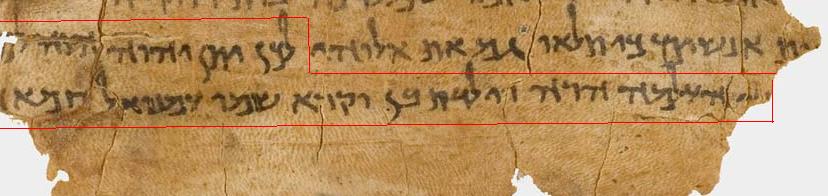 The Israel Museum teamed up with Google to make high-resolution, searchable images of the Dead Sea Scrolls available online. It even provides a translation for you. To begin with, only five scrolls are available for viewing. Two of them are Biblical documents: the Great Isaiah Scroll, the Habakkuk commentary. This is really cool!
FYI, last month I posted a link to a site that allowed you to view the Great Isaiah Scroll. That link is now connected to the Israel Museum/Google Dead Sea Scroll site.
The picture above is a picture of Isaiah 7:14 in the Great Isaiah Scroll.
September 8, 2011
The Misuse and Abuse of “Miracle” and “Healing”
Posted by Jason Dulle under Spiritual gifts, Theology[2] Comments
I’m always bothered when Christians speak of God “healing” someone through surgery, or when they call something a “miracle” that does not clearly bear the marks of supernatural intervention. While we should ultimately thank God for all good things, if a surgeon fixes your body, then it was not a divine healing–it was a medical healing.
We should thank God for giving the doctors the knowledge and wisdom to fix our body, but to attribute the healing to divine intervention cheapens the Biblical concepts of divine healing and miracles. When God performs a healing, surgeries are not necessary. When God does a miracle, His direct involvement will be obvious because the outcome will defy a naturalistic explanation. Did your headache go away? Great, thank God for it. But if you popped an Aspirin at the same time you prayed for the headache to go away, you should probably be buying shares in pharmaceutical companies rather than telling people God healed your headache.
August 25, 2011
Avoiding self-righteousness
Posted by Jason Dulle under Ethics, Hamartiology, TheologyLeave a Comment
One way to avoid self-righteousness when your brother falls is to keep in mind that each of us is capable of the worst evil, because we are all equally fallen. That’s why Paul said, “Brothers, if anyone is caught in any transgression, you who are spiritual should restore him in a spirit of gentleness. Keep watch on yourself, lest you too be tempted” (Gal 6:1) and “Therefore let anyone who thinks that he stands take heed lest he fall” (1 Cor 10:12). See also 1 Cor 9:27.
August 22, 2011
See the Great Isaiah Scroll from Qumran
Posted by Jason Dulle under Archaeology, Bible, Textual Criticism, Theology[7] Comments
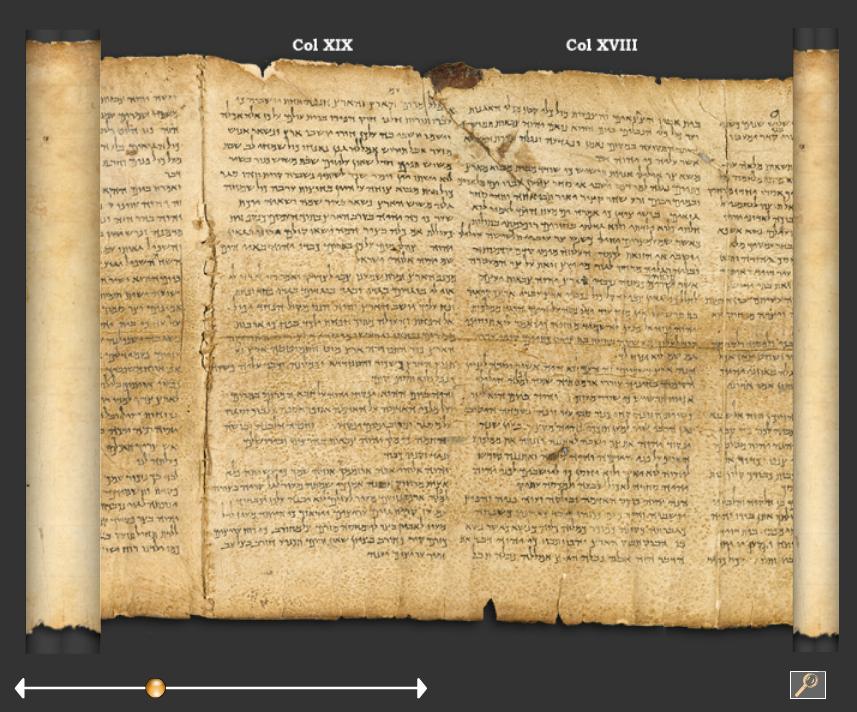 While doing some research on the Dead Sea Scrolls I discovered a website that shows the entire Great Isaiah Scroll found in Qumran. The site allows you to literally scroll through the scroll, and provides a zoom feature as well. Very cool!
July 15, 2011
Video Introduction to NT Textual Criticism
Posted by Jason Dulle under Textual Criticism, TheologyLeave a Comment
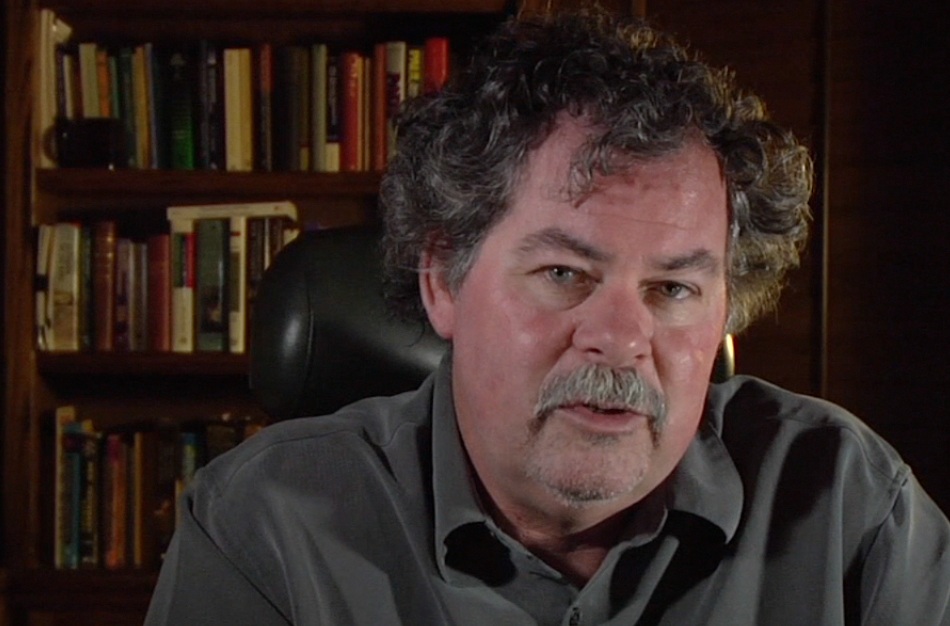 The Center for the Study of New Testament Manuscripts recently released a video series on NT textual criticism oniTunesUniversity. I’ve delayed blogging about it until after I could watch all the videos. I assumed they would be superb given the presenter: Daniel Wallace. My assumption was correct. Not only is the content tremendous, but the video quality is great as well. If you would like a good, well-rounded introduction to NT textual criticism, do yourself a favor and watch these videos. You won’t be disappointed.
July 7, 2011
 “Everyone who hates his brother is a murderer, and you know that no murderer has eternal life abiding in him.” (1 John 3:15, ESV)
When I was a young boy I spoke to my mother of hating some particular thing. While I no longer remember what it was I expressed my hatred toward, I vividly remember the dialogue that ensued. My mother told me I should not hate anything, to which I responded, “Well then, I dislike it completely.”
While my mom found my wordsmithing humorous, it raises an interesting question: What is the difference between a mere dislike and hatred? How does one know when they have crossed the line from disliking someone or something to actually hating that thing or person?
July 1, 2011
Did Jesus teach that corporate, vocalized prayer is wrong?
Posted by Jason Dulle under Hermeneutics, Theology[17] Comments
 Mt 6:5-6 “Whenever you pray, do not be like the hypocrites, because they love to pray while standing in synagogues and on street corners so that people can see them. Truly I say to you, they have their reward. 6 But whenever you pray, go into your room, close the door, and pray to your Father in secret. And your Father, who sees in secret, will reward you.” (NET)
Jesus’ words here have been interpreted by many to mean vocalized prayers in public settings should be avoided. The only acceptable form of prayer in a public setting is silent prayer. Is this what Jesus meant? No, as Biblical examples of prayer make clear.
The first thing to observe is that Jesus went on to instruct the disciples how they should pray. He told them they should say, “Our Father, who is in heaven…” (6:9) Jesus’ use of the plural possessive implies that this prayer would be prayed aloud in a community setting. There would be no need for a single person praying alone, or a single person praying silently in a group to use “our.” In both cases “my Father” would be more appropriate.
June 8, 2011
The Meaning of the Pentateuch: A Review
Posted by Jason Dulle under Mosaic Law, Theology[17] Comments
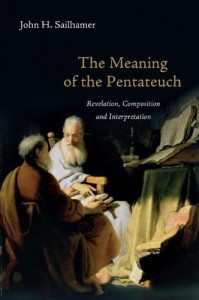 Not many months ago I finished reading John Sailhamer’s The Meaning of the Pentateuch. If you are only going to read one book on the Pentateuch, this should be it. Prior to reading this book I can honestly say I never saw much more than a chronological structure in the books, and never saw how the five books fit together. Sailhamer has illuminated the meaning of the Pentateuch in a way I never thought possible.
Sailhamer argues that the structure of the Pentateuch reveals the meaning of the Pentateuch. While most of us think the purpose of the Pentateuch is to record the Law of Moses for Israel, Sailhamer argues convincingly that this is not Moses’ primary intention (if it were, the inclusion of Genesis would be inexplicable). The Pentateuch was not the first written record of the Law (Dt 27:1-8), and it was written well after the giving of the Law at Sinai, so its purpose must go beyond a mere record of the Law. Sailhamer argues that the structure of the Pentateuch reveals that its primary purpose was to confront its readers with their inability to keep the Law, and the need to live a life of faith while they wait for the promised seed: the future king from Judah (Gen 15:6; Ex 19:9; Num 14:11; 20:12). The golden calf incident lies at the heart of the Pentateuch, exposing the heart of Israel’s problem: their heart. That’s why the Pentateuch ends with an acknowledgment that something needs to be done with the human heart for people to be able to keep God’s covenant (Dt 30:6).
May 24, 2011
Update on May 21 Non-End of the World
Posted by Jason Dulle under Eschatology, TheologyLeave a Comment
 It appears that Harold Camping has gone the way of so many other false prophets in spiritualizing his false prediction. The AP quoted Camping as saying, “”We’ve always said May 21 was the day, but we didn’t understand altogether the spiritual meaning. The fact is there is only one kind of people who will ascend into heaven … if God has saved them they’re going to be caught up.” The AP added, “The globe will be completely destroyed in five months, he said, when the apocalypse comes. But because God’s judgment and salvation were completed on Saturday, there’s no point in continuing to warn people about it, so his network will now just play Christian music and programs until the final end on Oct. 21.” How convenient.
I wonder what his excuse will be when 10-21 comes and goes without incident?
May 20, 2011
I’m sure you’ve heard about it. Harold Camping has predicted that judgment day is tomorrow, May 21. He and his followers are expecting the rapture to happen, but it won’t. Unfortunately, many Christians’ hopes will be dashed, and some will probably give up their faith in Christ. His followers should have learned from his first false prediction that the Lord would return in 1994 that Camping is a false prophet.
I would love to hear Camping’s radio program on Monday. What kind of calls is he going to get? I would imagine that he’d receive calls from irate followers who spent their life savings to advertise “the end” Camping predicted and guaranteed. There will be irate callers who racked up their credit cards in expectation that they would never have to pay them back. There will be scoffers who just want to rub it in his face. It’s my understanding that the day after his 1994 prediction failed, Camping acted like nothing happened on his radio show. Perhaps he’ll do the same again. Or perhaps he’ll decide it’s time to retire. Hopefully the latter.
April 29, 2011
I’ve been urbanized by a legend! Gehenna was not a perpetually burning trash dump.
Posted by Jason Dulle under Hell, Odds & Ends, Theology[8] Comments
 I was directed by Justin Taylor to a post by Trevin Wax discussing common urban legends propagated by preachers. I went to the list expecting to have a good laugh. And I was not disappointed. Wax spoke of the “the eye of the needle was a gate in Jerusalem” legend, the “rope-around-the-high-priest’s-ankle” legend, and the “scribes took baths before writing the divine name” legend. Oh how I chuckled!
April 27, 2011
Did the Accusation above Jesus’ Cross Form an Acrostic Spelling “YHWH”?
Posted by Jason Dulle under Miscellaneous, Theology[37] Comments
 Some have made the claim that an acrostic of the accusation Pilate wrote above Jesus’ cross spells “YHWH.” (example). There is at least one reason to seriously question the claim, and a second reason that proves it false. Let me deal with each in turn.
One reason to question this claim is the fact that we cannot be certain what was actually written on the titulus (the placard on which the victim’s crime was recorded) above the cross. The evangelists do not present us with a single version of what was written:
- Matthew: “This is Jesus, the king of the Jews” (27:37)
- Mark: “The king of the Jews” (15:26)
- Luke: “This is the king of the Jews” (23:38)
- John: “Jesus of Nazareth the king of the Jews” (19:19)
April 25, 2011
Ben Witherington on Jesus’ Appearance to Mary
Posted by Jason Dulle under Resurrection, Theology[5] Comments
I was reading Ben Witherington’s Easter Sunday sermon and he raised a couple of good points about John’s account of Jesus’ resurrection to Mary Magdalene:
“Jesus calls her by name— Miryam! And it is only when he calls her by name that she realizes it is Jesus! Now this matches up nicely with what John 10 says— Jesus says he is the good shepherd and he knows his sheep, and they know the sound of his voice, and most importantly, he calls each one by name.
…
“Jesus’ response is interesting. He tells her— ‘don’t cling onto me’. … Jesus is telling her that there is no clinging to the Jesus of the past. He is no longer just Miryam’s teacher, and there is no going back. He is now the risen Lord. There was something strikingly different about the risen Jesus. …. He tells her to tell them he will soon be ascending to God the Father. Jesus did not rise from the dead to continue earthly existence, so things could go on business as usual. Jesus rose from the dead to begin the endtimes, then and there, the eschatological age, the age in which all manner of things would change, and when Jesus comes back, we too will experience resurrection from the dead as 1 Cor. 15 promises.”

 Thinking to Believe