declineEarlier this month the Guttmacher Institute released the latest abortion figures (for 2011), which revealed that the number of abortions in this country have once again began to decline despite the continued growth in population.  In 2011, there were 1.06 million abortions – a 13% decline from 2008.  The 2011 abortion rate also declined 13% from 2008, with 16.9 abortions per 1,000 women aged 15-44.  Compare this to the 1981 peak of 29.3 abortions per 1,000 women.

There has also been a big shift in the way women procure abortions.  In 2008, 17% of all abortions were performed via chemicals (such as RU-486).  As of 2011, that number increased to 23%.

There are also fewer abortion providers (4% fewer than 2008) and abortion clinics (1% fewer than 2008).

See Abortion Incidence and Service Availability in the United States, 2011 for details.

EFCIn 2011, the Evangelical Fellowship of Canada (EFC) Youth and Young Adult Ministry Roundtable commissioned a survey of 2,049 Canadian adults age 18-34 who attended church as a child on a weekly basis to see how many were still active members of the Christian church. They found that:

  • Only 1/3 were still attending church on a regular basis
  • 1/3 no longer identify as Christian
  • The primary reasons cited for abandoning the church were hypocrisy, judgmentalism, exclusivity, and failure.

We must do better at living out our faith, and preparing our young people with good theology and apologetics.

The details are contained in Hemorrhaging Faith: Why and When Canadian Young Adults are Leaving, Staying and Returning to Church. It costs $15 to download, so I didn’t download it. But if any of my readers want to do so, and wish to share some additional details or insights of the report, I welcome you to do so.

See http://hemorrhagingfaith.com/ for more information.

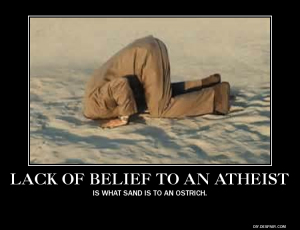
What are your thoughts on this message?  Agree or disagree?  Is atheism a religion?  Why or why not?

atheism not religion

UPDATE: February 13

Now that I’ve heard from you and interacted a bit with your answers, here are my thoughts on the message:

I think the message and image is powerful.  I agree with the message too.  Atheism cannot be meaningfully identified as a religion.  This might seem like a no-brainer for some since atheism lacks belief in a deity, but belief in a deity is not a sine qua non of religion.  Think of Buddhism, for example.

The best reason for rejecting the claim that atheism is a religion is that atheism is nothing more than the belief that God does not exist.  There is no other content to atheism.  For something to qualify as a religion, not only does it need a set of beliefs, but it needs to contain positive beliefs.  Religions typically involve rituals of some sort, and provide answers to questions about origins, what’s wrong with the world, morality, meaning and purpose, and what the future holds.  Atheism does not address any of these elements.

(more…)

think more feel lessToo many people in our day think with their feelings.  “Feeling-speak” is so pervasive in our culture that the vast majority of us talk about what we think in terms of what we feel.  For example, one might say “I feel that Christianity is true” rather than “I think Christianity is true.”  Feelings are wholly subjective and have no truth value – they cannot be true or false.  They just describe our psychological dispositions.  Thoughts, however, do have truth value.  They purport to describe reality, and the description is either true or false.

Since our ideas and beliefs have truth value, let’s be intentional about speaking in terms of what we think rather than what we feel.

Lack of FaithHe who makes a claim bears a burden to demonstrate the truth of his claim.  Theists have a burden to demonstrate their claim that God exists, and atheists have a burden to demonstrate their claim that God does not exist.  Nowadays, however, it’s common for atheists to claim that the theist alone bears a burden of justification.  They try to escape their own burden of justification by redefining atheism from a “belief that God does not exist” to “the absence of belief in God.”  Since only positive beliefs can be defended, they are off the hook.  All the pressure lies with the theist.

While I think their attempt to redefine atheism is intellectually dishonest, let’s grant the validity of their redefinition for a moment.  Greg Koukl observed that while it’s certainly true atheists lack a belief in God, they don’t lack beliefs about God.  When it comes to the truth of any given proposition, one only has three logical options: affirm it, deny it, withhold judgment (due to ignorance or the inability to weigh competing evidences).  As applied to the proposition “God exists,” those who affirm the truth of this proposition are called theists, those who deny it are called atheists, and those who withhold judgment are called agnostics. Only agnostics, who have not formed a belief, lack a burden to demonstrate the truth of their position.

(more…)

I don’t know how I missed this news story, but on December 20 U.S. District Court Judge Robert Shelby declared that Amendment 3 in Utah’s constitution – which defined marriage as between a man and woman, and the voter’s passed in 2004 – is unconstitutional.  Same-sex marriages began immediately.  Utah appealed to the SCOTUS for a stay, which was granted by Justice Sotomayor on January 6.  In the 17 days before the stay, ~1300 same-sex couples were married.

Then, there’s Oklahoma.  Similar story.  On January 14, Judge Terence C. Kern of U.S. District Court for the Northern District of Oklahoma ruled that Oklahoma’s constitutional ban of same-sex marriage is unconstitutional because it is based on a moral disapproval of homosexuality and has no rational basis.  In light of what happened in Utah, however, Judge Kern stayed his own ruling.  It is almost certain that Oklahoma will appeal the case to the 10th Circuit Court of Appeals in Denver, CO – the same court where Utah’s appeal will be heard.

A recent study published in Review of the Economics of the Household is one more study that calls into question the claims of the American Psychological Association and American Sociological Association that when it comes to the effects on children, there is no difference between being raised in a home headed up by male-female parents and a home headed up by same-sex parents.

What did the researchers find?  When looking at the rates of high school graduation, they found that the children of lesbian couples were the least likely to graduate (65% as likely as children of married, opposite-sex couples) – even more unlikely than children of single parents!  They even discovered that male children raised in a lesbian home are less likely to graduate than male children raised in a gay home, and female children raised in a gay home are less likely to graduate than female children raised in a lesbian home.  It appears that when it comes to parenting, moms and dads are not interchangeable.  The gender of one’s parent does have an effect on kids.

The findings are significant because Canada has long supported same-sex couples (marriage benefits since 1997, and marriage since 2005), and the data set is extremely large (a 20% sampling of the Canadian population based on the data contained in the Canadian Census).

For similar studies, see the following:

Studies purporting to show that children raised by same-sex parents fare just as well as children raised by opposite-sex couples are flawed, and new evidence that they fare worse

For a critique of Allen’s study, see Philip Cohen’s analysis.  Mark Regnerus also points out a few limitations of the study, even though he finds the overall study credible and valuable.

HT: Mark Regnerus

Christian apologists have long pointed out that when it comes to textual reliability, the NT is in a league of its own compared to all other ancient texts.  According to NT manuscript expert Daniel Wallace, there are 1000x more copies of the NT than the average ancient Greek text.  If we stacked the NT manuscripts on top of each other, they would reach more than a mile high.  Not only are there more manuscripts for the NT than any other ancient text, but the gap between the original text and our first copies is smaller for the NT than other ancient texts.  There are 3x as many NT manuscripts within 200 years of the original text than the average Greco-Roman text has in 2000 years.

Unfortunately, many of the statistics appearing in apologetics literature are outdated.  Additional manuscripts of both the NT and other ancient texts continue to be discovered.  Clay Jones wrote an article for the Christian Research Institute in 2012 providing the latest stats.  The article was recently posted on the CRI website.  Check it out and see how the NT compares to other ancient Greek texts.

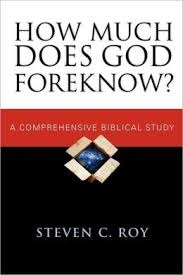
God ForeknowA couple of years ago a friendly soul purchased Steven C. Roy’s book, How Much Does God Foreknow from my Ministry Resource List.  Other research, however, prevented me from getting to this book until now.

As the title implies, the purpose of the book is to explore the question of God’s foreknowledge. It is meant to be a critical evaluation of open theism, which is the view that God cannot know the future, free choices made by moral agents because the future does not exist. One of the strengths of Roy’s work is that he interacts directly with Open Theists, quoting them at length.  This avoids the potential for constructing a straw man argument, and allows the reader to consider Open Theists arguments for themselves.

(more…)

AZ enacted a law in April 2012 banning abortions at 20 weeks and later (measured from last menstrual period) due to evidence that fetuses can feel pain at 20 weeks.  This was ruled unconstitutional by the 9th Circuit Appellate Court in San Francisco because Roe protects a women’s right to abortion before a fetus is viable, and a fetus is not viable until ~24 weeks.  The SCOTUS refused to hear the case, and thus the ruling stands.

Judge Kleinfeld, from the 9th Circuit court, had said, “Were the [AZ] statute limited to protecting fetuses from unnecessary infliction of excruciating pain before their death, Arizona might regulate abortions at or after 20 weeks by requiring anesthetization of the fetuses about to be killed, much as it requires anesthetization of prisoners prior to killing them when the death penalty is carried out.”

discipleship2Jesus said we are to make “disciples” — not just believers (Mt 28:19). For Jesus, making disciples involves more than baptism (conversion); it involves teaching them as well. Spiritual development requires knowledge, not just an experience.

To be discipled is to be taught. Jesus taught His disciples for 3+ years. Apparently, there is a lot to know to do the work of God and be the kind of Christian Jesus wants us to be! And yet today, most churches stop training Christians after a simple Bible study. Christians are not taught theology from the pulpit, but merely encouraged to keep the faith week after week.

(more…)

ModestyThere is a difference between a woman making herself attractive and making herself seductive.  The former enhances her natural beauty to increase a man’s desire for her, whereas the latter enhances her sexual appeal and increases a man’s desire to use her to satisfy his sexual lusts.  In other words, the former enhances her value as a person, whereas the latter devalues her to a mere object of lust.

Modesty cannot be legislated by prescribing certain forms of clothing, certain lengths, or a certain fit.  Women must be responsible for their own modesty.  With every outfit they put on they should be asking themselves, “Does this outfit enhance my natural beauty, or does it enhance my sex appeal to men?  Will this cause men to objectify me, or value me as a woman?”  If women asked these questions of themselves each morning, and if they asked it of other men, no church would have to have standards of modesty.

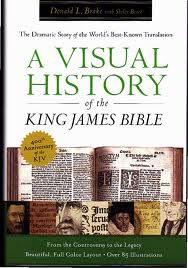
Visual History of KJVWhen the KJV turned 400 years old in 2011, there were a number of books published to celebrate and explore this historic, influential translation. One of those books was A Visual History of the King James Bible: The Dramatic Story of the World’s Best-Known Translation by Donald L. Brake.  I picked it up earlier this year via a scratch and dent special through CBD, and I’m glad I did.  It is chocked-full of interesting (and not-so-interesting) information about the history of the KJV.

Brake covers everything from the impetus for the translation to its modern form.  He begins with a brief overview of the history of the English language and the first English translations of Scripture.  Politics and religious factions caused a tug-of-war when it came to the production and acceptance of new translations.  No English translation gained universal acceptance. While the KJV did not immediately gain the adoration of all English speakers, within 30 years it had supplanted most other prior translations, and only continued to gain more and more market share until it became the standard translation in the English speaking world with no serious challengers until the late 19th century.

(more…)

Paying-Lip-ServiceOne of the reasons many conservative Christians tend to vote for Republican politicians is due to the party’s moral conservatism: pro-life, pro-family.  Several people have argued, however, that this is not a worthwhile reason to vote Republican because most Republican politicians only pay lip service to the pro-life position for political purposes, and/or they don’t really do anything to limit or abolish abortion (or can’t really do anything due to Roe).

I’ve always found the psychoanalysis claim to be dubious. It’s very difficult to prove that someone does not truly believe what they say they believe. Pro-life Republicans could make the same claims about pro-choice Democrats: They don’t really believe abortion should be permitted, but pay lip service to the pro-choice position for political purposes.  I think it’s best to avoid the psychoanalysis, and just take people at their word unless we have good reason to doubt their sincerity.

(more…)

I’ve heard a few prolife thinkers take the position that it is wrong to use the biological tissue of aborted fetuses for medicinal purposes on the grounds that such a practice would encourage additional abortions.  I’m not sure I agree with this line of reasoning, however.  Consider the practice of using the organs of those killed by homicide.  Should we be opposed to this on the grounds that it will encourage additional homicides?  Surely not.  The motivation for homicide is not to provide a fresh supply of organs for the born, but hatred for the individual who was murdered.  Nobody commits murder so that they can increase the number of organs available for transplantation; therefore, there is no reason to believe that using the organs of homicide victims will increase the number of homicides in the future.  By the same token, the motivation for abortion is not to provide additional biological tissue to help the born, but because people do not want the children they conceived.  While an unborn child should never be killed, if and when an unborn child has been killed, I see no ethical problem in using its tissues to aid the born.  After all, one is not doing evil (abortion) to accomplish some good (helping the sick), but trying to find some good (helping the sick) from an evil (abortion) they cannot prevent.

At least, these were my thoughts prior to reading more deeply into some of the arguments presented by those who oppose the use of aborted fetal tissues.  After having delved a bit more into the arguments, I’ve changed my thinking.  It think it is more reasonable to avoid the medical use of aborted fetal tissues.

(more…)

A new Harris Poll confirms that Christian beliefs are on the decline in this country.  There is a greater need for apologetic engagement with culture than ever before.
HT: CNS News

Dr. Craig responds to an op-ed piece in The Washington Post by Reza Aslan titled “Five Myths about Jesus: Challenging Everything You Think You Know.”

A or BIf you’re looking for an explanation of the universe, which is a collection of contingent beings, there are only two possibilities: 1) The explanation is found in a necessary being that transcends the universe; 2) There is no explanation.

Regarding 1), every physical entity is a contingent being. The “universe” simply refers to the whole collection of physical, contingent beings.  One cannot explain why the universe exists by appealing to another physical, contingent being because there can be no physical, contingent beings outside of the collection of all physical, contingent beings.  “But,” one might say, “perhaps it could be explained by a prior non-physical, contingent being.  Perhaps, but even if so, as a contingent being, that non-physical, contingent entity would also require an explanation for its existence.  To avoid an infinite regress, one must ultimately arrive at a necessary being that transcends the universe, and explains why the universe exists.

(more…)

Credit: CBS

Credit: CBS

Another cake maker, this time in Colorado, was sued for refusing to provide a cake for a same-sex wedding celebration.  Judge Robert N. Spencer ruled that Jack Phillips of Masterpiece Cakeshop discriminated against the couple based on their sexual orientation, and would be fined in the future if he ever refused to provide a cake to another same-sex couple again. He wrote, “At first blush, it may seem reasonable that a private business should be able to refuse service to anyone it chooses.  This view, however, fails to take into account the cost to society and the hurt caused to persons who are denied service simply because of who they are.”  So the law can force a man to violate his conscience just so someone else’s feelings don’t get hurt?  What about Jack Phillips’ feelings?  Should the law protect him from feeling bullied by the government?  Surely his feelings are hurt at the prospect of having to close his business.  I don’t see his feelings being taken into consideration.  And finally, Jack Philips is not denying them service “because of who they are,” but because of what they are doing.  It’s not as if Jack Phillips refuses to make birthday cakes for people who are gay.  He is refusing to provide a cake that will be used to celebrate an action that he considers immoral.  There is a big difference.  But I don’t expect the law to recognize such distinctions anymore.

Just more of the same.

Update 8/24/15: A Colorado Court of Appeals ruled against Jack Phillips on the grounds that he is free to believe whatever he wants, but he is not allowed to act on those beliefs by refusing service to people with a homosexual orientation.  Oddly enough, Mr. Phillips isn’t discriminating against anyone’s sexual orientation.  He has no problem baking cakes for homosexuals.  What he has a problem with is baking cakes for events that promote homosexuality and same-sex marriage.

burning carImagine with me the following scenario: You are resting peacefully at your home, when all of a sudden you hear a loud bang.  You rush outside to see what happened, and across the street is a wrecked car with a man trapped inside.  As you approach the car to offer help, it becomes engulfed in flames.  The man is fully conscious, but unable to escape.  You’ve called 911, but it will be 15 minutes before they are able to arrive with a fire truck and the jaws of life.  The man is burning before your eyes with no chance of survival, and you hear his blood curdling cries from within the car: “Shoot me, please!  Shoot me!  Ahhhhhh!!!!!!!!!!!”

You own a gun, and have the means to honor this man’s request.  The choice is yours: Do nothing, and watch this man burn to death in excruciating pain for the next 10 minutes, or get your gun, and shoot the man to hasten his death to avoid the unbearable suffering.  What would you do?

Once you have answered this question, scroll down below for an additional question.


Euthanasia is the practice of actively and purposely killing an individual because they are experiencing some form of unbearable suffering.  Think, for example, of the person with terminal bone cancer whose body is wracked with pain.  If you were to meet such a person, and they requested that you kill them to end their suffering, would you do it?

If you would kill the man in the car, but not the man with cancer, please explain what you see as the morally significant distinction between the two scenarios.  Likewise, if you would not kill the man in the car, but would kill the man with cancer, please explain what you see as the morally significant distinction between the two scenarios.