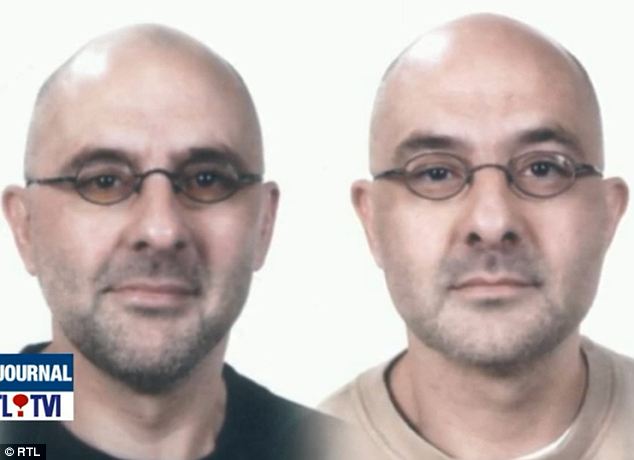
Deaf TwinsTwin brothers were recently euthanized in Belgium.  The two unidentified men – who appear to be in their 40s – were born deaf, and have spent their entire lives together.  When informed that they were both going blind, they decided to end their lives because they couldn’t bear the thought of not seeing one another again.

Belgium euthanizes 1% of the population every year.  What makes this brother-duo unique is that they were not terminally ill, nor were they experiencing any physical suffering.  They simply did not want to live with the quality of life they would be forced to live under, so they found a doctor to kill them before that day arrived.

Let this be a sounding alarm.  Euthanasia is not yet legal in this country, and only Oregon and Washington allow for physician-assisted suicide.  But there continues to be a big push for the legalization of physician-assisted suicide and euthanasia, and it is gaining momentum throughout the Western world.  Those who push for its legalization always tell the public that the legal option for suicide will only be reserved for the terminally ill who are experiencing agonizing pain at the end of their lives.  But that’s just the selling point.  Once a society buys into that line, the pro-death community always goes for the upsell.  Their ultimate goal is death-on-demand.

(more…)

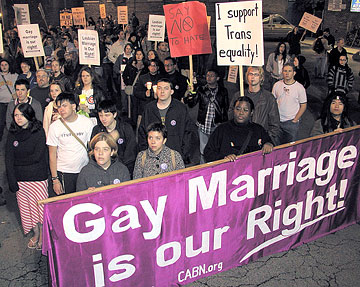
gay_marriage_banner_rightsWhile there exists a natural right to form marriages, and while we have a right to form those marriages without government interference (a negative right), we do not have the right to government recognition of our marriages (a positive right).  The State regulates marriage because it is in their best interest to manage the procreative potential of opposite sex couples, not because they have a moral obligation to do so.  The institution of marriage is a natural union that exists prior to, and wholly independent of government recognition.

What basis is there, then, for SSM advocates to claim they have a right to civil marriage?  While those with homosexual orientations have a right to form same-sex relationships[1], they have no corresponding right to have their relationships recognized and regulated by the government.

(more…)

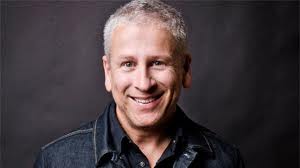
Louie GiglioThat’s the headline.  Perhaps it should have read “Christian pastor withdraws from Obama inauguration after it is discovered that he’s a Christian.”

A website, ThinkProgress, published a sermon Reverend Louie Giglio preached in the 90’s in which he said these “shocking” words:

If you look at the counsel of the word of God, Old Testament, New Testament, you come quickly to the conclusion that homosexuality is not an alternate lifestyle… homosexuality is not just a sexual preference, homosexuality is not gay, but homosexuality is sin. It is sin in the eyes of God, and it is sin according to the word of God. You come to only one conclusion: homosexuality is less than God’s best for his creation.”

(more…)

The Guardian published a story about pedophilia last week.  You would expect such a story to offer strong moral condemnation against such a practice, but you would be mistaken.

The story begins by emphasizing that experts on pedophilia are not even sure that “consensual paedophilic relations necessarily cause harm.”  Really?  A ten year old child is capable of making informed decisions about their sexuality and sexual relationships?  And how consensual can a relationship be between an adult and a child?  Children naturally submit to the desires of adults, even if deep-down they do not want to.

I found this article so appalling not only because of its sympathetic voice for pedophilia and pedophiles, but because it uses the same talking points used by the homosexual lobby to break down the moral and emotional barriers the public once held against homosexuality.  For example, the story begins by talking about the number of people who experience sexual attraction to children.  The author claims that as few as 1-2%, but possibly even up to 20% of men are capable of being sexually aroused by children.  Why bring this up?  The idea is that if so many people experience this, it can’t be so bad after all.  This same tactic was used by the homosexual lobby.  They once claimed that 10% of society was homosexual in an attempt to normalize homosexuality (we now know it’s closer to 2%).

(more…)

ImperviousThe kalam cosmological argument (KCA) for God’s existence can be stated as follows:

(1) Anything that begins to exist requires a cause
(2) The universe began to exist
(3) Thus, the universe requires a cause

Additional logical inferences allow us to identify this cause as God.  Whatever caused space, time, and matter to begin to exist cannot itself be spatial, temporal, or material.  Furthermore, whatever caused our orderly, life-permitting universe to come into being a finite time ago must be immensely powerful, intelligent, conscious, and hence personal.  These are apt descriptions of a being theists have long identified as God.

Both premises have been challenged on scientific grounds.  Premise one is typically challenged on the basis of quantum mechanics, while premise two is challenged by new cosmological models that seek to restore an eternal universe.  I am going to argue that neither premise of the argument can be undermined by scientific evidence, and thus the argument itself is impervious to scientific refutation.  Only philosophical arguments are capable of undermining either premise of the argument.

(more…)

disembodiedSome atheists claim that God cannot exist because unembodied minds are impossible; i.e. that persons must be physical beings.  I spoke to this in a 2008 post.  Prayson Daniel recently blogged on the subject as well.  I would encourage you to read his post.  I commented on his post, and wanted to share some points I made that supplement the points I made in my previous post. 

This argument begs the question in favor of materialism and atheism. It merely assumes that minds/persons are reducible to brains; that we have no immaterial mind that is capable of existing apart from our bodies. No reason is given for thinking that a mind/person needs a body other than the fact that we are not familiar with it. That’s a very poor reason.  It confuses common properties of persons with essential properties of persons. 

(more…)

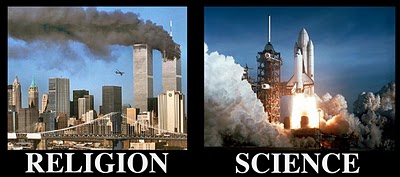
Retired particle physicist and outspoken atheist Victor Stenger developed a rhetorically powerful aphorism against religion: “Science flies men to the moon, religion flies men into buildings.”

I think Stenger is being a bit too selective in what he chooses to highlight about science and religion, though.  Science has also been responsible for great moral atrocities, and religion has also been responsible for great moral goods.  To demonstrate how worthless this rhetoric is, I could just as easily develop an aphorism modeled on Stenger’s to make the opposite point: “Science builds atomic bombs to kill millions of people, religion builds hospitals to save billions of people.”

queen-james-gay-bibleIf the title itself doesn’t give it away, the Queen James Bible is a new “gay Bible” based on the King James Version, complete with a rainbow-styled cross on the cover.  It was named “Queen James Bible” because King James I of England, who authorized the creation of the Bible that bears his name, was rumored to be bisexual.

According to the unnamed editors[1] of this version, “The Queen James Bible seeks to resolve interpretive ambiguity in the Bible as it pertains to homosexuality.[2] … We edited the Bible to prevent homophobic interpretations.”[3]  It is a near-identical reproduction of the KJV, but with gay-friendly edits made to eight verses that have been traditionally been interpreted as speaking negatively against homosex.  What follows is a comparison of the KJV to the QJV (changes in bold), followed by my comments on their changes:

(more…)

Reasonable FaithDr. William Lane Craig is my favorite Christian apologist.  I’ve read countless articles he has authored and several of his books, listened to virtually every debate he has participated in as well as his podcasts and Defenders lectures, and even read his weekly Q&A on reasonablefaith.org.  I could rightly be called a Craigite, and yet I had never read his signature book, Reasonable Faith, which is now in its third edition.

I finally purchased the book and read through it with slobbering delight.  I must confess that having followed Craig for so long, there wasn’t much in the book that I had not encountered before.  But that is more of a personal commentary, and does nothing to detract from the wealth of information contained in this book.

Craig begins the book by answering the question, How can one know Christianity is true?  After surveying what important past and present thinkers have to say on the matter, Craig adopts a Plantingian-based model in which we can know Christianity is true in virtue of the witness of the Spirit in our hearts.  Craig makes an important distinction, however, between how we personally know Christianity to be true, and how we demonstrate to others the truth of Christianity.  While the witness of the Holy Spirit is sufficient for the believer to be persuaded of the truth of Christianity, we demonstrate the truth of Christianity to unbelievers through evidence and rational argumentation.

(more…)

Baby atheistsI have heard several atheists claim that “all people are born atheists.”  One popular slogan says “I’ll die like all believers are born: an atheist.”

If the point of such slogans is merely that no one is born with a belief in God’s existence, and that such a belief develops later, I agree.  Babies do not have beliefs regarding such things.  This much is obvious (although it is irrelevant to the question of the truth of theism).  But if their point is that babies should be described as atheists, this is patently absurd.  Indeed, it’s because babies do not have any beliefs regarding God that they can be neither a theist nor an atheist.

No one is born an atheist.  To claim otherwise is to employ a faulty definition of atheism as “a lack of belief in God.”  So defined, atheism is relegated to a psychological state rather than a rational claim regarding the veracity of a particular proposition.  This is not only a departure from the historic definition of atheism, but it guts it of any rational significance.  Atheism is not a lack of belief in God.  That is more properly described as “agnosticism.”  Atheism is the belief that the proposition “God exists” is false.  No baby is born with that belief, and thus no baby is born an atheist. (more…)

Michael KrugerEarlier this year Michael Kruger blogged his way through the 10 most common misconceptions about the NT canon.

Check them out to see which misconceptions you are guilty of, and then confess your intellectual sins in the comments section.

Atheism and the Burden of ProofIn recent years there has been a lot of debate regarding the proper definition of “atheist,” even on this blog.  Traditionally, atheism has been defined as the claim that God does not exist. In the mid-20th century, however, atheist philosopher Antony Flew attempted to redefine atheism.  Noting that the Greek prefix “a” is a term of negation, Flew said the proper definition of a-theism is simply “not a theist.”  Another popular way of cashing this out has been to define atheism as “one who lacks belief in God.”

What’s the difference between these definitions?  The traditional definition is an ontological claim (God is not included among the entities that exist) while the new definition is a psychological description (“I have no belief regarding the existence or non-existence of God”).  We might label these two ways of defining atheism as  “ontological atheism” and “psychological atheism.”

Why does it matter how we define atheism?  It matters because of the burden of proof.  A principle of rational discourse is that he who makes a claim bears the burden to defend it.  If someone claims that God does not exist (ontological atheism), he bears a burden to demonstrate how he knows this to be true.  On the other hand, one who lacks any beliefs with respect to God’s existence (psychological atheism) bears no burden of proof because he is not making a claim to knowledge.  He is merely describing the content of his beliefs – that his stock of beliefs does not include a belief regarding the existence or non-existence of God.  Flew understood this.  He purposely redefined atheism to make it a psychological description so as to absolve atheists from their burden to defend the claim that God does not exist.

(more…)

New Scientist published an article last week explaining why the universe must have had a beginning.  While they end the article with speculative physics that try to place that beginning so far back into the past so as to be virtually indistinguishable from an eternity ago, a beginning to the universe remains.  And if physical reality began to exist a finite time ago, then it must have a transcendent, immaterial, eternal, spaceless cause.

We're all atheistsIn two separate posts I have addressed a common piece of atheist rhetoric that I like to call the “one less God zinger.”  It goes roughly as follows: “We’re all atheists.  Christians are atheists with respect to all gods but their own, while I am an atheist with respect to all gods, including your own.  When you understand why you reject all other gods, you’ll understand why I reject all gods.”

While this is rhetorically effective, it does not stand up to scrutiny.  While much could be said of this zinger, I only want to focus on the first two sentences.  Is it true that we are all atheists?  Can Christians be properly described as atheists because we deny the existence of all gods other than YHWH?  Not at all.

(more…)

I have been asked on several occasions what my thoughts are regarding re-baptism.  I have in mind those who were previously baptized in a legitimate Biblical manner, but want to be baptized again for various reasons.  The Bible does not directly address this issue, so we cannot cite chapter and verse to settle it.  We have to think about it theologically and practically.  Here are my thoughts on the matter.

First, we have to consider what makes baptism effective.  According to Paul, it is one’s faith in what God is doing through the act of baptism:

In him also you were circumcised with a circumcision made without hands, by putting off the body of the flesh, by the circumcision of Christ, 12 having been buried with him in baptism, in which you were also raised with him through faith in the powerful working of God, who raised him from the dead. (Col 2:11-12)

If one exercised genuine faith in Jesus when they were baptized, then their baptism was legitimate and spiritually efficacious, and there is no spiritual need to be rebaptized.  They already have the spiritual benefits of baptism applied to their life.  Being rebaptized will add nothing to their spiritual life that they do not possess already.  However, if one did not have faith in Jesus when they were baptized, or if they are not certain whether they had genuine faith at the time and they feel the need to be rebaptized, then by all means they should do so.

(more…)
“Apologetics” is a difficult word.  Most people have never heard of it and have no idea what it means.  It sounds like something that involves saying “I’m sorry.”  For others, it connotes something that only concerns academics.  To avoid these concerns, Brian Auten has come up with a helpful list of alternative expressions that conveys the purview and purpose of apologetics without using the word itself:

  • defending Christianity
  • the defense of the faith
  • thinking through the issues
  • being thoughtful about your convictions
  • being thoughtful about the faith
  • (more…)

Tom Chivers defines secularism as “the belief that the state should be neutral towards the religious beliefs of its citizens.”[1]  As I read his definition it struck me how different it is from other definitions I have read, and how one’s theological bias can affect their definition.  For example, Christians have often defined secularism along the lines of “ordering society as if God did not exist, or His existence is irrelevant.”  Tullian Tchividjian defines secularization as “the process through which God and the supernatural are relegated to the fringe of what’s important in society,” adding that “a secularized society is a society that has determined to make God and the supernatural socially irrelevant even if they remain personally engaging. It restricts the relevance of God to the private sphere only. …God may be important individually but he is rather unimportant socially and culturally. He may be alive and well privately but publicly he is dead.”[2]

So is secularism the idea that government should be religiously neutral, or is secularism little more than social atheism?  Is it just a matter of perspective?


[1]Tom Chivers, “Atheism may be lonely, but it’s honest – and the loneliness can be fixed, http://blogs.telegraph.co.uk/news/tomchiversscience/100149264/atheism-may-be-lonely-but-its-honest-and-the-loneliness-can-be-fixed/; Internet; accessed 30 October 2012.
[2]Tullian Tchividjian, “The Irrelevance of God”; available from http://theologica.blogspot.com/2007/07/irrelevance-of-god.html; Internet; accessed 30 July 2007.

If you’ve ever read the exchange between Jesus and the Syro-Phoenician woman in Mark 7:24-30, I’m sure you’ve asked the same question most of us have: “Did Jesus really say that?!”

What did He say?  In response to the woman’s request for Jesus to cast a demon out of her daughter, Jesus said, “Let the children be fed first, for it is not right to take the children’s bread and throw it to the dogs.”  How rude!  It seems out of character for Jesus to put down a woman, equating her to a dog.

Larry Hurtado has a helpful article on this passage that explains Jesus’ point in its original context.  He makes the following points:

What would you say if I told you that a politician supported a man’s legal right to physically abuse his wife under any circumstance, but is “a pro-woman hero” because his policies will help undermine the root causes of spousal abuse?  You’d say I was nuts, right?  Well, this same sort of argument is made all the time when it comes to pro-abortion politicians.

Eric C. Miller seems to have drunk this same Kool-Aid.  The title of my post is the title of his article in Religion Dispatches Magazine.  The title is as oxymoronic as “Adolph Hitler, Zionism Hero” or “Chick-fil-A, PETA hero.”  How does one come to the conclusion that the most pro-abortion president this nation has ever seen is actually a pro-life hero?  Birth control.

President Obama’s “Obamacare” will require all health insurance companies to cover contraceptives free of charge.  And according to a recent study by researchers at the Washington University School of Medicine, access to free birth control can reduce unintended pregnancies by up to 75%.  Miller reasons that since virtually all abortions are due to unintended pregnancies, access to free contraception will lower the number of unintended pregnancies, and thus severely lower the abortion rate.

(more…)

Science can only describe; it cannot explain.  Surely this is wrong, you say.  Science explains a lot.  Well, that depends on what you mean by “explain.”  Science can tell us why we don’t float off into space (gravity), and can even tell us what creates gravity (the warping of space-time), but these are not explanations.  They are merely descriptions of physical phenomena.  The deeper questions go unanswered.  For example, why gravity exists in the first place, and why does it assume the value it does?  Scientists can describe the history of the universe all the way back to the Planck time, but they cannot explain why the universe started the way it did, or what caused the universe to come into being.

If science can only describe physical phenomena but cannot explain it, then it is naïve to think science alone is sufficient to answer every question of human inquiry.  Science is an amazing discipline that has been wildly successful in doing what it is intended to do, but it cannot do everything.  The role of science should not be diminished below its usefulness, but neither should it be exalted above its limits.  If you want explanations, you’ll have to look beyond science.