 LiveScience reported on a new “breakthrough” in origin-of-life (OOL) research. Robert Roy Britt began the article by describing the current state of OOL research: “One of life’s greatest mysteries is how it began. Scientists have pinned it down to roughly this: Some chemical reactions occurred about 4 billion years ago – perhaps in a primordial tidal soup or maybe with help of volcanoes or possibly at the bottom of the sea or between the mica sheets – to create biology.”
I like how Britt “pinned it down” to chemical reactions in a soup, or maybe volcanoes, or maybe the sea, or maybe between mica sheets. The specificity is overwhelming. Can you imagine if homicide detectives worked like this?: “Captain, we haven’t caught the killer yet, but we’ve pinned it down to a human being, living on some continent, on this planet.” Good work guys. I’m glad you narrowed it down for us. Now I can check outer-space off my list as a possible location for the origin of life. Oh wait, some scientists think life did originate in outer-space! Maybe the killer isn’t living on this planet after all. Someone better alert the detectives to broaden their search. End of sarcasm.
So what was the big breakthrough?: a self-replicating RNA molecule. Some background information will be helpful. One theory of how life originated from inorganic material by purely chance, natural processes is the RNA-world hypothesis. According to this hypothesis, RNA strands formed from nucleotides, which later gave rise to DNA, proteins, and the basic cell. Among its many problems, however, is the fact that no RNA strand has ever self-replicated in the lab. But Gerald Joyce and his team at the Scripps Research Institute was able to get RNA to do just that. This isn’t much of a breakthrough, however, at least not as it concerns OOL research.
Joyce was able to get RNA to replicate only by engineering the RNA molecules to copy “word-by-word” rather than letter-by-letter (nucleotide by nucleotide). But that is not how RNA replicates in natural conditions, so why think this experiment tells us anything about how RNA might have been able to self-replicate on the early Earth, and how life got started? If anything, it seems to demonstrate that for RNA to replicate apart from the cell requires an intelligent agent to manipulate it into behaving in ways it does not behave in nature. And if that’s what we’re doing, then the results of the experiment don’t tell us anything about the chance, physical process by which life emerged.
Then there is the matter of the nucleotide strings Joyce and his team put in the beaker with the RNA. These raw materials are necessary for RNA replication, but why think they would have been available in the early Earth, and/or available in the quantities and locations needed? If an ancient RNA molecule needed thousands of nucleotides at location X for replication to occur, but only 50 were present at location Y, there would be no replication. As Stuart Kauffman wrote:
The rate of chemical reactions depends on how rapidly the reacting molecular species encounter one another-and that depends on how high their concentrations are. If the concentration of each is low, the chance that they will collide is very much lower. In a dilute prebiotic soup, reactions would be very slow indeed. A wonderful cartoon I recently saw captures this. It was entitled ‘The Origin of Life.’ Dateline 3.874 billion years ago. Two amino acids drift close together at the base of a bleak rocky cliff; three seconds later, the two amino acids drift apart. About 4.12 million years later, two amino acids drift close to each other at the base of a primeval cliff…. Well Rome wasn’t built in a day.[1]
Is it any surprise that if you provide the right kind of “RNA food” in the right quantities, in the right location, and re-program the RNA so that it is able to join itself to those nucleotides, that it does so? No. Because it is not surprising that when an intelligent agent involves itself in the process, what is naturally impossible becomes possible. Take away that intelligent agent, however, and you are left with the impossible. Joyce’s work was not a breakthrough for OOL research, but a reaffirmation of what we already know: intelligent agents can do things nature cannot do on its own.
[1]Stuart Kauffman, At Home in the Universe: The Search for Laws of Self-Organization and Complexity, [1995] (Penguin: London, 1996, reprint), 34-35.
 Most Christians are under the assumption that it took Noah 120 years to build the ark, because God said “My spirit will not remain in humankind indefinitely, since they are mortal. They will remain for 120 more years” (Genesis 6:3). Since this verse appears prior to God’s command to Noah to build the ark, it is reasoned that it must have taken Noah 120 years to finish the project. A careful reading of the text, however, will demonstrate that the ark was built in 80 years or less.
 Last month Amanda Gefter opined in New Scientist that when it comes to explaining the fine-tuning of the universe “
 Many attempts have been made to ground morality outside of a personal God, but all fall miserably short. At best, non-theistic ethical systems offer a rationale, or principle by which one can justify a system of prescriptions and proscriptions, but in what do they ground the rationale? The guiding principle may provide for a consistent system of ethical thought, but just because a system is consistent does not mean it is true, or that anyone is obliged to adopt it. Offering a rationale for saying one ought to do X is very different from grounding that moral imperative itself.
 Whenever an all-church fast is called, pastors commonly give people a range of fasting options to engender wider participation. On the one extreme, total abstention from food and drink (except water) is called for. On the other extreme is what is often called “the Daniel fast.” This is usually defined as eating only vegetables and drinking liquids.
 Over the past 60 years, the branch of science known as cosmology (studies the history of the universe) has become infested with scientists who engage in metaphysical speculations masquerading as real science. There’s been everything from Fred Hoyle’s Steady State universe, to the modern multiverse theory. But few theories have been as speculative and bizarre as Max Tegmark’s. According to Tegmark, the universe is just math. In fact, every mathematical “structure” is its own separate universe. Math is all that really exists. In his words, “I have this sort of crazy-sounding idea that the reason why mathematics is so effective at describing reality is that it is reality. That is the mathematical universe hypothesis: Mathematical things actually exist, and they are actually physical reality.” No Max, it doesn’t just sound crazy-it is crazy! Read the whole
  The universe is incredibly finely-tuned, not only for its own existence, but for the existence of complex, intelligent life. This fact does not set well with naturalists and atheists. It is enormously difficult to explain the unfathomable specificity and precision of the cosmos on the basis of chance alone. Indeed, the value of some physical constants were initial conditions present at the universe’s origin, and thus cannot possibly be explained by random chance processes. So how do non-theists explain how our universe got so lucky?
 Pro-life apologist extraordinaire, Scott Klusendorf, has written an excellent
 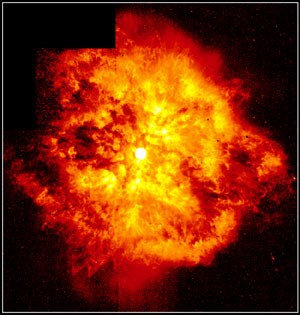 For millennia philosophers maintained that the universe is eternal. The philosophical payoff of this view was that it avoided the God question. If the universe has always been, it did not need a creator. The emergence of the Big Bang theory in the early part of the 20th century, however, changed all of that. The Big Bang model successfully predicted that the universe–including all spatio-temporal-material reality–had an absolute origin at a point in the finite past, from which it expanded, and continues to expand today.
 When the charge of “forgery” was brought against the James Ossuary, many wrote it off. The judge who is presiding over the trial, however, has apparently
 Thinking to Believe