The National Institutes of Health defines “inner cell mass” as follows: “the cluster of cells inside the blastocyst. These cells give rise to the embryo and ultimately the fetus.” This is false. The inner cell mass consists of embryonic stem cells. These cells do not “give rise to the embryo.” It is the other way around. The embryo gives rise to these cells. The embryo exists prior to the existence of the inner cell mass. These stem cells simply continue forming what came into existence several days earlier: a new human individual. It’s better to say it the way the NIH said it, however, because it makes people think the stem cells are being extracted from something that is not a human embryo.

Stowers Institute president and CEO William Neaves said, “You are working entirely with the genes of a person conceived years earlier. “You are not creating new life. You are not causing conception to occur. You are just reawakening the developmental potential that already resides in that individual’s [donor’s] genes.”


The same could be said of every human being! Every human being is composed of genes from persons conceived years earlier. Would anyone say the new baby, therefore, is not a new life? Of course not!

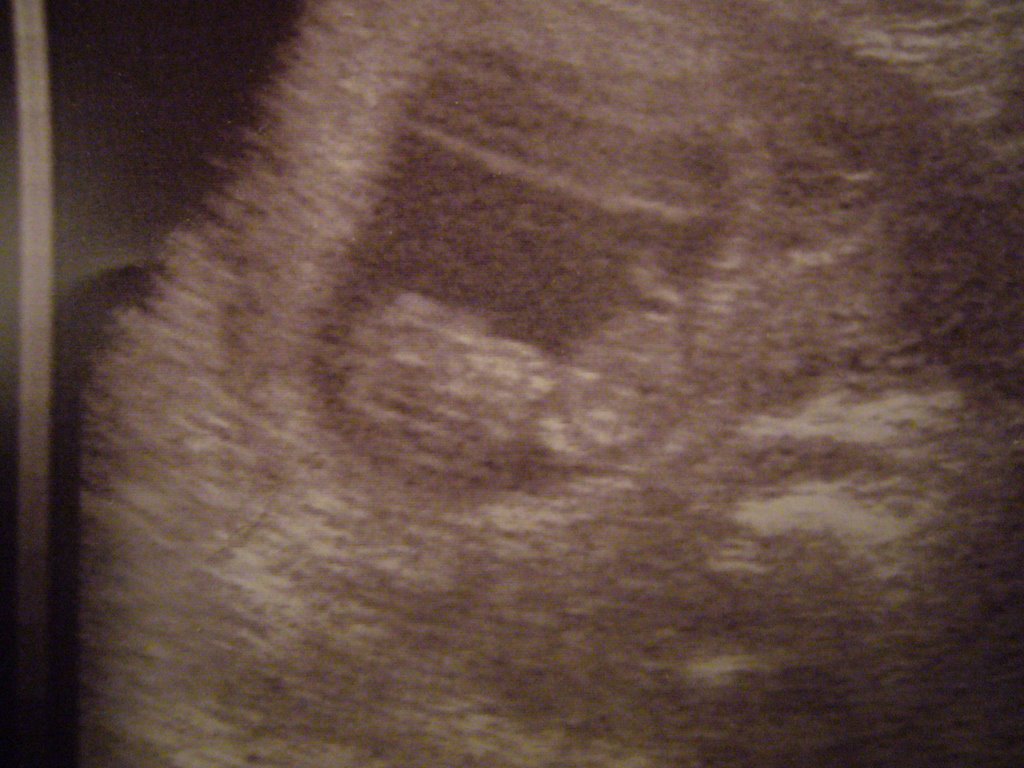
Where have I been? From bombarding you with posts to absolute silence for three weeks! Well, a lot has been going on, not the least of which is pictured below.


Yes, that’s right…my wife is pregnant. She’s 14 weeks along now, and has been having a really difficult pregnancy. The little squirt has given her morning, noon, night, and all night sickness. She’s been on mandatory bedrest for five weeks and doing a lot of this:


I have been taking care of my wife, which hasn’t left much time for blogging…or much of anything intellectual for that matter. The only thing I have been studying is what might help morning sickness, what stroller is the best, what crib I want to buy, etc.

I’ve also been interviewing for a new job (which has been offered to me) and looking into a new place to live. So other than a new baby, a new job, and a new home, my life is pretty much the same!! I hope to respond to the comments on the last string next week, and then resume with some new posts whenever I find a little time.

When someone dies before their time—whether by disease or tragedy—Christians often ask why God allowed it to happen. This is particularly the case when the person was killed tragically in an unsaved state. As Christians we wonder why God did not intervene to prolong their life, affording them more time to make a decision for Christ. Maybe—we muse—they would have turned to Christ five, ten, or twenty years from now if only afforded the time, but now that possibility is gone.


I propose that every person who dies prematurely in an unsaved state would not have accepted Jesus as Savior even if they lived a full life—and God, in His omniscience, knows this. On the basis of such knowledge God allowed them to die, rather than intervening to prolong their life. On such a view there is no need to wonder “what if they had more time?” because their untimely death proves they never would have accepted Christ. Would they have done so in the future God would have preserved their life in the present. My rationale for this position is as follows:


First, God’s omniscience includes knowledge of all true propositions, including counterfactuals. Not only does God know all that ever was, all that is, and all that ever will be, but He also knows all that could have been, all that could be, and all that might have been in the future had the circumstances and set of facts been other than what they were (hypothetical vs. actual). This knowledge allows God to know what person X would do if he continued to live beyond the time of his untimely death. God, seeing that person X would not serve Him even if he lived a full life, can allow him to die without impeding his chances for eternal life.


Secondly, according to Paul God wants every person to come to the knowledge of the truth and be saved (I Timothy 2:4). Furthermore, God is tolerant and patient with man so that he will come to repentance (Romans 2:4). If God’s greatest desire is for His children to come to saving faith, and he knew person X would come to saving faith in the future, it is stands to reason that He would have intervened to prolong his life, and then patiently waited for him to make that decision in the future. To believe God would allow a sinner to die prematurely with the knowledge that she would have chosen to serve Him in the future if given the time is inconsistent with God’s will as expressed in Scripture.


I would even argue that a sinner’s premature death might be a blessing in disguise, because it prevents him from accumulating more sins for which he will have to give an account. The less sin, the less punishment.


What do you think of this argument? Is it theologically sound? Is it Biblically based? Is it rational and logical?


While we’re talking about this, what do you think about saints who dies prematurely? I’ve heard many Christians claim God might take these people prematurely because He knew they would turn away from Him in the future if given the time to do so. What do you think of this claim? Do you think God would do this at times?

Greg Koukl’s lecture at the 2006 Master’s Series in Christian Thought was on the topic “Truth is a Strange Sort of Fiction: The Challenge from the Emergent Church.” It was a masterful presentation! He argued that truth and knowledge are essential to the enterprise of Biblical faith, and demonstrated this both Biblically and philosophically. What made it so profound was that He provided the philosophic underpinnings for what all of us know intuitively, explaining why it is that we know what we know. I would recommend you buy the 2+ hour lecture from www.str.org, but I would like to summarize some of the lecture for you here.


Koukl began by arguing that knowledge of the truth is fundamental to our daily survival. If we were not able to know the truth about the world with a high degree of accuracy we would not be able to survive more than a few hours.


Truth is a life or death matter, and people die for the truth all the time. People die for the truth of cancer when they don’t take their doctor’s advice seriously. They die for the truth of drunk driving when they underestimate the power of alcohol to impair their driving abilities. They die for the truth of inertia and mass when they cross the street without looking both ways before crossing. In all these instances people actually die, not for the truth, but because they don’t have the truth. They die because they have false beliefs about important things. Not only must we know the truth, but we must act on that truth if we hope to survive.


Belief


While knowledge of the truth is necessary for survival, what does it mean to say we know something? At the very least it means you believe it is so; i.e. it accurately describes reality. That’s why it makes no sense to say “I believe X, but I’m not saying it’s true” as do so many postmodern thinkers. To say you believe something is to say you think you are right in your belief. If that is not what is meant the statement becomes entirely vacuous and meaningless.


Could our beliefs be mistaken? Yes. That’s why it takes more than merely believing something for it to be true. But at the very least to say you believe something is to say you think it is true, even if your belief turns out to be false.


Why should we believe anything (to be true)? For good reasons (justification). Justification comes in degrees. When the level of justification rises to the level of “beyond reasonable doubt” we can rightly claim to know something even though our level of justification does not reach certainty.


Truth


What is truth? Truth is when your statement corresponds to the way the world really is. It is a relationship between something in the mind of a knowing subject and the objective world. What makes the belief true is the objective world. Reality, then, is the truth maker. Something is not true simply because we believe it to be true.


The Relationship of Knowledge to Faith


Knowledge is critical to the faith project because faith is active trust in what we know to be true. If we do not know what is true (what corresponds to the way the world really is), or cannot know what is true (according to postmodernism), we cannot exercise faith in it. Since knowledge is the basis for our active trust, if we cannot have knowledge we cannot have Biblical faith.


Does knowledge save by itself? No. You can know medicine X will heal you, but if you stop there you will die. An extra step is needed: active trust in that knowledge.


Does faith save by itself? No. Muslims have active trust, but their faith is in the wrong object. Trust can be misplaced. Salvation obtains only when active trust is combined with accurate knowledge. If there is no truth/knowledge (or if we cannot know what the truth is) there can be no saving faith, and if there is no saving faith there can be no Christianity! That is why postmodernism (including the Emergent Church which has adopted postmodern epistemology) and Christianity are philosophically incompatible.

Every one of us has a particular philosophical worldview: a way in which we perceive ultimate reality. Often there are competing philosophical outlooks within a given culture, particularly in one as pluralistic as our own. One way to readily identify someone’s philosophical presuppositions is to ask them their take on some specific issue/problem. I’m going to do that with you to determine your philosophical viewpoint on the issue of personal identity. What gives us our identity? Does our identity remain the same over time?


Let’s say person X suffers a coma at age 35. He is in a coma for 7 years. During that time nearly every cell in his physical body has been replaced. At age 42 he wakes up from his coma but cannot remember anything about his past.


Question: Is he still person X, or has he become a different person: person Y? Why or why not?


Consider another problem. In ancient Greece there was an Athenian king by the name of Theseus. He was both a warrior and a sailor. Plutarch makes reference to his ship:


The ship wherein Theseus and the youth of Athens returned had thirty oars, and was preserved by the Athenians down even to the time of Demetrius Phalereus, for they took away the old planks as they decayed, putting in new and stronger timber in their place, insomuch that this ship became a standing example of the philosophers, for the logical question of things that grow; one side holding that the ship remained the same, and the other contending that it was not the same.

(Plutarch, “The Life of Theseus,” in The Lives of the Noble Grecians and Romans, trans. John Dryden, rev. Arthur H. Clough (New York: Random House, n.d.), 14.)


Question: Was the ship repaired or replaced? Was the ship that existed in Phalereus’ day the same ship that Theseus sailed on? Why or why not?


I just finished reading Wesley J. Smith’s testimony before the CA Senate Judiciary Committee regarding AB 651: a bill that would legalize euthanasia in CA (the second attempt for passage in two years).


I must say that this was one of the best summary arguments against euthanasia I have ever read. I would highly recommend that you read it. It won’t take more than 15 minutes or so. This issue is one that is not going to go away. Greater numbers of people are accepting the morality of euthanasia, so we had better prepare ourselves for this cultural battle.


For those of you who are not familiar with Wesley J. Smith, he is a lawyer and bioethicist who is a legal and literary advocate against embryonic stem cell research and euthanasia. His extensive qualifications are listed at the end of the testimony. I also have a link to his blog on my site titled “Secondhand Smoke.”

Can someone lose the Holy Spirit? This is an oft-asked question in Pentecostal circles. Rather than simply stating my position on the question I will offer a few thoughts and insights to stir up your own. Once there has been sufficient discussion I will state my position.

I am somewhat uncomfortable with the way the question is even framed. While it could be a mere limitation of language, I wonder if the way we frame the question reflects a theological misunderstanding of the nature of Spirit baptism. To be filled with the Spirit is not merely having the spiritual substance of God enter your body and spirit in a special way. Spirit baptism involves the regeneration (making-alive) of an individual’s spirit that was “killed” by sin. It is a rebirth as Jesus described it in John 3.

If this understanding of what it means to be filled with the Spirit is correct, then to lose the Spirit would mean our spirit has to be spiritually “unborn.” Losing the Spirit would not be a mere departure of God’s spiritual presence from one’s body/spirit, but a removing of the spiritual life God infused into the individual, so that her human spirit is left for dead once more.

Is this feasible? Is it possible for God to undo a spiritual birth? Nicodemus asked Jesus how a man could re-enter his mother’s womb to be born again. He recognized that birth is a decisive moment in time that cannot be repeated, nor undone. If such is true of the first birth, is it also true of the second? Can the spiritual birthing of our spirit from a state of death to life be undone, yet alone repeated (for those who believe one can lose and then regain the Spirit)? We know it is not possible to undo a natural birth, but is it possible for God to undo our spiritual birth?

If so, how? What Biblical or rational evidence leads you to this conclusion? What would it take for God to “unbirth” you? Is it persistent sin? If so, how long does one have to persist in that sin before God reverses their regeneration? Is it a particular amount of sin? If so, how much is too much?

If regeneration is not reversible, how do you explain the many passages of Scripture that warn of believers falling away from God?

David Darling of the SETI Institute (Search for Extra-Terrestrial Intelligence) wrote an article on http://www.space.com entitled “Of Faith and Facts: Is SETI a Religion?” to respond to charges that it is a religion. In his attempt to demonstrate how the search for extra-terrestrial intelligence is not a religious endeavor Darling offered what he believes to be the criteria for something to be properly identified as a religion, and then showed how SETI does not meet those criteria. He wrote:


Religions are characterized by two factors: worship—in other words, some system of devotion directed toward one or more omniscient and supranatural beings—and faith in the absence of material evidence. SETI qualifies as a religion on neither of these counts. Unless I’m very much mistaken no SETI researcher offers prayers to the subject of his or her quest…. … [W]e already have material evidence for intelligence in the universe: it consists of the brains you’re using right now to assimilate these thoughts. Unlike a religion which relies on pure faith that a god exists, we don’t need faith that intelligence and technology exist.


While I agree with Darling that SETI is not a religion proper, I would argue that it is a faith commitment based on unproven presuppositions and lacking in empirical support similar to many religious beliefs (this does not take away from the fact that SETI’s methods of design detection are indeed scientific). But this is not the purpose of my post. I am more interested in Darling’s view of what constitutes religion, or more particularly religious faith.

According to Darling faith is “the absence of material evidence,” also termed “pure faith,” a.k.a. blind faith. This is the typical “confidence without evidence” view of faith shared by so many people, both religious and non-religious, and unfortunately Christian and non-Christian.

While this may be the view of faith in some religions, by no means is this the Christian view of faith. Christian faith is not a blind leap, wishful thinking, or a commitment of the will in the absence of reason, but rather a carefully considered and reasoned judgment in reality. Faith is a persuasion based on reasonable evidence. Faith involves placing trust in what we have reason to believe is true. We believe, not in spite of the evidence, but because of the evidence. This is the Christian view.


That is why the idea that science and theology are in two different domains (or magisteria) that do not, and should not intersect is utterly opposed to Christian theology. On the Christian view God is the creator of the universe and He has left us evidence of His involvement with creation, thus theological truth and scientific truth should intersect if the Judeo-Christian religion is true. But if purely natural, blind, unguided, unintelligent, and purposeless processes are the best explanation for how the universe both came into being and came to exist in its present form, Christianity is shown to be false. Why? Because Christianity makes certain truth claims that can be falsified or verified by science. Christianity is not a religion based on wishful thinking. It is not a religion built on philosophical teachings that merely prescribe a certain way of life. No, Christianity is a religion whose God acts in history. It is based on certain historical truths. If science and history can demonstrate that God did not do in history what Scripture says He did (such as creating the cosmos or raising Jesus from the dead), then the foundation of Christianity crumbles, and the Christian religion along with it. Since the God of our Scriptures also claims to be the Creator of our universe and Lord over history, what we find in one domain (science) affects the other (religion). So contra Darling, Christianity is an evidence-based religion that rejects a “confidence without evidence” view of faith. While it is true that faith lacks absolute certainty, faith is not blind.


p.s. after completing this post I read an interview between Deborah Solomon of the New York Times and the pre-eminent evolutionary philosopher and ardent atheist, Daniel Dennett in which the same “faith is blind” line is given. Solomon asks Dennett, “So what can you tell us about God?

Dennett responded, “Certainly the idea of a God that can answer prayers and whom you can talk to, and who intervenes in the world – that’s a hopeless idea. There is no such thing.”


Solomon responded in turn, “Yet faith, by definition, means believing in something whose existence cannot be proved scientifically. If we knew for sure that God existed, it would not require a leap of faith to believe in him. Not only does Solomon believe that faith cannot be verified, but that if it were it would cease to be faith. Furthermore, Solomon creates an all-or-nothing dichotomy when it comes to faith and proof. Either one believes something without any evidence whatsoever, or they have so much evidence that it cannot be doubted. Such is not the case when it comes to religious faith, or even knowledge in general for that matter.

Some like to dismiss the issue of religion by claiming we can’t know if God exists or not. I have always found this to be a strange position to take because it is intellectually indefensible. How might we respond to such an assertion?

The best weapon of any apologist is the question. The first question we might ask is one of clarification: “Are you saying it is logically impossible to know whether God exists, or are you just saying it is practically impossible? Relatively few would opt for the former. Most recognize that there is nothing inherently contradictory between the existence of God and our ability to know of His existence.

The second question to ask is one of justification: How do you know that, and why do you believe it to be true? I doubt you will get a coherent response. Most people who make this assertion have not given much thought to the matter. It’s not as though they have thoroughly investigated the question, and after having completed an exhaustive study of the matter were forced to conclude that religious knowledge is simply impossible. No. It’s a pat answer that usually works to silence those who would try to convert them, and gives them the justification they need for intellectual laziness and/or ungodliness. If we can’t know whether God exists, they reason, there is no reason to explore the issue. [Pascal’s Wager is enough to show the fallacy underlying this sort of thinking. It confuses epistemology with ontology. Even if we could not know for certain (epistemology) whether God exists, the fact remains that He either does or He doesn’t (ontology). The possibility that He does is reason enough to consider the question, particularly when our post-death existence might be affected by our beliefs about the answer. See my April 24th post entitled Pascal’s Wager Under Attack for further reading.]

The person who believes no one can know whether God exists presupposes only two possible sets of reality: (1) A world in which there is no God; (2) A world in which there is a God, but one who does not reveal Himself to man. Neither state of affairs would afford us the ability to answer the question of God’s existence. The problem with this line of reasoning is that it sets up a false dichotomy. There is at least one more possibility: (3) A world in which there is a God who reveals Himself to man. If (3) is a logical possibility then it would be possible to know if God exists. To answer the question of God’s existence all we would need is a legitimate revelation of Himself to man. This is where the intellectual leg-work comes in. Many claim to have received revelation from god(s). These claims must be examined. Their truth-value must be based on the quantity and quality of the evidence. If there is good reason to believe that one or more of these supposed revelations is indeed from god(s), then we can possess knowledge of God existence.

For further reading see my article entitled How to be a Good Agnostic

In the past I have recommended that you check out www.bethinking.org. It is a great apologetics resource, containing articles and mp3s of all the best apologists. You can subscribe to a monthly email letter that will highlight a particular “bethinking characteristic,” as well as let you know what’s new on the site. This month’s email highlighted humility, explaining both what it is and what it is not. It is worth repeating here:

“Humble : bethinkers know that our understanding of some truths is fallible, and will not press a point beyond what the evidence allows.”

Being less sure doesn’t make you humble. That’s just a plain fact. In the past, humility was the opposite of pride. But now it has become the opposite of conviction. Being sure of something is now often considered a character flaw. There three basic reactions to being challenged. Reaction one is to turn the volume up. For example Fundamentalists seemed to have more “certainties” than they could every justify from Scripture. The next reaction is to turn the volume right down. This might seem humble, however, the danger might be that we overreact with equally arrogant assertions of uncertainty when God has clearly spoken. The third and final reaction is to turn the volume to a level so that you can actually hear the conversation or challenge and interact with it, but while you still keep the music on.

In the wake of all of this we should ponder carefully this question – Do we have the humility to doubt ourselves while having the courage to witness to the truth as it has been revealed?


“Prior” to the creation of the material universe ex nihilo there was no space or time. Because there was no time we conclude that God existed atemporally (timelessly). What about the absence of space? Would this not mean God existed non-spatially without creation? Yes it would. How does that conclusion square with the Biblical teaching that God is omnipresent? How can a being that is spaceless in nature be omnipresent? Is the Bible contradicting itself in its description of God’s nature? What exactly is the nature of God’s omnipresence? Has He always been omnipresent? These questions ought to cause us to think more clearly about what it means to say God is “omnipresent.”

To be all-present requires that there be a “here” and a “there” to be present at. Without the existence of spatial location the notion of omnipresence is meaningless. Seeing that there was no space “prior” to creation it follows that God was not omnipresent prior to creation.1 Omnipresence, then, is not an essential attribute of God’s nature; spacelessness is essential to God’s nature. “God existing alone without creation is spaceless.”2 God became omnipresent concurrent with creation in virtue of the creation of space.3 Omnipresence emerged as a contingent relation between God and the spatial universe. (more…)

The slippery slope of euthanasia is slipping as projected in England, Europe’s hotspot for bioethical immorality. Len Doyal, professor of medical ethics at Queen Mary University of London, argues that physicians should be able to actively euthanize severely impaired patients whose lives they deem no longer worth living, without their consent. He recognizes that this is already going on in the form of dehydration (as in the Terri Schiavo case), but argues that this can cause a “slow and distressing death.” To alleviate this distress Doyal proposes that the British government legalize the active euthanizing of these patients so that they die immediately.


This is important for several reasons. First, it is the doctors—not the patient or family—who decide whether the patient’s care should be ended and their life terminated. Secondly, this is no mere passive euthanasia where medical care is simply removed and the person dies from their disease. This is the active killing of human beings. And for the record we are not talking about brain dead humans being kept alive only artificially by machines; we are talking about severely damaged humans (suffering from severe cognitive dysfunction) being intentionally killed because their lives are deemed invaluable by the medical community. Thirdly, I find it interesting that during the Terri Schiavo fiasco doctors were arguing that people like Terri would not feel the pain of dehydration, and yet Doyal admits that such a death can be slow and distressing. Which is it?


HT: Wesley J. Smith

Melinda Penner at Stand to Reason had a good blog post

yesterday on the cliché, “Don’t put God in a box”. Among her various criticisms of this cliché she wrote:

The box is one of God’s own nature we’re all just trying to figure out what the box looks like. God should be in a box. What’s the alternative? God has no limitations on what He can be like or act like? That is frightening. God Himself is limited by His own nature. He can’t lie. He can’t sin. He’s can’t go out of existence. God’s box – the definition of what He is like – is what makes Him God and a Person we can love and trust and glorify. If God isn’t in some kind of a box, He would be arbitrary. … Our goal is to get the best idea of what that box looks like.


I love it! God is in a box because God is an ontological reality, and as such there are certain things that are true about Him and a lot of things that are not true about Him. The task of theology is to separate the false notions about God from the true so we can get an accurate picture of who God is, what He is like, and what He wants. So the next time someone tells you “Don’t put God in a box” tell them, “He’s already in a box. I’m just trying to delineate what that box looks like.”

Albert Einstein predicted and Edwin Hubble confirmed that the universe is expanding. What I find so amazing is that the universe is not expanding into space, but is expanding space itself. Space is continually being created as the universe expands into what was previously nothingness. While it is well recognized that the singularity (the mathematical point at which the spatio-temporal material universe came into being) “created” space from nothingness, it is not so well recognized that even now new space continues to emerge from” nothingness. What is space expanding into if not space? What does the border of space look like? What is on the other side?

These questions are similar to asking what God was doing before the beginning of time. There can be no such thing. It is a categorical mistake to even pose the question. Likewise, there is nothing on the other side of the border of space. It’s not empty space, but the absence of space. What does the absence of space look like? My spatio-temporal brain can’t even begin to comprehend it.

Tune in tomorrow for a discussion of space and God’s relationship to it.

Is it wrong to get a tattoo? Why so?

Is Darwinian evolution—the idea that unguided, natural processes are solely responsible for the existence of the universe—consistent with the religious belief that God created the universe? It is commonly believed that they are, but such a belief is rationally incredible.


If unguided, natural processes are wholly adequate to account for the entirety of the universe, God’s causal activity is excluded, and His existence unnecessary. Are we to believe that if God exists He sat idly by, thoroughly surprised to find time, space, and matter popping into existence from nothing? While Darwinian evolution does not necessarily exclude the existence of God, we must admit that if He does exist (in the words of Phillip Johnson) “He has never found gainful employment.”


Nancy Pearcey echoed similar sentiments: “If natural causes working on their own are capable of producing everything that exists, then the obvious implication is that there’s nothing left for a Creator to do. He’s out of a job. And if the existence of God no longer serves any explanatory or cognitive function, then the only function left is an emotional one: Belief in God is reduced to an escape hatch for people afraid to face modernity.” [1]


This truth was brought to my mind again recently when I was re-reading Judge Jones’ decision in Kitzmiller vs. Dover (regarding the so-called “teaching” of Intelligent Design in Dover, PA, in which he ruled that ID was religious and hence unconstitutional to teach in public schools). He made a comment that was just plain silly: “Repeatedly in this trial, Plaintiffs’ scientific experts testified that the theory of evolution represents good science, is overwhelmingly accepted by the scientific community, and that it in no way conflicts with, nor does it deny, the existence of a divine creator.” (emphasis mine) Not only does Darwinian evolution conflict with belief in God, but it absolutely rules out the existence of a divine creator by the very definition of the word. If the divine creator isn’t doing any creating then the concept of a divine creator becomes meaningless! If divine creators don’t have to create to be creators then maybe human judges like Jones don’t have to make judgments to be judges. Oh the absurdity!


There are some evolutionists who are much more honest about the implications of Darwinism. For example, the eminent evolutionist, William Provine said “evolution is the greatest engine of atheism ever invented.” [2] In another place he wrote:

[Y]ou have to check your brains at the church-house door if you take modern evolutionary biology seriously. The implications of modern evolutionary biology are inescapable, just as the conclusion of an immense universe was inescapable when we shifted from a cozy geocentric view to the heliocentric conception of our solar system. Stated simply, evolutionary biology undermines the fundamental assumptions underlying ethical systems in almost all cultures, Western civilization in particular. The frequently made assertion that evolutionary biology and the Judeo-Christian traditions are fully compatible is false. The destructive implications of evolutionary biology extend far beyond the assumptions of organized religion to a much deeper and more pervasive belief, held by the vast majority of people: that non-mechanistic organizing design or forces are somehow responsible for the visible order of the physical universe, biological organisms and human moral order. [3]


And again,


Of course, it is still possible to believe in both modern evolutionary biology and a purposive force, even the Judeo-Christian God. One can suppose that God started the whole universe or works through the laws of nature (or both). There is no contradiction between this or similar views of God and natural selection. But this view of God is also worthless. Called Deism in the seventeenth and eighteenth centuries and considered equivalent to atheism then, it is no different now. A God or purposive force that merely starts the universe or works thought the laws of nature has nothing to do with human morals, answers no prayers, gives no life everlasting, in fact does nothing whatsoever that is detectable. In other words, religion is compatible with modern evolutionary biology (and indeed all of modern science) if the religion is effectively indistinguishable from atheism. [4]


Evolutionary biologist, Greg Graffin wrote:

The most important feature of evolutionary biology is its integrated view of humankind’s place in nature that easily lends itself to a deeply satisfying metaphysics based entirely on materialist principles. This provision, coupled with the observation that theology has lost so much of its appeal to the average citizen, leads to the controversial conclusion that, in the modern world, Naturalism is a substitute for, and provides all the benefits of, traditional religion. If the naturalists have their day, theism is effectively dead.

We still live in a world, however, that is predominantly theist, particularly in America where 95% of the citizens believe in God (according to the Gallup Poll of 2001). In this environment, many evolutionary biologists are reluctant to carry the implications of Darwinism to their logical extent. Theists vote, pay the taxes, and support the research institutions where most naturalists work. Theists do not appreciate hearing the vulgar truth of evolutionary theory, that mankind is no fallen angel, has no immortal soul, nor free will, and was not specially created. So what is a naturalist evolutionary biologist to do in this climate? [5]


I hope our culture will wisen up to the notion that Darwinism and Christianity are not compatible. For further reading see my article entitled “Theistic Evolution: The Illegitimate Marriage of Theism and Evolution”.


[1]Nancy Pearcey, Total Truth: Liberating Christianity from Its Cultural Captivity (Wheaton, IL: Crossway Book, 2004), 154.
[2]
William Provine, “Evolution: Free will and punishment and meaning in life.” Slide from Prof. William B. Provine’s 1998 “Darwin’s Day” address, “Darwin Day” website, University of Tennessee Knoxville TN, 1998) [3]William Provine, “Evolution and the Foundation of Ethics.” Science, Technology, and Social Progress, Steven Goldman, ed. 1989, pp. 253-254.
[4]
William Provine, review of Trial and Error: The American Controversy over Creation and Evolution, by Edward J. Larson (New York: Oxford University Press, 1985, 224 pp.), in Academe, January 1987, pp.51-52.
[5]
http://www.cornellevolutionproject.org/purpose.html#whatisit; Internet; accessed 6 January 2006.

<!–[if !supportFootnotes]–>


<!–[endif]–>
  1. “There is no reason why debates in ivory towers should not also take place at water coolers.”—Darrel Bock, Breaking the Da Vinci Code, 158

There is a difference between an argument and a sophisticated assertion.”—Greg Koukl

Richard Dawkins of Oxford University wrote that “biology is the study of complicated things that give the appearance of having been designed for a purpose.”[1] The appearance of design in the cosmos is so strong that Francis Crick (co-discoverer of DNA) felt compelled to warn that “biologists must constantly keep in mind that what they see was not designed, but rather evolved.”


The absurdity of such statements can be seen when we apply the logic to other areas of life. Can you imagine Crick’s advice being given to a car mechanic: “Mechanics must constantly keep in mind that what they see under the hood was not designed, but rather evolved.” Cars have the appearance of design because they are designed. Why should we believe anything different when it comes to the physical and biological worlds if they display the same tell-tale signs of design? Both contain specified and irreducibly complex systems, and the only known generator of such is intelligent designers.


The only reason to believe something different about the cosmos is an a priori commitment to philosophical and/or methodological naturalism. If you start off with the presupposition that there is no God (or if there is He is not involved with the universe) then it must be true that the appearance of design in our universe is only apparent, not real. But why should we believe God does not exist, or is not involved with our universe? These presuppositions must be defended before philosophical materialism should be taken seriously, and the random and purposeless evolution it supports.


If the world looks designed as Dawkins and Crick admit, why deny that it was indeed designed (it would be the simpler explanation)? What compelling evidence is there that would cause us to opt for a naturalistic explanation over some kind of theistic explanation? There is none! Only a predisposition to look for a naturalistic explanation that leaves God out. That’s why evolutionary theory is becoming less of a scientific theory and more of a philosophical (if not religious) dogma that cannot be questioned. That is why Darwinists all over the land are doing everything they can to run intelligent design theorists off the map. They can’t defend their philosophical viewpoint with solid empirical data so they resort to name calling and dismissals.


Darwinism has dominated science for the last 150 years, not because there is a plethora of evidence for the theory, but because the modern definition of science presupposes methodological materialism (you act as if the only thing that exists and is causally active in the world is matter), if not philosophical materialism itself (you actually believe nothing exists except the material world). If you arbitrarily define science as the pursuit of material causes, it should be no surprise that evolution will be the undisputed king of the scientific hill. By fiat definition it is the only game in town. That’s why the main thrust of the Intelligent Design movement has been to challenge the very definition of modern science itself, exposing the fact that it is presupposes philosophical materialism. If we have good reason to believe philosophical materialism is false (and we do), then much of the evolutionary theory comes crashing down with it like a house of cards in the wind.


The evolution vs. intelligent design debate is not a debate between science and religion or science and faith, but a debate over the very definition of science itself. It is a debate of science vs. science. Each side offers a competing scientific account of the physical world, but each driven by different philosophical presuppositions. May the best philosophy win!


[1]Richard Dawkins, The Blind Watchmaker (New York: Norton, 1987), 1.

[2]Francis Crick, What Mad Pursuit (New York: Basic Books, 1988), 138.

I was listening to Dennis Prager this morning, the connoisseur of moral clarity. He made a point that is worth repeating. He said one cannot truly love good without simultaneously hating evil. Someone who is not morally outraged by atrocious acts of evil cannot claim to love the good. It’s like trying to have one side of a coin. A one-sided coin cannot exist.


I thought this point was fitting in a day when we have become so accustomed to seeing and hearing about evil that we are desensitized to it. It seems to me that we have nearly lost our ability to feel moral outrage. Do we really hate evil anymore? If not, we can’t truly love the good.


See Psalm 91:10 and Proverbs 8:13