Those who deny inerrancy end up replacing the authority of the Bible with their own authority because they get to determine which parts of the Bible are divinely inspired and which are not. The process is almost entirely subjective.
The tendency is to deny the inspiration of any part of Scripture that does not line up with what they think is true. When the Bible’s sexual ethics conflict with their sexual ethic, it is because those texts reflect man’s opinion rather than God’s. When the Bible’s teaching seems to conflict with the current scientific consensus, it is because those teachings are not inspired. When the Bible portrays God doing something that conflicts with their understanding of God, those passages must reflect man’s ideas rather than God’s. In the end, the Bible (and Christianity) is remade into their own image. When God just so happens to endorse everything you already believe, you’ve probably got the wrong God.
 Here’s a dilemma for those who support abortion.
 While cessationists offer Biblical arguments for their position, truth be told, Scripture plays a secondary role in most cessationists’ epistemology/theology. What’s really driving their position is their experience – or more properly, their lack of experience of the supernatural.
 What is the name above every name that was given to Jesus by God (Phil 2:5-11)? Was it “Jesus” or “Lord”?
 Belief in God has dropped to 81%, according to
  June 24, 2022 will go down in history as one of the most important days in American history. I have longed for the day when I would read the headline, “Roe v. Wade Overturned.” That day has arrived, and much sooner than I ever imagined! It was made possible by God, Trump, and SCOTUS justices who care more about interpreting the Constitution than legislating from the bench.
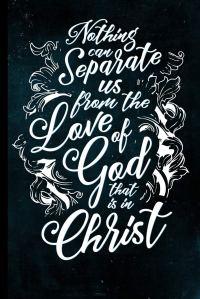 It’s amazing to me how we can interpret a passage to mean almost the exact opposite of its intended meaning simply because the intended meaning seems to conflict with our theology. A great example of this is Paul’s teaching in Romans 8:35-39:
 A view of morality you’ll hear a lot in the public square is social contract theory. Contractarianism holds that “morality rests on a tacit agreement between rationally self-interested individuals to abide by certain rules because it is to their mutual advantage to do so.”1 There is nothing intrinsically wrong with murder, rape, or torture, for example, but since rational self-interested persons do not want these things being done to them, they agree to extend the same courtesy to others.2 Philosopher, Edward Feser, offers at least six helpful criticisms of Contractarianism:
 For many years now I have harbored concerns about the way many churches practice the Lord’s Supper:
 Greg Koukl delivered a lecture at the 2006 Master’s Series in Christian Thought on the topic, “Truth is a Strange Sort of Fiction: The Challenge from the Emergent Church.” While the Emergent Church has morphed into the Progressive Church, the information is just as relevant today as it was in 2006.
 My friend, William Arnold, once made an observation about “the rapture” that is worth sharing.
 This is a difficult question. It’s not difficult theologically, but practically. If we give a simple “yes” answer, it makes Christianity and the God of Christianity look petty or bigoted. So how can we communicate the answer in a way that is both truthful and tactful? Greg Koukl from Stand to Reason has some tips for answering this question in a tactical manner.
 If God is omniscient, then He knows everything that will happen in the future – including everything you will ever do. God knows that on x date at time t1 you will stub your toe, and on q date at time t5 you will forget where you placed your keys. God has had such knowledge from eternity past. Since God cannot be mistaken, it is certain that you will stub your toe on x date at time t1 and forget your keys on q date at time t5. How, then, can our “choices” be free? Does God’s knowledge of the future eliminate free will, reducing us to mere actors who simply perform the parts of a cosmic play written for us by God from eternity past? Are we puppets with no control over our own destiny? Is our experience of free choice illusory? Darwinist, Robert Eberle, sums up the problem nicely:
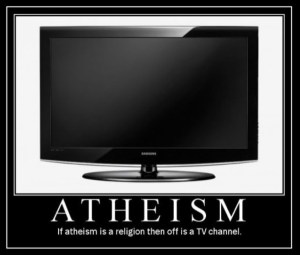 It’s not uncommon to hear some people characterize atheism as a religion. Is it? It depends, in part, on how one defines religion. That’s a tricky subject that does not have widespread agreement. Be that as it may, I think most people would say atheism can’t be categorized as a religion because religions worship deities, and atheism explicitly denies the existence of any deity. However, that’s not accurate. Most forms of Buddhism could be categorized as atheist or agnostic. There is no worship of any deity, and yet Buddhism is properly categorized as a religion.
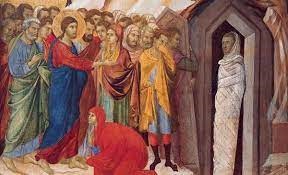 Traditionally, the fourth gospel is ascribed to the Apostle John, who is understood to be the mysterious beloved disciple that makes so many appearances in the book. However, based on the internal evidence, I am persuaded that this identification is mistaken. Lazarus is the beloved disciple, not John. Since the beloved disciple is identified as the author, wouldn’t that make Lazarus the author of the fourth gospel? In a sense, yes, but authorship is rightly attributed to John given ancient standards.
 Thinking to Believe