Bioethics


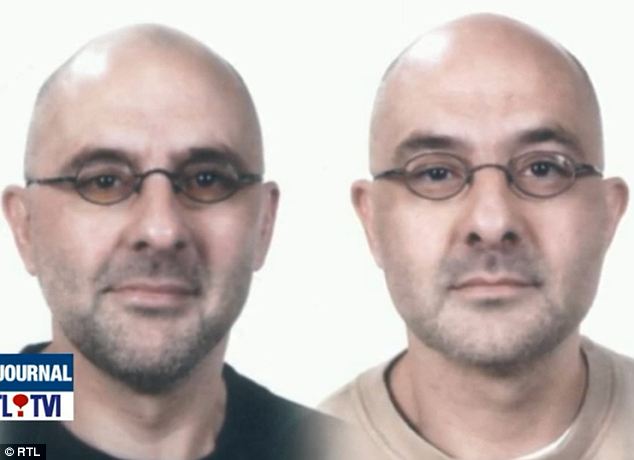
Deaf TwinsTwin brothers were recently euthanized in Belgium.  The two unidentified men – who appear to be in their 40s – were born deaf, and have spent their entire lives together.  When informed that they were both going blind, they decided to end their lives because they couldn’t bear the thought of not seeing one another again.

Belgium euthanizes 1% of the population every year.  What makes this brother-duo unique is that they were not terminally ill, nor were they experiencing any physical suffering.  They simply did not want to live with the quality of life they would be forced to live under, so they found a doctor to kill them before that day arrived.

Let this be a sounding alarm.  Euthanasia is not yet legal in this country, and only Oregon and Washington allow for physician-assisted suicide.  But there continues to be a big push for the legalization of physician-assisted suicide and euthanasia, and it is gaining momentum throughout the Western world.  Those who push for its legalization always tell the public that the legal option for suicide will only be reserved for the terminally ill who are experiencing agonizing pain at the end of their lives.  But that’s just the selling point.  Once a society buys into that line, the pro-death community always goes for the upsell.  Their ultimate goal is death-on-demand.

(more…)

What would you say if I told you that a politician supported a man’s legal right to physically abuse his wife under any circumstance, but is “a pro-woman hero” because his policies will help undermine the root causes of spousal abuse?  You’d say I was nuts, right?  Well, this same sort of argument is made all the time when it comes to pro-abortion politicians.

Eric C. Miller seems to have drunk this same Kool-Aid.  The title of my post is the title of his article in Religion Dispatches Magazine.  The title is as oxymoronic as “Adolph Hitler, Zionism Hero” or “Chick-fil-A, PETA hero.”  How does one come to the conclusion that the most pro-abortion president this nation has ever seen is actually a pro-life hero?  Birth control.

President Obama’s “Obamacare” will require all health insurance companies to cover contraceptives free of charge.  And according to a recent study by researchers at the Washington University School of Medicine, access to free birth control can reduce unintended pregnancies by up to 75%.  Miller reasons that since virtually all abortions are due to unintended pregnancies, access to free contraception will lower the number of unintended pregnancies, and thus severely lower the abortion rate.

(more…)

Elections tell you a lot about the worldview of Americans.  Last night’s election is no exception.  It reveals a lot about our moral views.  This election reveals that our nation has become very accepting of homosexuality and same-sex marriage, as well as smoking pot.

Homosexuality and Same-Sex Marriage

Wisconsin elected the first openly gay U.S. Senator.  Maine (53% vs. 47%) and Maryland (52% vs. 48%) voted to support the legalization of same-sex marriage.  Maryland voters merely confirmed their support of a law allowing same-sex marriage that was recently signed into law by the governor.  Maine chimed in on this same issue in 2009 after their legislature passed a bill legalizing same-sex marriage, and they rejected same-sex marriage with 53% of the vote.  Look how quickly public opinion is shifting!

The significance of what happened in Maine and Maryland cannot be underestimated.  This is the first time in history that same-sex marriage has been approved by the people of a state as opposed to the courts or legislature.

Washington also had an initiative to legalize same-sex marriage (same-sex marriage was already legal in all but name).  Only half of the votes have been counted thus far, but at present 52% have voted in favor of same-sex marriage, and thus it is likely to become legal there as well.  If so, nine states will have laws allowing same-sex marriage.

Minnesota tried to change their constitution to limit marriage to a man and a woman, but the initiative was defeated 51% to 48%.  The measure’s defeat, however, does not mean that same-sex marriage is legal.  It’s just not on the books as being illegal.

On the international front, France is now in the process of trying to legalize same-sex marriage there.  If it passes, they will become the 12th country in the world where same-sex couples can marry.  And yesterday, Spain’s high court upheld a 2005 law that legalized same-sex marriage.

(more…)

This is crazy.  A mentally handicapped women is pregnant.  While both she and her parents want to give birth the baby and give it up for adoption (6 couples are already waiting to adopt the baby), a judge is considering forcing her to have an abortion and undergo sterilization.  Outrageous!

In my opinion, abortion is the greatest moral issue of our day.  Nothing is more unjust than depriving innocent human beings of their God-given, inalienable right to life simply because we are inconvenienced by them.  For that reason, the issue of abortion figures prominently in my political affiliations and the way I vote.  While I am not a one-issue voter, and while I do not think it is always wrong to vote for a pro-choice political candidate (there are some political offices for which one’s personal views on abortion are irrelevant on a practical level), I will almost always vote for the pro-life candidate even if I have fundamental disagreements with him on other matters.  It’s not that I think economic issues do not matter, or that foreign policy does not matter, but that I think the moral injustice of abortion is much more important than these others. 

That is why I was disheartened to read the results of two polls which sought to determine what voters think the most important issues are when choosing the candidates they will give their vote to.  

(more…)

While dialoguing with a friend on the topic of abortion, I was asked how I define abortion.  After communicating my own definition of abortion, I thought it would be interesting to see how various dictionaries define it.  Needless to say, I was amazed at how inaccurate and politically correct the definitions were.  Here are a few: 

Dictionary.com
Abortion:

  1. The removal of an embryo or fetus from the uterus in order to end a pregnancy.
  2. Any of various surgical methods for terminating a pregnancy, especially during the first six months.

Interestingly, there is no mention of the fate of the unborn baby.  Instead, the focus is on the “pregnancy” and terminating that pregnancy.  

The first six months?  How is that relevant to the definition?  If a child is killed in utero at seven months, that is also called an abortion.  

(more…)

Wesley J. Smith wrote about the most recent statistics available on the number of deaths caused by euthanasia in the Netherlands.  The official report as reported in the Lancet notes that only 2.8% of all deaths in the Netherlands were the result of euthanasia.  The truth is about a decimal point off, however, and Smith explains why.

First, the report also notes that only 77% of all cases of euthanasia were reported to a review committee.  That means 23% of deaths by euthanasia were not reported, raising the total number to 3.5%.  But this leaves out the deaths involving terminal sedation, which is nothing more than “slow motion euthanasia.”  The practice of terminal sedation involves sedating a person to the point of unconsciousness, and then depriving them of food and water until they die.  In 2012 a full 12.3% of people were killed this way!  Since approximately 2% of people are so close to death when they receive terminal sedation that they die of their disease before they die of dehydration, we can reduce this number to approximately 10%.  That means that nearly 14% of deaths in the Netherlands are caused by doctors actively killing the patients.

It gets worse.  The 14% figure is based on the total number of deaths.  Given the fact that approximately half of all deaths do not involve end-of-life medical decisions (accidents, heart attacks), the reality is that approximately 28% of all deaths involving end-of-life decision making are the result of intentional killing by the medical community!  Of course, the headline “28% of deaths involving end-of-life medical care caused by suicide at the hands of doctors!” doesn’t sound nearly as good as “Only 2.8% of Dutch die by euthanasia.”  You’ve got to be careful when it comes to stats.  If you’re not careful, they (stats and Dutch doctors) will kill you.

A former professor of medical ethics and former chairman of the Institute of Medical Ethics in Britain, Raanan Gillon, wrote an editorial in the British Medical Journal lambasting a judicial ruling that gave pre-eminence to the sanctity of life.  Gillon argues that given scant medical resources, physicians should be allowed to withdraw treatment from stable, but minimally conscious patients suffering from severe dementia in order to cause their premature death.  

Yes, this is a preeminent bioethicist.  The field has become overrun with utilitarians who espouse views that are anything but ethical.

What makes humans valuable?  There are only two options: something inherent within the nature of humans themselves (intrinsic) or something acquired by humans (extrinsic).  Things that are valuable in and of themselves for the sake of themselves have intrinsic value (love, friendship, health, happiness, virtue, etc.).  Things that are valued for their function – what they do for us or how they allow us to obtain an intrinsic good (money) – have extrinsic value.   

When it comes to bioethics, the great divide is between those who think human value is extrinsic (and many would add, subjective) and those who think human value is intrinsic and objective.  Put another way, bioethicists are divided between the liberals who think human value is based on doing (extrinsic value) and conservatives who think human value is based on being (intrinsic value).  Whereas liberals only value the functional expression of certain human capacities, conservatives value the being who possesses those innate capacities whether they are being expressed or not.

(more…)

Adult stem cell research has been booming.  There are so many advances that it is hard to keep up.  Just recently researchers were able to take adult human skin cells, convert them back to an embryonic state, and then with a string of chemical cocktails convert them into heart cells that were capable of being transplanted into rats.  While not yet ready for human trials, this is a major milestone that may one day give real hope to those who have suffered heart attacks.


HT: Wesley J. Smith

The cover story for New York Magazine’s May 28th issue is titled “A Life Worth Ending.”  The author, Michael Wolff, “argues” for the voluntary euthanizing of the sick and elderly—not a rational argument, but an appeal to our emotions, our finances, and our hatred of being inconvenienced.   

Most of the article is taken up with the story of Wolff’s mother who is suffering from dementia, seizures, and a host of other debilitating health issues.  While no human could read his mother’s story without feeling a strong sense of compassion and empathy for both what his mother has endured as well as her family, his proposal is chilling: kill.  Here are some of the most provocative excerpts:

(more…)

Gallupreleased the results of their annual abortion questionnaire yesterday.  Since 1995 they have been asking Americans whether they identify as “pro-life” or “pro-choice.”  When they asked the question in 1995, 56% of Americans considered themselves pro-choice and 33% pro-life.  In 2012 the situation is nearly reversed with 50% identifying as pro-life and 41% as pro-choice. 

Often in questionnaires about abortion people’s true positions get blurred by the legal vs. moral distinction.  For example, someone may be opposed to abortion morally, but think people should have a legal right to an abortion.  Such a person could rightly identify as either pro-choice or pro-life.  To truly gauge people’s views on abortion we need to separate the legal question from the moral question. Gallupdid just that, asking people what they thought of the morality of abortion, apart from whether or not they think it should be legal.  The result was 51% saying they thought abortion was morally wrong, while only 38% thought it was morally acceptable. 


It’s 1856.  The American presidential race is on.  What would you say to me if I told you that I am opposed to slavery, but was prepared to vote for a political candidate who personally supported it, or who was part of a political party whose platform included support for it?

While there would be no reason to question the sincerity of my personal belief/position, one would be thoroughly justified in questioning the level of my concern and the propriety of my political priorities.  If candidates’ economic and foreign policy was more influential in determining my vote, then slavery ranks low on my totem poll of priorities.  While I say I am morally outraged that society would permit the use of human beings as property, my political choices indicate that my concerns lie elsewhere.  After all, how could one be genuinely concerned for the welfare of African Americans while at the same time supporting political parties and political candidates whose platform includes the enslavement of African Americans?

(more…)

Bioethics is a strange field.  Not only are there no objective qualifications for being a bioethicist, but one need not even hold views that are deemed ethical by most morally sane people.  Indeed, it seems that the field of bioethics consists primarily of liberals who hold to a utilitarian philosophy of ethics in which almost everything is permissible.  That is why you can have bioethicists advocating infanticide in respectable bioethics journals like the Journal of Medical Ethics.  Alberto Giubilini and Francesca Minerva wrote an article for the journal titled “After-birth Abortion: Why Should the Baby Live?”[1] that appeared online February 23, 2012.

The abstract reads:

Abortion is largely accepted even for reasons that do not have anything to do with the fetus’ health. By showing that (1) both fetuses and newborns do not have the same moral status as actual persons, (2) the fact that both are potential persons is morally irrelevant and (3) adoption is not always in the best interest of actual people, the authors argue that what we call ‘after-birth abortion’ (killing a newborn) should be permissible in all the cases where abortion is, including cases where the newborn is not disabled.

While I disagree vehemently with their reasoning and conclusion, this is where the arguments for abortion logically lead one to.  The authors recognize that birth is a trivial and subjective dividing line for determining who is valuable and who is not; who can be killed and who cannot.

HT: Wesley Smith


[1]J Med Ethics doi:10.1136/medethics-2011-100411.

Scott Klusendorf is the best pro-life apologist out there.  No one can say as much as Scott can say in as little space and as eloquently as he can.  He wrote an essay for the Christian Research Journal addressing five questions often asked of pro-life advocates and the pro-life movement:

  1. Are pro-life advocates focused too narrowly on abortion? After all, informed voters consider many issues, not just one.
  2. Why don’t pro-life advocates care about social justice both here and in developing countries?
  3. Why don’t pro-lifers oppose war like they do abortion?
  4. Instead of passing laws against abortion, shouldn’t pro-life Christians focus on reducing its underlying causes?
  5. Should pastors challenge church members who support a political party sworn to protect elective abortion?

It’s worth checking out his answers.  It is not a long piece, and he provides some great answers to ponder.

In California, minors are no longer able to use tanning beds even if they have their parent’s consent, but of course they can still obtain abortions even without their parent’s consent.

This is where a culture of death leads to: believing that people with disabilities are better off dead, and suing doctors for “wrongful life.” This is what happens when you stop believing humans have intrinsic value, and when selfishness becomes a virtue.

This is reminiscent of the Nazi idea of a “life unworthy of life.” When we think we are being more merciful by killing people with handicaps, we have become a very sick society. Can you imagine if this boy ever finds out about this: that his mother would have rather aborted him and sued the doctor for allowing him to be born?

There has been a long debate over whether or not abortion is directly tied to poor mental health.  In 2008 the American Psychological Association concluded that there wasn’t any research supporting the idea that abortion caused poor mental health.  A new study published in the British Journal of Psychiatry, however, is challenging this conclusion.

This new study is a meta-analysis of 22 previous studies which examined the mental health of 877,000 women, of which 163,831 had an abortion.  According to the study, “the results revealed that women who had undergone an abortion experienced an 81 per cent increased risk of mental health problems, and nearly 10 per cent of the incidence of mental health problems were shown to be directly attributable to abortion.”  Having an abortion was found to increase one’s risk of experiencing the following:

Recently I was listening to the July 23, 2011 broadcast of Unbelievable, a great UK radio program that faces off Christians and non-Christians on a range of theological, philosophical, and moral/social topics.  The July 23rd broadcast addressed the issue of abortion.  Representing the pro-abortion side was Wendy Savage, and representing the anti-abortion side was Madeleine Flannagan.  While much could be said concerning the dialogue, I want to focus on one particular comment from Ms. Savage.  Ms. Flannagan was arguing that it was just as wrong to kill a baby in the womb as it is to kill a baby outside the womb.  Ms. Savage responded to the effect, ‘It’s not a baby, it’s a fetus.”

Pro-choicers often make this sort of “argument.”  The problem is that it commits a categorical error.  “Fetus” is not a type of life distinct from a “baby” or “human being,” but the name we give a particular stage of human development—on the same level of “adolescence, toddler, adult,” etc.  So to say “it’s not a baby, it’s a fetus” is only to say “it’s a younger human being, not an older one.”  But that observation does not tell us whether or not it is morally acceptable to kill younger human beings.  That’s the million dollar question, and one pro-abortion advocates like to skirt.

(more…)

Abort73.com is known for using powerful visuals to demonstrate the gravity of abortion.  Now they’ve used their talent to create a video that tackles the common misconception that the unborn are just a clump of cells in the first trimester of pregnancy.  Check it out.


« Previous PageNext Page »