New Scientist published an article last week explaining why the universe must have had a beginning. While they end the article with speculative physics that try to place that beginning so far back into the past so as to be virtually indistinguishable from an eternity ago, a beginning to the universe remains. And if physical reality began to exist a finite time ago, then it must have a transcendent, immaterial, eternal, spaceless cause.
Cosmological Argument
Archived Posts from this Category
December 11, 2012
New Scientist on why the universe must have had a beginning
Posted by Jason Dulle under Apologetics, Cosmological Argument, Science, Theistic Arguments[19] Comments
October 17, 2012
Can the universe come from nothing? If so, I want nothing for Christmas.
Posted by Jason Dulle under Apologetics, Cosmological Argument, Naturalism, Science, Theistic Arguments1 Comment
Luke A. Barnes, a specialist in astro-physics and researcher at the Sydney Institute for Astronomy, University of Sydney, has an excellent quote responding to those who claim it’s possible that the universe could have come into being from nothing:
The claim regarding a universe coming from nothing is either nonsensical or a non-explanation. If we use the dictionary definition of ‘nothing’ – not anything – then a universe coming from nothing is as impossible as a universe created by a married bachelor. Nothing is not a type of thing, and thus has no properties. If you’re talking about something from which a universe can come, then you aren’t talking about nothing. ‘Nothing’ has no charge in the same sense that the C-major scale has no charge – it doesn’t have the property at all. Alternatively, one could claim that the universe could have come from nothing by creatively redefining ‘nothing’. ‘Nothing’ must become a type of something, a something with the rather spectacular property of being able to create the entire known universe. It’s an odd thing to call `nothing’ – I wouldn’t complain if I got one for Christmas.[1]
Love it!
[1]Luke A. Barnes, “The Fine-Tuning of the Universe for Intelligent Life,” 21 December 2011; available from http://arxiv.org/abs/1112.4647; Internet; accessed 16 April 2012; page 67.
July 17, 2012
How Can We Know Something Can’t Come from Nothing if We’ve Never Experienced Nothing?
Posted by Jason Dulle under Apologetics, Cosmological Argument, Philosophy, Theistic Arguments[18] Comments
 Theists often use the basic metaphysical principle that something only comes from something as evidence for God’s existence. We reason that if the universe (something) came into being, then it must have been caused to come into being by something else – it could not have simply materialized out of nothing without a cause because out of nothing, nothing comes. The something that brought the universe into being must itself be immaterial, spaceless, and eternal, which are some of the basic properties of a theistic being.
I have heard a few atheists object to this argument by questioning the veracity of the basic metaphysical principle that something can only come from something on the grounds that we have never experienced nothing to know whether or not it is possible for something to come from nothing, and thus we cannot know that it’s impossible for something to come from nothing. While we may not have any direct experience of something that comes into being from nothing, it does not mean it’s not possible. Indeed, in the case of the universe it was not only possible, but it actually happened.
July 10, 2012
Another Scientist Claiming that the Laws of Physics + Time = Protons and Plato
Posted by Jason Dulle under Apologetics, Cosmological Argument, Naturalism, Science, Theistic Arguments[10] Comments
 Astrophysicist Alex Filippenko of the Universityof California, Berkeley took part in a panel discussion on June 23, 2012 at the SETICon 2 conference on the topic “Did the Big Bang Require a Divine Spark?” Taking a page out of the playbooks of Stephen Hawking and Lawrence Krauss, Filippenko claimed that “the Big Bang could’ve occurred as a result of just the laws of physics being there. With the laws of physics, you can get universes.”[1] If the laws of physics are responsible for churning out universes, then the ultimate question is not the origin of the universe, but the origin of the laws of physics. Where did they come from? Filippenko recognizes this problem, saying “The question, then, is, ‘Why are there laws of physics?’ And you could say, ‘Well, that required a divine creator, who created these laws of physics and the spark that led from the laws of physics to these universes, maybe more than one.’”[2]
June 21, 2012
Even if the universe is eternal, it still needs a cause
Posted by Jason Dulle under Apologetics, Atheism, Cosmological Argument, Naturalism, Theistic Arguments[88] Comments
 Given my recent post on falsely assuming that God’s eternality excludes the possibility that He has a cause (and thinking premise 1 of the kalam cosmological argument proves He doesn’t have a cause), I thought it fitting to address atheists who assume that the universe, if it is eternal, is uncaused. Some atheists reason as follows:
(1) If the universe began to exist, then it has a cause
(2) The universe did not begin to exist
(3) Therefore the universe did not have a cause
This commits the fallacy of denying the antecedent. The form of the fallacy is as follows:
June 19, 2012
Premise 1 of the Kalam Cosmological Argument Does not Prove God Has no Cause
Posted by Jason Dulle under Apologetics, Cosmological Argument, Theism, Theistic Arguments[46] Comments
 The kalam cosmological argument (KCA) for God’s existence goes as follows:
(1) Everything that begins to exist has a cause
(2) The universe began to exist
(3) Therefore, the universe has a cause
When we consider what kind of cause would be necessary to bring the universe into being, we arrive at an immaterial, eternal, spaceless, personal, intelligent, and powerful being – an apt description of what theists identify as God. Atheists commonly object and theists often wonder, “Well, then who made God?” Theists rightly point out that the argument does not claim everything has a cause, but only those things that begin to exist. As an eternal being, God never began to exist, and thus does not need a cause. Indeed, the question itself is nonsensical given the kind of being God is.
We apologists must be careful, however, not to think that the 1st premise of the KCA proves God does not have a cause. The premise only pertains to things which begin to exist. We cannot infer anything about the causal requirements or lack thereof for eternal beings from this premise. While the 1st premise of the KCA does not require that God have a cause, to think it proves God does not have a cause is to commit the fallacy of denying the antecedent:
June 11, 2012
Is postulating an eternal God explanatorily equivalent to positing an eternal universe?
Posted by Jason Dulle under Apologetics, Cosmological Argument, Nature of God, Theism, Theistic Arguments, Theology[15] Comments
Many atheists assert that an eternal universe is explanatorily equivalent to an eternal God. For example, Sagan once asked, “If we say that God has always been, why not save a step and conclude that the universe has always been?”[1] And just recently, two prominent atheists made the same claim. In his new book, A Universe from Nothing, Lawrence Krauss writes, “[T]he declaration of a First Cause still leaves open the question, ‘Who created the Creator?’ After all, what is the difference between arguing in favor of an eternally existing creator versus an eternally existing universe without one?”[2] Victor Stenger agrees with Krauss:
June 7, 2012
Does Ockham’s Razor inveigh against a creator God?
Posted by Jason Dulle under Apologetics, Atheism, Cosmological Argument, Theism, Theistic Arguments[7] Comments
 In response to various cosmological and teleological arguments for the existence of a creator God some atheists appeal to the principle of parsimony—often dubbed “Ockham’s Razor”—to argue that invoking God to explain our cosmic origins is both unnecessary and unhelpful. Introducing a divine being to explain the origin of the universe is said to be less parsimonious than simply acknowledging that the universe popped into existence uncaused from absolutely nothing.
May 22, 2012
Do Quantum Mechanics Invalidate the Causal Principle?
Posted by Jason Dulle under Apologetics, Cosmological Argument, Science, Theistic Arguments[33] Comments
 Premise one of the kalam cosmological argument (KCA) states that everything which begins to exist has a cause. It goes on to reason that since the universe began to exist, it too requires a cause. Given the properties required of such a cause, the KCA is a powerful argument for a personal creator God.
To avoid the conclusion of the argument many new atheist-types take exception with the causal principle embodied in premise 1. Quantum physics, they say, has shown that there can be effects without causes. And if quantum events do not need causes, then perhaps the universe doesn’t either.
May 1, 2012
Illustrating the Argument for God Based on Contingency
Posted by Jason Dulle under Apologetics, Cosmological Argument, Theism[9] Comments
 During his debate with Arif Ahmed and Andrew Copson at the Cambridge Union Society, Peter S. Williams gave a lucid illustration for the argument for the existence of God based on the contingency of material reality.[1]
Imagine if I asked you to loan me a book. You say you don’t have it, but you’ll ask your friend to loan you his, and in turn you’ll loan it to me. When you ask your friend for the book, he says he does not have it, but he’ll ask his friend to borrow his copy, and in turn he’ll loan it to you, who will loan it to me. If this process continues ad infinitum, I will never receive the book. If I do receive the book it is because the process of requesting to borrow the book is not infinite, but temporally finite. Somewhere down the chain of requests to borrow the book, someone actually had the book without having to borrow it from someone else.
April 3, 2012
NYT reviews Lawrence Krauss’ new book on why something exists rather than nothing…and it isn’t pretty
Posted by Jason Dulle under Apologetics, Cosmological Argument, Naturalism, Science[22] Comments
 Physicist Lawrence Krauss’ new book, A Universe from Nothing: Why There is Something Rather than Nothing, purports to answer the age-old philosophical question of why there is something rather than nothing from a scientific, rather than philosophical or religious perspective. In the book’s afterword Richard Dawkins announces that Krauss has triumphed in his quest:
Even the last remaining trump card of the theologian, “Why is there something rather than nothing?,” shrivels up before your eyes as you read these pages. If On the Origin of Species was biology’s deadliest blow to supernaturalism, we may come to see A Universe From Nothing as the equivalent from cosmology. The title means exactly what it says. And what it says is devastating.
Columbia professor of philosophy, David Albert, couldn’t disagree more. In his scathing review for the New York Times, Albert points out that Krauss has not answered the question at all.
January 22, 2012
Alexander Vilenkin: “All the evidence we have says that the universe had a beginning.”
Posted by Jason Dulle under Apologetics, Cosmological Argument, Naturalism, Theistic Arguments[17] Comments
 In honor of Stephen Hawking’s 70th birthday, a meeting of the minds took place to discuss the state of cosmology. New Scientist[1] reported on the events of the night, one of which was a talk delivered by famed cosmologist, Alexander Vilenkin, describing why physical reality must have a beginning. But first, a little background is in order.
For a long time scientists held that the universe was eternal and unchanging. This allowed them to avoid the God question—who or what caused the universe—because they reasoned that a beginningless universe needed no cause.[2] They recognized that if the universe began to exist in the finite past that it begged for a cause that was outside of the time-space-continuum. As Stephen Hawking told his well-wishers in a pre-recorded message, “A point of creation would be a place where science broke down. One would have to appeal to religion and the hand of God.”
Scientific discoveries in the early and mid-20th century, however, forced cosmologists to the uncomfortable conclusion that our universe came into being in the finite past. The scientific consensus was that the origin of our universe constituted the origin of physical reality itself. Before the Big Bang, literally nothing existed. The universe came into being from nothing and nowhere. This sounded too much like the creation ex nihilo of Genesis, however, and seemed to require the God of Genesis to make it happen. As a result, some cosmologists were feverishly looking for ways to restore an eternal universe.
January 4, 2012
Stephen Hawking: God Could not Create the Universe Because There Was No Time for Him to Do So
Posted by Jason Dulle under Apologetics, Atheism, Cosmological Argument, Naturalism, Science, Theism, Theistic Arguments[448] Comments
 Several months ago the Discovery Channel aired a television series featuring Stephen Hawking called Curiosity. Whereas in his book The Grand Design Hawking claimed that God is not necessary to explain the origin of the universe given the existence of physical laws such as gravity, in Curiosity he argued that God could not have created the universe because there was no time in which God could have done so:
[D]o we need a God to set it all up so a Big Bang can bang? … Our everyday experience makes us convinced that everything that happens must be caused by something that occurred earlier in time. So it’s natural for us to assume that something—perhaps God—must have caused the universe to come into existence. But when we’re talking about the universe as a whole, that isn’t necessarily so.
(more…)
November 16, 2011
Cosmologist George Ellis on the Multiverse
Posted by Jason Dulle under Apologetics, Cosmological Argument, Naturalism, Science[7] Comments
 In the August 2011 edition of Scientific American, famed cosmologist, George Ellis, wrote an article titled “Does the Multiverse Really Exist?” Here are some great excerpts from that article:
“Similar claims [about a multiverse] have been made since antiquity by many cultures. What is new is the assertion that the multiverse is a scientific theory, with all that implies about being mathematically rigorous and experimentally testable. I am skeptical about this claim. I do not believe the existence of those other universes has been proved—or ever could be. Proponents of the multiverse, as well as greatly enlarging our conception of physical reality, are implicitly redefining what is meant by ‘science.’”—pg 39
March 17, 2011
Science Cannot Prove the Universe is Eternal
Posted by Jason Dulle under Apologetics, Cosmological Argument, Epistemology, Science, Theistic Arguments[17] Comments
 In an earlier post I argued that the nature of science is such that it cannot demonstrate an entity/event to be uncaused, and thus scientific discoveries can never inveigh against the causal premise (“whatever begins to exist has a cause”) of the kalam cosmological argument (KCA) for God’s existence. Here I want to extend the discussion to the cosmological premise (“the universe began to exist”) of the KCA as well.
The contrapositive of the second premise is “the universe is eternal.” The nature of science, however, renders it incapable of demonstrating the universe to be eternal even if the universe were eternal. Why? Science is an empirical discipline based on what can be observed and quantified. For science to prove that the universe is eternal, it would have to do so empirically. But this is impossible. An eternal past cannot be observed or quantified.
March 10, 2011
Science Cannot Identify Uncaused Entities
Posted by Jason Dulle under Apologetics, Cosmological Argument, Science, Theistic Arguments[29] Comments
 The kalam cosmological argument (KCA) for God’s existence goes as follows:
(1) Anything that begins to exist requires a cause
(2) The universe began to exist
(3) Thus, the universe requires a cause
Additional reasoning leads us to conclude that the cause of the universe is God. Given that whatever caused space, time, and matter to begin to exist cannot itself be spatial, temporal, or material. Furthermore, whatever caused our orderly universe to come into being a finite time ago must be immensely powerful, intelligent, conscious, and hence personal. These are apt descriptions of a being theists have long identified as God.
Some seek to undermine this causal argument for God’s existence by denying the first premise. They point to quantum mechanics and virtual particles as evidence that there are exceptions to the causal principle.
January 31, 2011
Does it make sense to have an efficient cause without a material cause?
Posted by Jason Dulle under Apologetics, Cosmological Argument, Theistic Arguments[6] Comments
I was doing some research on William Lane Craig’s website the other day when I stumbled on an interesting objection to the kalam cosmological argument (KCA) I had not heard before. I thought it was interesting, so I’m passing it along. It requires a brief set-up.
According to Aristotle there are four types of causes:
1. Material cause (that of which something is made)
2. Formal cause (a thing’s essence, form, or pattern)
3. Efficient cause (the thing that produces the change)
4. Final cause (the purpose for which something is caused)
Consider a marble statue. The block of marble from which it was formed is the material cause, the precise shape of the statue is the formal cause, the sculptor is the efficient cause, and beauty is the final cause.
The two causes we are most familiar with are material and efficient causes. Point to anything in the universe and we can tell you what it is made of, and what caused it to exist. But what about the universe itself? The origin of the universe marks the beginning of material stuff, so it cannot have a material cause. It came into being ex nihilo. The KCA argues, however, that the universe still needs an efficient cause. Something outside the universe is needed to cause the universe to come into being because contingent entities don’t just pop into existence uncaused.
January 13, 2011
“Who Caused God” is a Meaningless Question
Posted by Jason Dulle under Apologetics, Cosmological Argument, Nature of God, Theistic Arguments, Theology[17] Comments
I was listening to a podcast by Jim Wallace from PleaseConvinceMe.com the other day on my way to work. He was talking about atheists’ stock objection to the cosmological arguments[1]: “Well, then, who caused God?”
Wallace pointed out that the question itself is meaningless. He illustrates his point by asking, What sound does silence make? Silence is soundless, of course, so it makes no sense to ask what kind of sound it makes. Likewise, the question, Who created God? is a meaningless question because by definition God is an eternal, uncreated being. To ask, Who caused God?, then, is to ask, Who caused the Uncreated Being to exist? which is meaningless.
For additional information on responding to the “Who made God?” objection, read my post “Inexcusable Ignorance Part II.”
[1]Which argue that the universe needs a cause, and that cause is God.
December 8, 2010
Unwarranted Skepticism of Premises in Theistic Arguments
Posted by Jason Dulle under Apologetics, Cosmological Argument, Epistemology, Logic, Philosophy, Theistic Arguments, Thinking[18] Comments
 In my experience, most opponents and skeptics of theism reject theistic arguments on less than epistemically justifiable grounds. For example, premise one of the kalam cosmological argument proposes that “everything which begins to exist has a cause” (and concludes that since the universe began to exist, the universe has a cause). Some detractors of the argument will counter that since our only experience with cause and effect is within the spatio-temporal world, we cannot be certain that causation is possible outside the spatio-temporal world. While I think this is a fair point to consider, does it really undermine the premise, and hence the conclusion? It doesn’t seem to me that it does. While it is possible that the principle of cause and effect does not apply beyond the temporal framework of our universe, unless one can demonstrate that non-temporal causality is incoherent/impossible, the mere logically possibility that the principle of causality does not hold outside of the universe does not override the warrant we have for thinking all effects require an antecedent cause (and that contingent things require an external cause).
September 9, 2010
Stephen Hawking Puts God on Unemployment
Posted by Jason Dulle under Apologetics, Atheism, Cosmological Argument, Science, Theism[13] Comments
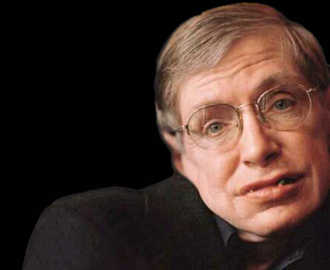 Some of you may have seen a news article circulating every major news outlet. With provocative titles such as “God did not create the universe, says Hawking,” and “Why God Did Not Create the Universe,” one would expect to find some new scientific discovery/argument proving that the universe is capable of creating itself – no God needed. After reading the articles, however, that expectation will quickly turn into disappointment.
Stephen Hawking is probably the most famous physicist alive. While he is clearly a brilliant man, his case for the sufficiency of natural processes to account for the origin of the universe is truly embarrassing. Consider the following claim: “Because there is a law such as gravity, the universe can and will create itself from nothing. Spontaneous creation is the reason there is something rather than nothing, why the universe exists, why we exist. It is not necessary to invoke God to light the blue touch paper and set the Universe going.”
Where to begin! First, while Hawking is attempting to explain how something could come from nothing, he only explains how something (the universe) comes from something else (physical laws, namely gravity). True nothingness is the absence of any and all existents, including physical laws. So from whence come the physical laws?

 Thinking to Believe