Apologetics


OmnipotentSome people claim the existence of God cannot be falsified.  As I have argued elsewhere, this is not true. One way to falsify God’s existence is to show that the concept of God is logically incoherent. This can be done by demonstrating that two or more supposed divine attributes are logically incompatible. For example, it has been argued that omnipotence and omnibenevolence are logically incompatible.

The objection

The argument is set forth along these lines: Omnipotence entails the power to actualize any state of affairs that is logically possible to actualize. There is nothing logically incoherent about an omnipotent being committing evil, so omnipotence must include the power to actualize a world in which the omnipotent being commits evil. As an omnibenevolent being, however, God is incapable of committing evil.  Therefore, God cannot be omnipotent.  While a being can be either omnibenevolent or omnipotent, no being can be both omnibenevolent and omnipotent.  Since the theistic concept of God entails both, the God of theism cannot exist.

Areas of agreement

How might the theist respond to this objection?  Let us start with some points of agreement.  First, we agree that God must be both omnipotent and omnibenevolent.  Theistic philosophers have long held that the concept of God is that of the greatest conceivable being (GCB).  God is a being of which a greater cannot be conceived.  If we can conceive of some being Y who is greater than the being we call God, then being Y is the true God. Since it is greater to be all-powerful than partially powerful, the GCB must possess the property of being all-powerful.  Likewise, since it is greater to be all-good than partially good, the GCB must possess the property of being all-good.

(more…)

William Lane Craig’s ministry, Reasonable Faith, has released another excellent video illustrating a major argument for God’s existence.  This time it’s the argument from contingency.  Of the four released thus far (kalam, moral, cosmic fine-tuning), this is probably the most difficult to follow, but it also has the best graphics.  Take a look:

Two cases out of the United Kingdom are causing great concern for the freedom of speech.

Earlier this year a Christian street preacher in England, Mike Overd, was convicted for quoting Leviticus 20:13 as a condemnation against homosexuality after a homosexual complained to police. The judge reasoned that since Leviticus 20 doesn’t just condemn homosexuality, but prescribes the death penalty for it, the preacher was inciting violence against homosexuals (even though Overd claims he did not quote the portion of the text calling for the death penalty). He even added that he would have avoided a fine had he quoted from Leviticus 18:22 instead since there is no mention of the death penalty for homosexuality in that passage.

(more…)

It was announced last week that another King Hezekiah bulla has been found (initially discovered in 2009).  This is a small clay seal (13×12 millimeters) used by Hezekiah to seal and authenticate a document. It was molded around the strings that tied the document shut. In fact, we can still see the impression from the fibers on this bulla.

We already had eight other bullae bearing King Hezekiah’s name, but they were unprovenanced. This new bulla was uncovered during an official excavation at the Temple Mount in Jerusalem by Dr. Eliat Mazar. It reads, “Belonging to Hezekiah, (son of) Ahaz, king of Judah.”

There’s a nice video on the find here.

The discovery of this bulla should remind us again that the Bible is not a book of fairy tales. It is written as history, and archaeological finds such as this prove that it is based on real historical people and real historical events.

diversityDiversity is not a value.  Diversity just is.  We don’t value diversity for diversity’s sake, but for what that diversity provides us. For example, we value diversity in food because we enjoy eating different kinds of food.  We value diversity of clothing styles because we like to express ourselves in different ways, and we think it would be wrong to make everyone wear the same kind of clothes or eat the exact same food.  But there are some examples of diversity that should not be valued or “celebrated.”  We should not celebrate diversity in moral views, particularly when some of those moral views entail gross immorality.  The British did not celebrate the diversity of Indians when they burned their widows on the funeral pyre.  They forcibly ended that barbarism.  We should not celebrate diversity in how women’s genitalia is treated – celebrating those who mutilate women’s genitalia alongside those who do not.  We should not celebrate the diversity of killing one’s own daughter after she is raped to preserve the honor of the family.  Not all ideas are of equal value.  We celebrate the diversity of people, but not the diversity of ideas.  Bad ideas should be fought against – first by persuasion, but if that fails, in some cases we must fight those ideas by force.

Car-on-fireImagine for a moment that a man wrecks his car in a rural area. The car bursts in flames and the man is trapped inside. There is no way for authorities to reach him in time before he dies. Knowing this, he reaches for his gun in his glove box and shoots himself in the head to avoid a long and agonizing death by fire.  Did he commit sin (suicide), or is this morally justified?

Now let’s change the scenario a bit. A man wrecks his car in a rural area, right in front of your house. The authorities could never reach him in time to save him.  In this scenario, however, he does not have a gun.  You hear the accident and explosion from your house and rush to the road to see what has happened.  You can hear the man writing in pain from within the car.  He sees you through the flames and shouts, “Shoot me!  Kill me please!”  Is it morally permissible for you to honor his request, killing him with a gun to shorten the amount of agony he must suffer?  Or is this murder?

(more…)

In Texas of all places.  Two employees at a daycare in Houston were fired for refusing to call a six year old girl a boy after her two fathers instructed the daycare center leadership that she should now be referred to as a boy.  Only in our day can people be fired for refusing to deny reality.

I always knew the move to normalize transgenderism would follow on the coattails of the “homosexual campaign,” but I never anticipated that the acceptance of transgenderism was actually embedded within the very pockets of the coat itself.


HT: Wintery Knight

Many people assume that science and religion conflict. Who believes this? The religious people, right? They are the ones who are anti-science, right? No. Pew Research indicates that those most likely to see a conflict between religion and science are not the most religious, but the least religious.

Why is that? It could be that the most religious people are scientifically illiterate, and are unaware of the conflict between their faith and science. But this is opposed to the meme that the most religious people are the most anti-science because they recognize that science conflicts with their religious faith. One cannot be both scientifically illiterate and know enough about science to determine that science conflicts with one’s faith.

Perhaps the most religious people do not see a science-faith conflict because they are scientifically literate and have found a way to reconcile the findings of both (e.g. theistic evolution).

(more…)

Ryan Anderson writes in the Daily Signal about a new study showing that contrary to the claims of some physician assisted suicide (PAS) advocates, legalizing PAS increases the number of suicides.  Did we really need a study to tell us this?  No, but these days common sense can’t get a hearing unless it is confirmed by a study.


HT: Wintery Knight

Empty BedThe predominant sexual ethic today is built on three moral principles: 1) Consent; 2) No harm involved; 3) Whatever feels good.  As long as it feels good, no one is getting hurt, and those involved are consenting to it, it is deemed to be morally acceptable.  Timothy Hsiao has written a great article showing why consent and harmlessness are not sufficient to justify a sexual behavior.

Regarding consent, Hsiao argues that consent ought to be based on what is good for us (not just desired by us), and thus the inherent goodness of the act – not just consent – is required. Furthermore, to give consent is to give someone moral permission to do what they would not be justified in doing absent the consent. Giving consent, then, presumes that one has the moral authority to give that permission to another. But if one lacks the moral authority to grant such permissions, consent is not sufficient to make an act ethical. If the act in question is not morally good, then the consenter lacks the proper authority to give consent.

(more…)

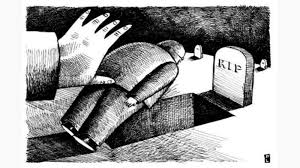
Push into GraveLong commutes, domestic responsibilities, teaching, and the need for more sleep (old age) have prevented me from blogging as much as I would like to.  That means I get behind on my cultural commentary. Case in point: the legalization of assisted suicide in California.

On October 5 Governor Brown signed the bill into law after years of failed attempts from the assisted suicide lobby (the CA Senate approved it by a vote of 23 to 14, and the CA House approved it by a vote of 43 to 34).  Assisted suicide is not something I write about too often, but it is a matter of concern to me. Here’s why I think it should be a matter of concern to you as well:

Legalizing suicide sends the message that there are some human lives not worth living. While suicide advocates say the option for suicide gives people dignity, it does anything but. It robs them of their dignity and value. It communicates a message to them that they are better off dead than alive. Indeed, to claim that this is “death with dignity” is a backhanded way of saying those who choose to suffer in life rather than choosing to take their own life lack dignity. The message is loud and clear: death is more noble than life.

(more…)

why_did_god_allow_the_possibility_of_evil_and_suffering_tSteven Cowan and Greg Welty argue contra Jerry Walls that compatibilism is consistent with Christianity.[1] What they question is the value of libertarian free will (the freedom to do other than what one, in fact, chooses to do, including evil).  Why would God create human beings with the ability to choose evil?  Libertarians typically argue that such is necessary in order to have genuine freedom, including the freedom to enter into a loving relationship with God.  After all, if one could only choose A (the good), and could never choose B (the evil), then their “choice” of A is meaningless.  The possibility of truly and freely choosing A requires at least the possibility of choosing B. The possibility of evil, then, is necessary for a free, loving relationship with God. It is logically impossible for God to create free creatures who are unable to choose anything other than A.

Cowan and Wells ask, however, what would be wrong with God creating us in a way that made it impossible for us to desire or choose evil, and yet our choice would still be free.  All that would be required is the presence of more than one good to choose from (A, C, D, E, F…).  No matter what we choose, we could have chosen some other good, but never evil.  This avoids the logical contradiction and preserves real freedom of choice.  Cowan and Wells argue that such a world would be superior to our world since this possible world preserves libertarian free will, but lacks evil.  In their assessment, there is no reason for the actual world if the value of libertarian free will (relationship with God, gives us freedom to choose the good, gives us the freedom to do otherwise) could be obtained without the possibility of evil.  For the libertarian who wants to maintain that the actual world is superior to this possible world, they must maintain that the greatest value of libertarian freedom is that it gives us the opportunity to do evil.  Why would God value our ability to do evil if He is good and hates evil?  Why would God create a world in which libertarian freedom results in evil if He could have achieved all of the goals of libertarian freedom without evil?

(more…)

BidenVice President Biden says abortion is always wrong, but he won’t impose his views on others. Mr. Biden, are there any other human beings believe it’s wrong to kill, but won’t impose that view on others?  How about newborns?  How about toddlers?  How about teenagers (some parents would like to kill a few)?  Why not allow others to kill newborns, toddlers, and teenagers?  Why do you feel the right to impose your view on others for these human beings, but not unborn humans?  Why are you discriminating against the unborn?

Deliberation-by-Mario-Sánchez-NevadoCompatibilists are those who believe that freedom and determinism are compatible with each other. On their view, one is free so long as they make actual choices. And they maintain that people do make actual choices: They choose what they desire. Of course, the problem comes when you ask where those desires come from. The desires are determined by God or physics. So what if physics or God determined for you to desire to kill your roommate? Then you will “choose” to kill your roommate.

In my estimation, this is not a very robust sense of freedom. Indeed, I would argue that it is not freedom at all. If desires cause actions, but the desires are determined by something other than the self, then the actions are determined as well, even if only in a secondary or intermediate sense. More could be said in the way of critique, but I have done so elsewhere.

For this post, I just want to pose a simple question to compatibilists: If our choices are caused by our desires, are our desires are determined by God/physics, then why is “choosing” so hard?  Why do we struggle with deliberation?  The only reason we experience deliberation is because we possess conflicting desires and we need to weigh them to decide which desire to act on.  If our desires are determined, does that mean God (or physics) determined for us to have conflicting desires?  If so, what would the purpose be other than to give us the false appearance of having libertarian free will?

Doritos-RainbowTongue-in-cheek, of course, but c’mon!  What’s next?  Polygamous Doritos that contain three flavors in a single bag?  I can see the ad: “They’re Doritogomous!”  Or perhaps Bisexual Doritos (Bi-ritos), where each chip contains two flavors?

It’s just amazing to me how brands like Oreos and Doritos are bending over backwards to promote the moral acceptance of homosexuality. Enough already. Let me eat my Doritos in peace. They are “food,” not propaganda.

Religious-Liberty-CensoredIt’s alarming to me how the freedom of religion guaranteed by the First Amendment is being framed these days by government officials. It is being limited to the freedom to believe as you want privately, rather than the ability to practice your faith publicly. Case in point: same-sex marriage. A Christian business owner is free to believe that same-sex marriage is immoral, but they are not free to act on their convictions by denying a request to offer their services in support of a same-sex wedding. They can believe as they want, but they cannot act on those beliefs in a public manner.

This is wrong. The First Amendment guarantees us the right to believe and practice our religion without government interference.  The freedom of religion is not limited to the private sphere, but to public expression as well.  Indeed, religious freedom that doesn’t allow one to act as if their beliefs are actually true is not religious freedom at all.

If we allow the government to reinterpret the First Amendment as a right to private belief only, we will cease to have true religious freedom in this country. Freedom of religion means that one is free to believe as they want, and to act on those beliefs.

Medical history is going to be attempted in 2017 with the world’s first head transplant. Does anyone see any implications this might have for substance dualism?

Frank BruniBack in April, Frank Bruni wrote an opinion article for the New York Times on the Indiana religious freedom debacle. Bruni is very negative toward conservative Christians in his article.  In his opinion, conservative Christians can support homosexuality, but choose not to do so.  Instead, they cling to outdated interpretations of an outdated text. Bruni writes:

So our debate about religious freedom should include a conversation about freeing religions and religious people from prejudices that they needn’t cling to and can indeed jettison, much as they’ve jettisoned other aspects of their faith’s history, rightly bowing to the enlightenments of modernity.

(more…)

The University of Tennessee is inventing new gender neutral language for those who do not want to identify by the traditional gendered “he” and “she.” Instead of “he” and “she,” it’s ze and xe. Of course, these need object and pronoun forms as well.  Here’s the interpretive chart:

gender-pronouns

Insanity.

Kim DavisKim Davis, a clerk in Rowan County, Kentucky, has refused to issue marriage licenses to same-sex couples after the Supreme Court of the United States created a right for same-sex couples to marry in all 50 states (and at this point refuses to issue any marriage licenses at all).  The reason?  It violates her conscience and Christian faith.  She was sued and lost.  A request for a stay on the decision was even sent to the U.S. Supreme Court and denied.  As an elected official, she can’t be fired.  But she can be impeached, fined, and even jailed for her refusal to carry out her state-mandated duties.

I must say that I am amazed Kim Davis is standing alone on this issue. Surely there are thousands of Christians employed across our nation to perform the same job as Kim Davis, and yet Kim Davis is the only person who has the courage to stand by her convictions.  Perhaps others quit in protest, but I imagine that most Christians just went along with the program.

(more…)

« Previous PageNext Page »