This one made me laugh: “Peter Atkins, a brilliant chemist for sure, says exactly what’s on his mind, even when there’s nothing on it.”—Joshua Warren
September 24, 2011
This one made me laugh: “Peter Atkins, a brilliant chemist for sure, says exactly what’s on his mind, even when there’s nothing on it.”—Joshua Warren
September 14, 2011
 There has been a long debate over whether or not abortion is directly tied to poor mental health. In 2008 the American Psychological Association concluded that there wasn’t any research supporting the idea that abortion caused poor mental health. A new study published in the British Journal of Psychiatry, however, is challenging this conclusion.
This new study is a meta-analysis of 22 previous studies which examined the mental health of 877,000 women, of which 163,831 had an abortion. According to the study, “the results revealed that women who had undergone an abortion experienced an 81 per cent increased risk of mental health problems, and nearly 10 per cent of the incidence of mental health problems were shown to be directly attributable to abortion.” Having an abortion was found to increase one’s risk of experiencing the following:
September 8, 2011
 Those who wish to change the historic definition of marriage so as to include couples of the same sex often argue that marriage is a fluid institution with an evolutionary history. One of their favorite examples is polygamy. Polygamy used to be an acceptable form of marriage, but such is no longer the case in most societies. They think it follows that if the definition of marriage is flexible enough to change in this fashion, then it should be capable of including people of the same sex as well.
The problem with this argument is that polygamy is not an exception to the “male and female” understanding of marriage. Rather, it is an exception to the concept of monogamy. Polygamy did not involve multiple partners in a single marriage, but rather multiple, concurrent marriages. This can be demonstrated by the following:
September 2, 2011
 Recently an article appeared in the Proceedings of the National Academy of Sciences[1] which concluded that observed changes in biological populations are usually short-lived, and typically fail to spread through the entire species. According to lead author and zoologist Josef Uyeda (Oregon State University), “Rapid evolution is clearly a reality over fairly short time periods, sometimes just a few generations. But those rapid changes do not always persist and may be confined to small populations. For reasons that are not completely clear, the data show the long-term dynamics of evolution to be quite slow.” He and his team concluded that it takes approximately one million years for a biological change to take root in a population.
August 24, 2011
Just up at the Institute for Biblical Studies: “The (In)adequacy of Darwinian Evolution.”
August 24, 2011
 Recently I was listening to the July 23, 2011 broadcast of Unbelievable, a great UK radio program that faces off Christians and non-Christians on a range of theological, philosophical, and moral/social topics. The July 23rd broadcast addressed the issue of abortion. Representing the pro-abortion side was Wendy Savage, and representing the anti-abortion side was Madeleine Flannagan. While much could be said concerning the dialogue, I want to focus on one particular comment from Ms. Savage. Ms. Flannagan was arguing that it was just as wrong to kill a baby in the womb as it is to kill a baby outside the womb. Ms. Savage responded to the effect, ‘It’s not a baby, it’s a fetus.”
Pro-choicers often make this sort of “argument.” The problem is that it commits a categorical error. “Fetus” is not a type of life distinct from a “baby” or “human being,” but the name we give a particular stage of human development—on the same level of “adolescence, toddler, adult,” etc. So to say “it’s not a baby, it’s a fetus” is only to say “it’s a younger human being, not an older one.” But that observation does not tell us whether or not it is morally acceptable to kill younger human beings. That’s the million dollar question, and one pro-abortion advocates like to skirt.
August 23, 2011
True tolerance is how we treat people, not how we treat ideas. All people are equal, but all ideas are not. I am glad we live in a society that allows people the freedom of mind and conscience to believe as they choose, but we must not confuse one’s right to believe what they choose with the absurd notion that beliefs are true. Some beliefs are true, and others are false. That is why all beliefs should be critically examined, including our own.
August 23, 2011
Back in March I blogged about new research which called into question whether life has existed on this planet for 3.5 billion years. A fossil believed to be a bacteria is now thought to be a hermatite (a mineral), making the oldest life form 2 billion years old. Now a 3.4 billion year old extremophile fossil has been discovered inAustralia. The organism is thought to have been sulfur-based rather than oxygen-based.
Such is the nature of science. Life gets a 1.5 billion year age reduction in a single day, and then a few months later, it ages quickly to just 100 million years short of its original mark.
HT: Uncommon Descent
August 22, 2011
A man by the name of Andre from Brazil wrote to Dr. William Lane Craig seeking help in responding to one of his college professors who denies the existence of reality. In Andre’s words: “some days ago, a professor of mine said that there is no reality. I don’t know why, but I didn’t like this affirmative because seems to me that, if it’s true, then we can take all science and throw in the garbage, because, in the end, nothing is real. At last, there is no reality?
Dr. Craig’s full response was “Who wants to know?” Classic! If you didn’t bust up laughing, either you didn’t get it or you aren’t a geek.
Related: “Who’s Asking”
July 21, 2011
Discovery News & Views has a good post on the problem sex presents for Darwinism. No, not the act of sexual intercourse, but the origin of sexual organisms (male and female). Asexual organisms have the ability to produce offspring at twice the rate as sexual organisms, and they never fail to reproduce on the grounds that they can’t find a mate. Given these clear biological advantages of asexual reproduction, how did sexuality ever evolve? How did it come to dominate in the struggle for survival? Sexuality should have been outcompeted very early on. Even more intriguing is the question of how asexual organisms could gradually evolve into sexual organisms without dying out in the process. A partially formed reproductive system does not result in progeny. Even if we find a way to hurdle the problem of a gradual transition, what is the likelihood that random mutations would create two different, and completely complimentary reproduction systems? And what is the likelihood that this would happen at the same time? Apparently chance is just really lucky.
A couple of new Darwinian explanations have been offered to solve this long-standing Darwinian conundrum. The post explores these explanations and shows how they fall short of explaining what needs to be explained. Check it out.
July 18, 2011
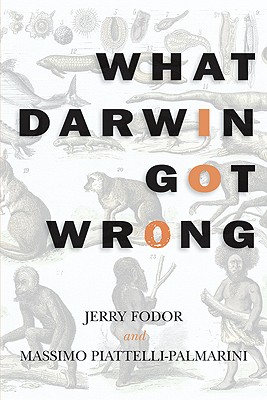 In 2010 Jerry Fodor, a philosophy professor at Rutgers University, and Massimo Piattelli-Palmarini, a biophysicist, molecular biologist, and cognitive scientist at the University of Arizona, published What Darwin Got Wrong. Fodor and Piattelli-Palmarini (FPP) are, by their own admission, died-in the-wool atheists and committed to a fully naturalistic account of evolutionary development. And yet, they admit that they do not know how evolution proceeds. One thing they are sure of is that Darwin’s account of natural selection cannot be it. Natural selection fails as an explanation on both scientific and philosophical grounds.
June 28, 2011
 Just a little over 1 ½ years ago the Senate of New York rejected a bill legalizing same-sex marriage, 38-24. On Friday June 24, 2011, however, they approved a similar bill, 33-29, and Governor Cuomo signed it into law. Beginning July 24, 2011, same-sex couples will be allowed to marry in New York.
New York is the 9th state/district to legalize same-sex marriage (Massachusetts in 2003 by court order, California in 2008 by court order, Connecticut in 2008 by court order, Iowa in 2009 by court order, (more…)
June 27, 2011
 During his recent debate with William Lane Craig on the topic “Is there Evidence for God,” physicist Lawrence Krauss claimed that only empirical data is an acceptable form of evidence. Given our culture’s proclivity toward empiricism and naturalism, I doubt that most found Krauss’ epistemic principle controversial. I think it is highly controversial, however.
First, to say empirical data alone counts as evidence is to relegate the entire discipline of philosophy to the ash heap of epistemic irrelevance.
Second, it seems to have escaped Krauss’ attention that his epistemic principle is itself a philosophical claim, not an empirical finding. Indeed, what empirical evidence could he offer in its support? None. There is no empirical evidence to (more…)
June 22, 2011
Abort73.com is known for using powerful visuals to demonstrate the gravity of abortion. Now they’ve used their talent to create a video that tackles the common misconception that the unborn are just a clump of cells in the first trimester of pregnancy. Check it out.
June 21, 2011
 Pro-life advocates often scoff at fetal homicide laws, arguing that they represent just how schizophrenic our legal system is when it comes to the unborn. On the one hand our legal system says the unborn are not persons, and therefore they can be killed per the mother’s request. On the other hand, fetal homicide laws treat the unborn as a person, allowing for an individual who kills an unborn child without the mother’s consent to be prosecuted for murder. The legal distinction is based almost entirely on the mother’s will. If she wants the child, it is illegal for someone else to kill it. If she does not want the child, it is legal for someone else to kill it.
While I am pro-life, I want to argue that the current law is consistent in its treatment of abortion and fetal homicide. Just because the unborn are not deemed persons with legal status—and can be killed at the mother’s request—does not mean the state could or should allow anyone to kill an unborn child without consequence. If the unborn is not a person, then it is property[1], and the same laws we apply to property must be applied to the unborn as well.
June 15, 2011
 McCormick Professor of Jurisprudence at Princeton University, Robert George, et al have written what is arguably one of the best defenses for the traditional understanding of marriage available in print. Titled “What is Marriage?”, this paper was first published in the Harvard Journal of Law & Public Policy, and later expanded into a book by the same title.[1]
I’ve often said the reason support for same-sex marriage has grown so fast in the West is because our culture has long forgotten what marriage is. George et al understand that when it comes to the marriage debate, everything hinges on the question, What is marriage? Does marriage have a fixed nature independent of cultural norms, or is it a mere social construction that can be whatever society wishes it to be? The authors rightly begin their paper by defining and contrasting these two perspectives (what they call the “conjugal view” and “revisionist view”):
June 1, 2011
 Pete Stark has introduced a bill in the U.S. House of Representatives that would prohibit any foster care or adoption agency who receives government funding (or is associated with an entity who does) from discriminating against prospective foster/adoptive parents on the basis of sexual orientation, gender identity, or marital status. This is not the first time he has introduced a bill like this, so we’ll see what becomes of it. But if this is passed, it will force many agencies to shut down their doors or violate their ethical principles. As I wrote about previously, the debate over same-sex marriage and homosexuality matters, and has practical consequences that affect us all.
Go here for a legal analysis of the bill.
May 27, 2011
Gallup just released a new poll on abortion. Historically, more Americans have identified themselves as “pro-choice” than “pro-life.” This trend reversed in 2009. For example, last year 47% of American adults identified themselves as “pro-life,” and 45% identified themselves as “pro-choice.” The new poll indicates that the tables have reversed themselves again. Now a slight majority self-identify with the pro-choice label (49% vs 45%).
While labels are helpful in gauging public opinion, people have different understandings of what “pro-life” and “pro-choice” mean. For example, someone could understand these terms to refer to one’s position on the legality of abortion, in which case a person who is personally opposed to all abortion but thinks people should have the legal right to an abortion may identify as “pro-choice.” The real test of Americans’ views on abortion comes to light when more specific questions are asked. For example, when asked whether abortion is morally wrong, 51% agreed while only 39% disagreed. This confirms that many adopting the pro-choice label do so as a reflection of their political views related to abortion, not their moral views.
May 26, 2011

Justice Lamberth
Last summer I informed you that Justice Lamberth ruled Obama’s embryonic stem cell policy illegal, arguing that it violated the Dickey-Wicker amendment which prohibits the use of federal funds for destructive embryo research. Lamberth slapped a preliminary injunction on the policy, suspending all use of federal money for embryonic stem cell research. Shortly after, an appeals court lifted the injunction while they were considering the appeal against Lamberth’s decision. On April 29, the U.S. Court of Appeals in Washington finally ruled against Lamberth’s interpretation of the Dickey-Wicker amendment, 2-1. President Obama’s policy stands.
May 20, 2011
 When it comes to abortion, we always hear about women’s rights. Currently, the law allows a woman to abort her child without the father’s knowledge or consent. Fathers are completely excluded from the decision. Why are fathers’ rights being denied? For example, fathers who want to abort their child – but are prevented from doing so because the mother will not consent to an abortion – lack both the freedom to determine the fate of the child they co-created as well as the freedom to decide whether to financially support the child. Why should a man be legally obligated to pay for a child that he did not want? If a woman can abort a child she does not want to support or care for, why can’t a man? If a father cannot choose to abort his child, then he should not be forced to support it. The law unfairly discriminates against men by saying fathers have no rights to determine the fate of their children in utero, and yet also saying fathers have obligations to their unwanted children after birth.
 Theosophical Ruminations
 Thinking to Believe