Theology


I have encountered a number of Oneness Pentecostals who not only object to the Trinitarian concept of God as “three persons,” but object to calling God a “person” at all.  In what follows, I provide typical objections offered against calling God a person, followed by a response.

Objection: The Bible never uses the term “person” of God
Response: The question is not whether the Bible uses the term per se, but whether the nature of God as described in Scripture can rightly be described as personable, given the definition of person: a conscious, rational, thinking, subject of various experiences (a mind).

Furthermore, the Bible does not speak of humans as “persons” either, and yet no one disputes the legitimacy of applying such a term to human beings.  The mere fact that such terminology is not used of God no more means that God is not accurately described as being a person than the absence of such terminology for humans means we are not accurately described as persons.  If we do not hesitate to call ourselves persons, neither should we hesitate to call God a person.

(more…)

One of the objections against studying and using apologetics I often hear from fellow Christians is, “It doesn’t work.”  Why do they think this?  Because they learned a few evidences for the Christian faith, tried them out on unbelievers, and discovered that it didn’t make everyone immediately fall down on their face in repentance.  So, they concluded apologetics do not work.  If by “work” they mean successful 100% of the time in causing conversion, I would agree.  But surely this can’t be the standard by which we judge success.  If it is, then we would also have to deem the simple Gospel presentation a failure as well since the majority of people who hear it do not convert to Christianity.  Even Jesus failed to persuade the vast majority of all those He encountered.

The problem is not with the message/method/evidence, but with the heart of man.  According to Paul, unbelievers suppress the knowledge of God so they can continue in their moral rebellion (Romans 1).  Unbelief is primarily moral and volitional in nature, and only secondarily intellectual.  It should be no surprise, then, that intellectual arguments fail to persuade some people: they do not want to be persuaded.  As Winston Churchill once said, “Men stumble over the truth from time to time, but most pick themselves up and hurry off as if nothing happened.”  And yet, rational arguments for the Christian faith can be instrumental in leading the open-hearted to faith in Christ.  Indeed, many former atheists can testify to the fact that apologetics “worked” to bring them to a belief in Jesus Christ.  Apologetics is no magic bullet, but it is a valuable tool in our evangelistic tool box.

In Isaiah 55:8-9 we read the word of YHWH: “For my thoughts are not your thoughts, neither are your ways my ways, declares the LORD. 9 For as the heavens are higher than the earth, so are my ways higher than your ways and my thoughts than your thoughts.”

In my experience, this Scripture is usually quoted in two contexts: (1) when we are ignorant of some knowledge; (2) when our position is being decimated by our opponent’s evidence, and we lack a sufficient response.  Neither use is legitimate because both are taking the passage out of its context.  

Verse 7 reads, “Let the wicked forsake his way, and the unrighteous man his thoughts; let him return to the LORD, that he may have compassion on him, and to our God, for he will abundantly pardon.”  The Lord’s way/thoughts are contrasted to the ways/thoughts of the wicked, not the righteous.  The Lord’s point is that His ways/thoughts are superior to the ways/thought of the wicked, not that His ways/thoughts are incomprehensible to mankind in general.  That’s not to say we can fully understand God and His ways, but it is to say that this passage is not teaching divine incomprehensibility, but rather divine superiority.

In recent days I have taken up a task I had given up on a number of years ago: harmonizing the resurrection accounts in the Gospels.  I hope to blog on this in considerable detail in the future, but wanted to explore a particular anomaly I have encountered that has me befuddled – an anomaly I am hoping you, the community, can help me resolve.

All of the Evangelists – with the exception of Luke[1] – report that Jesus appeared to several of Jesus’ women followers after they saw the angels in the empty tomb, but before they reported the incident to the apostles.  Luke, however, does not mention a resurrection appearance to the women.  According to Luke the women discover the empty tomb, encounter angels who tell them Jesus is risen, and then leave to tell the disciples what they had seen and heard.[2]  If this was all there was to Luke’s account it would not be much of a problem, since each of the Evangelists omit certain details that the others chose to include.  While it would be a curious detail to omit, its omission would be just that: a curiosity.

But the story is complicated by the testimony of the two disciples on the road to Emmaus.  

(more…)

Here’s another attempt to explain the Biblical plagues without reference to the supernatural: global warming and a volcano eruption.  It’s always funny to me how—in an attempt to avoid the supernatural—people appeal to explanations that are so implausible that it takes more faith to believe them than it does to believe the Biblical account that God was responsible.  

For example, how is it that Moses’ could have known in advance that a plague of frogs would be produced by global warming?  What’s even more unbelievable is the fact that each of the natural phenomena just-so-happened to stop when Moses said it would stop.  And how is it that each of the ten plagues happened one after another, and never simultaneously?  Who do they think they are trying to kid? 

The National Geographic Channel will air a program on this April 4 (Easter day).

Christians have long observed that the Gospels do not record the actual resurrection of Jesus.  The Evangelists record and describe Jesus’ death, burial, and resurrection appearances, but not the resurrection itself.  Why?  The most likely explanation is that none of the early Christians observed the resurrection event.  If they were making up stories as some skeptics suggest, however, surely we would expect for them to have invented an elaborate and glorious story describing how Jesus rose from the dead.  It is counter-intuitive to think they would fail to describe the cornerstone event of their religion if they were fabricating stories.  The fact that they do not report and describe Jesus’ actual resurrection lends a lot of historical credibility to their story.

While the Bible never records/describes the resurrection of Jesus, the Gospel of Matthew may provide us with a very good approximation of when the event occurred.  Matthew began his account by depicting the women on the way to Jesus’ tomb early Sunday morning (Mt 28:1).  In verse 2 he switches scenery to the tomb itself, describing what is happening at the tomb while the women are on their way: “Suddenly there was a severe earthquake, for an angel of the Lord descending from heaven came and rolled away the stone and sat on it.”  Why did the angel open the tomb?  Could it have been to let the recently resurrected Jesus exit the tomb?  If so, then Jesus was probably raised from the dead early Sunday morning, perhaps between 4:30 and 6:00 a.m.

(more…)

I think a good argument can be made for the existence of God based on the existence of the universe.  We know the universe began to exist.  Given that whatever begins to exist requires a cause external to itself to bring it into existence, there must be a cause external to the universe to explain why it came into being.  Whatever brought time, space, and matter into existence cannot itself be temporal, spatial, and material, and thus the cause of the universe must be eternal, non-spatial, and immaterial.  Furthermore, the cause must be personal in nature since there are only two known sources of causation—events and personal agents—and it is impossible to explain the first event in terms of a prior event.  Therefore, an agent must be the cause of the universe.  A personal, eternal, non-spatial, and immaterial being is what most theists mean by “God.”

While I think this argument demonstrates the existence of the divine, it cannot tell us anything about the number of divine beings responsible for creating the universe.  There could be one, or there could be billions.  An additional argument is needed if one is going to prove the existence of one and only one God.  In the past I argued for monotheism on the basis of divine omnipotence.  I reasoned that the property of omnipotence cannot belong to more than one being, for if two or more beings have to share power, then neither being can be said to have “all” power.  So God, then, must be one if He is omnipotent.

(more…)

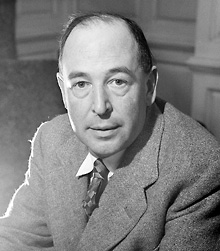
“If you asked twenty good men to-day what they thought the highest of the virtues, nineteen of them would reply, Unselfishness. But if you asked almost any of the great Christians of old he would have replied, Love. You see what has happened? A negative term has been substituted for a positive, and this is of more than philological importance. The negative ideal of Unselfishness carries with it the suggestion not primarily of securing good things for others, but of going without them ourselves, as if our abstinence and not their happiness was the important point. I do not think this is the Christian virtue of Love.”—C.S. Lewis

Some skeptics of Christianity claim the doctrine of Christ’s physical resurrection from the dead was a later development, not something believed and proclaimed from the inception of Christianity.  Others will admit that the doctrine was part of Christianity from its inception, but both groups claim the resurrection appearance pericopes that overtly stress the physicality of Jesus’ resurrection body were later inventions of the church.  As evidence for this claim, they assert that our earliest gospels—Matthew and Mark—lack overt references to the physical nature of Christ’s resurrection.  It is not until we come to the gospels of Luke and John that we find such pericopes.  They hypothesize that in the latter half of the first century some Christians began proclaiming a non-physical resurrection of Christ, so Luke and John invented material to counter this teaching.

(more…)

Updated 2/19/10: I have changed my assessment of the possibility that Luke recorded the appearance to the 500.  Originally I had argued that it was unlikely on the grounds that Jesus’ final appearance began indoors, and only then proceeded outdoors (thus the gathering had to be small).  But it occurred to me that this conclusion fails to take into account the fact that Luke is obviously telescoping his account of Jesus’ resurrection appearances into a single appearance.  The appearance recorded in Luke 24:50-51 cannot be a continuation of the appearance recorded in Luke 24:36-49, and thus there is no reason to believe the latter appearance began indoors (as the former appearance obviously did).

How do I know Luke must be speaking of at least two different appearances, but telescoped them into one for his narrative?  In Acts 1 Luke recounts Jesus’ final appearance and ascension from Bethany/Mount Olivet, providing much more detail than he did at the end of his Gospel.  Luke declared that Jesus appeared to the apostles many times over a period of 40 days, after which He ascended into heaven (Acts 1:3-12).  It is clear that the appearance in Luke 24:36-49 occurred the day of Jesus’ resurrection.  If Jesus did not ascend until 40 days later, then the appearance and ascension recorded by Luke in 24:50-51 must have been separated from the appearance in 24:36-49 by 40 days.  That means the appearance in 24:50-51 may have been instantiated outdoors, and thus it is possible that a group of more than 500 people could have been present.  The text below has been updated to reflect my change of mind.

______________

Matthew records a very peculiar event in connection with Jesus’ resurrection appearances.  He writes, “The eleven disciples went away into Galilee, into a mountain where Jesus had appointed them.  And when they saw him they worshipped him, but some doubted” (Mt 28:16-17).  It is highly unlikely that Matthew would have invented a story in which individuals who see the resurrected Christ for themselves still do not believe in Jesus.  This comment, then, lends credibility to the historicity of Matthew’s report.

But the question remains: Who doubted?  Was it some of the 11 apostles, or members of another unidentified group?  It’s unlikely that some of the apostles doubted.  The “they” in verse 17 most naturally refers to all 11 disciples mentioned in verse 16, and thus it stands to reason that all 11 worshipped Jesus: when “they” (the Eleven) saw Him “they” (the Eleven) worshipped Him.  The real clincher, however, is that we know this was not Jesus’ first appearance to the Eleven.  His first appearance to them was in Jerusalem on the eve of His resurrection (Mk 16:14; Lk 24:36-42; Jn 20:19-23).  Since that appearance convinced the Eleven that Jesus had risen, they cannot be numbered with those who doubted at Jesus’ Galilean appearance.

Who were those that doubted, then, if it was not some of the Eleven?  Most likely, they were members of a larger, unidentified group of witnesses that accompanied the Eleven to the mountain, all of whom were disciples of Jesus during His ministry.  In fact, there is good reason to speculate that this was the epiphany Paul speaks of in 1 Corinthians 15:6 wherein Jesus appeared to more than 500 people at once.[1]

(more…)

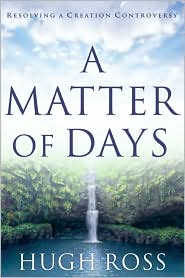
A Matter of Days is a book on the young-earth vs. old-earth creationism debate written by astronomer and Christian apologist, Hugh Ross.  Ross is an old-earth creationist, meaning he rejects both Darwinism and theistic evolution.  He argues that both the scientific and Biblical data support an ancient universe.  Not only does he provide evidence for his view, but he interacts with and critiques the arguments and objections raised by young-earth creationists.

If you are interested in the old-earth vs. young-earth debate, this is a must-read book.

I’ve read a good number of books since my last “What I’ve Been Reading” post, but have failed to write about them.  I hope to write about these books in the coming days or months, but for now I’ll just write about my most recent reading escapades.

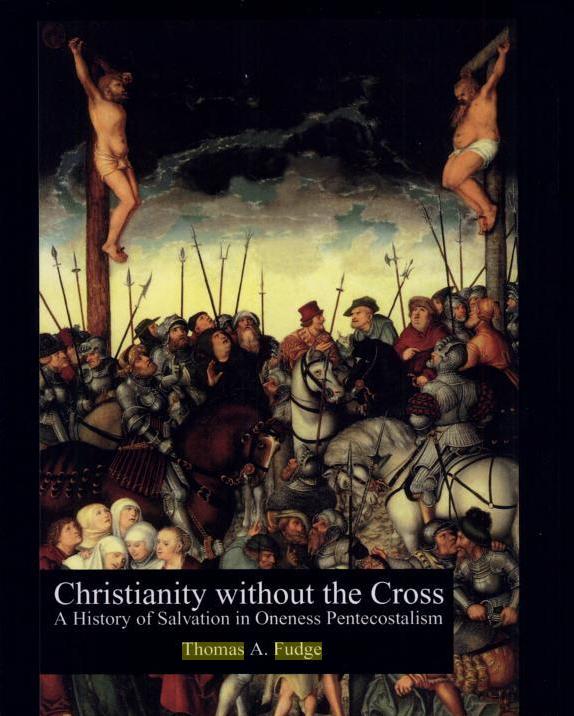
I recently finished reading Christianity without the Cross: A History of Salvation in Oneness Pentecostalism (thank you Michael for purchasing this for me from my Ministry Resource List!).  Historian Thomas Fudge has written a well-researched history on the history of the doctrine of salvation in the United Pentecostal Church.[1] Fudge documents the evidence that those involved in the merger of the Pentecostal Church International (PCI) and the Pentecostal Assemblies of Jesus Christ (PAJC) into the United Pentecostal Church (UPC) in 1945 held two different views of salvation.  The majority believed that one is born again only after they have repented, been baptized in Jesus’ name, and baptized in the Spirit evidenced by speaking in tongues.  A sizable minority (mainly from the PCI), however, believed one was born again at the point of faith/repentance.  While they believed in baptism in Jesus’ name and receiving the Spirit evidenced by speaking in tongues, they understood such to be the result of salvation, not the cause of salvation.  The two groups agreed to fellowship their soteriological differences, not contending for their own views to the disunity of the new fellowship.

(more…)

Al Mohler has written a good piece on the doctrine of hell.  He details the steps by which the doctrine has become liberalized in many churches:

  1. It ceases to be discussed
  2. It is revised and retained in a reduced form
  3. It is subject to ridicule
  4. The doctrine is reformulated (annihilationism, etc.)

I would add a possible fifth step as well: The doctrine is denied.

This same pattern can be applied to the liberalization of any Biblical doctrine.  We must be on guard so as not to follow this pattern.  The best way to guard against it is to preach and teach on the full spectrum of Biblical doctrines, rather than focusing on a handful and ignoring others.  In general, what ceases to be taught ceases to be believed.

Mohler also had some challenging words on the tendency to lament, or apologize for the doctrine of hell.  As Mohler describes it, there are Bible believing Christians who will affirm that the Bible teaches the doctrine of hell, but admit they do not like the doctrine and wish it were not true.  I think we’ve all been there, and understandably so.  But Mohler raises some good points against this disposition:

What does this say about God? What does this imply about God’s truth? Can a truth clearly revealed in the Bible be anything less than good for us? … Apologizing for a doctrine is tantamount to impugning the character of God.  Do we believe that hell is a part of the perfection of God’s justice? If not, we have far greater theological problems than those localized to hell.

Indeed.  As Dennis Prager once noted, it would be the epitome of injustice if the evil had the same fate as the righteous.  If we love God, then we will love righteousness and justice.  And if we love righteousness and justice, then the existence of hell is not something we should lament.

Some theists and religious pluralists claim that God is wholly other; so transcendent as to be incomprehensible to finite minds.  They assert that nothing can be known about God – He is ineffable.  No propositions we humans can formulate about Him can be true.  

This perspective is fundamentally flawed.  Not only is it self-refuting and contradictory, to say no human concept of God can be true of God (since the concept of ineffability is a human concept), it also results in absurdities.  For example, if there can be no true propositions about God, then the proposition “God exists” cannot be a true proposition.  But surely this is absurd.  The ineffability of a being, X, depends on the existence of X.  If God is a real entity, then at the very least the proposition “God exists” must be a true proposition about God.  

If God’s transcendence means there is no congruence between the thoughts of God and the thoughts of man, so that whatever we know God does not know and vice versa, that would mean if we know the proposition “God exists,” God Himself cannot know it.  But surely any conscious being must be aware of its own existence, and thus it is false that our thoughts can never match God’s thoughts.  Indeed, as Christopher Neiswonger once noted, if we can’t know God’s thoughts, then we can’t know anything at all because God knows everything!

While humans cannot know every truth about God, this does not mean we cannot know any truths about God.  Indeed, on the Christian worldview, God is not wholly other, purely transcendent, and absolutely silent.  We are made in His image, He is immanent, and He has revealed Himself to mankind, communicating to us many truths about Him.  While we cannot comprehend the depths of these truths, they can be known and apprehended.

I just finished reading an interesting account of how The Center for the Study of New Testament Manuscripts was called in to investigate a newly discovered Biblical manuscript.  If you have ever wondered how scholars go about determining the authenticity of manuscripts, this is a good read.  It’s like a detective story.  In the end, their detective work (along with the help of Google) revealed that it was a modern day forgery.

I just finished reading a tremendous review of Bart Ehrman’s latest book, Jesus Interrupted, by Michael Kruger.  I would highly recommend it.  The last paragraph is literary gold in my book.  It’s one of those summary paragraphs that I would have loved to have penned myself.


HT: Justin Taylor

Aphorisms are everywhere, including Christian circles.  People love aphorisms because they are short and convey truths in a witty, memorable fashion.  The problem with aphorisms is that while they are intended to convey general truths, many people take them to be Gospel truth.  “All we need is God” is a popular Christian aphorism.  There is a lot of truth to this.  We need God more than anything else, and to the extent that this aphorism emphasizes that fact, it should be affirmed as true.  But if “all” is understood literally, so that it comes to mean that we have no need of anything other than God, then the aphorism is patently false.  Indeed, it is unchristian.  While we need God most of all, Scripture is quite clear that we also need people—particularly people of like precious faith.

God created humans as social beings, to be in community with other human beings.  That is why one of the greatest forms of punishment/torture is isolation.  It’s said that people who experience long periods of isolation literally begin to lose their mind.  We need people.  The need for community is not some defect in humanity resulting from the fall, either.  In the beginning, prior to the first act of sin, Adam desired a human companion.  When God presented Eve to him he exclaimed, “At last!” (Genesis 2:23)  Even God Himself concluded that it was not good for man to be alone (Genesis 2:18).

(more…)

People rarely agree.  Getting people to agree on one point is difficult enough; getting people to agree on 20, 30, and 50 points in nearly impossible.  In matters of religion, I think it is impossible!  Given the rarity of agreement, one would think that Christian denominations would limit their statements of faith to include only the most salient doctrines of Christianity, as well as a few denominational distinctives thrown in for good measure!  And yet, it is common for denominational statements of faith to include many articles on secondary, tertiary, and quaternary doctrines, as well as non-biblical issues.  This seems to me to be a recipe for disaster.

If an organization has, say, 30 articles in their articles of faith that one must assent to in order to belong to the group, one of at least four things will happen:

  1. (more…)

Marcus Borg, like so many other theological liberals (although I must admit that Borg is so liberal that even a lot of theological liberals would disown him as such), claims God is ineffable.  During a recent debate between Borg and William Lane Craig, Craig pointed out that to say God is ineffable is to say that no human concept is applicable to God.  But since ineffability is a human concept, it doesn’t apply to God either.  This is self-refuting, and thus cannot be true.  Great point!

FellowshipI often hear it said that “we don’t go to church for people, but for God.”  This is usually said in the context of addressing interpersonal problems at church: “Just because Sister Susie did you wrong, that doesn’t mean you should stop going to church.  God is still there, so you should come to church for Him.”

While I understand the intent behind such a statement, I think it is almost entirely backward.  While it’s true that we go to church for God, the primary purpose for attending a local assembly is for the people present, not for God.  After all, most things we do for God at church – worship, pray, sing, read Scripture – can be done by oneself in the privacy of their home.  What we cannot do by ourselves, however, is experience Christian community and minister to the needs of one another.  We need to assemble with other believers for that – what is commonly called “going to church.”

(more…)

« Previous PageNext Page »