Yesterday was the actual day Jesus ascended into heaven 1,992 years ago. To coincide with this momentous day, I published my first episode exploring the theological and practical significance of the ascension. Resurrection
May 16, 2025
Yesterday was the actual day Jesus ascended into heaven 1,992 years ago. To coincide with this momentous day, I published my first episode exploring the theological and practical significance of the ascension. March 25, 2025
The Shroud of Turin
Posted by Jason Dulle under Apologetics, Resurrection, Shroud of Turin, Theology[14] Comments
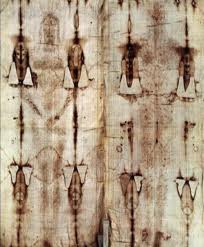
My podcast series on the resurrection is still going strong. I’ve recently started my last sub-series within the larger series, focused this time on the Shroud of Turin. If you have never heard of it before, it’s the purported burial cloth of Jesus Christ, bearing the image of a crucified man. Many Protestants have dismissed it as a fake Catholic relic, and most non-Christians have dismissed it as a medieval forgery due to carbon dating tests in the 1980s. However, interest in the Shroud has not gone away, and for good reason. There is much more to the story. In this sub-series, I’m examining the mountains of evidence for its authenticity, and I’ll address questions related to dating, and more.March 7, 2025

Harmonizing the Empty Tomb and Resurrection Narratives
Posted by Jason Dulle under Bible Difficulties, Resurrection, TheologyLeave a Comment

I’ve just completed my subseries on Differences in the Gospels in my larger series on the Historical Evidence for Jesus’ Resurrection. In the final episode (#151), I provided my best attempt to construct what I call the “video view” of the events that transpired after Jesus’ crucifixion; i.e. what you would have seen if you had a video recording of the events. It incorporates every verse in the empty tomb and resurrection accounts from all four gospels. Here it is:
Mary Magdalene (Mary M), Mary the mother of James and Joseph, Salome, Joanna, and other women journeyed together to the tomb early Sunday morning before dawn to anoint Jesus’ body (Mt 28:1; Mk 16:1-2; Lk 24:1,10; Jn 20:1). They wondered how they would roll away the stone to gain entrance to the tomb (Mk 16:3). Unbeknownst to them, before they arrived, two angels appear at the tomb to open it for the women (Mt 28:2). Their appearance frightened the guards, causing them to flee and report the event to the chief priests (Mt 28:3-4,11-15). When the women arrived, they saw the stone rolled away (Mt 28:2; Mk 16:3-4; Lk 24:2; Jn 20:1). Mary M assumed someone must have taken the body, so she (and possibly one other woman[1]) left the group of women to tell Peter and the Beloved Disciple (BD) that Jesus’ body was missing (Jn 20:2).
February 5, 2025
Contradictions in the Gospels?
Posted by Jason Dulle under Apologetics, Bible, Bible Difficulties, Hermeneutics, Historical Jesus, Resurrection, Theology1 Comment
I posted back in October that I was starting a podcast series on the resurrection of Jesus. That series is still on-going. Right now I’m in the midst of a sub-series focused on explaining so-called contradictions in the Gospels, particularly in the empty tomb, resurrection, and post-mortem appearance narratives. I spent three weeks laying the foundation for how we ought to approach and understand Gospel differences. The episode to be released this Friday will start to explore specific examples of differences in the empty tomb narratives. Check it out wherever you get podcasts, or at https://thinkingtobelieve.buzzsprout.com.
October 9, 2024
Historical Evidence for the Resurrection of Jesus Series
Posted by Jason Dulle under Apologetics, Historical Jesus, Resurrection, Shroud of Turin, Theology[3] Comments
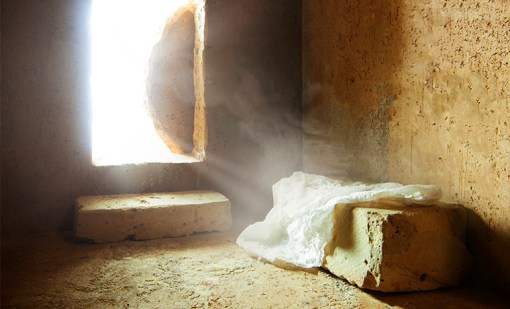
I’ve begun a new podcast series on the historical evidence for the resurrection of Jesus. The series will not only cover the historical evidence for Jesus’ resurrection, but also explore alternative (naturalistic) explanations, the evidence for Jesus’ existence, the theological and practical significance of the resurrection, questions and objections, our own future resurrection, an examination of the Shroud of Turin, and a harmonization of the gospel accounts of Jesus’ death and resurrection.
Listen wherever you get podcasts, or at https://thinkingtobelieve.buzzsprout.com.
March 29, 2024

The resurrection of Jesus is the centerpiece of Christian theology. I just posted a 1-N-Done episode on the historical evidence for the resurrection of Jesus. Check it out this Easter at https://www.buzzsprout.com/1958918/14768655.
He is risen!
See also:
- The Historical Evidence for the Resurrection of Jesus: A Short Case
- Why the resurrection matters
- A Resurrected Christ: The Most Unlikely of All Conclusions
December 5, 2022
Did Jesus Offer a Bad Argument for the Resurrection?
Posted by Jason Dulle under Bible, Bible Difficulties, Hermeneutics, Resurrection, Theology[12] Comments
In Jesus’ debate with the Sadducees, He defended His position that there will be a resurrection of the dead by quoting Exodus 3:6. Luke records Jesus as saying, “But even Moses revealed that the dead are raised in the passage about the bush, where he calls the Lord the God of Abraham and the God of Isaac and the God of Jacob. Now he is not God of the dead, but of the living, for all live before him.” (Luke 20:37-8, NET).
Jesus’ argument seems to be as follows:
(1) God can only be “the God of…X”, if X exists
(2) God identified Himself as the God of Abraham, Isaac, and Jacob centuries after their death
(3) Therefore, Abraham, Isaac, and Jacob still existed when God spoke to Moses
I find two problems with this line of reasoning.
October 14, 2022
Blessed Are Those Who Believe Without Seeing
Posted by Jason Dulle under Apologetics, Resurrection[6] Comments
Thomas would not believe the report of the other disciples who said they had seen Jesus alive. He only believed in Jesus’ resurrection after Jesus appeared to Him as well. Jesus’ words to Thomas on that day have been immortalized in the Gospel of John: “Because you have seen me, you have believed: blessed are those who have not seen, and yet have believed” (John 20:29).

This verse is often used by those who oppose the use of evidence and reason in evangelism. They argue that if God’s blessing is given to those who believe in Jesus’ resurrection without evidence, then apologetic arguments aren’t just unnecessary, but a spiritual hindrance that robs people of the blessing that comes through faith. On its face, Jesus does appear to berate Thomas for requiring evidence of His resurrection while pronouncing a blessing on those who believe without the need for evidence. A closer examination of the passage in its context, however, reveals this reading of the text to be mistaken.
May 17, 2022
Are the Biblical Witnesses of the Resurrection Disqualified Because they are Christians?
Posted by Jason Dulle under Apologetics, Resurrection, Theology[5] Comments

Many unbelievers have dismissed the testimony of the Biblical writers regarding the resurrection of Jesus on the basis that these witnesses are Christians. They argue that as Christians, the Biblical authors were biased to believe in the resurrection, making their testimony unreliable. Greg Koukl discussed the merits of this argument on his radio broadcast many years ago. I would like to share some of his ideas with you, as well as add a few of my own.
This objection presumes that rational objectivity is impossible if one has taken a position on a matter (in this case, the resurrection of Jesus Christ), but this ignores the fact that rational objectivity may be what led these individuals to believe in the resurrection in the first place. The evidence could have been so strong in favor of that conclusion that they were incapable of remaining intellectually honest without affirming that Jesus rose from the dead.
January 18, 2022
I believe in the concept of heresy. To be a Christian, one must believe in a core set of ideas (what some refer to as “primary doctrines”). If you deny or sufficiently distort those doctrines, you are not a Christian and will not be saved.

While there are disagreements about which doctrines qualify as primary, most would agree that the doctrine of God, the doctrine of Christ, the doctrine of salvation, and the physical resurrection of Jesus are on that list. Most people would also agree that there is some latitude for disagreements on these issues, but nobody agrees on just how much latitude can be tolerated before one moves from the realm of orthodox to the realm of heresy. For example, many consider Nestorianism to be a Christological heresy, whereas others, such as myself, have argued that it should only be considered a Christology error. In other words, I think the doctrine of Christ is flexible enough that a Nestorian can still be considered a Christian and saved, despite his theological error.
January 16, 2020
Evangelism: Are we preaching what the early church preached?
Posted by Jason Dulle under Resurrection, Soteriology, Theology[9] Comments
Evangelism is one of the most important missions of the church. In evangelism, we are making an appeal to non-Christians to both believe and do something. What we ask them to believe and do ought to pattern what the first disciples asked non-Christians to believe and do. Does it? To answer that question, I recently examined what the early church preached to unbelievers, chronicling every detail of every message found in Acts (2:14-40; 3:12-26; 4:8-12,33; 5:29-32,42; 7:2-53; 8:5,12,35; 10:34-43; 11:20; 13:16-41; 14:15-17; 16:30-31; 17:2-3,6-7,18,22-31; 18:5,28; 19:2-4,8; 20:21,25; 22:1-21; 23:6,11; 24:10-21,24-25; 25:19; 26:1-23; 28:17-20,23,30).[1] What follows are my findings and analysis. (more…)
April 21, 2019
Why the resurrection matters
Posted by Jason Dulle under Apologetics, Historical Jesus, Resurrection[4] Comments
The resurrection of Jesus is central to the Christian faith, but why does it matter? Why think of it as just another of many miraculous/supernatural events? Why not see it as a mere historical oddity? Why does it matter so much to Christianity? What is the significance of Jesus’ resurrection from the dead?
Here are just a few reasons it is significant:
April 21, 2019
The Historical Evidence for the Resurrection of Jesus: A Short Case
Posted by Jason Dulle under Apologetics, Historical Jesus, Resurrection[3] Comments
The resurrection of Jesus Christ from the dead was the central message of the early church and the basis of Christian hope. But why should we believe that a man was raised from the dead 2000 years ago when we were not there to witness it, and when our uniform experience says that dead people always stay dead? While many people think the resurrection of Jesus is something you either choose to believe or choose to reject based on your personal religious tastes, the fact of the matter is that there are good, objective, historical reasons to believe that Jesus rose from the dead.
Historians must do two things: establish the historical facts, and then find the best explanation for those facts. When it comes to the life of Jesus, the primary source material for the historian is the New Testament (NT) gospels and Paul’s writings because they include the testimony of early disciples who witnessed the events in question or knew those who did, and they provide the most detail about Jesus’ life.
June 27, 2017
Jesus’ resurrection and belief in Jesus’ deity
Posted by Jason Dulle under Apologetics, Historical Jesus, Resurrection, Theology[24] Comments
Only the resurrection of Jesus from the dead can explain why Christians believed Jesus was divine. It also gives credence to the fact that Jesus claimed to be God.
Many skeptics think that Jesus never made claims to deity – that such claims were merely put on his lips by his followers. But why would they do so? The Jews had no concept of a divine messiah. Indeed, the idea that God could become a human being was considered blasphemy to the Jews. If the gospels are to be believed, the reason Jesus was condemned to death by the Jews was precisely because he claimed to be God.
May 5, 2017
What I’ve Been Reading: The Resurrection of Jesus
Posted by Jason Dulle under Apologetics, Book Reviews, Resurrection, Theology[11] Comments
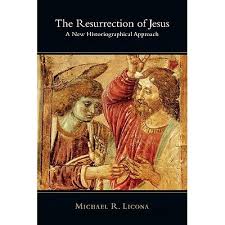
Michael Licona’s magnum opus on the resurrection, The Resurrection of Jesus: A New Historiographical Approach, is a must read for those who are interested in the historical evidence for the resurrection. It has some overlap with other great works on the resurrection such as N. T. Wright’s The Resurrection of the Son of God, but it is distinct in that it begins with an examination of history and method (philosophy of history) before examining the evidence for the resurrection of Jesus and drawing any conclusions. Licona explores the nature of historical knowledge (what can be known) and historical methodology. He even assesses the source material (canonical as well as non-canonical material) to determine each source’s value for the investigation. Finally, he gets to the heart of the matter by determining the historical facts, and then assessing competing hypotheses to determine the best explanation. All 600+ pages are worth your attention!
March 24, 2016
The Historical Evidence for the Resurrection of Jesus: A Short Case
Posted by Jason Dulle under Apologetics, Historical Jesus, Resurrection, Theology[142] Comments
The resurrection of Jesus Christ from the dead was the central message of the early church and the basis of Christian hope. But why should we believe that a man was raised from the dead 2000 years ago when we were not there to witness it, and when our uniform experience says that dead people always stay dead? While many people think the resurrection of Jesus is something you either choose to believe or choose to reject based on your personal religious tastes, the fact of the matter is that there are good, objective, historical reasons to believe that Jesus rose from the dead.
February 19, 2016
The Story of Christianity from Beginning to End: Putting the Pieces Together
Posted by Jason Dulle under Bible, Christology, Ecclesiology, Eschatology, Hamartiology, Hell, Mosaic Law, Nature of God, Resurrection, Soteriology, Spiritual gifts, Theology, Theology Proper, Worldview[125] Comments
Much of the Bible is written in narrative form. It tells a story – a true story, but a story nonetheless. There is a lot of information in the Bible to digest, and it’s easy to get lost in the details and miss the big picture. So how does one put it all together? What is the essence of the Biblical story? What is the basic story line from Genesis to Revelation? Various attempts have been to condense the major themes and events in the Bible into a coherent, terse story line. Here is my attempt to arrange the puzzle pieces into a clear picture, such as it is. I hope it will tie together some loose ends that may exist in your mind and offer you a bird’s-eye view of the greatest story ever told: (more…)
April 8, 2014
What do Jesus’ post-resurrection wounds tell us about our own resurrected bodies?
Posted by Jason Dulle under Resurrection, Theology[23] Comments
John tells us that in the final state there will be no sickness or disease. Most Christians tend to think of our glorified body as a perfected body. And yet, Jesus’ resurrected body was not perfect. The wounds from His crucifixion remained. What does this tell us about our own resurrected body? Could we retain our wounds too? If you lost a finger in shop class, do you only have nine fingers forever? Or do you think Jesus is just a special case. Perhaps He kept His wounds for evidential purposes, to convince the disciples that the Jesus they were seeing was the same Jesus who had been crucified?
October 24, 2013
Is it rational to believe in something without verifiable, empirical evidence?
Posted by Jason Dulle under Apologetics, Epistemology, Philosophy, Resurrection, Science, Theology[16] Comments
Those who subscribe to empiricism believe that we should not believe the truth of some X based on a competent authority. We are only justified in believing some X if we have empirically verifiable evidence supporting the truth of X. It goes without notice that this principle itself is not empirically verifiable, and thus empiricism is self-refuting as a complete theory of knowledge. But let’s ignore the man behind the curtain for a moment, and explore other deficiencies in an empirical epistemology.
In his book, A Universe from Nothing, physicist and empiricist Lawrence Krauss describes the state of the cosmos in the distant future. Due to cosmic expansion, in two trillion years all of the evidence for the Big Bang (cosmic microwave background, redshift of distant objects/the Hubble expansion, and the measurement of light elements in the cosmos), and all 400 billion galaxies visible to us now, will no longer be detectable via empirical methods. Worse yet, all of the evidence for the dark energy that caused the cosmic expansion will be gone as well. For scientists living in that day, all of the empirical evidence will point to a static universe inhabited by a single galaxy that is no more than a trillion years old (based on the ratio of light elements at the time).
May 9, 2013
New dating methods result in a 2000 year old date for the Shroud of Turin
Posted by Jason Dulle under Apologetics, Resurrection, Shroud of Turin[40] Comments
The Shroud of Turin – the purported burial cloth of Jesus which contains the faint image of a crucified man – was the subject of intense scientific examination in the mid 1980s. Based on a carbon-14 dating of the fibers, scientists dated the shroud to A.D. 1260-1390. For most, this was all the proof they needed to conclude that the shroud was a medieval forgery.
Other evidence, however, suggests that it is genuine. One theory put forward to explain the medieval date determined by C-14 dating is that the fibers used for the test were either contaminated (from either the lab, or from the fire in 1532 that nearly destroyed the Shroud), or were not part of the original Shroud (the Shroud was patched by weaving new threads into the old threads).
Recently, a group of scientists in Italy conducted tests on the fibers using three different dating methods and concluded that the Shroud dates to 33 BC, ±250 years. These dating methods utilized infra-red light, Raman spectroscopy (“the measurement of radiation intensity through wavelengths”), and a mechanical process utilizing electricity.
I cannot speak to the accuracy of these dating methods, but given the fact that three different dating methods all arrived at dates more than a Millennium earlier than the C-14 dates is quite interesting. It gives evidential backing to those who questioned the accuracy of the C-14 tests. At the very least, the authenticity of the Shroud can no longer be dismissed out-of-hand based solely on the C-14 tests. The new data fits perfectly with a first century dating of the Shroud. It will be interesting to see how other scholars respond to this new data.