Resurrection


Reasonable FaithDr. William Lane Craig is my favorite Christian apologist.  I’ve read countless articles he has authored and several of his books, listened to virtually every debate he has participated in as well as his podcasts and Defenders lectures, and even read his weekly Q&A on reasonablefaith.org.  I could rightly be called a Craigite, and yet I had never read his signature book, Reasonable Faith, which is now in its third edition.

I finally purchased the book and read through it with slobbering delight.  I must confess that having followed Craig for so long, there wasn’t much in the book that I had not encountered before.  But that is more of a personal commentary, and does nothing to detract from the wealth of information contained in this book.

Craig begins the book by answering the question, How can one know Christianity is true?  After surveying what important past and present thinkers have to say on the matter, Craig adopts a Plantingian-based model in which we can know Christianity is true in virtue of the witness of the Spirit in our hearts.  Craig makes an important distinction, however, between how we personally know Christianity to be true, and how we demonstrate to others the truth of Christianity.  While the witness of the Holy Spirit is sufficient for the believer to be persuaded of the truth of Christianity, we demonstrate the truth of Christianity to unbelievers through evidence and rational argumentation.

(more…)

Some people want to reject the testimony of the NT evangelists on the basis that they are biased.  I have written on the problems of this claim before, but here is a brief summary of my argument (with some added insight offered by Greg Koukl in his September 10, 2012 podcast):

  • This is an example of the genetic fallacy – dismissing one’s arguments because of its origin, rather than addressing it on its own merits.
  • Having a bias is irrelevant to the legitimacy of one’s testimony and/or arguments.  One must grapple with the evidence rather than dismiss it because it comes from a biased source.
  • Everyone has a bias, including those who reject Jesus.  The only people without a bias are those who are ignorant of the matter.
  • (more…)

Now Thomas, one of the Twelve, called the Twin, was not with them when Jesus came. [25] So the other disciples told him, “We have seen the Lord.” But he said to them, “Unless I see in his hands the mark of the nails, and place my finger into the mark of the nails, and place my hand into his side, I will never believe.” [26] Eight days later, his disciples were inside again, and Thomas was with them. Although the doors were locked, Jesus came and stood among them and said, “Peace be with you.” [27] Then he said to Thomas, “Put your finger here, and see my hands; and put out your hand, and place it in my side. Do not disbelieve, but believe.” [28] Thomas answered him, “My Lord and my God!” [29] Jesus said to him, “Have you believed because you have seen me? Blessed are those who have not seen and yet have believed.” (John 20:24-29 ESV) 

This passage of Scripture is often appealed to by those who see Christian apologetics as irrelevant to evangelism, or even contrary to Scripture.  On its face, it does seem to present an anti-evidence, anti-rational approach to the Christian faith: Jesus appears to berate Thomas for requiring evidence of His resurrection while pronouncing a blessing on those who believe without the need for evidence.  A closer examination of the passage in its context, however, reveals this reading of the text to be mistaken. 

(more…)

I recently taught on the historical reliability of the Gospels and the historical evidence for the resurrection of Jesus.  One of the areas I focused on was the apparent contradictions and errors in the Gospels, demonstrating how most of these are easily resolvable, and thus not contradictions/errors at all.  But not all Biblical difficulties are so easily resolved.  In fact, there are some for which I do not presently have a good answer.  If you are a careful reader of Scripture, I’d bet there are Biblical difficulties you have encountered for which you lack a good answer as well.  What are we to do with such difficulties given the doctrine of Biblical inerrancy?  What should our posture be toward the Christian faith once having discovered irresolvable difficulties in the text?

Some individuals respond by concluding that Christianity is not true.  Some go so far as to conclude that God does not even exist!  I submit to you that these responses are ill-founded; the result of elevating the doctrine of inerrancy to a status it should not be accorded in one’s theological taxonomy.  While the Bible is an indispensable aid to our faith and Christian growth, an inerrant Bible is not necessary for the truth of Christianity, and thus the doctrine of inerrancy—and Bibliology in general—should be subservient to more central doctrines such as the resurrection of Jesus in our theological taxonomy.  Let me explain.

(more…)

This slideshow requires JavaScript.

I recently read The Burial of Jesus, a collection of essays published by the Biblical Archaeology Society (the organization that publishes Biblical Archaeology Review).  It provided very valuable archaeological data regarding ancient Jewish tombs, and assessed whether or not the Garden Tomb or the Church of the Holy Sepulchre could possibly be the tomb of Jesus. What follows is a summary of the articles, as well as my own personal contribution.

The Gospels tell us that after Jesus’ death, He was hastily buried in a cave tomb owned by Joseph of Arimathea, a wealthy man who was also a member of the Sanhedrin (Mt 27:57-60; Mk 15:42-46; Lk 23:50-53; Jn 19:38-42).  Only upper-middle and upper class Jews could afford a rock-hewn tomb.[1]  The poor in the 1st century buried their dead in trench tombs.  Trench tombs were about 5-7’ deep, and had a niche in the bottom for the bodies.[2]  Bodies would be wrapped in a shroud (and sometimes placed in wood coffin) and lowered into the niche.[3]  Had Joseph not buried Jesus, Jesus may have been buried in a trench tomb, or thrown into a field as the Romans were oft to do with crucified victims.

(more…)

There were many messianic movements in the first and second centuries.  All of them ended with the death of their messiah, with one exception: the messianic movement centered around Jesus of Nazareth.  This is a historical anomaly that requires explanation.  Jews expected the coming Messiah to be a political and military victor, among other things.  He was to set Israelfree from Roman rule.  The fact that Jesus was crucified by the Romans rather than triumphing over them in a military victory should have been proof positive to any followers of Jesus that He was not the Messiah.  His group of followers should have disbanded in despair, and set their sights on finding the true messiah.  And yet, unlike all other messianic movements, Jesus’ disciples continued to believe that He was the Messiah, and some even gave their lives for that belief.  Why?  According to their own testimony, it was because they saw Him raised from the dead.  Even many skeptics who deny a real resurrection of Jesus will admit that Jesus’ disciples must have had experiences in which they thought they saw Jesus alive from the dead.  So what did they see and experience, if not the resurrected Christ?

(more…)

I was reading Ben Witherington’s Easter Sunday sermon and he raised a couple of good points about John’s account of Jesus’ resurrection to Mary Magdalene:

“Jesus calls her by name— Miryam!  And it is only when he calls her by name that she realizes it is Jesus!   Now this matches up nicely with what John 10 says— Jesus says he is the good shepherd and he knows his sheep, and they know the sound of his voice, and most importantly,  he calls each one by name.

“Jesus’ response is interesting.  He tells her— ‘don’t cling onto me’. … Jesus is telling her that there is no clinging to the Jesus of the past.  He is no longer just Miryam’s teacher, and there is no going back.  He is now the risen Lord.   There was something strikingly different about the risen Jesus. …. He tells her to tell them he will soon be ascending to God the Father.   Jesus did not rise from the dead to continue earthly existence, so things could go on business as usual.  Jesus rose from the dead to begin the endtimes, then and there, the eschatological age, the age in which all manner of things would change, and when Jesus comes back, we too will experience resurrection from the dead as 1 Cor. 15 promises.”

Matthew reports a guard being stationed outside of Jesus’ tomb (Mt 27:62-66; 28:4,11-15).  While it is often assumed that the guard was a Roman guard, the text does not say this.  While it may have been a Roman guard, it is also possible that it was a Jewish guard seeing that the temple in Jerusalem employed its own guards.  Which was it?

Reasons to think the guard was a Jewish temple guard:

  • The guards return to the chief priests rather than to Pilate or a Roman officer
  • It is unlikely that Roman guards would agree to spread a story for which they could be executed (execution was the punishment for Roman soldiers who fell asleep on watch).
  • While the mention of the governor in Mt 28:14 may indicate this is a Roman guard, if it was a Roman guard then it is difficult to see how the Jewish leadership could have done anything to keep the governor for killing his own soldiers.  What influence would they have in Roman military affairs?

(more…)

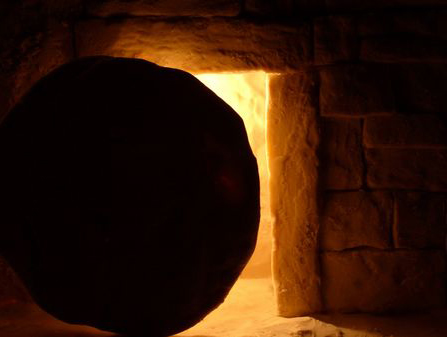
Could Jesus have rolled away the stone that covered his tomb?   The entrance of a Jewish tomb was quite small, so the stone needed to cover the opening would only be 4-6’ in diameter, and approximately 1’ thick.  How much would such a stone weigh?  Depending on the type of stone used, it could weigh between 1-2 tons (2000-4000 pounds).[1] This is quite heavy, but two men could move it into place (Mt 27:60; Jn 19:38-42).  The more difficult task was removing the stone.

Generally speaking, the rolling stone was set inside a groove in front of the entrance, and secured from falling over by a stone wall that stood in front of tomb opening (the rolling stone was sandwiched between the tomb entrance and stone wall as the pictures below illustrate).  Often, the groove was not level, but slightly sloped.  To close the tomb, the stone would be rolled down the groove at a decline and come to rest in front of the entrance.  To open the tomb, the stone would have to be rolled up the groove at an incline.

(more…)

In recent days I have taken up a task I had given up on a number of years ago: harmonizing the resurrection accounts in the Gospels.  I hope to blog on this in considerable detail in the future, but wanted to explore a particular anomaly I have encountered that has me befuddled – an anomaly I am hoping you, the community, can help me resolve.

All of the Evangelists – with the exception of Luke[1] – report that Jesus appeared to several of Jesus’ women followers after they saw the angels in the empty tomb, but before they reported the incident to the apostles.  Luke, however, does not mention a resurrection appearance to the women.  According to Luke the women discover the empty tomb, encounter angels who tell them Jesus is risen, and then leave to tell the disciples what they had seen and heard.[2]  If this was all there was to Luke’s account it would not be much of a problem, since each of the Evangelists omit certain details that the others chose to include.  While it would be a curious detail to omit, its omission would be just that: a curiosity.

But the story is complicated by the testimony of the two disciples on the road to Emmaus.  

(more…)

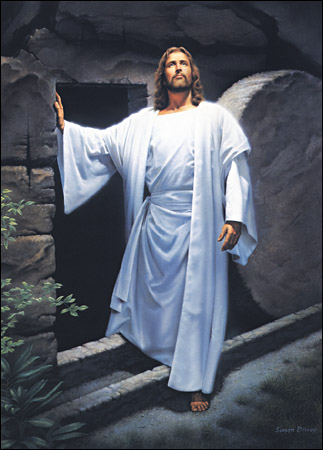
Christians have long observed that the Gospels do not record the actual resurrection of Jesus.  The Evangelists record and describe Jesus’ death, burial, and resurrection appearances, but not the resurrection itself.  Why?  The most likely explanation is that none of the early Christians observed the resurrection event.  If they were making up stories as some skeptics suggest, however, surely we would expect for them to have invented an elaborate and glorious story describing how Jesus rose from the dead.  It is counter-intuitive to think they would fail to describe the cornerstone event of their religion if they were fabricating stories.  The fact that they do not report and describe Jesus’ actual resurrection lends a lot of historical credibility to their story.

While the Bible never records/describes the resurrection of Jesus, the Gospel of Matthew may provide us with a very good approximation of when the event occurred.  Matthew began his account by depicting the women on the way to Jesus’ tomb early Sunday morning (Mt 28:1).  In verse 2 he switches scenery to the tomb itself, describing what is happening at the tomb while the women are on their way: “Suddenly there was a severe earthquake, for an angel of the Lord descending from heaven came and rolled away the stone and sat on it.”  Why did the angel open the tomb?  Could it have been to let the recently resurrected Jesus exit the tomb?  If so, then Jesus was probably raised from the dead early Sunday morning, perhaps between 4:30 and 6:00 a.m.

(more…)

Some skeptics of Christianity claim the doctrine of Christ’s physical resurrection from the dead was a later development, not something believed and proclaimed from the inception of Christianity.  Others will admit that the doctrine was part of Christianity from its inception, but both groups claim the resurrection appearance pericopes that overtly stress the physicality of Jesus’ resurrection body were later inventions of the church.  As evidence for this claim, they assert that our earliest gospels—Matthew and Mark—lack overt references to the physical nature of Christ’s resurrection.  It is not until we come to the gospels of Luke and John that we find such pericopes.  They hypothesize that in the latter half of the first century some Christians began proclaiming a non-physical resurrection of Christ, so Luke and John invented material to counter this teaching.

(more…)

Updated 2/19/10: I have changed my assessment of the possibility that Luke recorded the appearance to the 500.  Originally I had argued that it was unlikely on the grounds that Jesus’ final appearance began indoors, and only then proceeded outdoors (thus the gathering had to be small).  But it occurred to me that this conclusion fails to take into account the fact that Luke is obviously telescoping his account of Jesus’ resurrection appearances into a single appearance.  The appearance recorded in Luke 24:50-51 cannot be a continuation of the appearance recorded in Luke 24:36-49, and thus there is no reason to believe the latter appearance began indoors (as the former appearance obviously did).

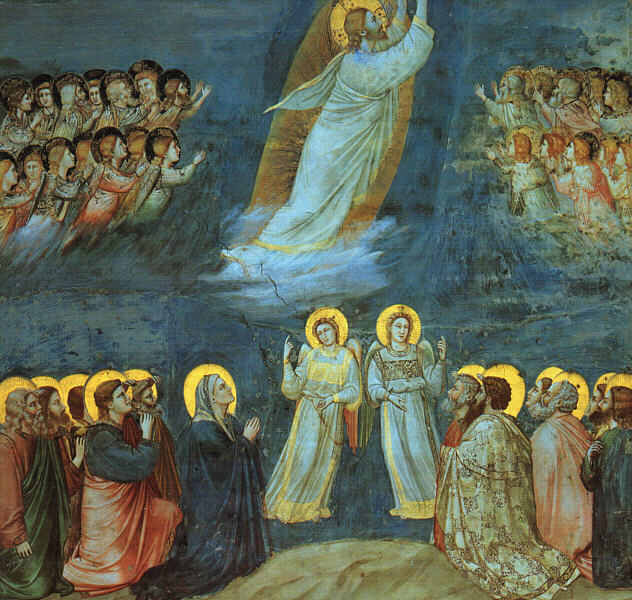
How do I know Luke must be speaking of at least two different appearances, but telescoped them into one for his narrative?  In Acts 1 Luke recounts Jesus’ final appearance and ascension from Bethany/Mount Olivet, providing much more detail than he did at the end of his Gospel.  Luke declared that Jesus appeared to the apostles many times over a period of 40 days, after which He ascended into heaven (Acts 1:3-12).  It is clear that the appearance in Luke 24:36-49 occurred the day of Jesus’ resurrection.  If Jesus did not ascend until 40 days later, then the appearance and ascension recorded by Luke in 24:50-51 must have been separated from the appearance in 24:36-49 by 40 days.  That means the appearance in 24:50-51 may have been instantiated outdoors, and thus it is possible that a group of more than 500 people could have been present.  The text below has been updated to reflect my change of mind.

______________

Matthew records a very peculiar event in connection with Jesus’ resurrection appearances.  He writes, “The eleven disciples went away into Galilee, into a mountain where Jesus had appointed them.  And when they saw him they worshipped him, but some doubted” (Mt 28:16-17).  It is highly unlikely that Matthew would have invented a story in which individuals who see the resurrected Christ for themselves still do not believe in Jesus.  This comment, then, lends credibility to the historicity of Matthew’s report.

But the question remains: Who doubted?  Was it some of the 11 apostles, or members of another unidentified group?  It’s unlikely that some of the apostles doubted.  The “they” in verse 17 most naturally refers to all 11 disciples mentioned in verse 16, and thus it stands to reason that all 11 worshipped Jesus: when “they” (the Eleven) saw Him “they” (the Eleven) worshipped Him.  The real clincher, however, is that we know this was not Jesus’ first appearance to the Eleven.  His first appearance to them was in Jerusalem on the eve of His resurrection (Mk 16:14; Lk 24:36-42; Jn 20:19-23).  Since that appearance convinced the Eleven that Jesus had risen, they cannot be numbered with those who doubted at Jesus’ Galilean appearance.

Who were those that doubted, then, if it was not some of the Eleven?  Most likely, they were members of a larger, unidentified group of witnesses that accompanied the Eleven to the mountain, all of whom were disciples of Jesus during His ministry.  In fact, there is good reason to speculate that this was the epiphany Paul speaks of in 1 Corinthians 15:6 wherein Jesus appeared to more than 500 people at once.[1]

(more…)

In Jesus’ debate with the Sadducees, He defended His resolve that the dead are raised by quoting from Exodus 3:6. Luke records Jesus as saying, “But even Moses revealed that the dead are raised in the passage about the bush, where he calls the Lord the God of Abraham and the God of Isaac and the God of Jacob. Now he is not God of the dead, but of the living, for all live before him.” (Luke 20:37-8, NET Bible).


Jesus’ argument seems to be as follows:


(1) God can only be “the God of…X”, if X exists

(2) God identified Himself as the God of Abraham, Isaac, and Jacob centuries after their death

(3) Therefore, Abraham, Isaac, and Jacob still existed when God spoke to Moses


I don’t see how Jesus’ argument supports His resolve. At best, Jesus demonstrated that man is a dualistic being whose immaterial self lives on beyond death (something the Sadducees denied). But how does it follow that the dead will rise? It could be that they continue in their non-corporeal state for time everlasting. It seems to me that Jesus would have to supply another argument to demonstrate why it is necessary for these non-corporeal persons to return to a bodily existence. No such argument is given.


I confess some trepidation in even writing this, but I don’t find Jesus’ argument persuasive. And yet when you read the text, Jesus’ opponents found it extremely persuasive. They were not able to offer any rebuttal. Am I missing something here? I do not want to say Jesus’ argument missed the point, but I cannot deny the fact that his argument appears to fall short of its intended goal. Does anyone have any insight on this passage they would like to offer me?

N.T. Wright offered some insight to Acts 23:7-9 in his tome, The Resurrection of the Son of God. Luke said the Sadducees deny the resurrection, angels, and spirits, whereas the Pharisees confessed them all. What is meant by resurrection is quite clear (a return to bodily life after death), but what is meant by angels and spirits? We usually interpret these to be a reference to angelic beings, of both the good and bad sort. The problem with this interpretation is that the Sadducees believed in angelic beings. Did Luke make a mistake? No.


Wright points out that “angel” and “spirit” were terms used in that day to refer to the immaterial part of man that survived death. Think back to Acts 12:14-16. Peter was imprisoned. Believers had gathered at Mary’s house to pray (presumably for him). When Peter was miraculously delivered from the prison, and showed up at Mary’s door, in disbelief the people said it was not Peter, but his “angel.” Apparently they thought he had been executed, and his spirit had come to visit them.


When Luke says the Sadducees deny the resurrection, angels and spirits, what he means is that they deny both an intermediate state, and a final resurrection of the body. The Sadducees were anthropological materialists, if you will. They believed the body and soul terminated at death.

Before Thomas saw the risen Christ, he would not believe the report of the other disciples who said they saw Him alive. But then Jesus appeared to Thomas as well, and he believed. Jesus told Thomas, “Because you have seen me, you have believed: blessed are those who have not seen, and yet have believed.” (John 20:29) 

It’s important to note that “believed” is in the aorist tense. Contrary to popular interpretation, Jesus is not referring to those in the future who would believe He rose from the dead without having seen Him alive, but to those in the past who believed He rose from the dead without having seen Him alive. This is important to the discussion we have had on this blog about why the disciples waited so long to proclaim Jesus’ resurrection. For Jesus to say there were people in the past who believed in His resurrection without having seen Him alive requires that the apostles/disciples were proclaiming the resurrection prior to Pentecost! If they had not been proclaiming the resurrection, no one except for those to whom Jesus had appeared to would believe in His resurrection. Of course, we don’t know how many people the disciples told about the risen Christ, or who they told (only previous followers of Jesus, or unbelievers as well), but this passage is evidence that the disciples did not wait until after Pentecost to begin proclaiming the resurrection. That proclamation only intensified and widened after Pentecost.

While the direct object of Jesus’ words were past believers, the principle is equally applicable to future believers. It’s as though John is using Jesus’ words to Thomas to speak to skeptics who argue, “It was all very well for Thomas to believe given His experience with the risen Christ, but you can’t expect me to imitate that kind of faith unless I have the same kind of experience/evidence Thomas had.” John counters this argument by pointing out that there were individuals before Thomas who believed without experiencing what Thomas experienced, and Jesus considered them blessed for having done so. Empirical evidence is not necessary for faith in Christ’s resurrection. 

This passage is often used by those who oppose apologetic arguments for the resurrection of Christ. They argue that if God’s blessing is given to those who believe in Jesus’ resurrection without seeing, then not only are apologetic arguments in behalf of Christ’s resurrection unnecessary for evangelism, they actually rob people of the blessing that comes through faith. This is a misinterpretation of the passage. Jesus did not say, “Blessed are those who believe without evidence,” but rather, “Blessed are those who have not seen me and yet believe.” He is not pronouncing a blessing on those who believed in His resurrection without any reason to do so, but those who believed without actually seeing Him alive in the flesh; He is not pronouncing a blessing on those who believe without any evidence for believing, but those who believe without empirical evidence like Thomas had. While we have many reasons to believe Jesus rose from the dead, we are doing so without having actually seen Jesus, and thus we are blessed.

According to Matthew 28:17, when the eleven apostles saw the resurrected Christ in Galilee, some of them worshipped Him, “but some doubted.” In context, the “some” refers to the apostles. This account is important on two fronts.

First, it argues for the historical veracity of the claims made about Jesus in Matthew’s gospel. Many skeptics argue that the gospels were not penned by eyewitnesses to the events, but by later disciples who freely embellished or invented many of the sayings and deeds they attributed to Jesus. This is unlikely given the nature of their reports, including this one.

If later disciples were embellishing, or inventing history it is highly unlikely that they would include embarrassing details such as this one. What purpose would it serve to report that the very pillars of the church—the apostles—doubted the resurrection of Jesus even after He personally appeared to them? At best it could only detract from the witness of Christ’s resurrection. After all, if some of Jesus’ own chosen apostles were not convinced that Jesus had risen from the dead—even after having seen Him alive—how can those who have not seen Him alive be expected to believe on Jesus through the mere testimony of the apostles? If the author was writing historical fiction, we would expect the apostles to emerge as the heroes of unswerving faith. We find just the opposite.

(more…)

I was struck the other day by a thought that should have occurred to me many years ago. After Jesus rose from the dead He appeared to His disciples several times over the course of 40 days, until He ascended to heaven. What never occurred to me until now, however, was to ask why the disciples did not proclaim the resurrection of Christ until after His ascension.


I don’t know about you, but that strikes me as odd. Why would they wait? If you saw someone alive who had previously been dead, would you hesitate more than a few moments to proclaim it abroad? Add to this His celebrity, the public nature of His death (many saw Him die), the disciples’ close relationship with Him, and the fact that His resurrection would vindicate His messianic claims, and the disciples had every reason to instantly proclaim to everyone in Israel that they saw Jesus alive. So why did they wait?


N.T. Wright muses that certain unbelieving contemporaries of the disciples must have surely asked this question. It is certainly plausible to think unbelievers would have used this lapse of time between the resurrection of Christ and the disciples’ proclamation of His resurrection as an argument against the resurrection. They might have argued “Why, if you knew Jesus had risen from the dead on X date, did you wait until X+Y date to proclaim it?” Indeed, a delayed proclamation could have been interpreted as time borrowed to fabricate the resurrection story. The longer they waited to proclaim the resurrected Christ the less credible their claim would become.


Wright thinks Mark may have offered an explanation to those critics in his gospel in Mark 16:8: “And they went out quickly, and fled from the sepulchre; for they trembled and were amazed: neither said they any thing to any man; for they were afraid.” This does not seem adequate, however, because the verse describes a time prior to the first resurrection appearance (this particular episode was after the angels’ resurrection announcement), and is limited to some women followers.


Did the disciples delay because they were afraid no one would believe them? Remember, Jesus only appeared to His followers and relatives. While His death was very public, His resurrection and resurrection appearances were not. He did not go the temple and show Himself alive to the chief priests or temple-gatherers. He did not walk the streets of Jerusalem showing the people the nail prints in his hands and feet. He only showed Himself to His close associates and relatives.


Did the disciples delay because they were waiting on Jesus to reveal Himself as Israel’s king? We know that right up to the day of His ascension the disciples were waiting for Jesus to restore Israel’s national sovereignty (Acts 1:6-7). With such an expectation, maybe they were waiting on Jesus to make the next move, fearing that any proclamation of their experience may hinder His plans.


Does anyone else have any suggestions for why the disciples might have delayed their proclamation? Does anyone have any suggestions to explain why Jesus chose to show Himself alive to believers and relatives rather than to unbelievers?


Post script: In my Blessed Are Those Who Believe Without Seeing post I argue that John 20:29 shows that the apostles did proclaim the resurrection to at least some individuals prior to Pentecost.

Some dismiss the independent testimony of the various Biblical witnesses of the resurrection on the basis that these witnesses are Christians, and their testimony is recorded in the Bible. Since they are Christians, it is reasoned, they are biased to believe in the resurrection, making their testimony unreliable. Greg Koukl discussed the merits of this argument on his March 18th radio broadcast. I would like to share some of his comments with you, as well as add a few of my own.


This sort of thinking is logically fallacious. First, it presumes that rational objectivity is impossible if one has taken a position on the matter (in this case, the resurrection of Jesus Christ). This ignores the fact that rational objectivity may be what led these individuals to believe in the resurrection in the first place. The evidence could have been so strong in favor of that conclusion that they were incapable of remaining intellectually honest without affirming that Jesus rose from the dead.


Furthermore, this standard works both ways. Those who deny the resurrection have taken a position on the matter. If taking a position eliminates objectivity, and hence trustworthiness, then we should dismiss the evidence against Christ’s resurrection presented by those who deny it. Their belief that Jesus was not raised from the dead makes their testimony against it unreliable. What’s good for the goose is good for the gander.


It also ignores the fact that those who are psychologically biased (i.e. have come to a conclusion) are still capable of rational objectivity. If that were not so, none of us would ever change our mind about anything we have come to believe. Clearly we have, and thus psychological bias does not preclude rational objectivity. Another way of saying this is that psychological objectivity (i.e. having formed no conclusions) is not a prerequisite for rational objectivity.


Secondly, it presumes that the only valid, objective evidence for the resurrection of Jesus must come from those who do not already believe in the resurrection of Jesus. But if they do not believe in the resurrection of Jesus, why would they present evidence for the resurrection of Jesus? Those who do not believe in the resurrection are not going to provide evidence for that which they do not believe! Can you imagine this standard being applied to any other topic? What if I said the only valid, objective evidence for global warming must come from opponents of global warming? That is nonsensical. We would expect the evidence for global warming to come from those who are convinced that it is a real phenomenon.


Furthermore, if those who deny the resurrection knew the evidence for the resurrection, they would probably believe in the resurrection as did the earliest Christians. At that moment we would have to reject their testimony as well.


The skeptics have set up an impossible, self-serving standard, and then claim victory when it cannot be met. Don’t take the bait. The testimony of those who believe in the resurrection is valid evidence, and needs to be evaluated on its own merits.

In the beginning of John’s Gospel John says no one has seen God, but the unique Son has unveiled him and shown the world who he is (1:18). The literary fulfillment of this powerful passage in John’s prologue is not unveiled until the end of John’s Gospel–John 20:28. While the great confession of the synoptics is Peter’s confession of Jesus as the Messiah, in John’s Gospel the great confession is that of Thomas: “My lord and my God” (Jn 20:28).


While we focus on Thomas’ doubt upon hearing reports of Jesus’ resurrection, he is the hero of John’s gospel. Thomas recognized Jesus as the Word in the beginning. He properly saw Jesus for who He was: God manifest in human existence. It was Thomas who recognizes the unveiled God, and yet all we seem to recognize is Thomas’ initial doubt. Poor Thomas. He got a bad rap.

« Previous Page