I am known for posting regularly and responding to comments, but over the past two weeks I have only posted one new post and have not been able to respond to the many comments that have been coming in on the various posts. Where have I been? Working. Unfortunately, blogging doesn’t pay the bills, and my work schedule has been hectic. And when I say hectic, I mean the working-through-the-night kind of hectic. I’ve been living off of 3-4 hours of sleep for the past three weeks. Things have let up a little bit, so I’ll begin posting more regularly again, but I can’t guarantee I’ll always be able to respond to comments (and I won’t even attempt to catch up on the old ones).
February 20, 2012
Tied at the Hip: The Logical and Evidential Versions of the Problem of Evil
Posted by Jason Dulle under Apologetics, Problem of Evil[30] Comments
After the failure of the logical problem of evil (deductive argument) to demonstrate the impossibility of God’s existence given the presence of evil in the world, atheists have largely turned to the evidential problem of evil (inductive argument) to provide a probabilistic argument against the existence of God. Whereas the logical problem of evil argued that the mere existence of evil in the world proves God cannot exist, the evidential problem of evil argues that the amount of evil in the world is so great that it is highly improbable that a good God exists. Those who advance the evidential form of the argument claim that if the amount of evil in the world reaches some threshold, then it is no longer reasonable to believe that a good God exists—and of course, they believe the amount of evil in the world has reached this threshold. The argument could be stated as follows:
(1) The probability of God’s existence is commensurate to the amount of evil in the world.
(2) The probability of God’s existence declines as the amount of evil increases
(3) There is much more evil in the world than we would expect there to be if a good and all-powerful God existed
(4) Therefore, it is improbable that God exists.
February 10, 2012
Prayer is not the (Only) Answer for Doubt
Posted by Jason Dulle under Apologetics, Epistemology[4] Comments
Have you ever questioned God’s existence or some point of Christian theology, and when you reached out to someone for help you were greeted with, “You just need to pray about it”? Is this the proper response? No, and again I say no! This sort of response is typically not helpful, and leads many sincere people to eventually abandon the faith.
What if you said “I am hungry” and someone responded by saying “Go pray about it.” Would you be satisfied with that? No, because it is eating, not prayer, that is the proper solution to the problem at hand. So why is it that when someone says “I am doubting my faith” that we think “Go pray about it” is a sufficient response? Prayer is not the kind of thing to adequately address the problem at hand. The problem is an intellectual one, and thus it requires an intellectual solution.[1] Christian theology and apologetics provide an intellectual account and justification for the Christian faith. While prayer should always be encouraged and never be discouraged, in this case prayer is not the meat and potatoes of the solution.
February 8, 2012
9th Circuit Upholds Lower Court’s Ruling that Prop 8 is Unconstitutional
Posted by Jason Dulle under Apologetics, Politics, Same-sex Marriage[5] Comments
Yesterday, the 9th circuit federal court of appeals upheld District Judge Vaughn Walker’s August 2010 decision that California’s Proposition 8 is unconstitutional by a 2-1 vote. Prop 8 was a voter referendum to amend the CA constitution to declare that marriage is only valid between a man and a woman. While the CA Supreme Court ruled that the amendment is constitutional (when judged against the California Constitution), their decision was appealed and Judge Walker ruled that it violates the U.S. Constitution. The 9th circuit court agrees.
February 7, 2012
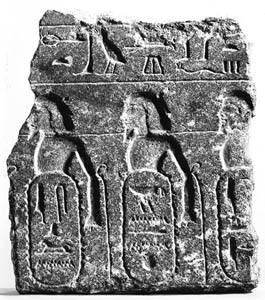
A 1st Century Manuscript Fragment of Mark?
Posted by Jason Dulle under Bible, Textual Criticism, Theology[4] Comments
That’s the claim Daniel Wallace made during his most recent debate with Bart Ehrman at UNC Chapel Hill. In his summary of the debate at Parchment and Pen, Wallace writes:
We have as many as eighteen second-century manuscripts (six of which were recently discovered and not yet catalogued) and a first-century manuscript of Mark’s Gospel! … Bart had explicitly said that our earliest copy of Mark was from c. 200 CE, but this is now incorrect. It’s from the first century. I mentioned these new manuscript finds and told the audience that a book will be published by E. J. Brill in about a year that gives all the data. … I noted that a world-class paleographer, whose qualifications are unimpeachable, was my source.”
Later he described the newly discovered manuscript as “just a small fragment.” Nevertheless, if this is a manuscript copy of Mark’s gospel, and if it can be reliably dated to the 1st century AD, this would be the greatest NT manuscript find to date, surpassing even p52 (a small portion of John’s Gospel, dated to ~125 AD)! We’ll have to wait and see.
UPDATE 2/16: Dr. Wallace has written specifically on this issue on the Dallas Theological Seminary website and added a tiny bit more information by saying “it was dated by one of the world’s leading paleographers. He said he was ‘certain’ that it was from the first century.” In the comments I have also quoted Dr. Ben Witherington III regarding the owner of the fragment, and a bit more detail about it. Witherington made it sound as if it is much more than a “small fragment.” I guess we’ll have to wait until next year to see how small is small.
February 6, 2012
Intelligent Design: Specification, not just complexity is necessary for design detection
Posted by Jason Dulle under Apologetics, Intelligent Design[25] Comments
There are many illegitimate critiques of Intelligent Design (the hypothesis that some features of the world are best explained in terms of an intelligent cause rather than undirected natural processes). One example is the charge often leveled against ID that it improperly uses probability statistics to infer design. For example, in a BBC documentary titled The War on Science, Ken Miller accused IDers of making the mistake of calculating probabilities after-the-fact, making the unlikely seem impossible:
One of the mathematical tricks employed by intelligent design involves taking the present day situation and calculating probabilities that the present would have appeared randomly from events in the past. And the best example I can give is to sit down with four friends, shuffle a deck of 52 cards, and deal them out and keep an exact record of the order in which the cards were dealt. We can then look back and say ‘my goodness, how improbable this is. We can play cards for the rest of our lives and we would never ever deal the cards out in this exact same fashion.’ You know what; that’s absolutely correct. Nonetheless, you dealt them out and nonetheless you got the hand that you did.
February 2, 2012
Scott Klusendorf Addresses Abortion Questions
Posted by Jason Dulle under Abortion, Apologetics, Bioethics[14] Comments
Scott Klusendorf is the best pro-life apologist out there. No one can say as much as Scott can say in as little space and as eloquently as he can. He wrote an essay for the Christian Research Journal addressing five questions often asked of pro-life advocates and the pro-life movement:
- Are pro-life advocates focused too narrowly on abortion? After all, informed voters consider many issues, not just one.
- Why don’t pro-life advocates care about social justice both here and in developing countries?
- Why don’t pro-lifers oppose war like they do abortion?
- Instead of passing laws against abortion, shouldn’t pro-life Christians focus on reducing its underlying causes?
- Should pastors challenge church members who support a political party sworn to protect elective abortion?
It’s worth checking out his answers. It is not a long piece, and he provides some great answers to ponder.
February 2, 2012
Hypocrisy: Presidents, Policies, and Religion
Posted by Jason Dulle under Political Incorrectness, Politics[4] Comments
When President George W. Bush cited his religion as influencing his political decisions the Left cried foul. The Left is eerily silent, however, to President Obama’s admission of the same. What’s good for the goose is good for the gander.
The problem is not with the idea that one is influenced by their religious convictions, but rather with the idea that religious convictions should not influence a president’s policies and decisions. Given the fact that moral values are highly influenced by religion, and that policies usually involve a moral dimension, it is to be expected that a president’s policies would be influenced by his religious convictions.
January 30, 2012
If Intelligent Design is Science, Why Do So Many Scientists and Scientific Institutions Denounce It?
Posted by Jason Dulle under Apologetics, Evolution, Intelligent Design, Naturalism, Science[97] Comments
The Best Schools interviewed leading Intelligent Design theorist, Bill Dembski. At one point he was asked, “You have stated that ‘design theorists oppose Darwinian theory on strictly scientific grounds.’ But then why is the ID movement so heavily populated with religious believers? Could we not expect more of the scientific community to support ID if your statement were true? Why do the majority of the world’s leading scientific bodies oppose ID and claim that it does not qualify as science?”
This is a valid question, and I’m sure it is on the minds of many people who are interested in the debate. I like Dembski’s answer:
As for why religious believers tend to be associated with design, I could turn the question around. If Darwinian evolution is strictly scientific, then why is that field so heavily populated with atheists? In one survey of around 150 prominent evolutionary biologists, only two were religious believers (as I recall, Will Provine was behind this survey). I see a scientific core to both intelligent design and Darwinian evolution. And I see no merit in questioning their scientific status by the company they keep. The character of the proposals that both approaches make is what really ought to count.
HT: Uncommon Descent
January 30, 2012
Demanding the Impossible: Empiricists Demand the Wrong Kind of Evidence for God’s Existence
Posted by Jason Dulle under Apologetics, Epistemology, Philosophy, Science, Theistic Arguments[30] Comments
When dealing with an empiricist who wants evidence that God exists, and yet thinks evidence—for it to be considered evidence—must be empirical in nature, ask him the following question: “What kind of empirical evidence could possibly be given for an immaterial being such as God?” If they say “none,” then point out that they are asking for the impossible. What would it prove, then, if you cannot deliver? Nothing. It just proves that the wrong question is being asked.
Insisting on empirical evidence before one will believe in the existence of God is like insisting on chemical evidence of your wife’s love for you before you’ll believe she loves you. One cannot supply chemical proof for love, and neither can one supply empirical proof of God’s existence, but that does not mean either is false. The problem is not a lack of evidence for God’s existence, but an arbitrary restraint on the kind of evidence the atheist is willing to accept as evidence. That is what needs to be challenged. Empirical evidence is not the only kind of evidence one can appeal to in support of a claim.
January 25, 2012
What I’ve Been Reading: The Darwin Myth
Posted by Jason Dulle under Apologetics, Book Reviews, Evolution, Naturalism[40] Comments
For many famous historical figures, a distinction often needs to be made between the man and the myth that surrounds him. This is no less true for Charles Darwin. While the mythical features of a man are often later creations by others, in the case of Darwin, he created some of his own myths through his autobiography. In his book The Darwin Myth: The Life and Lies of Charles Darwin, Benjamin Wiker takes a critical look at the historical Darwin: the man, the myth, and his contribution to evolutionary theory.
Wiker documents several myths have arisen regarding Charles Darwin and the theory of evolution:
- That Darwin thought up the theory of evolution. The notion that animals in the present evolved from earlier forms was not a novel idea. The idea can be traced back to the ancient Greek philosopher Lucretius in the 1st century BC, and it was particularly in vogue among the intelligentsia in Darwin’s day. In fact, his very famous grandfather, Erasmus Darwin, wrote a widely acclaimed book titled Zoonomia (1794) in which he laid out his own theory of evolution more than 60 years before Charles wrote On the Origin of Species. In medical school, Darwin studied under a radical evolutionist by the name of Robert Grant. He also read the works of other evolutionists. Darwin did not come up with evolution. He merely popularized the theory by providing a plausible, naturalistic mechanism by which it might work, backed up by some empirical observations.
January 22, 2012
Alexander Vilenkin: “All the evidence we have says that the universe had a beginning.”
Posted by Jason Dulle under Apologetics, Cosmological Argument, Naturalism, Theistic Arguments[17] Comments
In honor of Stephen Hawking’s 70th birthday, a meeting of the minds took place to discuss the state of cosmology. New Scientist[1] reported on the events of the night, one of which was a talk delivered by famed cosmologist, Alexander Vilenkin, describing why physical reality must have a beginning. But first, a little background is in order.
For a long time scientists held that the universe was eternal and unchanging. This allowed them to avoid the God question—who or what caused the universe—because they reasoned that a beginningless universe needed no cause.[2] They recognized that if the universe began to exist in the finite past that it begged for a cause that was outside of the time-space-continuum. As Stephen Hawking told his well-wishers in a pre-recorded message, “A point of creation would be a place where science broke down. One would have to appeal to religion and the hand of God.”
Scientific discoveries in the early and mid-20th century, however, forced cosmologists to the uncomfortable conclusion that our universe came into being in the finite past. The scientific consensus was that the origin of our universe constituted the origin of physical reality itself. Before the Big Bang, literally nothing existed. The universe came into being from nothing and nowhere. This sounded too much like the creation ex nihilo of Genesis, however, and seemed to require the God of Genesis to make it happen. As a result, some cosmologists were feverishly looking for ways to restore an eternal universe.
January 18, 2012
Against Theological Determinism / Compatibilism
Posted by Jason Dulle under Apologetics, Calvinism v Arminianism, Nature of God, Soteriology, Theology[35] Comments
In the latest edition of Philosophia Christi[1], Jerry Walls argues that no Christian should be a theological determinist. What is a theological determinist? It’s someone who believes that God’s sovereignty extends meticulously to every aspect of the world, including human “choice.” The problem with determinism is that it eliminates human freedom since there are factors external to humans sufficient to determine our choices, such that we could not do otherwise (or even want to do otherwise since even our desires are the product of God’s sovereign acts).
Most theological determinists are compatibilists. Compatibilists think determinism can be reconciled with free will: If one acts according to their desires, then their choices are free. But this is a veneer. At best this shows that we may feel like we our will is free, even though it is not. The fact remains that both our desires and our choices are determined by God wholly independent of our own volition. It should be no surprise when our desires match our actions when God has determined both. Given theological determinism, there can be no freedom of human will, despite attempts by some to evade the obvious.
January 18, 2012
I’m excited to share with you that this blog finally broke the 1000 page-views-in-a-single-day barrier (my previous best was 909). More than half of those views were to my post on the NT quotations in the Church Fathers.
Thanks to all for your continued readership, and for sharing my posts on your own blogs, Facebook, and Twitter!
January 17, 2012
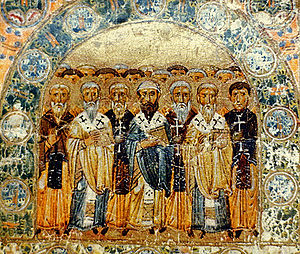
Modern Myth: All but 11 verses of the NT could be constructed from the writings of the early church fathers
Posted by Jason Dulle under Bible, Textual Criticism, Theology[47] Comments
Have you ever heard it said—or said it yourself—that if all the Bibles and Biblical manuscripts in the world were destroyed tomorrow, we could reconstruct all but 11 verses of the NT from the writings of the Ante-Nicene Church Fathers alone? Recently, while listening to an interview featuring NT textual critic, Daniel Wallace, I learned that this claim is demonstrably false.[1] Unfortunately this has been repeated in one form or another by many individuals, including prominent NT textual critics.
Apparently this misinformation began to circulate widely in 1841 with the publication of Robert Philip’s memoir of John Campbell titled The Life, Times, and Missionary Enterprises of the Rev. John Campbell. The Life contains a written anecdote of Campbell, who was rehearsing a story told to him by Reverend Dr. Walter Buchanan pertaining to the research David Dalrymple conducted into the church fathers’ citations of the NT. According to Campbell, Buchanan and Dalrymple were both in attendance at a literary party when someone raised the question: “Supposing all the New Testaments in the world had been destroyed at the end of the third century, could their contents have been recovered from the writings of the three first centuries?” No one had an answer. According to Campbell, two months later Dalrymple contacted Buchanan and reported to him that he had taken up the question raised at the party, researched the writings of the church fathers, and had an answer to the question. According to Campbell, Buchanan told him that Dalrymple told Buchanan he discovered that all but 7 or 11 verses (Dalrymple could not recall the exact number) of the NT were quoted in the early church fathers.
January 12, 2012
Homosexuality indoctrination in public schools
Posted by Jason Dulle under Apologetics, Homosexuality, Same-sex Marriage, Social[13] Comments
I would highly recommend that you watch the video clips at http://www.massresistance.org/media/video/brainwashing.html. They are from a documentary showing how elementary and junior high kids can be indoctrinated to believe homosexuality and same-sex marriage are morally acceptable (something the film extols as a virtue). If you think homosexuality is wrong, but that the issue of homosexuality is a private matter that isn’t going to hurt anybody so we should just sit back and do nothing, you need to watch this video. The gay rights movement has gone beyond the “just leave us alone to do what we want to do in the privacy of our own homes” days and into the day of approval advocacy. They are not content to be allowed to live how they want to live–now they want to make sure that you approve of their lifestyle as well. It’s too difficult to change adults’ minds, so they are targeting the young.
January 12, 2012
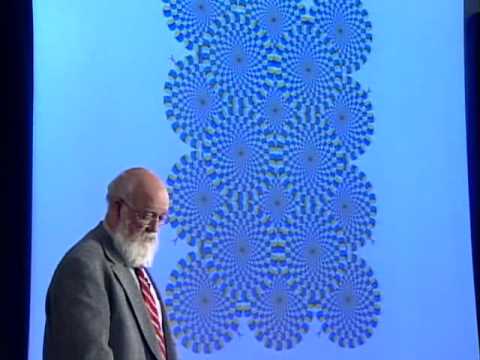
Naturalists struggle to fit consciousness into their worldview because it seems obvious that consciousness is not material in nature. Various attempts have been made by naturalists to account for consciousness. One of the strangest explanations is offered by philosopher Daniel Dennett. His solution is to eliminate consciousness so that it does not require an explanation at all. He does so by claiming that consciousness is not real, but an illusion.
Of the myriad of ways one might go about showing why Dennett’s solution does not work, I think Greg Koukl has offered the most straightforward and clearest critique. Koukl points out that in order to recognize something as an illusion, two things are required: (1) the presence of a conscious observer who is capable of perception, and (2) the ability to distinguish between what is real and what is illusion.
January 4, 2012
Stephen Hawking: God Could not Create the Universe Because There Was No Time for Him to Do So
Posted by Jason Dulle under Apologetics, Atheism, Cosmological Argument, Naturalism, Science, Theism, Theistic Arguments[448] Comments
Several months ago the Discovery Channel aired a television series featuring Stephen Hawking called Curiosity. Whereas in his book The Grand Design Hawking claimed that God is not necessary to explain the origin of the universe given the existence of physical laws such as gravity, in Curiosity he argued that God could not have created the universe because there was no time in which God could have done so:
[D]o we need a God to set it all up so a Big Bang can bang? … Our everyday experience makes us convinced that everything that happens must be caused by something that occurred earlier in time. So it’s natural for us to assume that something—perhaps God—must have caused the universe to come into existence. But when we’re talking about the universe as a whole, that isn’t necessarily so.
(more…)
January 3, 2012
Coyne on the Supposed Illusion of Free Will
Posted by Jason Dulle under Apologetics, Mind, Naturalism[7] Comments
Evolutionist, Jerry Coyne, has written an article in USA Today promoting the idea that free will is an illusion. After several paragraphs of attempting to convince his readers that they have no free will, Coyne raises the question of justice: Why punish people if they did not freely choose to do bad? His answer: “But we should continue to mete out punishments because those are environmental factors that can influence the brains of not only the criminal himself, but of other people as well. Seeing someone put in jail, or being put in jail yourself, can change you in a way that makes it less likely you’ll behave badly in the future. Even without free will then, we can still use punishment to deter bad behavior, protect society from criminals, and figure out better ways to rehabilitate them.” But wait, what is this talk of “should”? That presumes some sort of rational or moral obligation, but both are impossible in Coyne’s world since we have no ability to choose, and obligations cannot be met by those who lack the ability to choose to fulfill them. We can’t decide how we will respond to criminal behavior. Physics determines that for us. I may be determined to respond by refusing to punish anyone’s bad behavior or rewarding anyone’s good behavior. It’s not within my control, nor Coyne’s. We are just puppets on the strings of physics.
December 28, 2011
Why Think All Questions Have Scientific Answers?
Posted by Jason Dulle under Apologetics, Intelligent Design, Naturalism, Science[28] Comments
Scientists working in origin of life research are fairly candid that they do not know how life originated, but they are quick to point out that they are making progress and that science will eventually be able to provide an answer to this question. I have always found this sort of faith in science a bit intriguing. It is just assumed that there must be a naturalistic cause/explanation for the origin of life, and that we will eventually be able to discover it. But why should we think this to be true? Given what needs to be explained (the origin of biological information), and given our understanding of the causal powers of naturalistic processes, the origin of life does not appear to be the kind of thing for which natural causes are adequate to explain it even in principle (See 1, 2, 3, 4, 5, 6, 7, 8, and 9).